
GOODBYE butterflies, poppies & peaceful Dordogne. Today is all about war, 2,500 years of it, in fact: Carcassonne is an impressive medieval fortress city, bordering the Pyrenees in southwestern France. It is fairly close to the Spanish border.
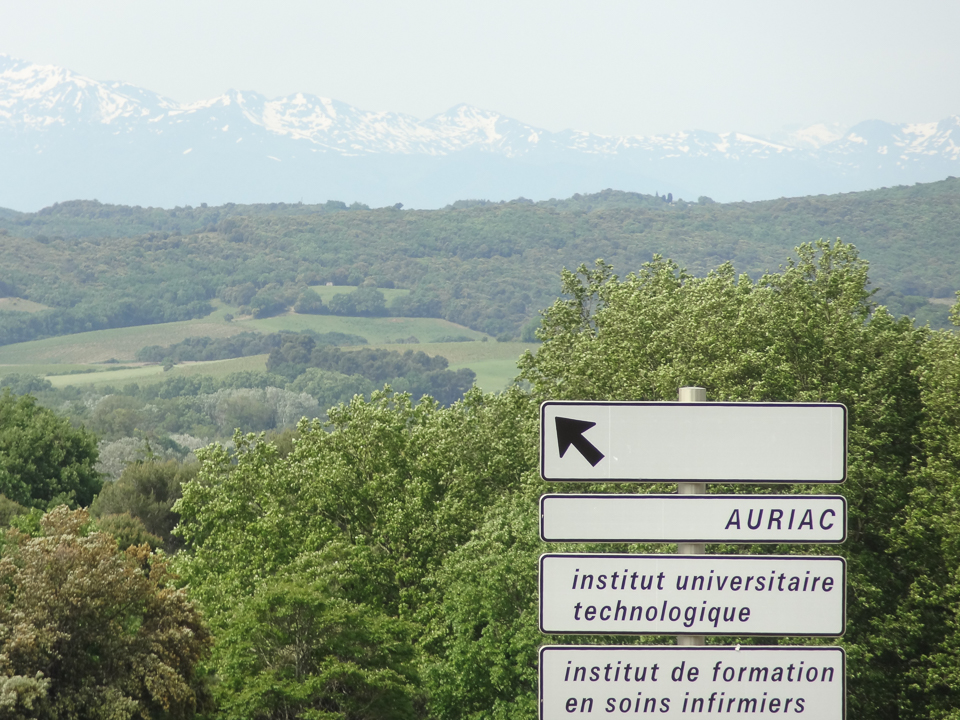
The Pyrenees, still snowcapped in May
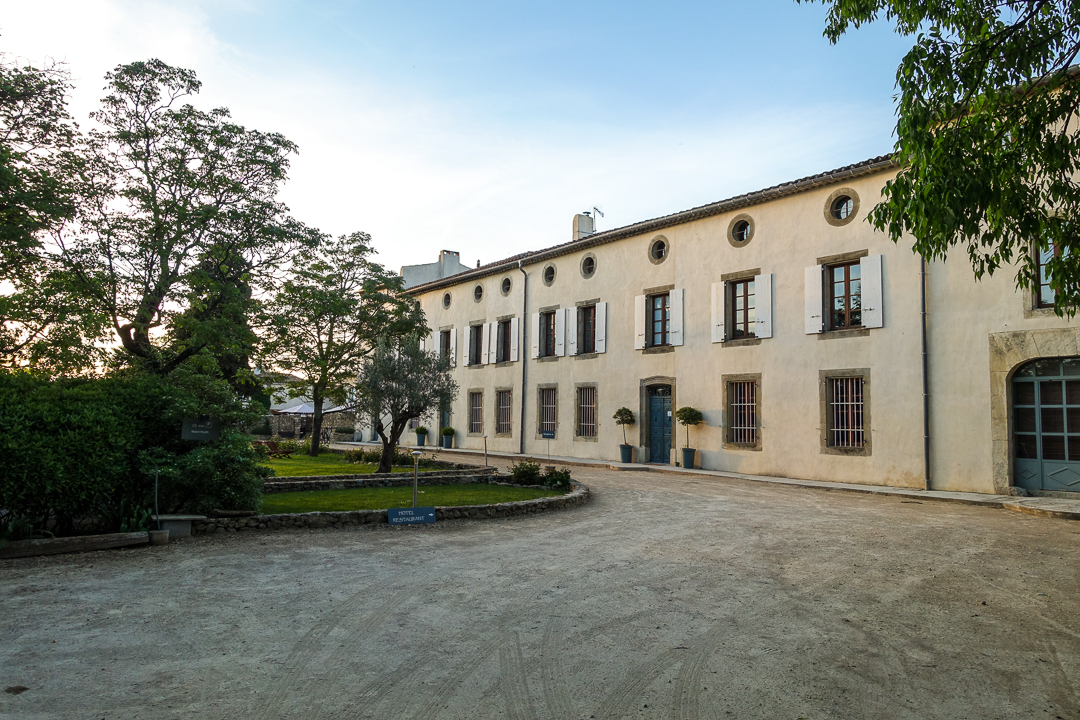
This area looks and feels like Southern California, with its Spanish influence and Mediterranean climate. It is around 80 degrees. Our hotel looks as if it could be in Santa Barbara: tile roofs, grapevines, bright sunlight, etc.
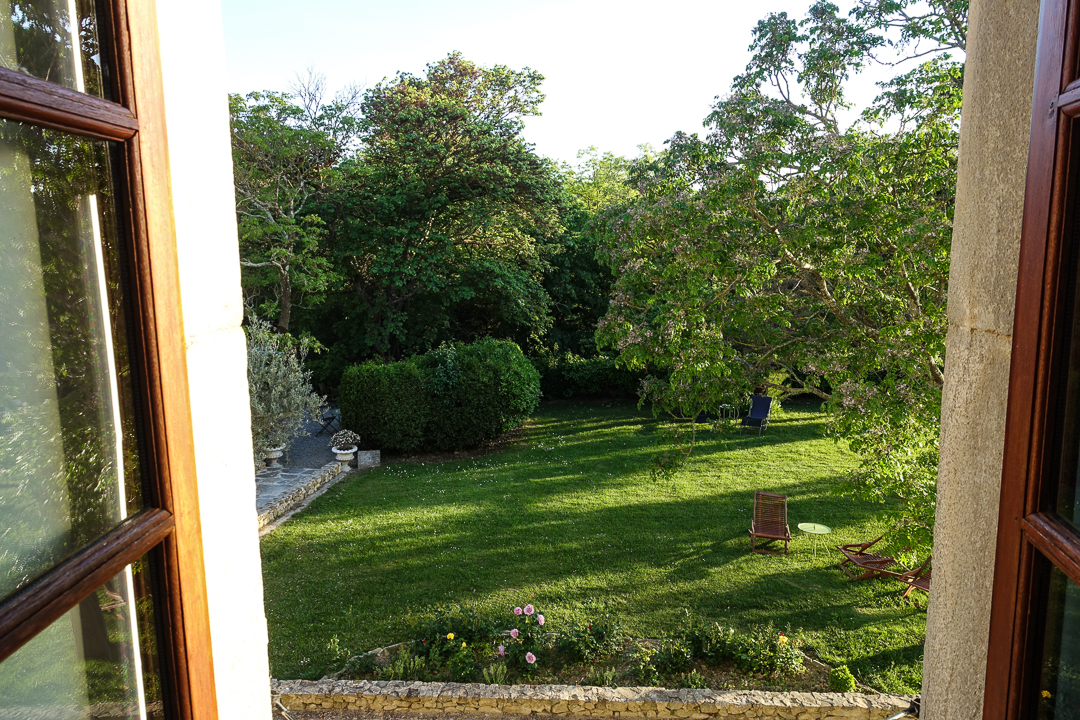
The garden view from our room looked familiar–lots of plants we see all the time in Cali like olive trees and cypress.
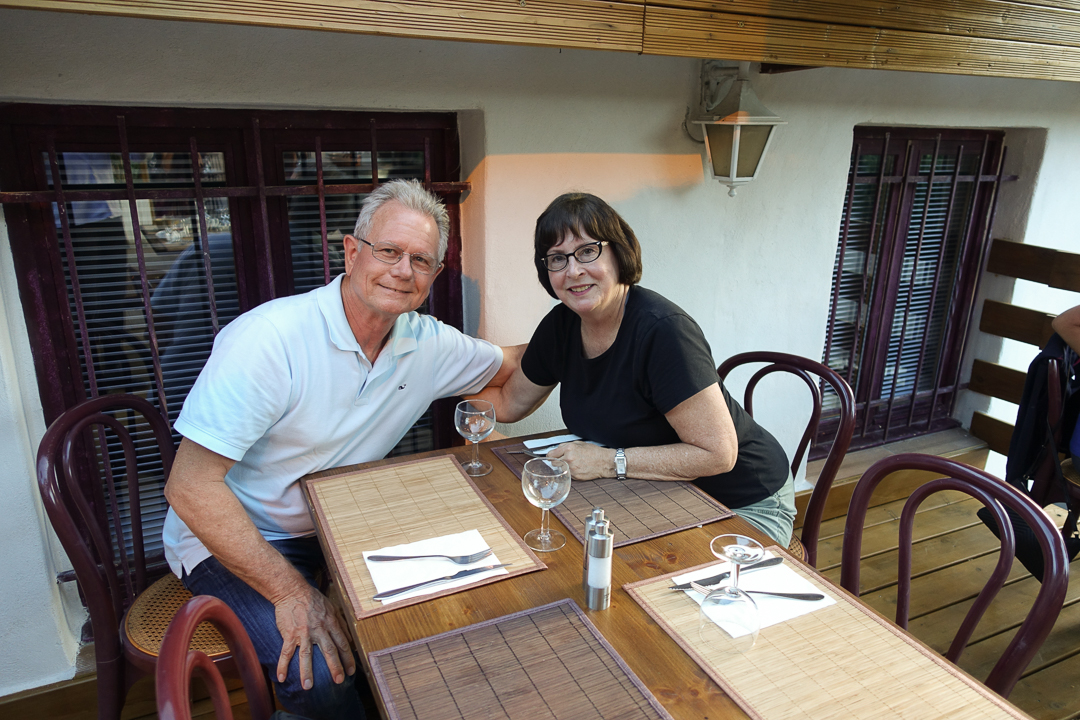
We decided to eat next door to the hotel after our long drive. The restaurant was rented out to a Cuban couple living in the area, who were throwing a wild party. The management found a seat for us anyway, and we listened to Cuban music and watched guests dancing salsa-style all evening. What a interesting evening. Wish we could share the great Cubanos music with you.
Because this area of France is on a time border, the sun sets around 9:30, so people eat around this time. We seem to be eating later and later each day. It is about 9 when this picture was taken and we hadn’t ordered yet.
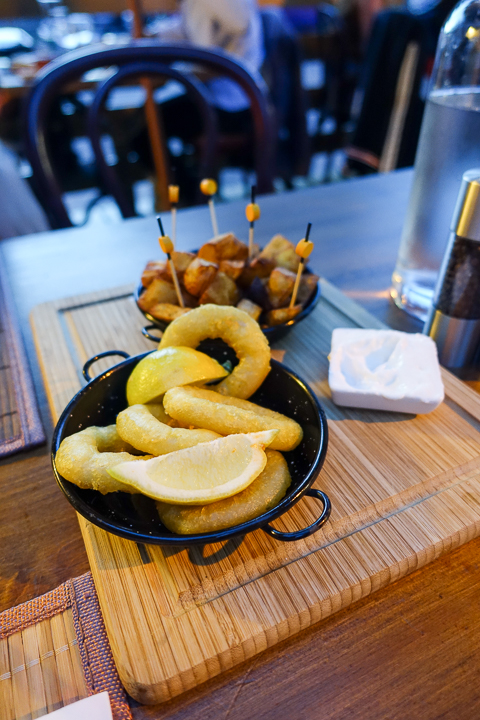
Being so close to the Spanish border, many of the people in this area are trilingual. You hear Spanish, French and English. We saw more tapas being served here, too.
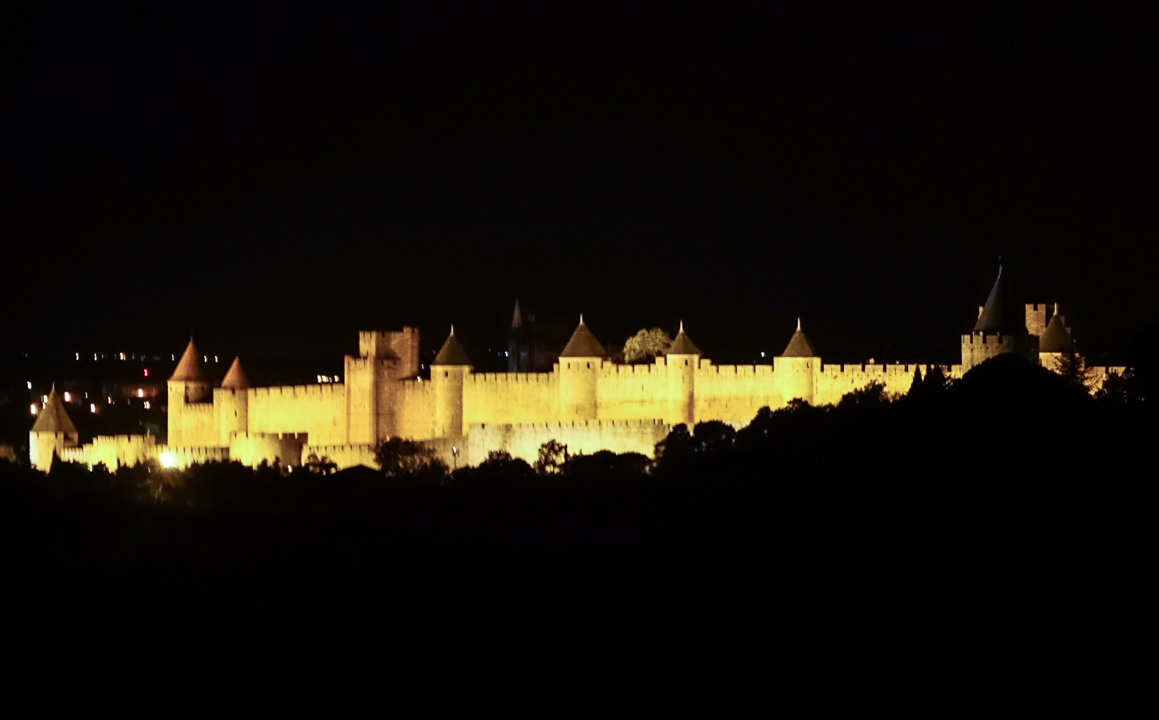
After dinner we took this night shot of Carcassonne, the medieval fortress.
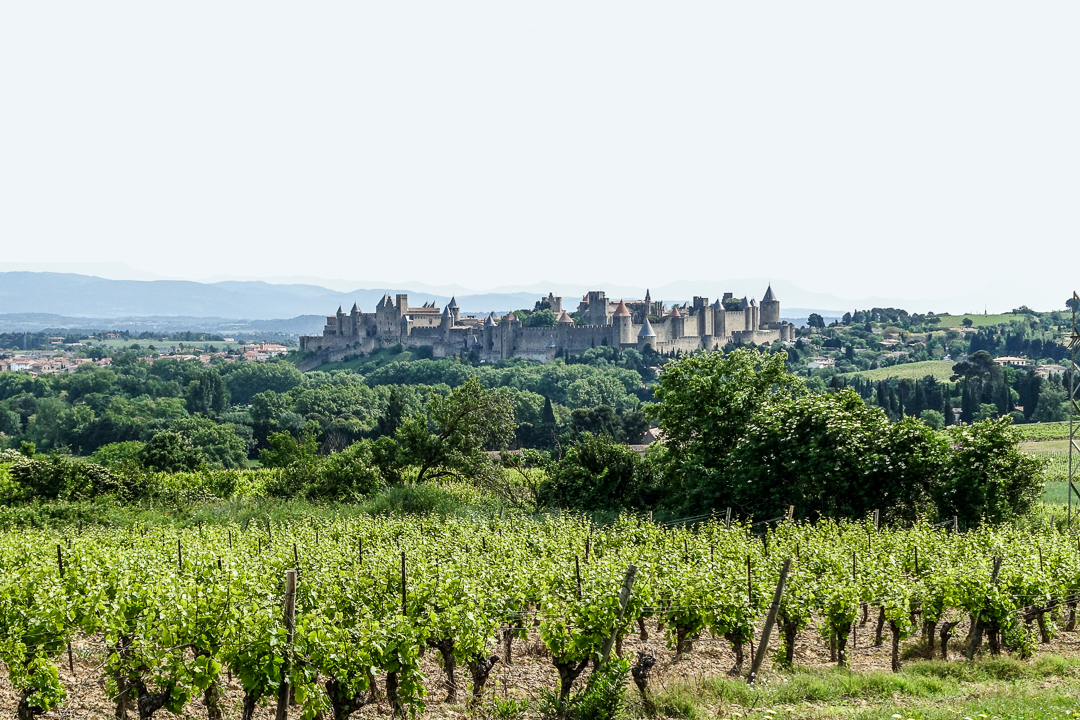
We returned the next morning to tour the fortress, surrounded by vineyards.
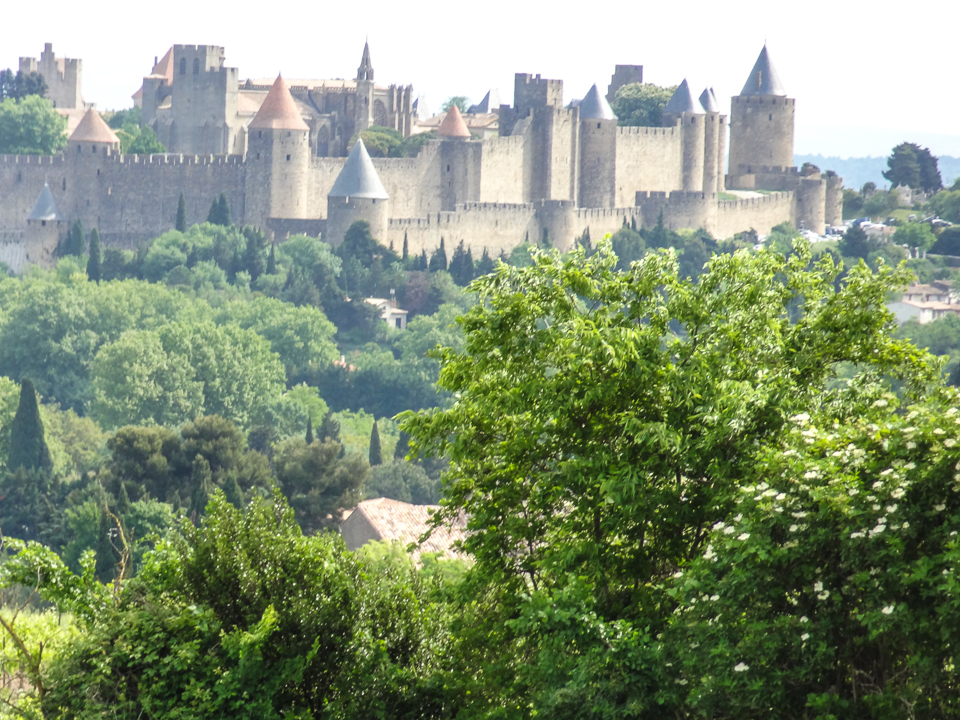
A children’s storybook castle. What time is the jousting event? Put your armor on; sharpen your lances. Ready? Forward, march.
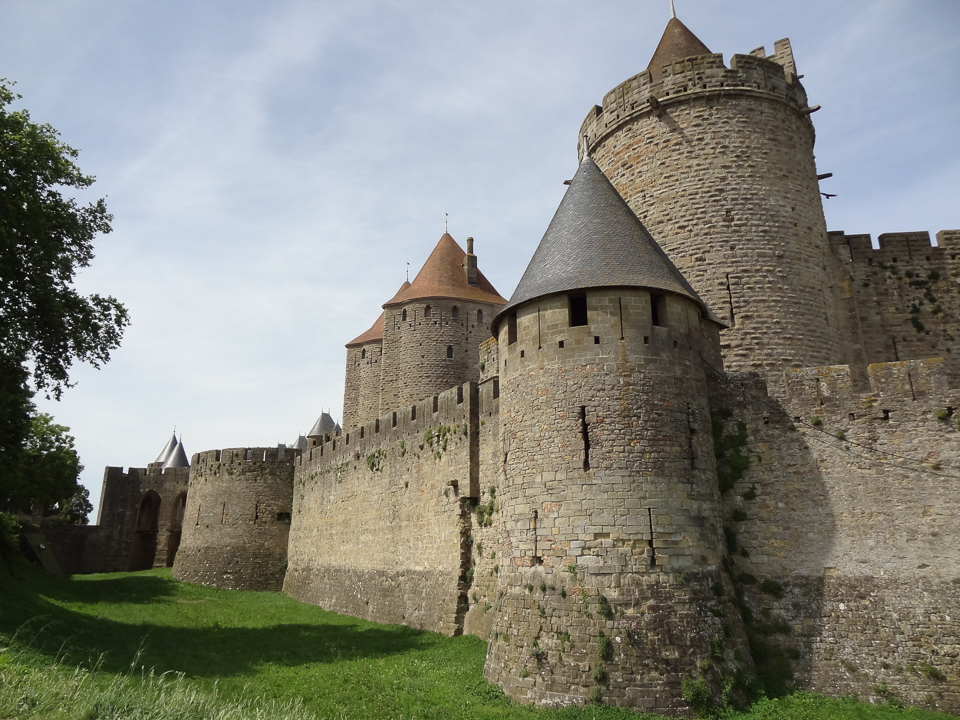
Carcassonne sits between the Atlantic Ocean and the Mediterranean Sea. A popular trade route, the area was occupied by the Romans, valuing its strategic position. The Romans constructed the lower part of these Northern ramparts.
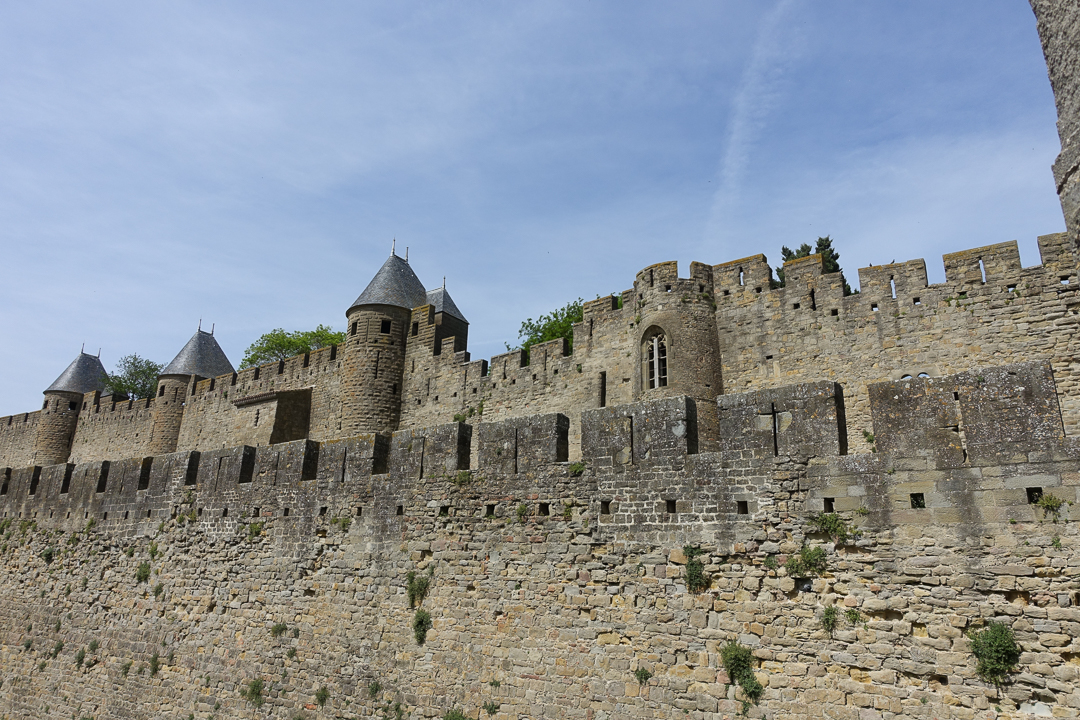
When the Visigoths sacked Rome and the Western Roman Empire fell, the fortress changed ownership many times. Each owner added to the structure. The fortified city itself consists of concentric design of two outer walls with 53 towers and barbicans to prevent attack by siege.
Double ramparts make for some serious defensive architecture.
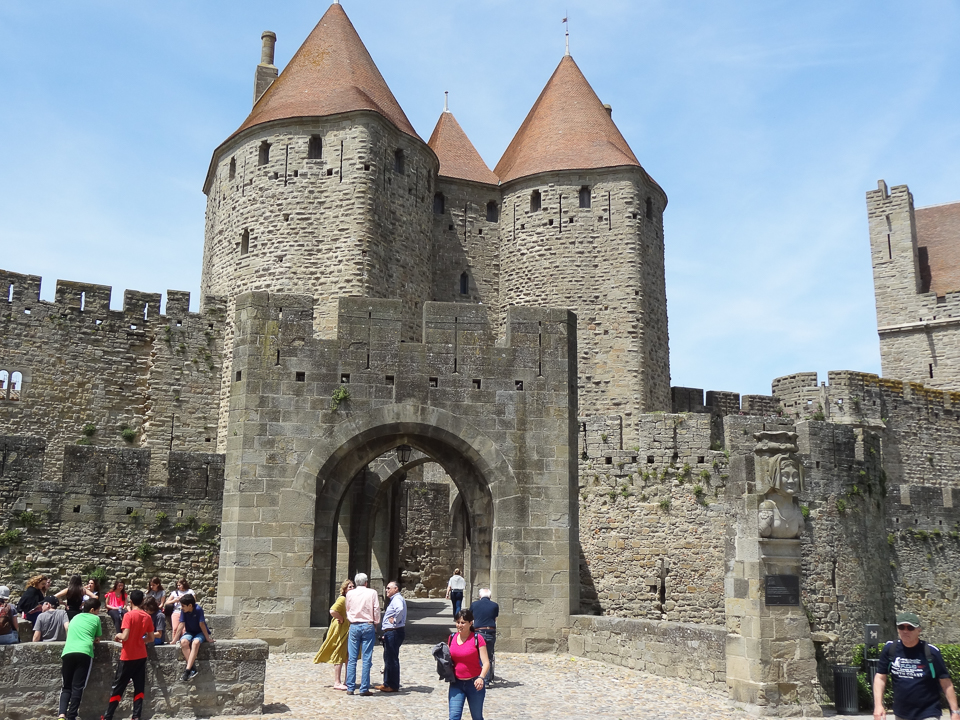
The entrance with a drawbridge (la Porte Narbonnaise).
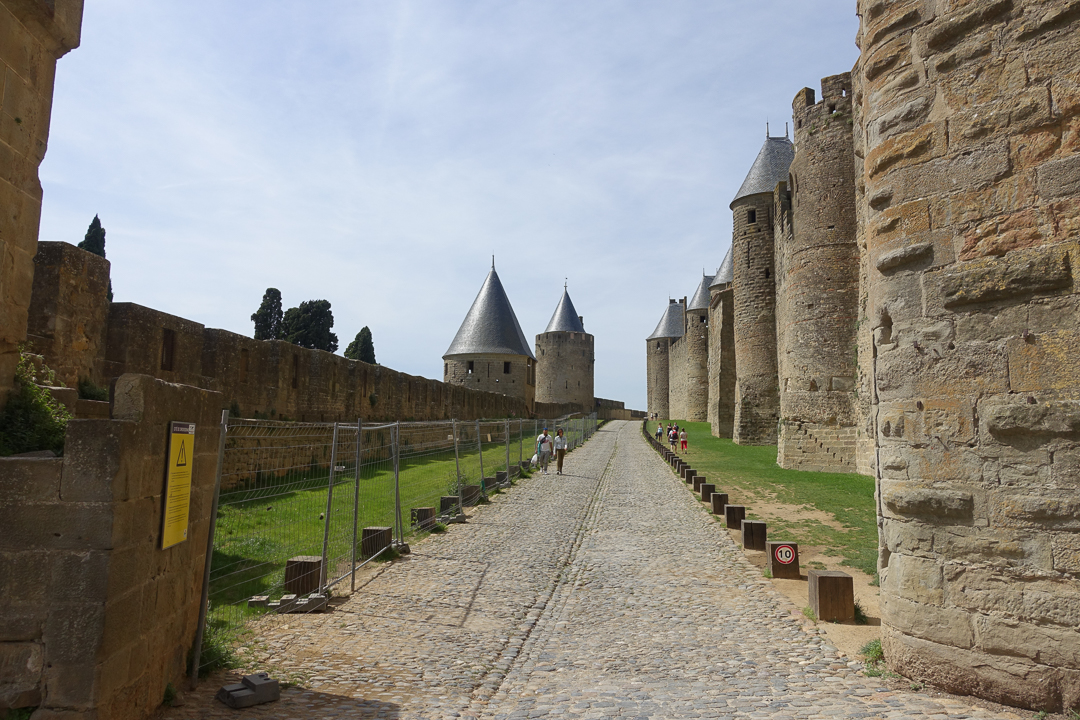
You are looking between the two walls of defense. These areas were occupied until the early 20th century by military garrisons and underwent multiple transformations.
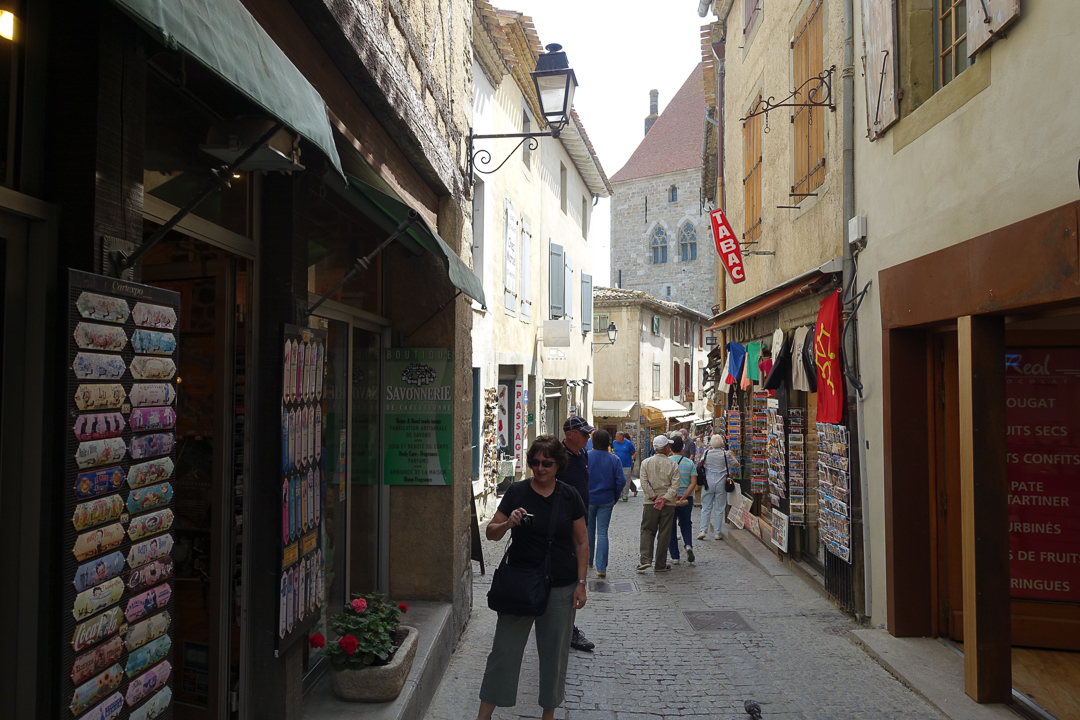
Village streets and shops rim the circumference of the inside of the fortress.
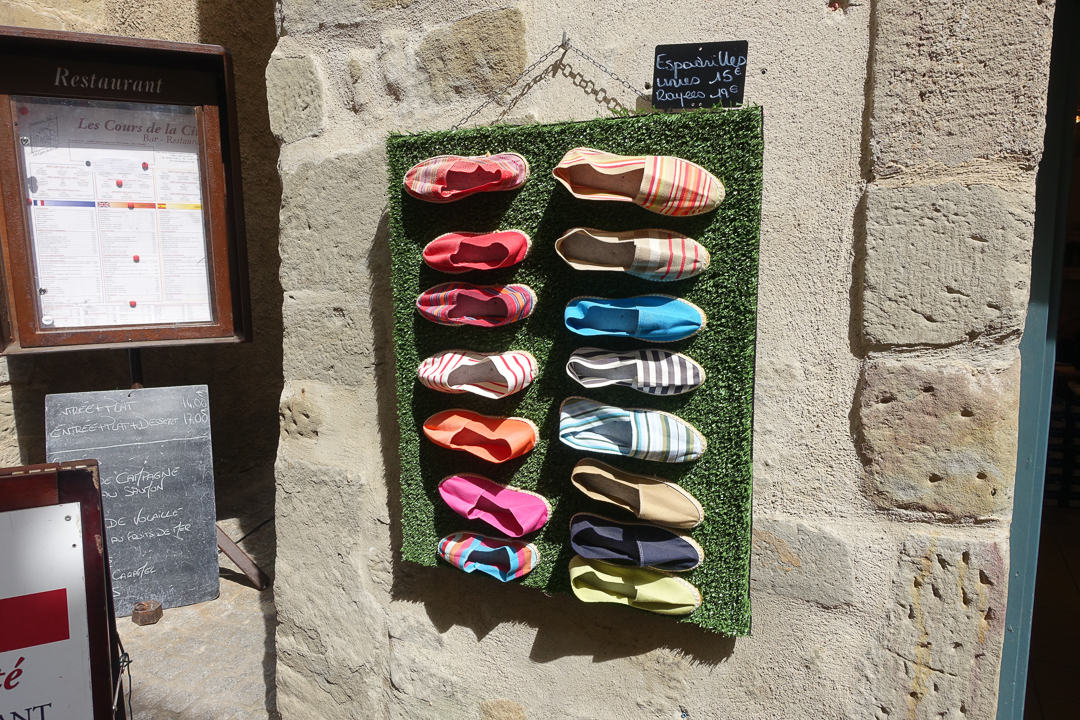
Medieval espadrilles?
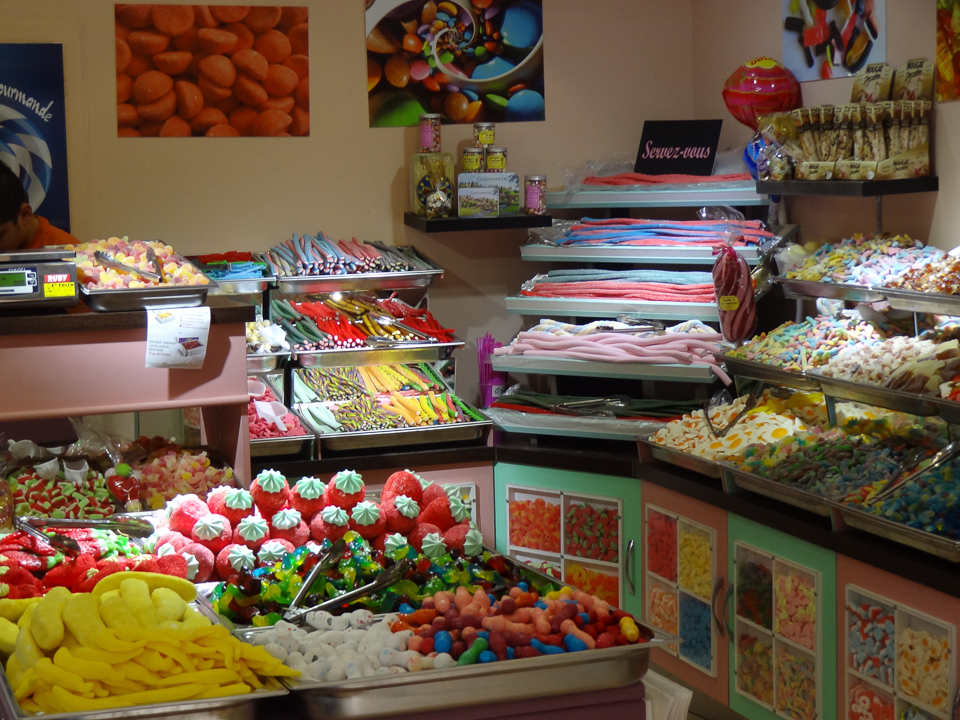
Death by sugar
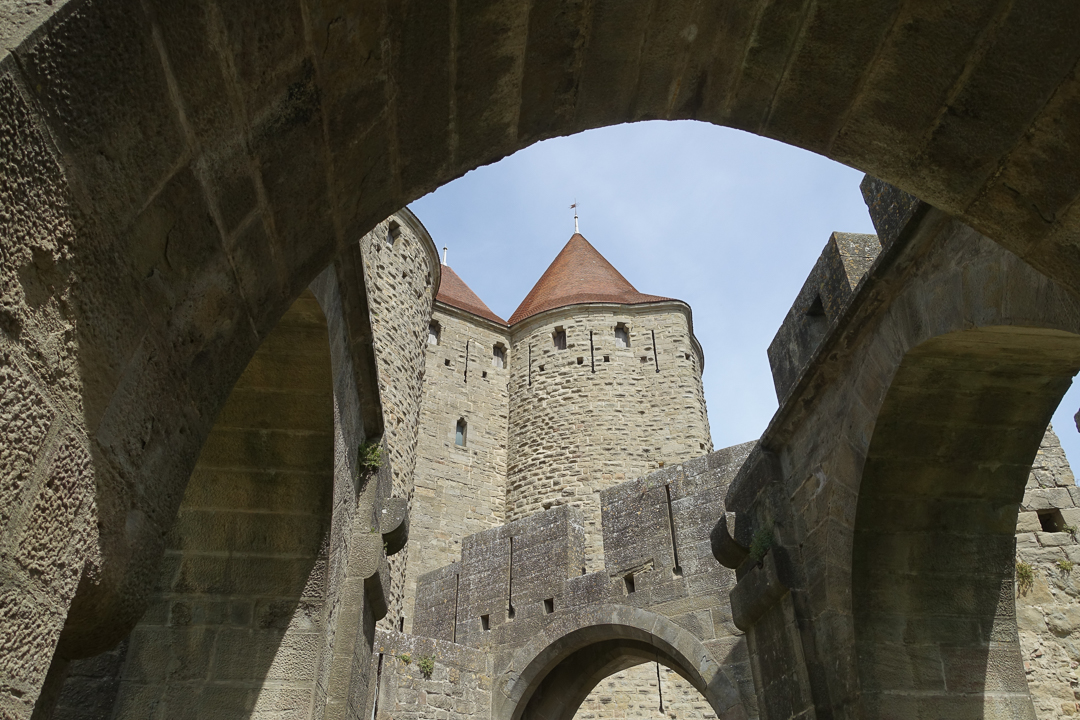
The fortress was built over a long period of time. One of these towers housed the dissenting Christians [i.e., the Cathars / Albigensians] who refused papal authority during the Catholic Inquisition in the 13th Century. It is still called “the Inquisition Tower.”
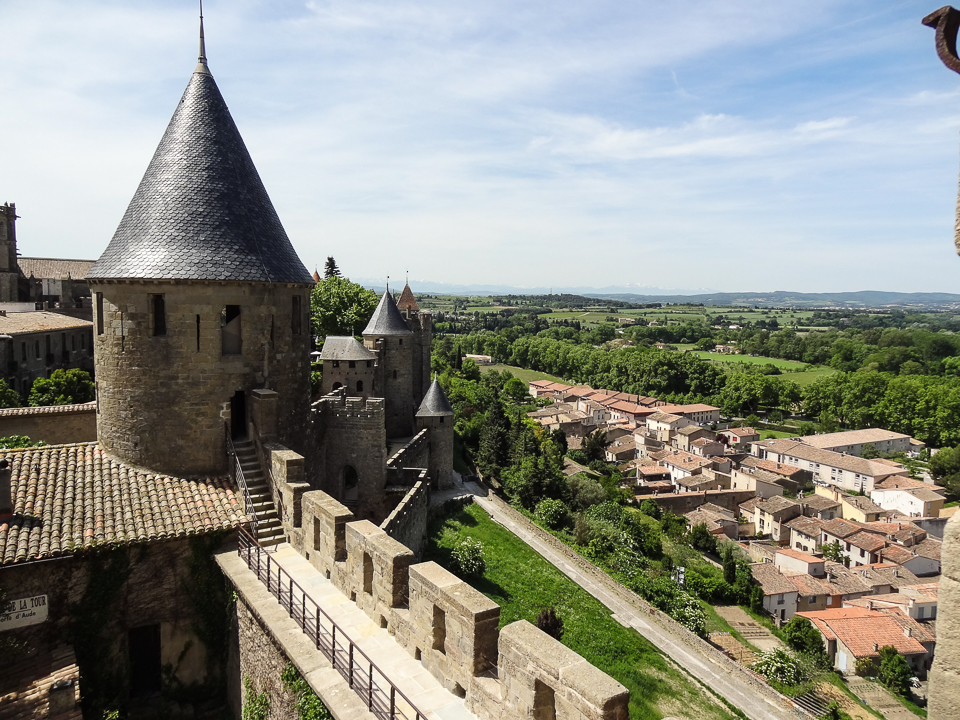
View of the Northern ramparts. The medieval towers, unlike the Roman ones, are covered with slate.
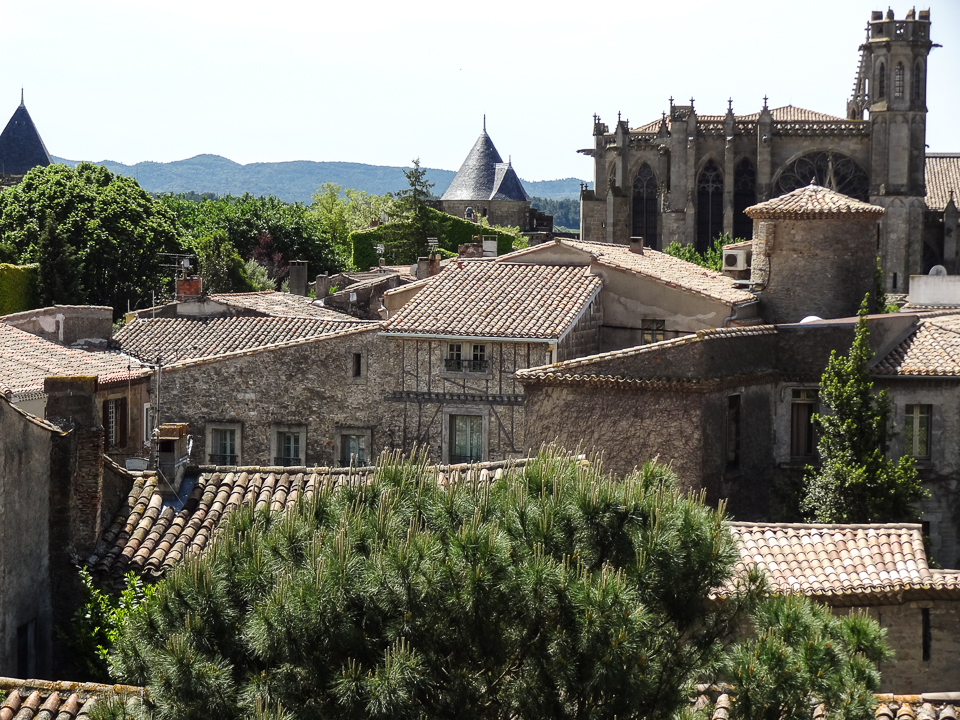
The Roman section, which has red brick layers and shallow pitch terracotta tile roofs, is noticeably different from the medieval section. The predecessor to the basilica that is now dedicated to Saint Nazaire is thought to be built by the Visigoths.
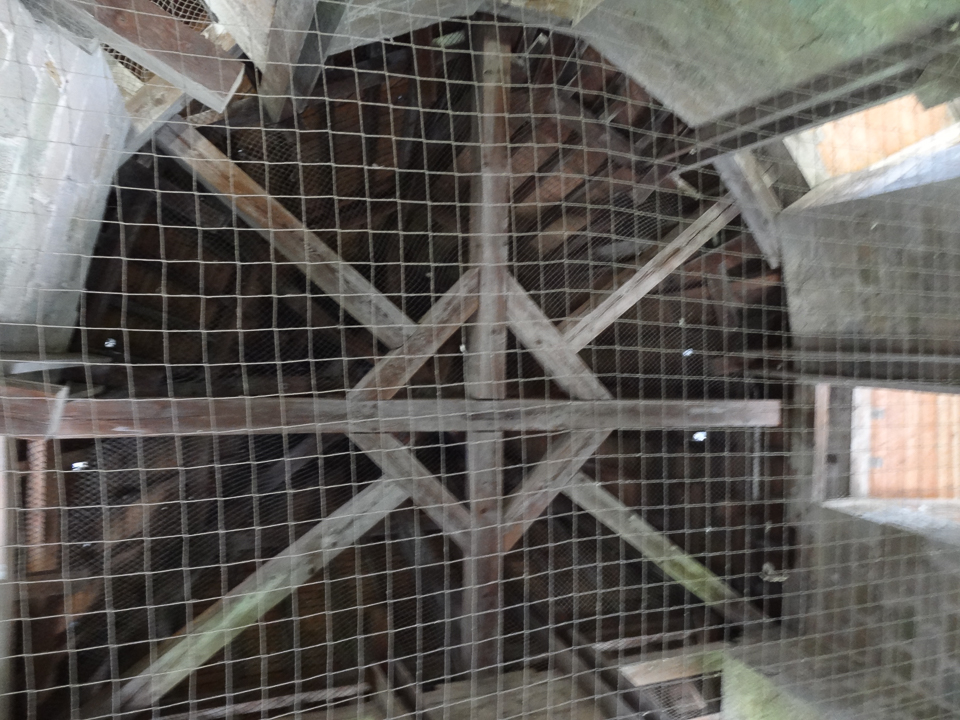
Looking up, one can see that the Roman towers are U-shaped, instead of round
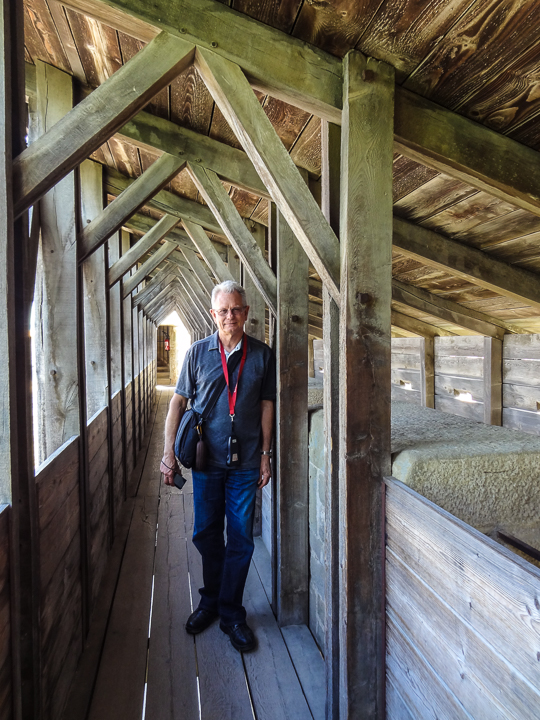
What makes this fortress unique is the use of hoardings. These wooden galleries completed the defensive fortifications, protecting the base of the ramparts. The wooden ramparts provided protection to defenders on the wall and allowed them to go out past the wall to drop projectiles onto the heads of invaders.
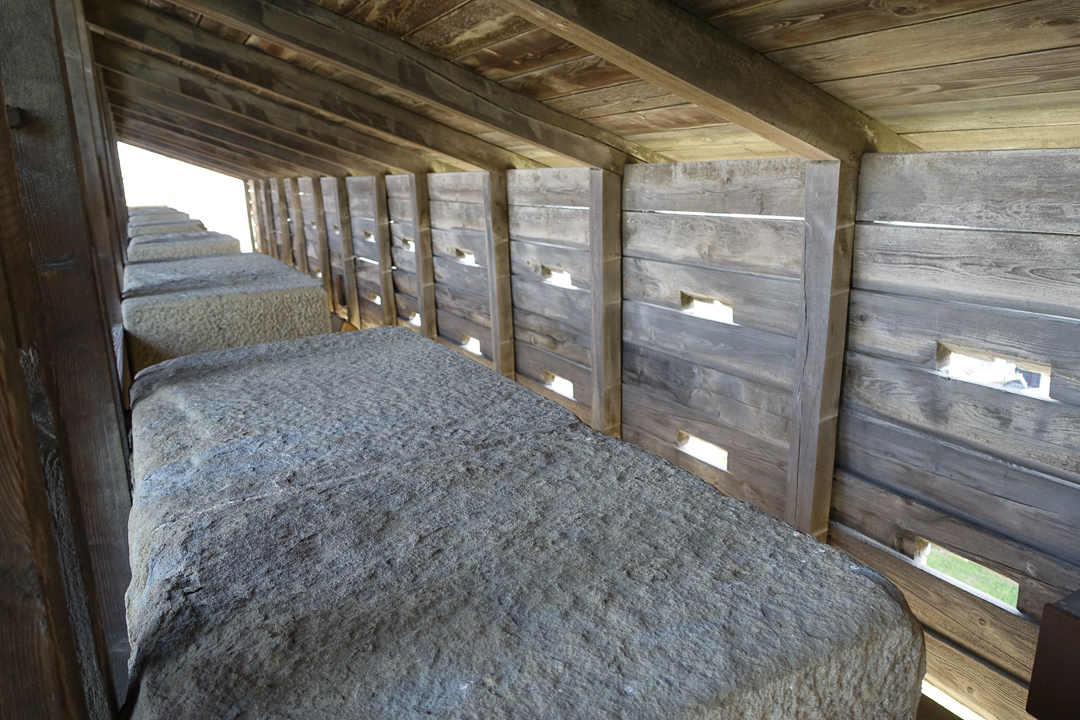
Slots provided the ability for archers to launch their arrows while remaining protected.
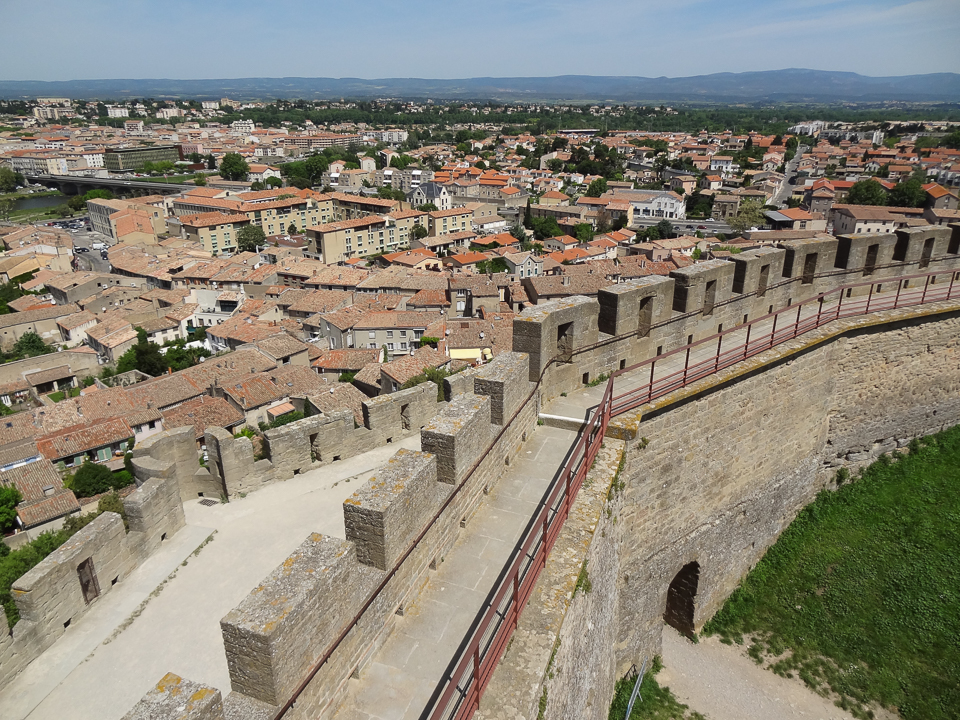
This is the best preserved spot of the old fortifications.
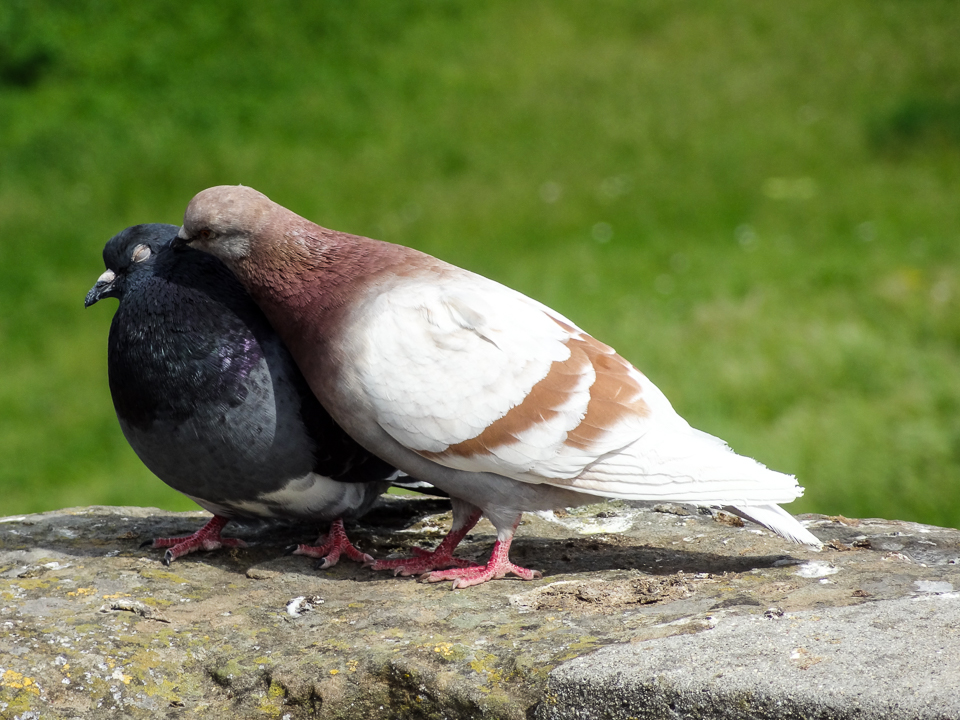
BREAK FROM WAR: What can we say? It is spring in France, and LOVE is in the air.
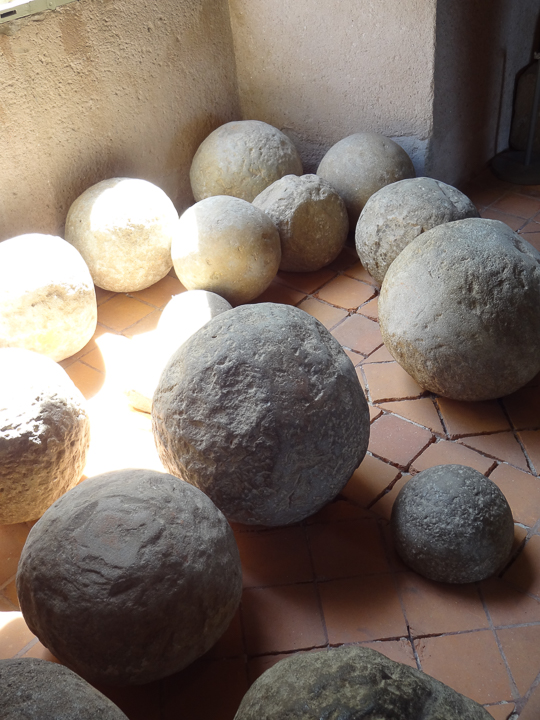
BACK TO WAR: These are some of the projectiles dropped from the hoardings. Holy headache!
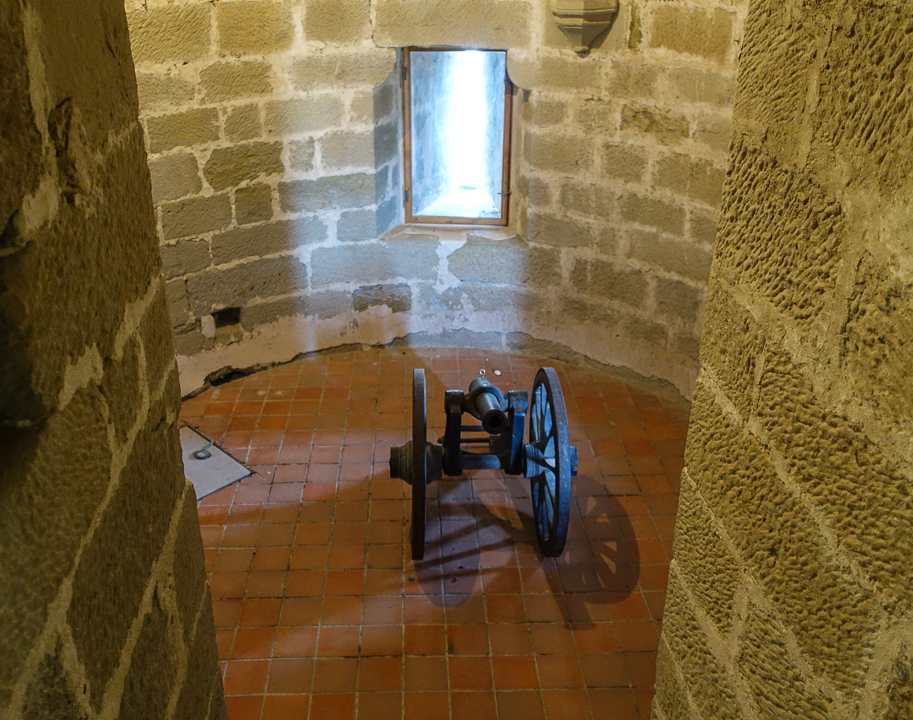
Advancing warfare technology over the life of the fortress evolved from dropping stones to firing canons,
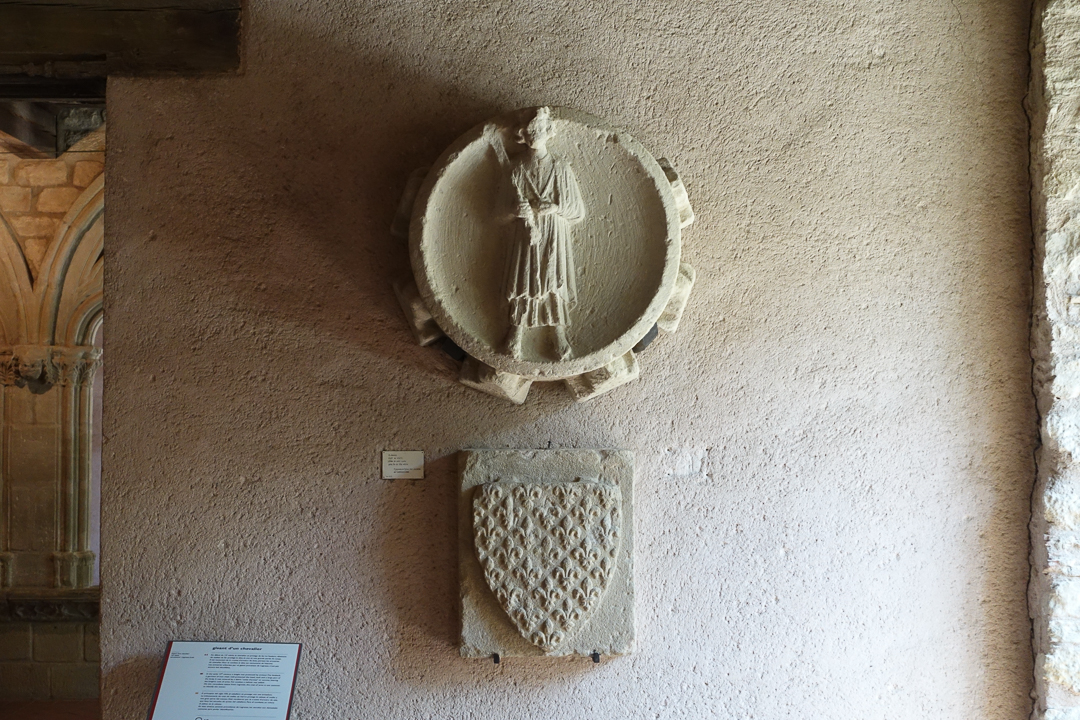
Many castle artifacts from different points in history were on display in the museum.
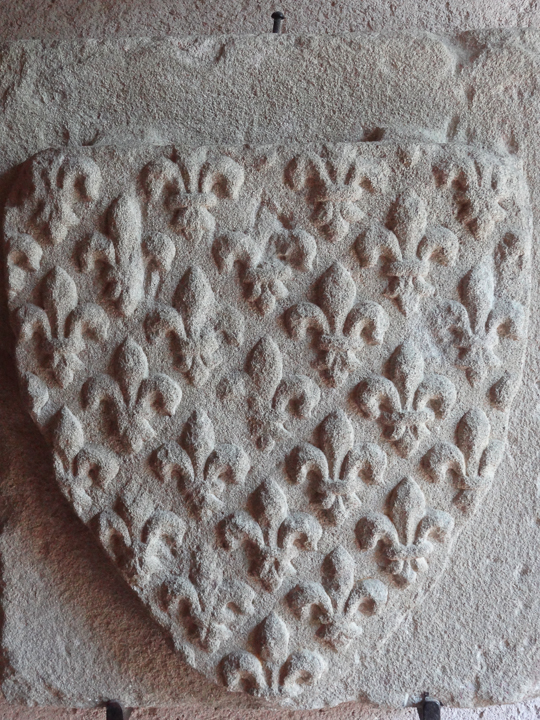
The Fleur-de-lis design, emblematic of the French monarchy, marks the fortress’ Franco rule.
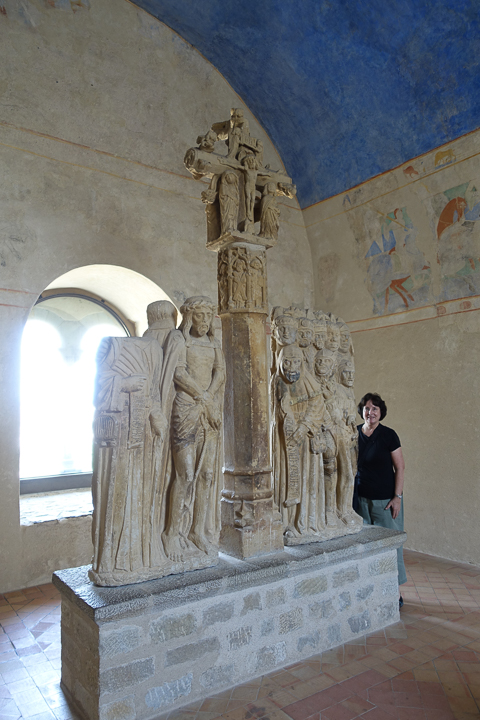
The papal influence
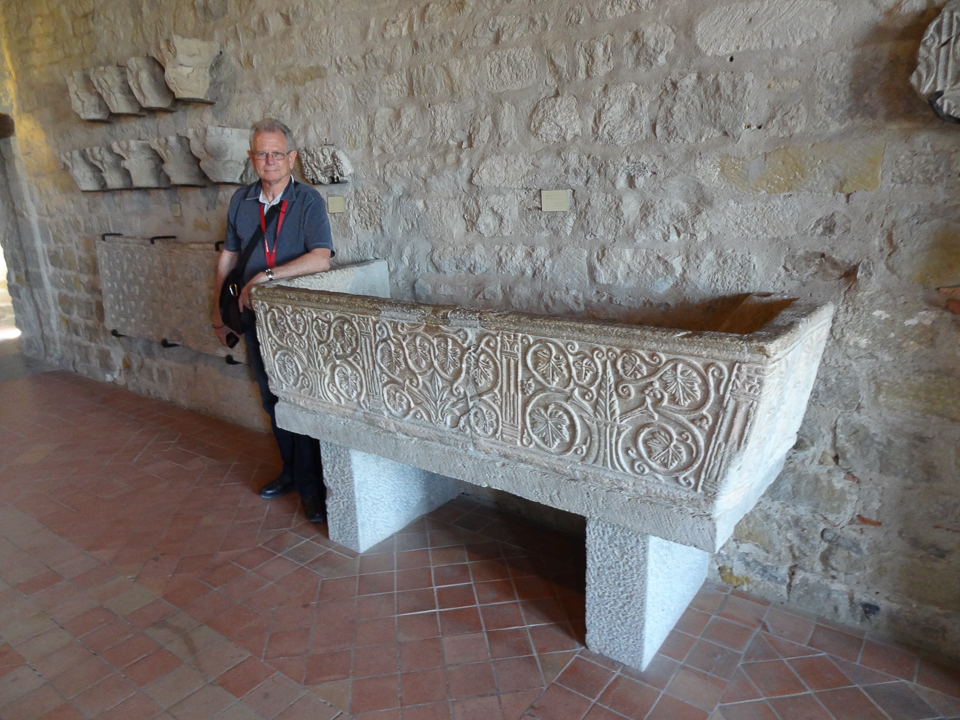
One sarcophagus with . . .
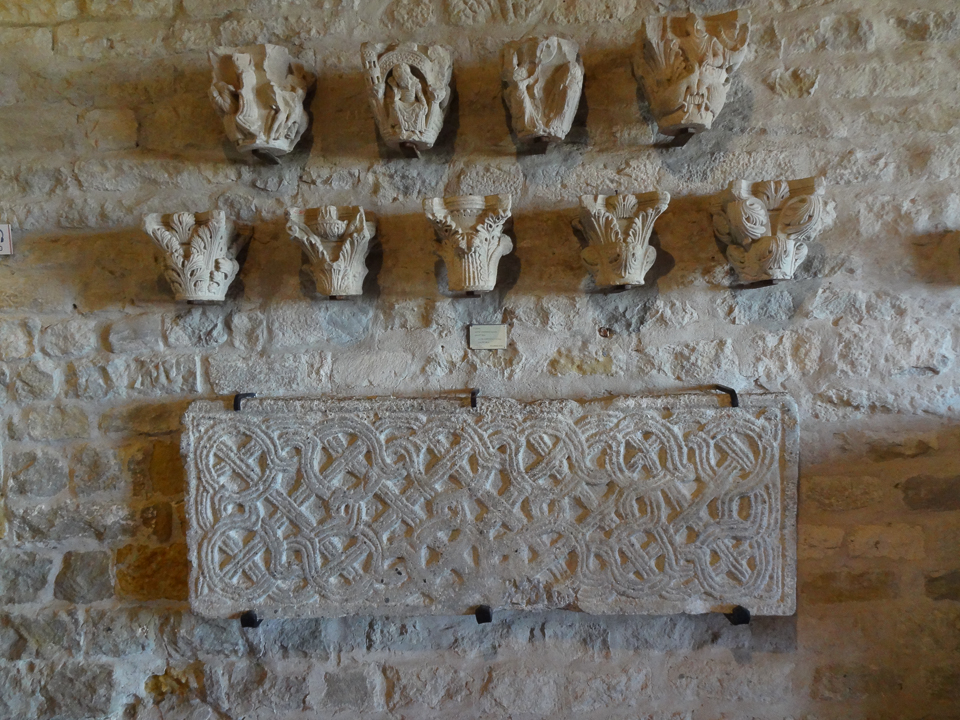
. . . its lid. We are sure that this place saw a lot of death in its day.
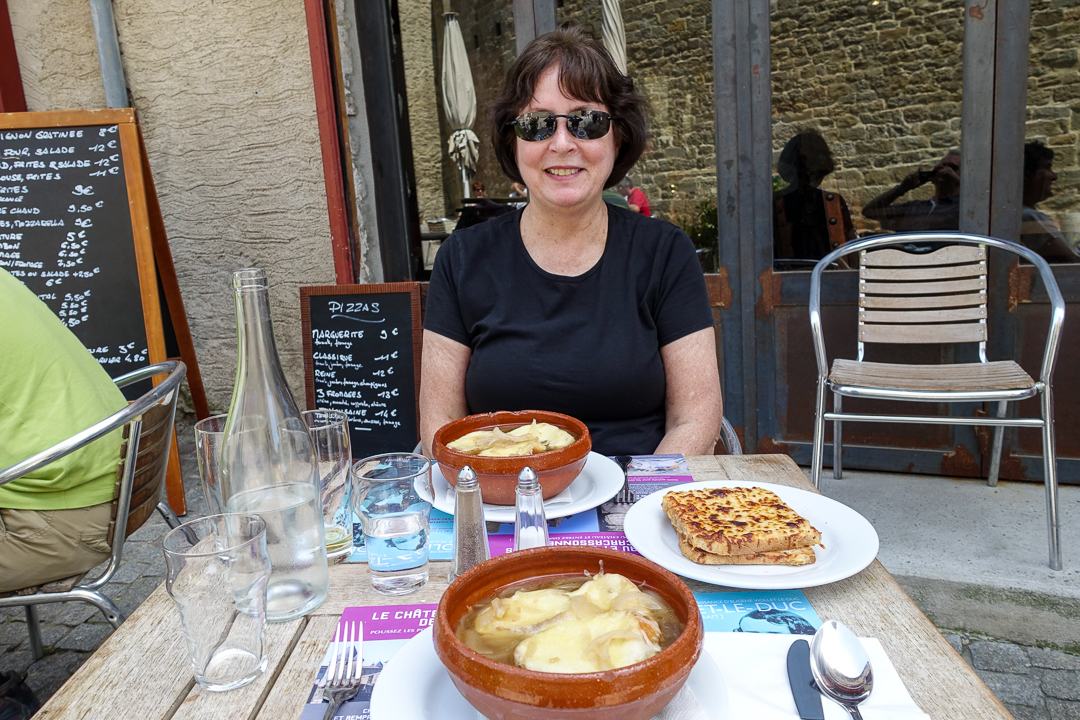
Soupe à l’oignon & croque monsieur
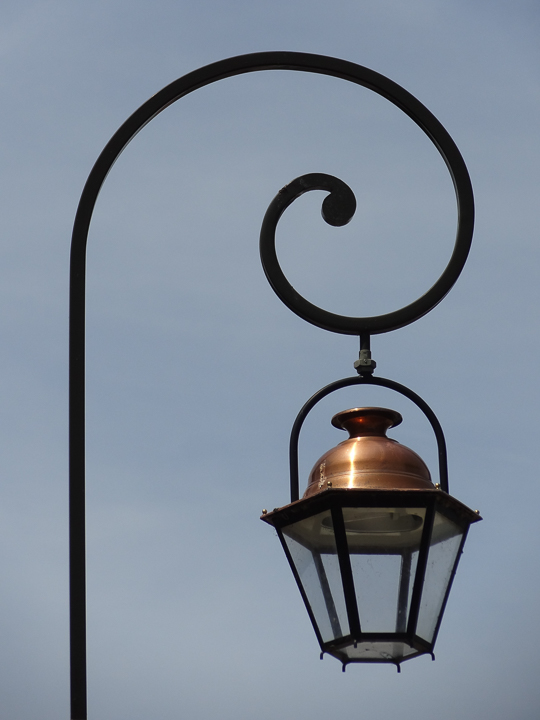
Elegant brass lanterns line the streets of Carcassonne. Time to head out to Provence.
Jusqu’à demain
P&J
6 Comments
Wish we were there! It is raining here and the garden is singing.
Welcome home, friends. Can’t wait to hear about your trip to the Deep Sorth. Wish you and Harry were here, too. Enjoy the rain while it lasts. Miss you guys.
I cannot believe all the info you share with us along with the photos, lovely. That croque monsieur looked delicious. Yes it did rain cats and dogs, thunder and lightning, snow in the mountains, they had to move the Amgen bike trials from there to Santa Clarita.
Much needed water.
WoW, I cannot believe there is snow in May in SoCal. Thanks for the update.
Just read a book about the Cathars called The Perfect Heresy by Stephen O’Shea.
I love this area with the amazing fortresses and towers. Killing is my hobby! LOL
What do you mean you WATCHED the people dancing salsa? Why didn’t you two lovebirds get up and cha cha, rhumba, samba, salsa also? You’re getting OLD.
What a great trip, so far. Keep eating that wonderful food and enjoying your vacation.
You’ll never forget this journey.
Hugs,
Flea
After driving for hours, we were pooped. Yes, we are young at heart, but we aren’t youngsters anymore. Gravity won in this case. I’ll have to read that novel.
XOXO
Jill