
Before leaving Aix-en-Provence, we wanted to tour the home of Paul Cezanne, a pioneer of modern art, and his source of inspiration, Mt. Victoire; but it required signing up for a day long tour. Moreover, the weather was grey, so the view from his house would have been poor. Instead we decided to drive to see the Pont du Gard on the way to Avignon.
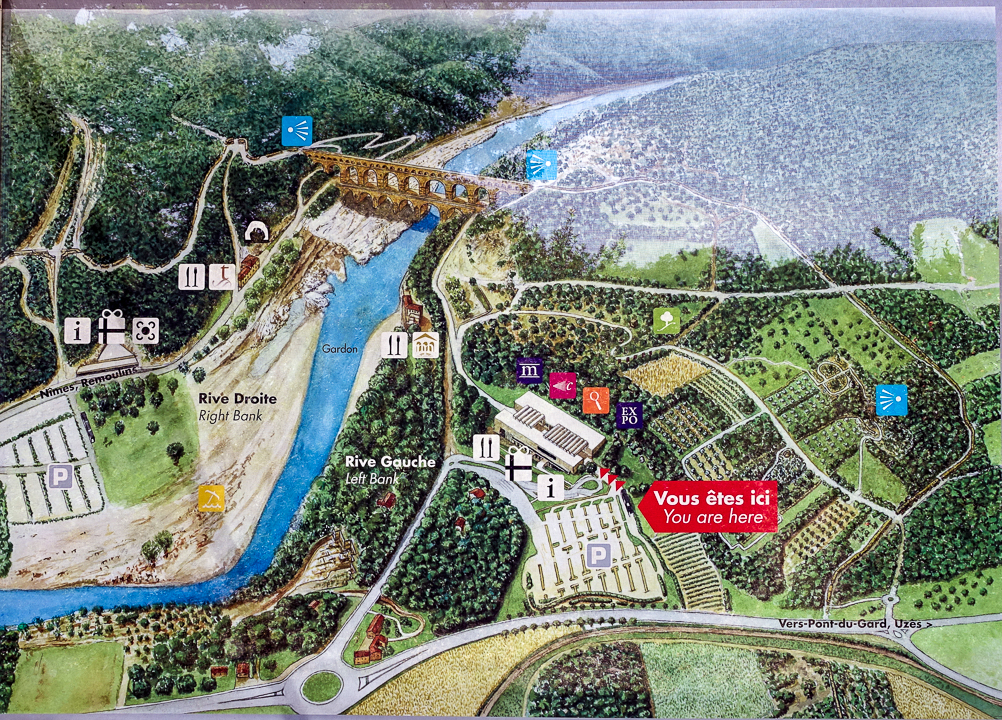
The Pont du Gard remains one of the best-preserved Roman aqueduct bridges and is designated a Unesco Heritage Site. The Aqueduct’s function was to carry water from a local spring to the large Roman colony in Nimes. The French have built a large recreation complex near the structure including a large museum, restaurant and campground. It is popular for both French and international tourists.
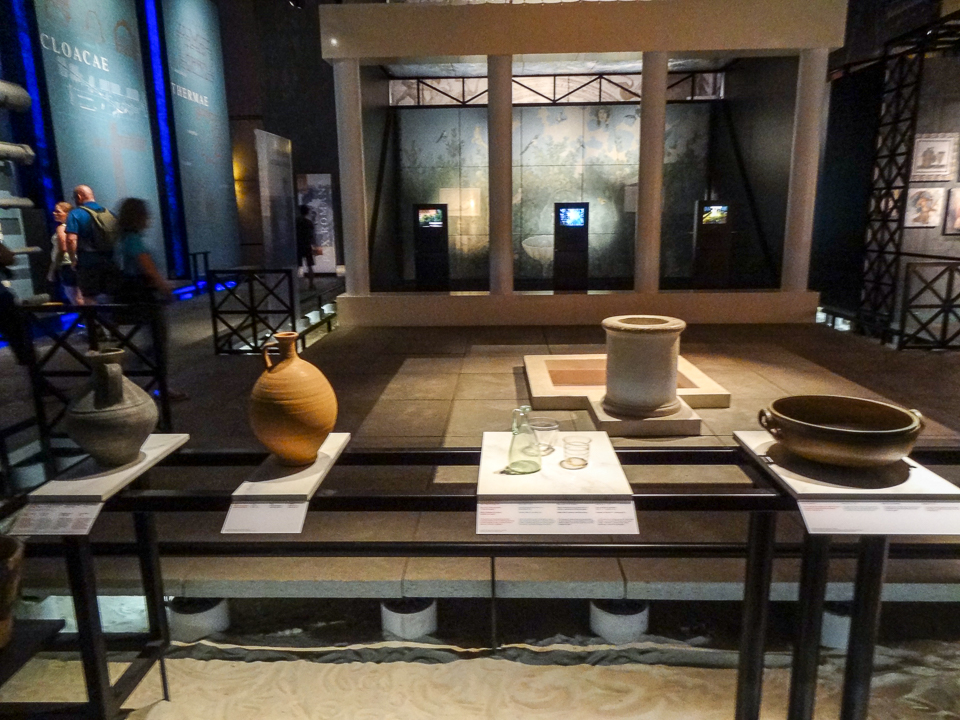
We visited the Pont du Gard Museum before we toured the bridge. The museum covers the story of the Aqueduct, its design, construction, and the role of water in Roman life.
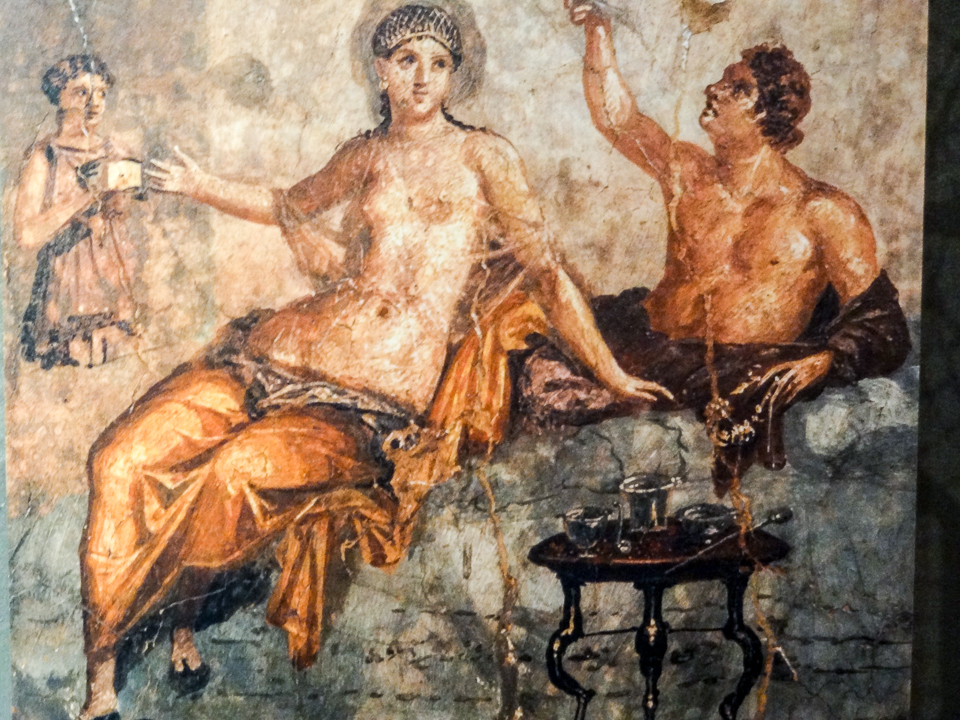
Water piped into homes provided a luxurious lifestyle for the Roman denizens in Nimes . . .
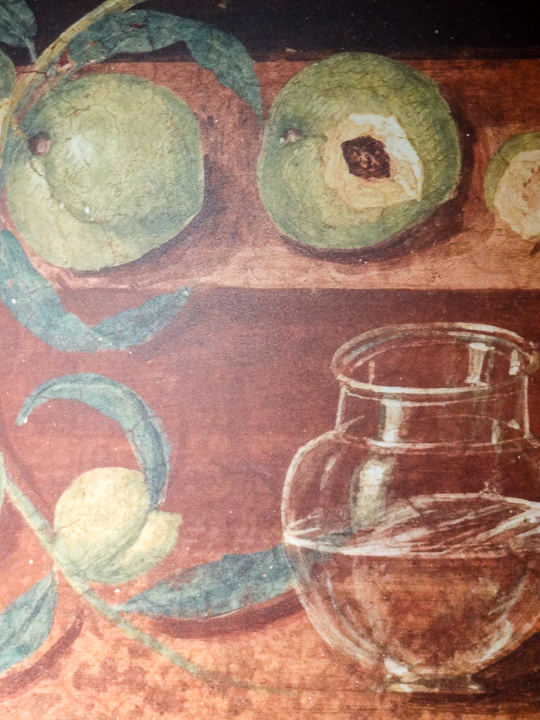
. . . and was a status symbol back in the first century.
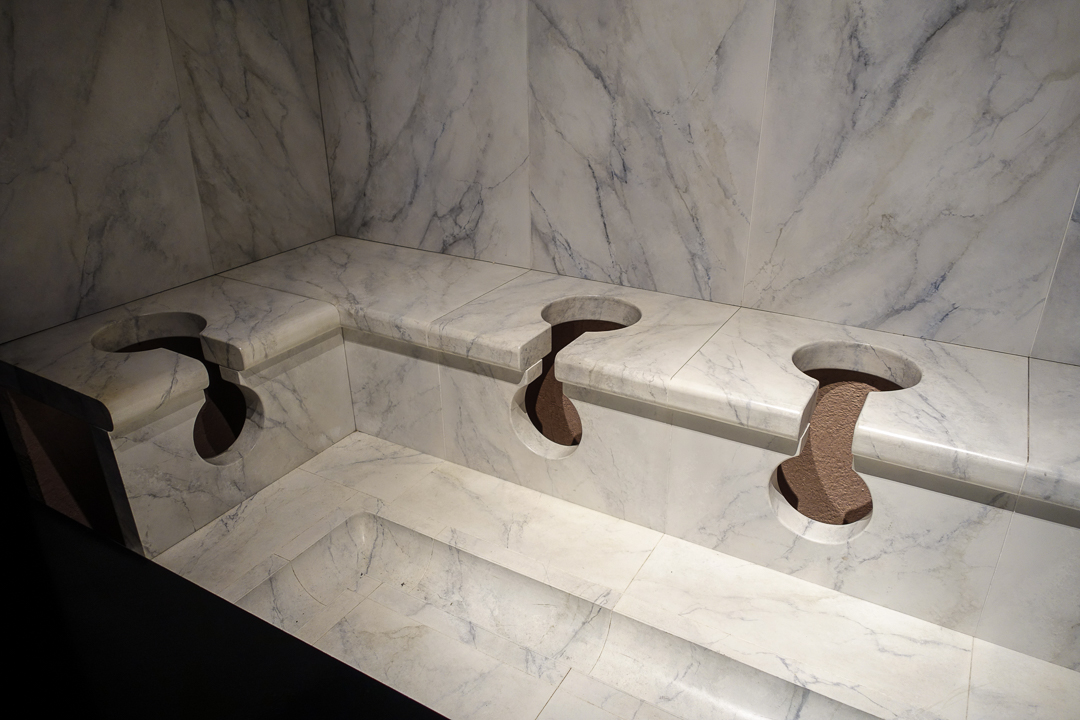
Transported water made possible all those beautiful fountains and Roman baths. Most important, it provided the opportunity to sit on marble toilet seats complete with the most favorable benefits of indoor plumbing.
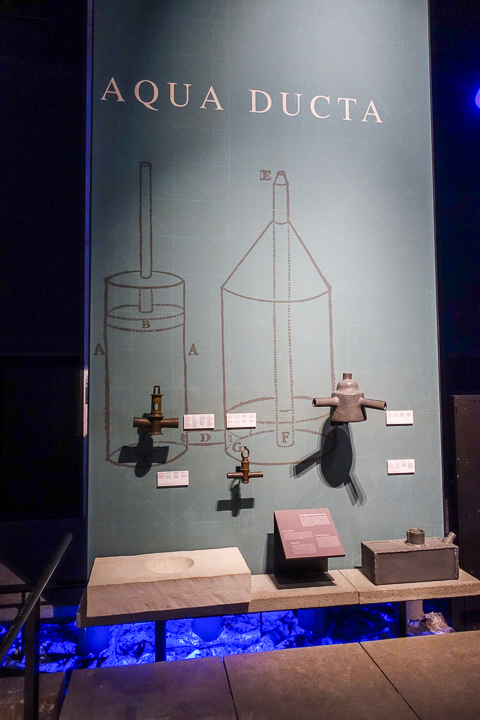
The museum featured many mechanical artifacts of early roman plumbing.
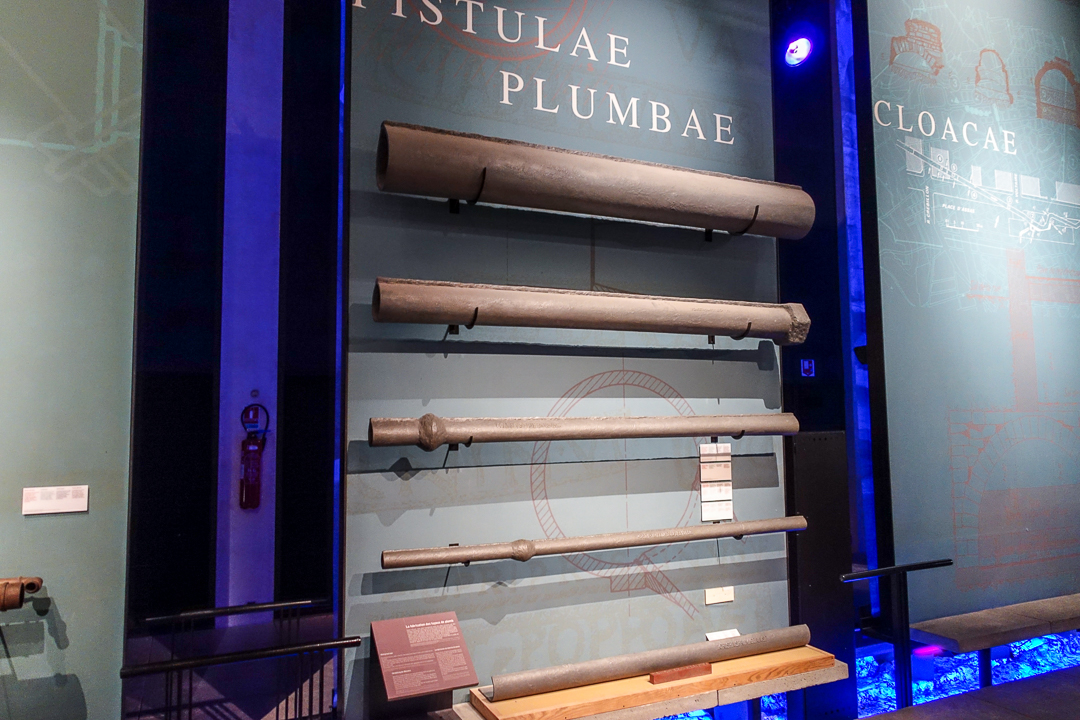
As with modern plumbing, pipes of various sizes were employed. These are made of lead. (OSHA hadn’t been instantiated yet.)
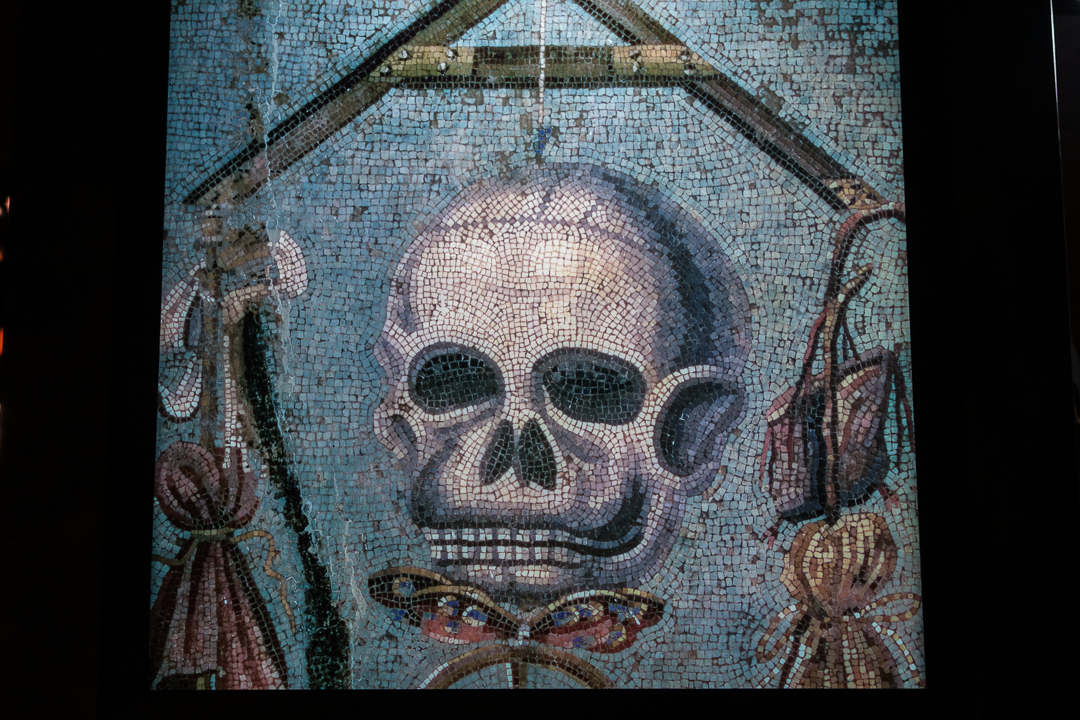
The extensive exhibit included many relics from the Roman Era, such as these mosaic tiles. Keith Richards must have been the model.
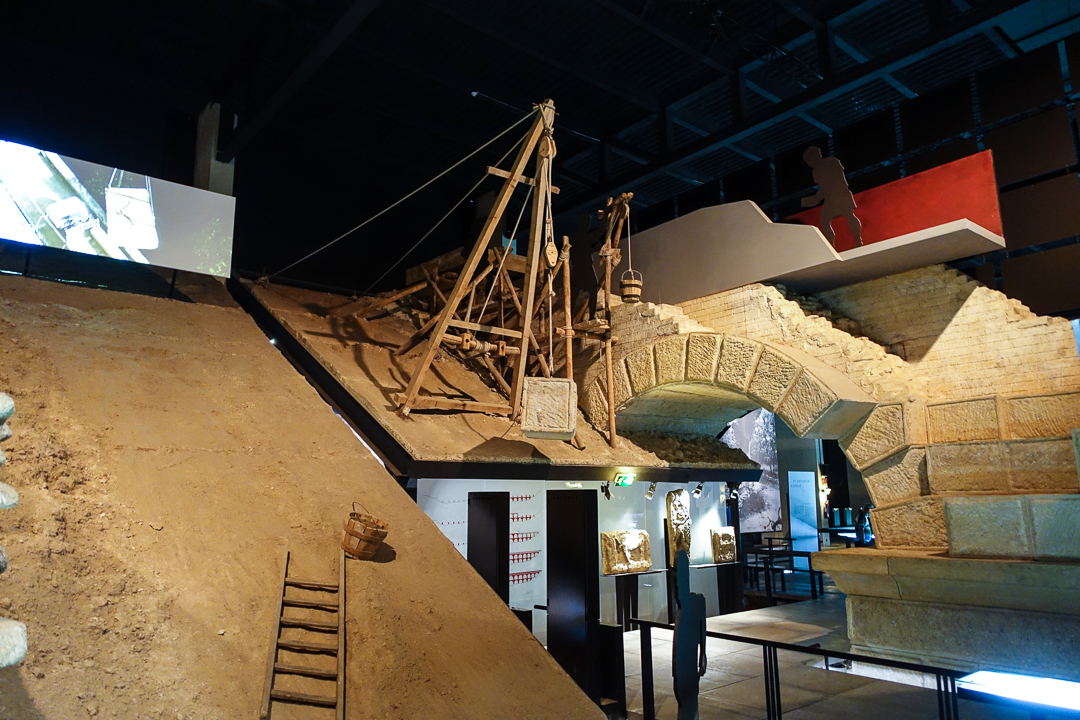
There were several displays depicting how the bridge was constructed along with detailed video simulations.
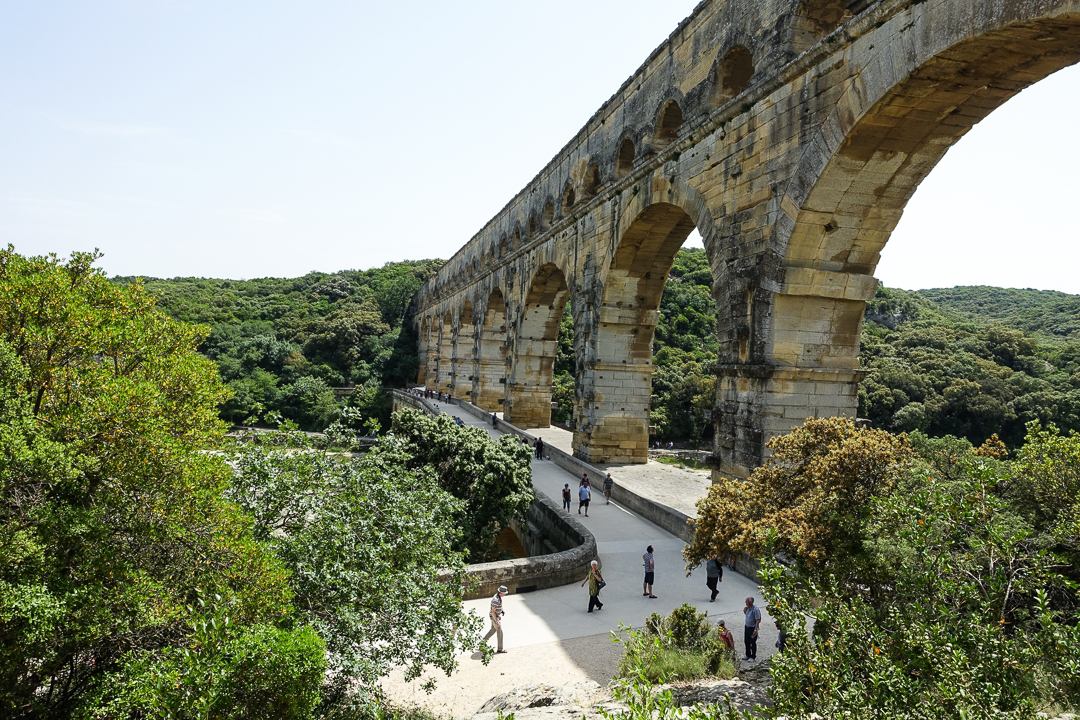
Three A380 jumbo jets long (899 ft.) and 161 feet above the water, the Pont du Gard is an amazing engineering feat. Although it fell into disrepair around the 4th Century, it has stood the test of time.
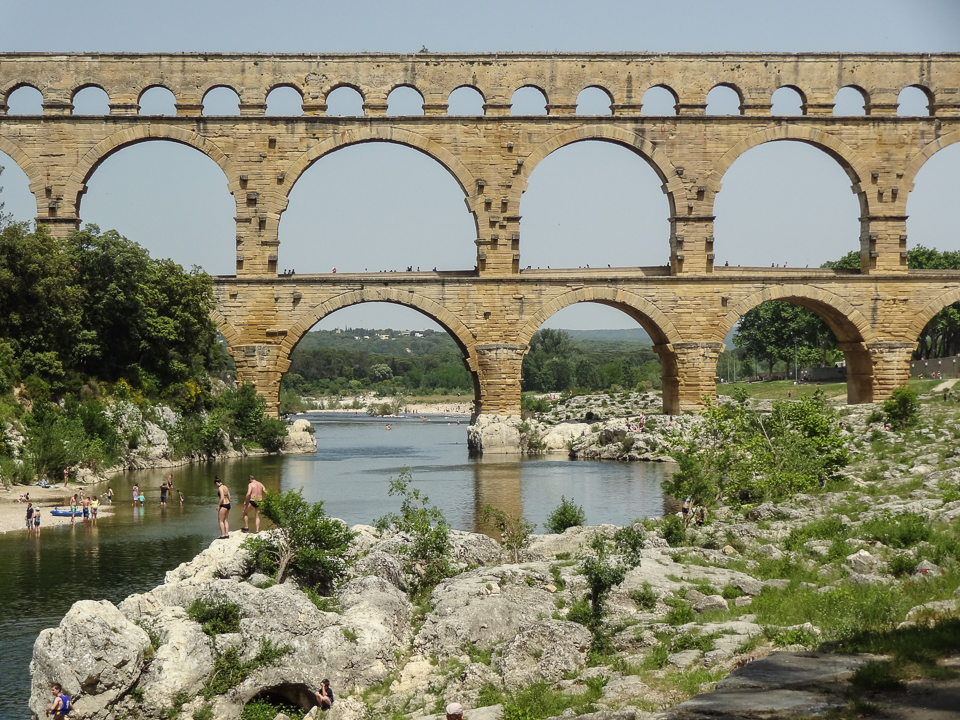
The three levels of the limestone arches are recessed.
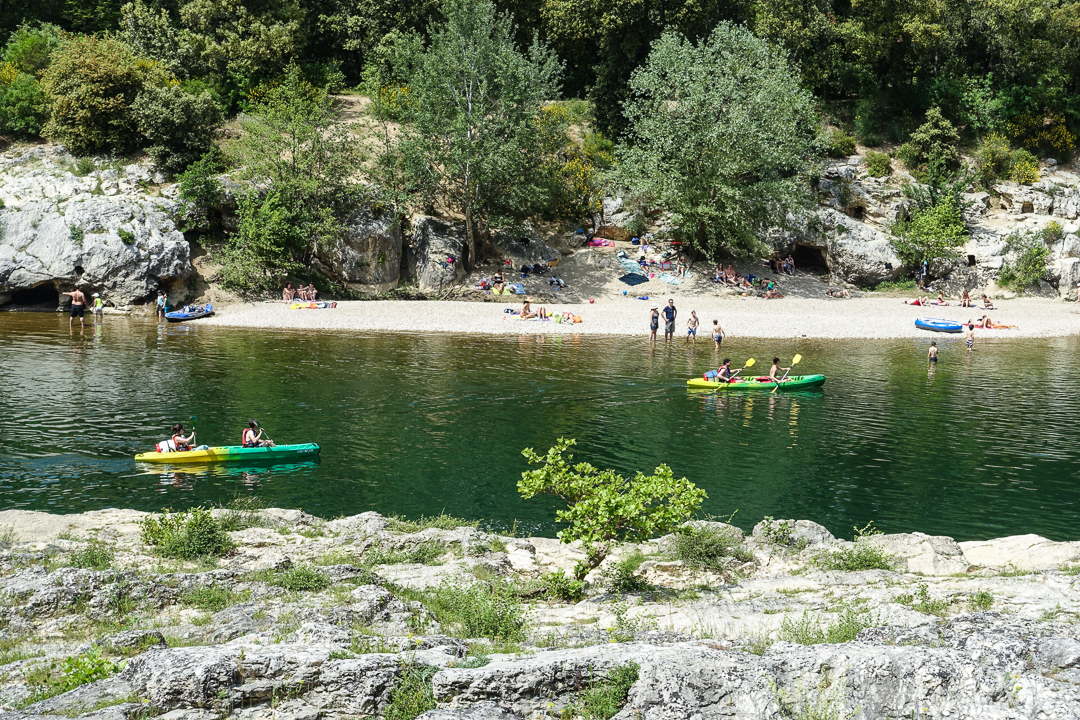
Below the bridge, people enjoy a recreational area, where they can swim, kayak, picnic . . .
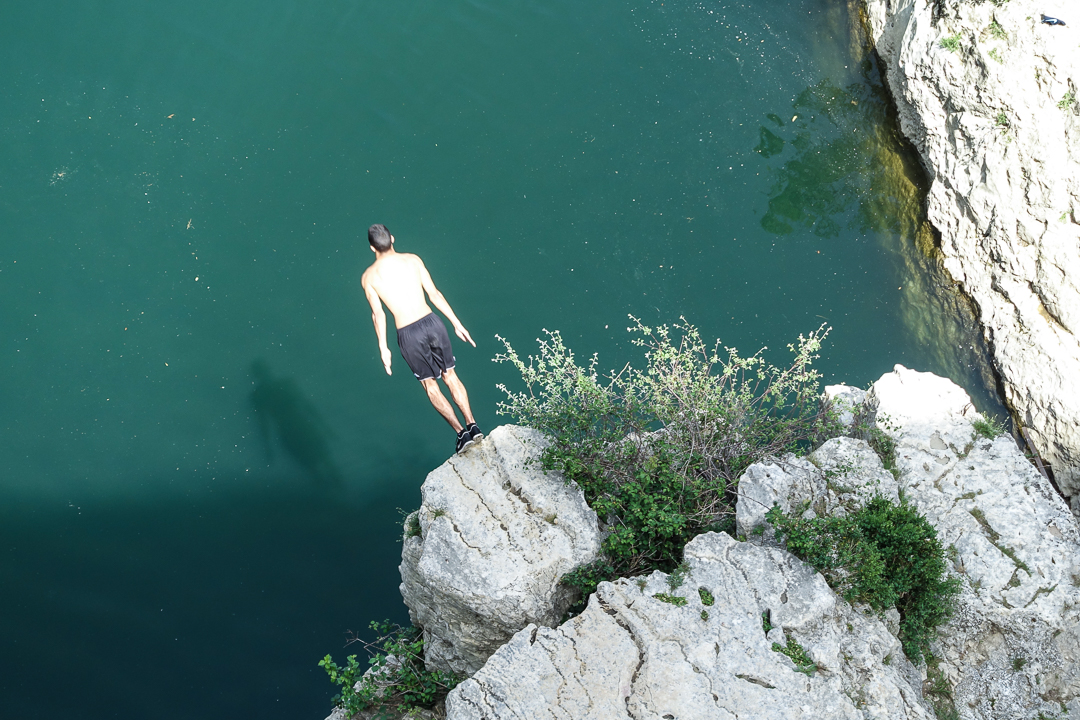
. . . and dive.
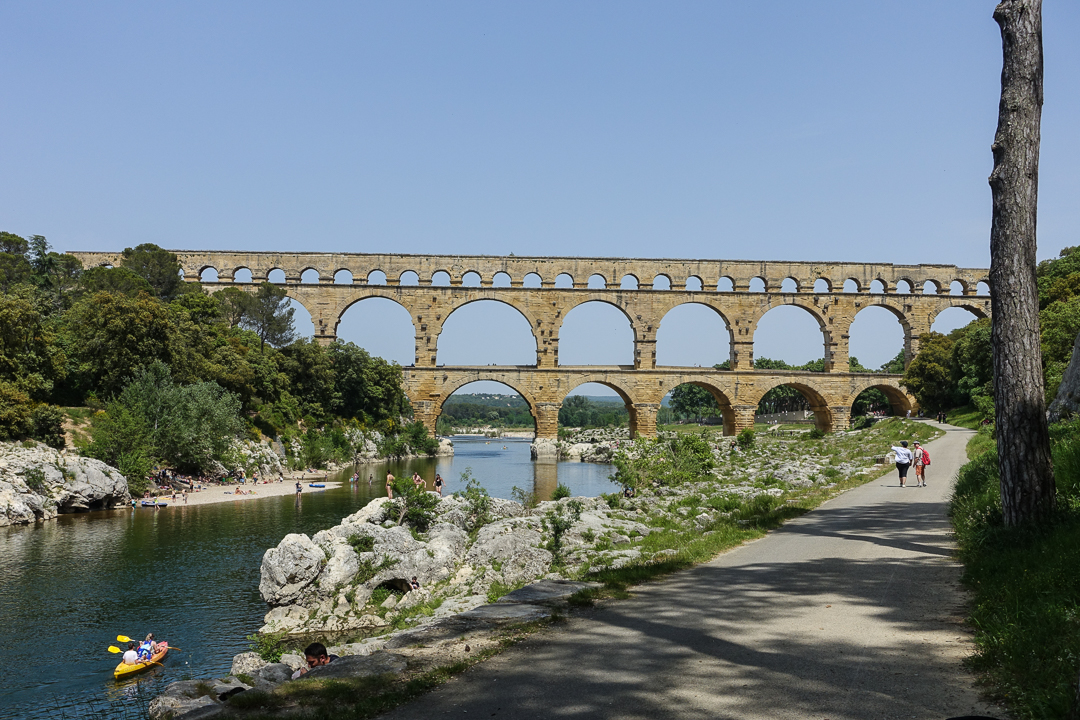
An awesome place to take pictures
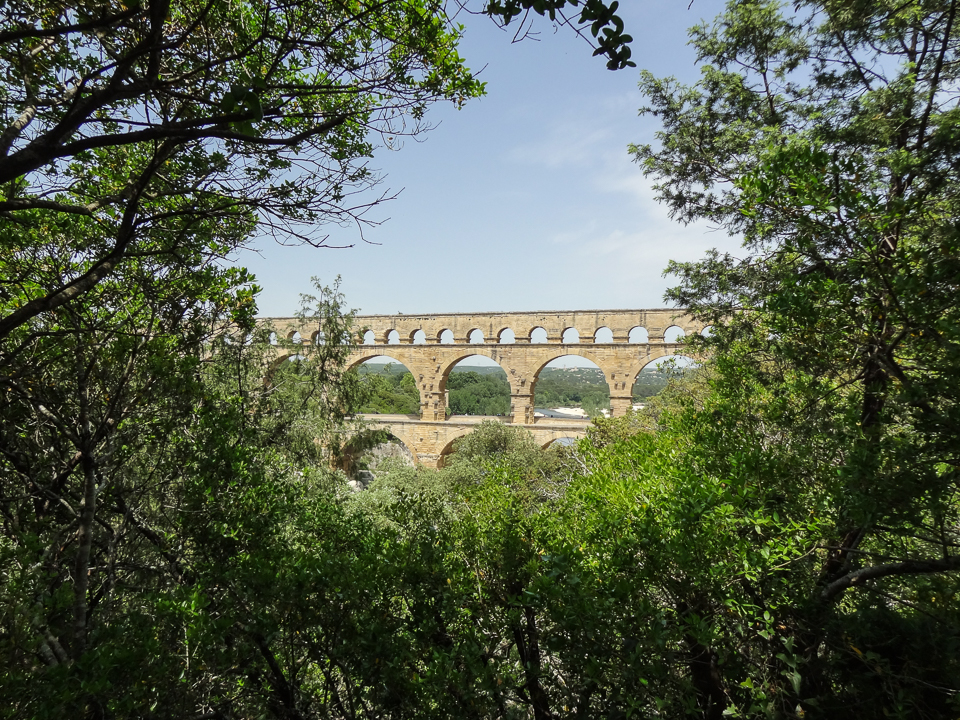
An inspirational point, painted by many French painters and shot by professional & amateur photographers
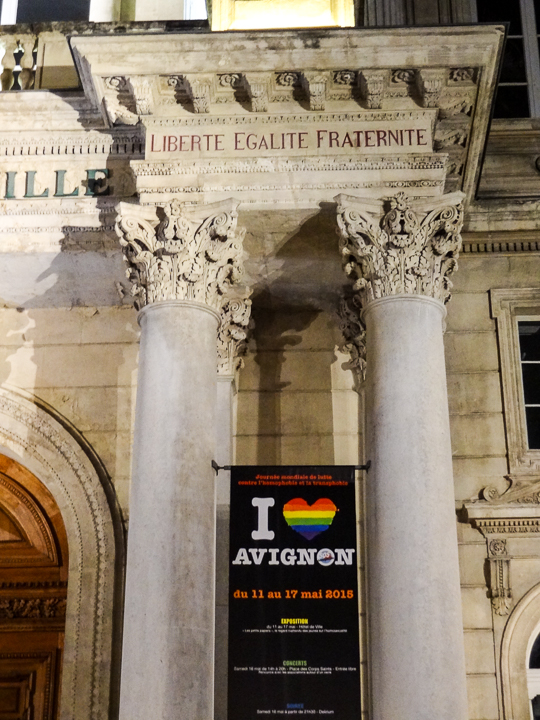
Later in the afternoon, we drove to Avignon, our last stop in the Provence Department. The rallying cry of the French Revolution greets visitors to the plaza square: “Liberté, Égalité, Fraternité.”
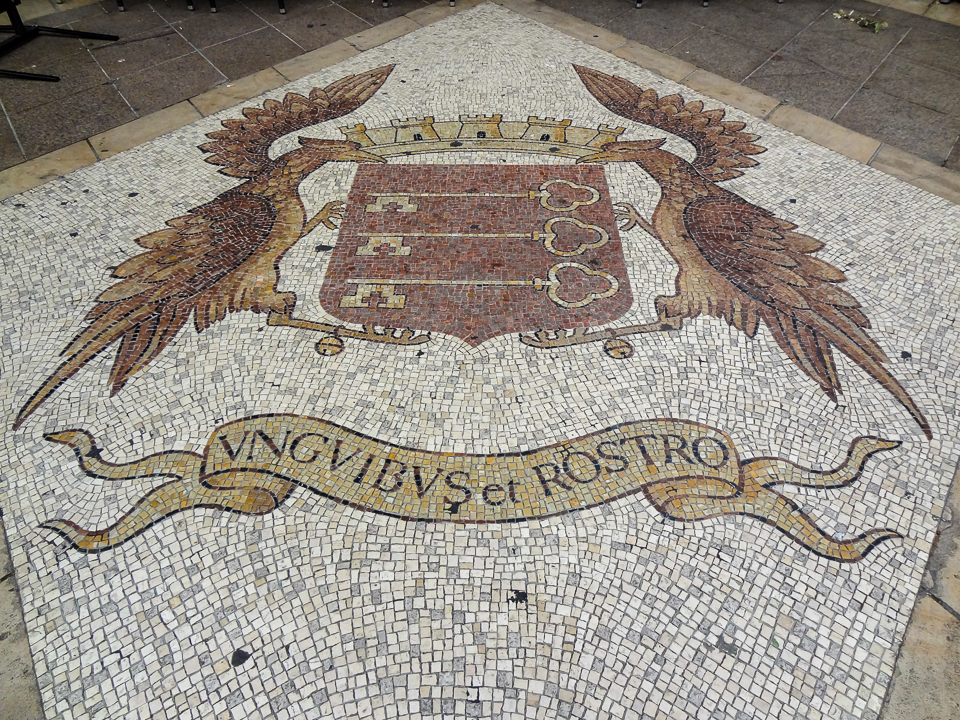
More remnants of the Roman Era are visible throughout Avignon.
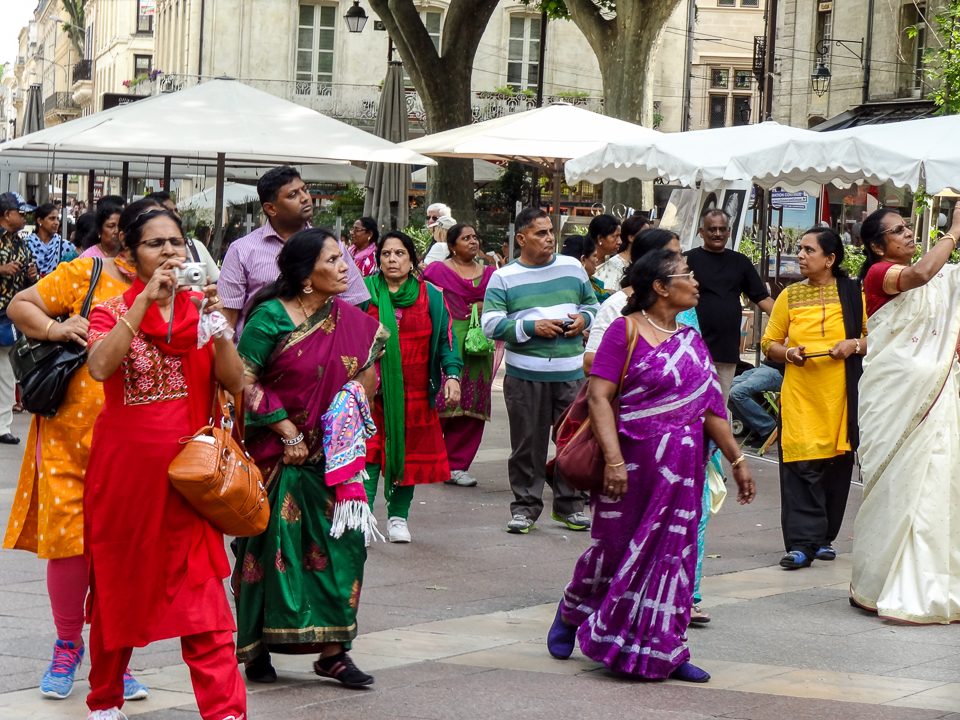
What a tourist haven!
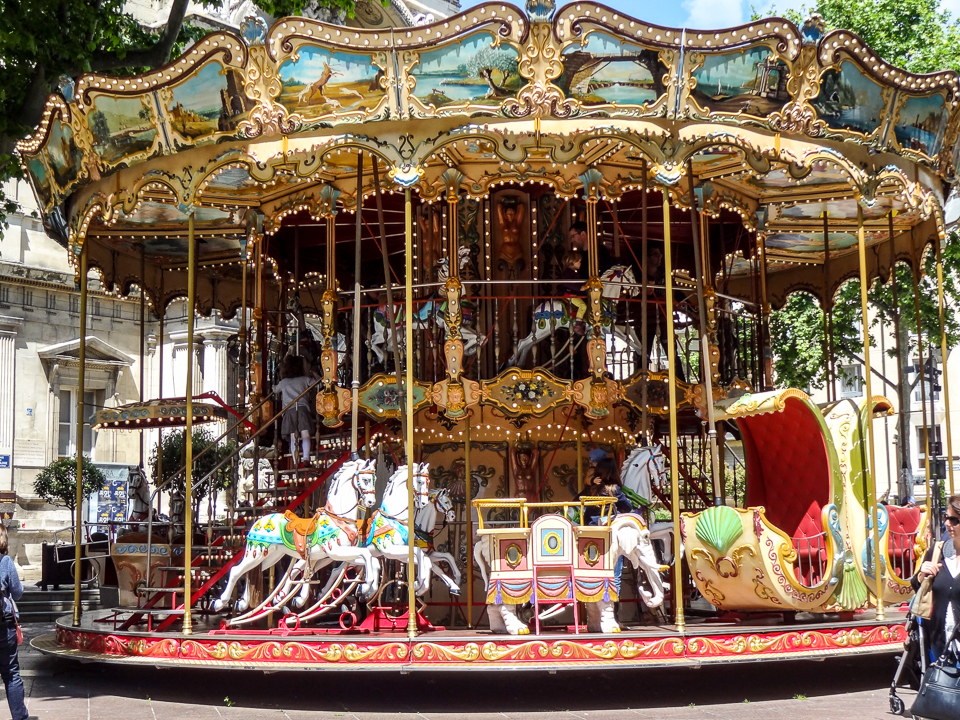
Carrousels in town centers seem to be popular in Southern France.
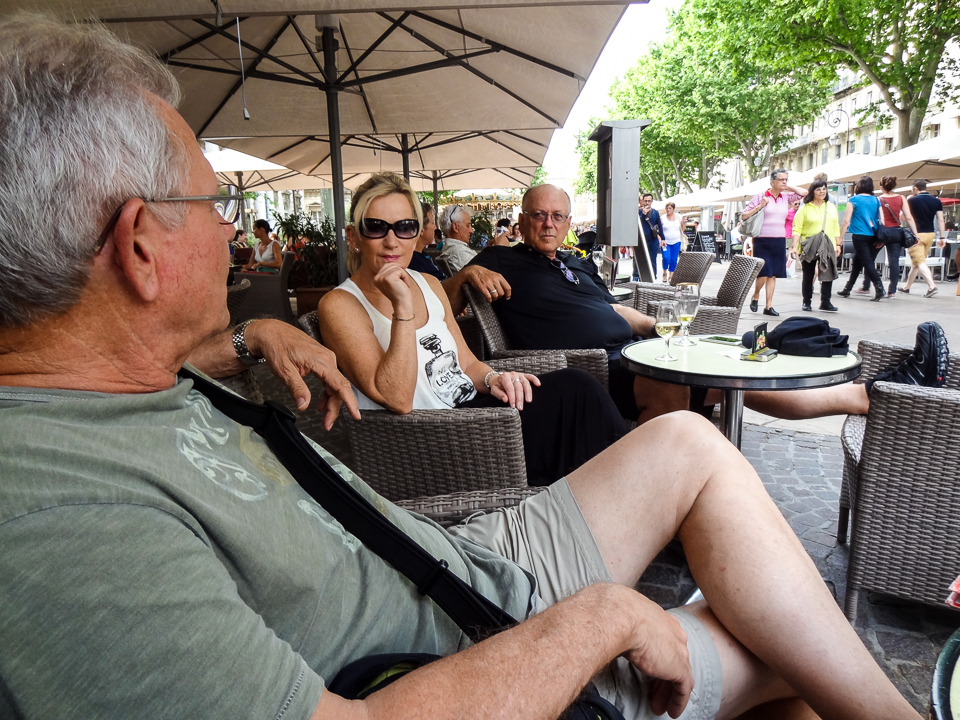
In a plaza café we met and chatted with a couple from Vancouver, BC, about our different journeys. We were surprised when they commented that the one place in the world where they most want to live is Manhattan Beach. We then informed them where we live. What a coincidence.
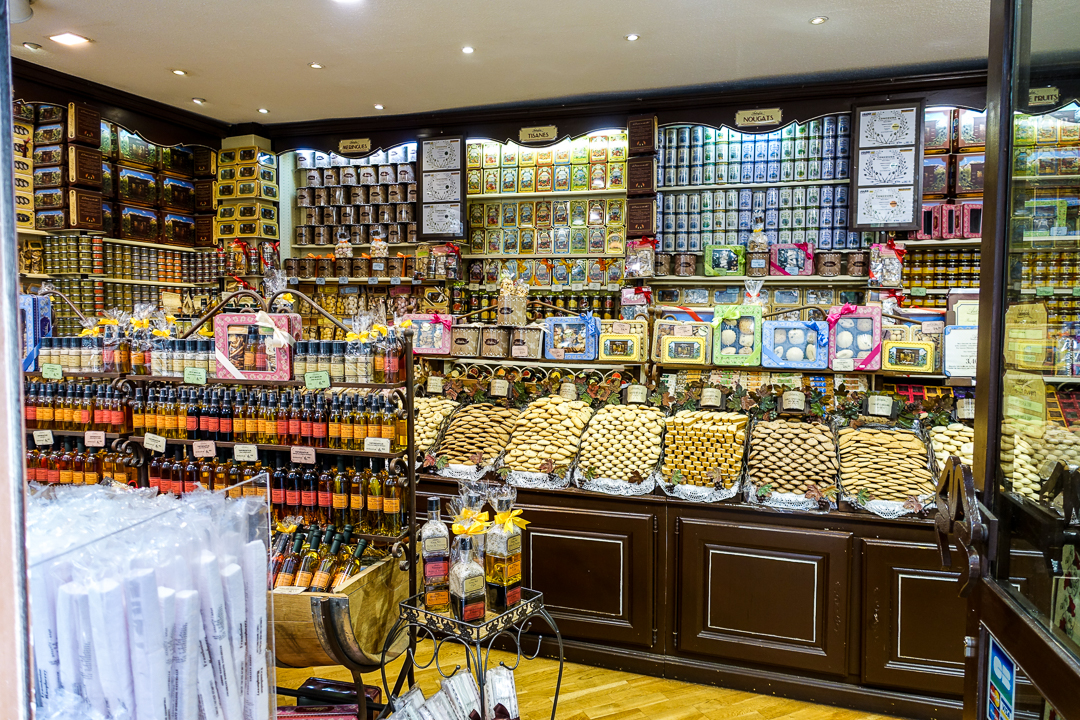
Wow, look at all those madeleine cookies.
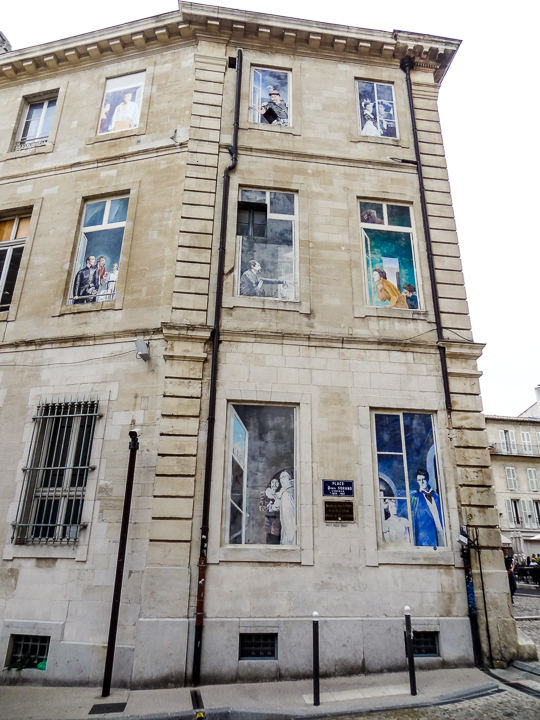
The way to make an old building look hip.
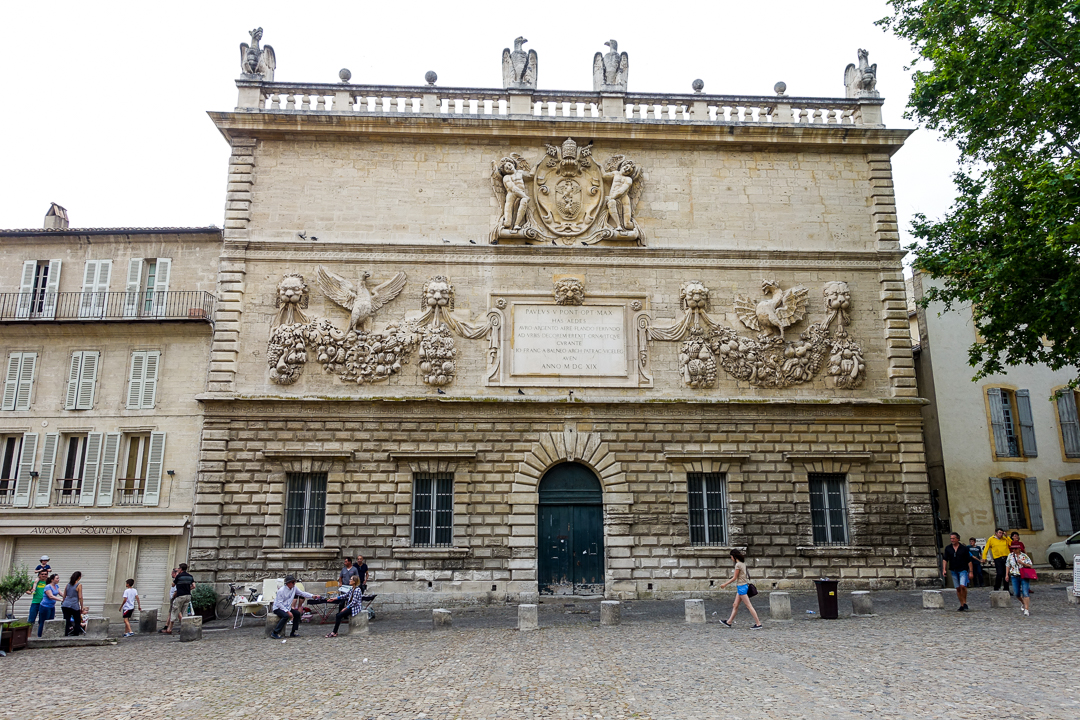
An example of the ornate medieval architecture on Palace Square
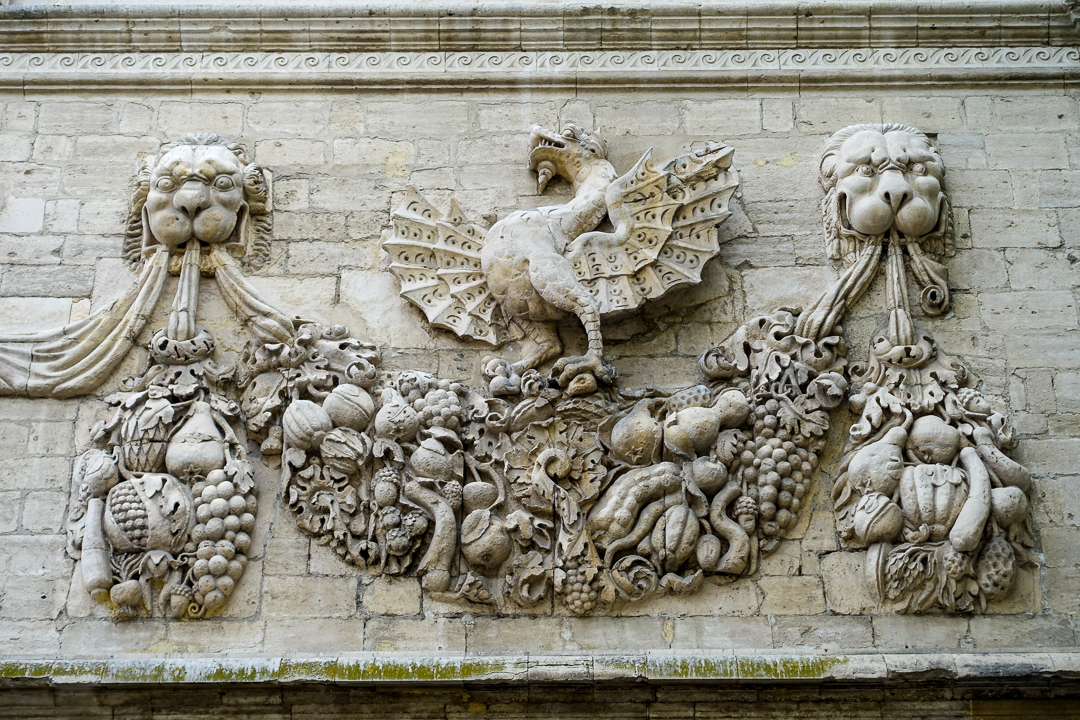
Close up we see symbols of power, glory & abundance.
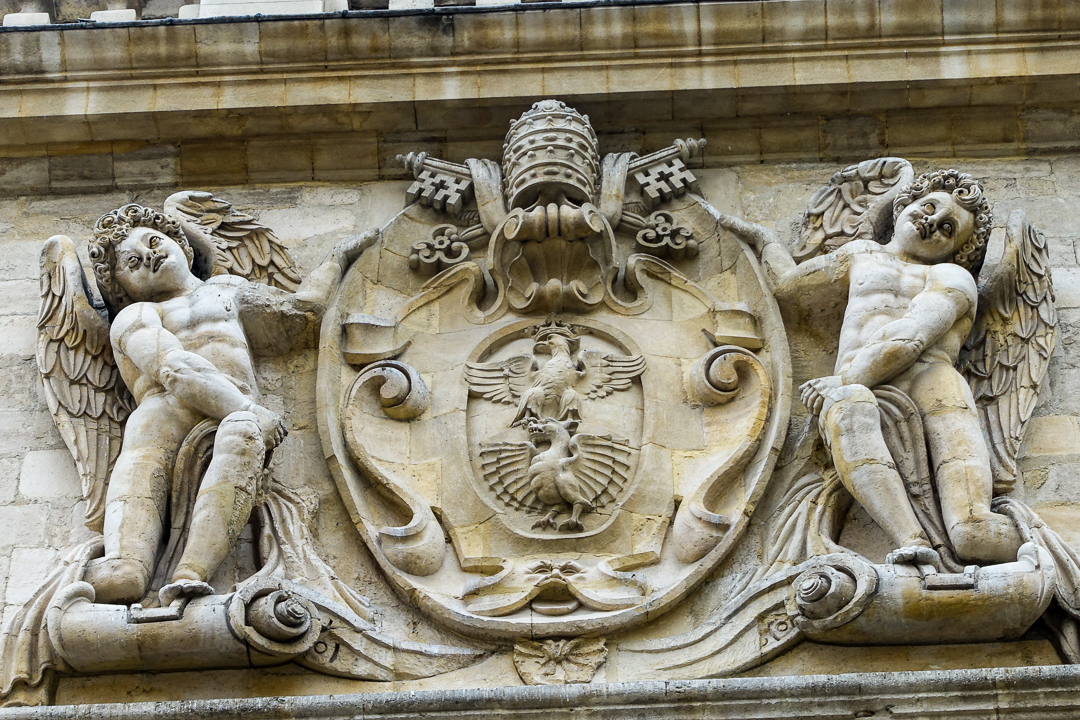
Sporting “God is on our side” symbols, this civic building, of course, faces the Palais de Papes (the Pope’s Palace).
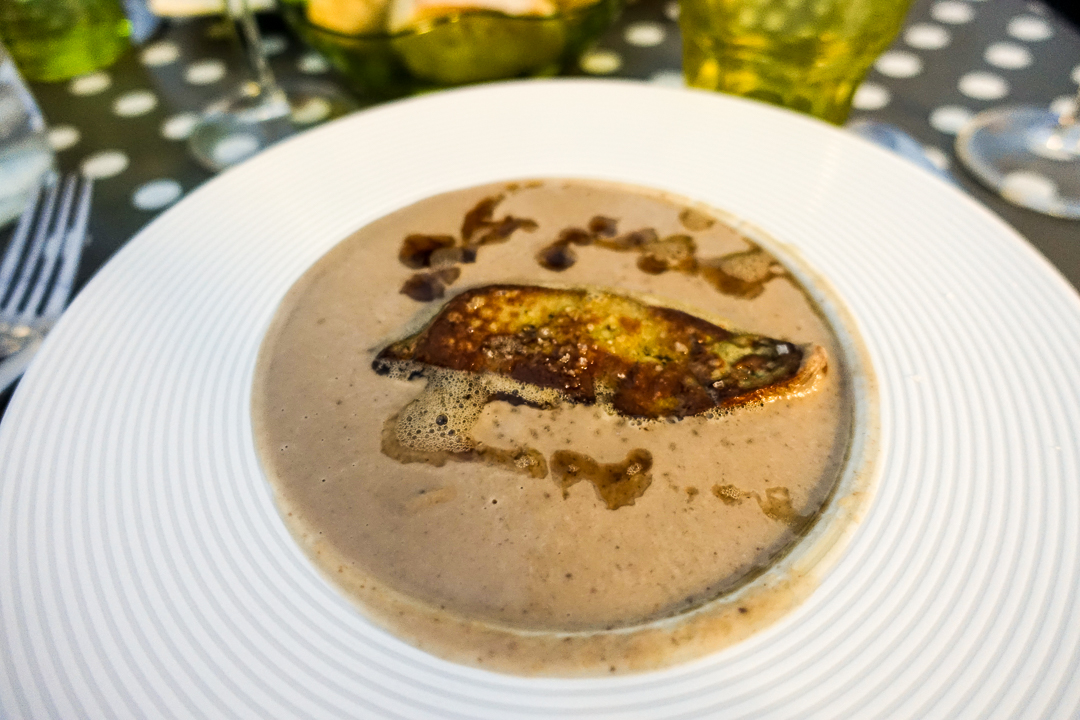
TIME TO EAT AGAIN? Pete’s mushroom soup with pâté at Le Petit Gourmand, another Tripadvisor fave.
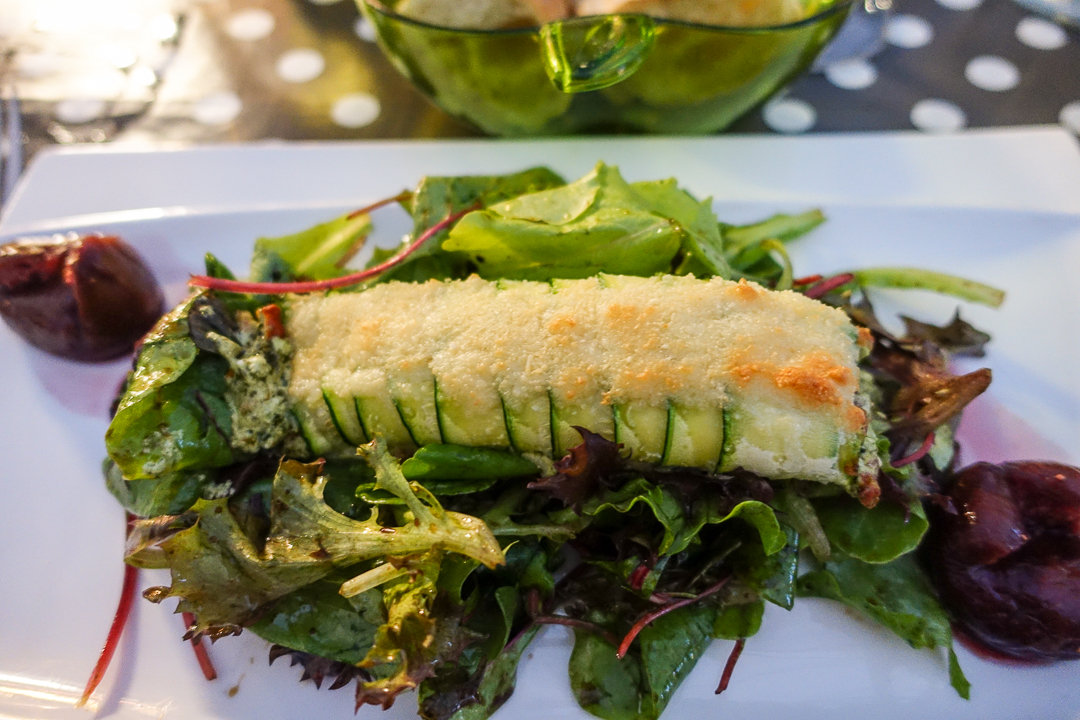
Jill’s zucchini and goat cheese cannelloni on a fig salad. She loves her fruits and veggies.
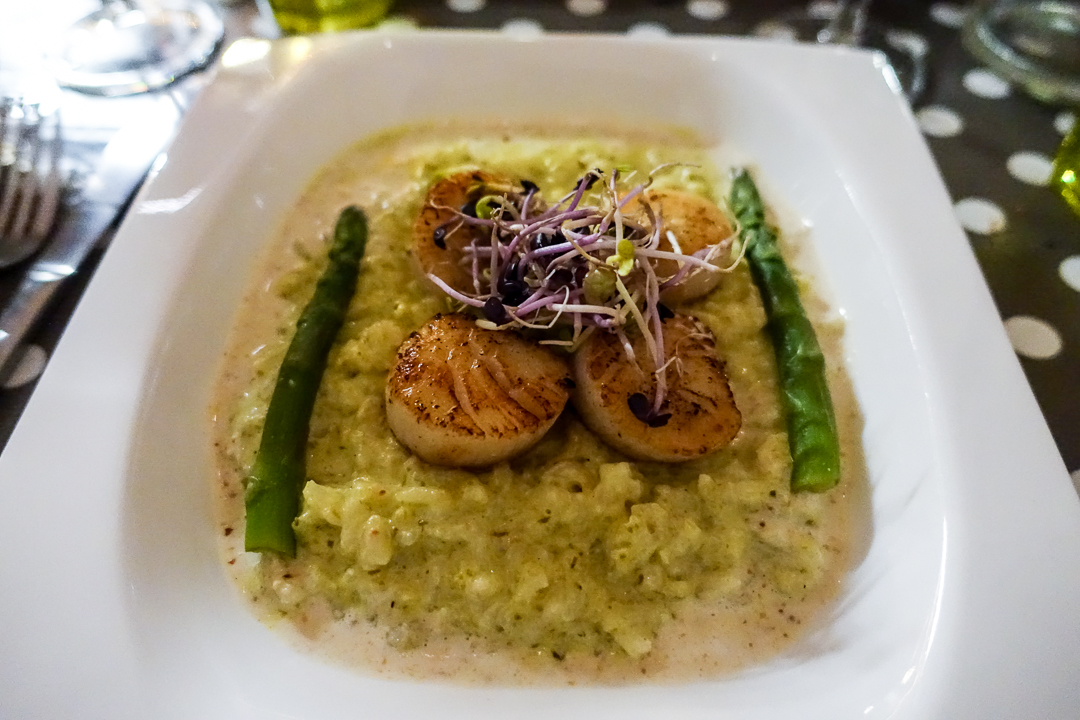
Scallops on asparagus risotto.
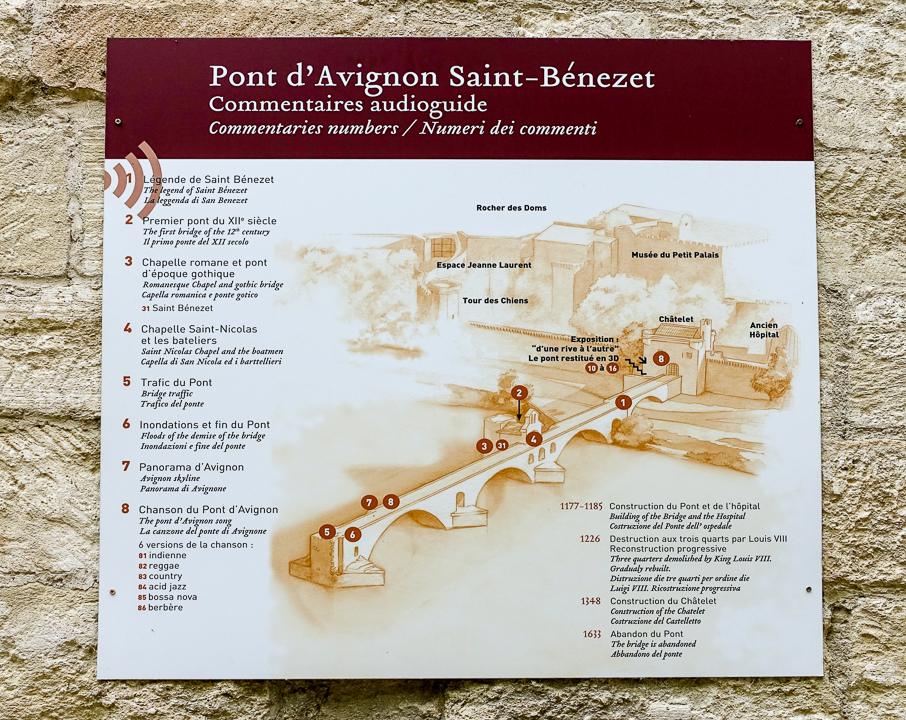
Avignon is known for its famous Pont Saint-Benezet and the song about the bridge [“Sur le Pont D’Avignon”], which Jill remembers singing ad infinitum in her middle school French class. She still remembers the lyrics! If you enlarge this picture, you’ll see that we got to listen to the song in all different styles on our audio guides. Both of us liked the ACID JAZZ version the best.
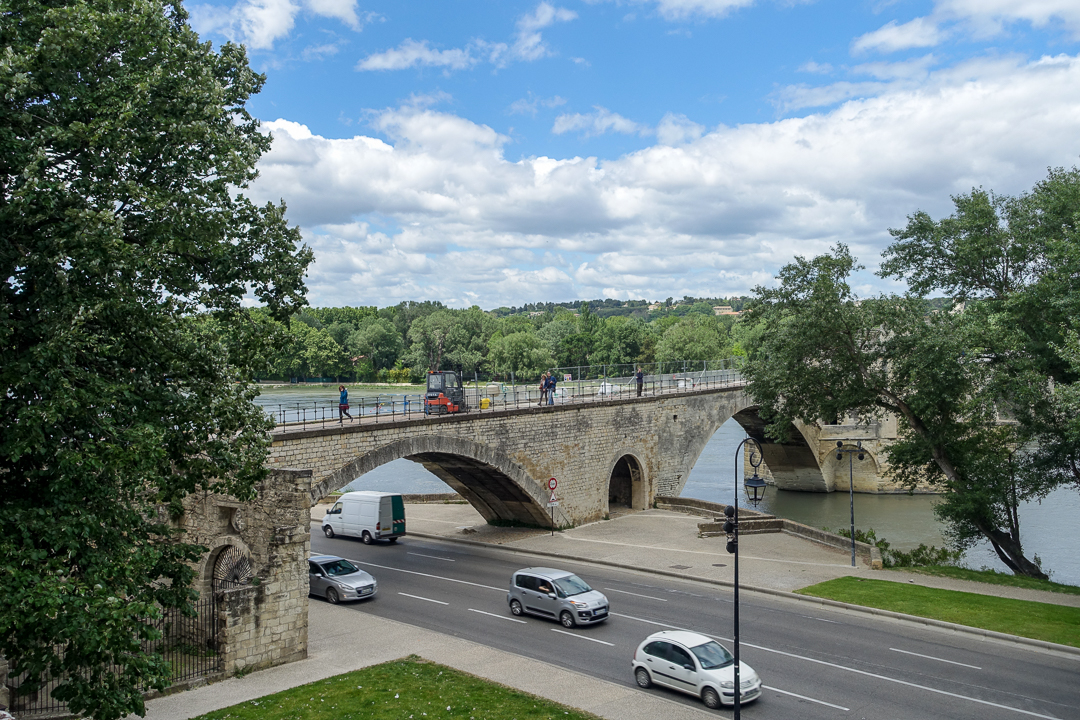
The medieval bridge spans the Rhone River and was built between 1177 and 1185. The early bridge was destroyed during the Crusades, but was rebuilt with 22 stone arches.
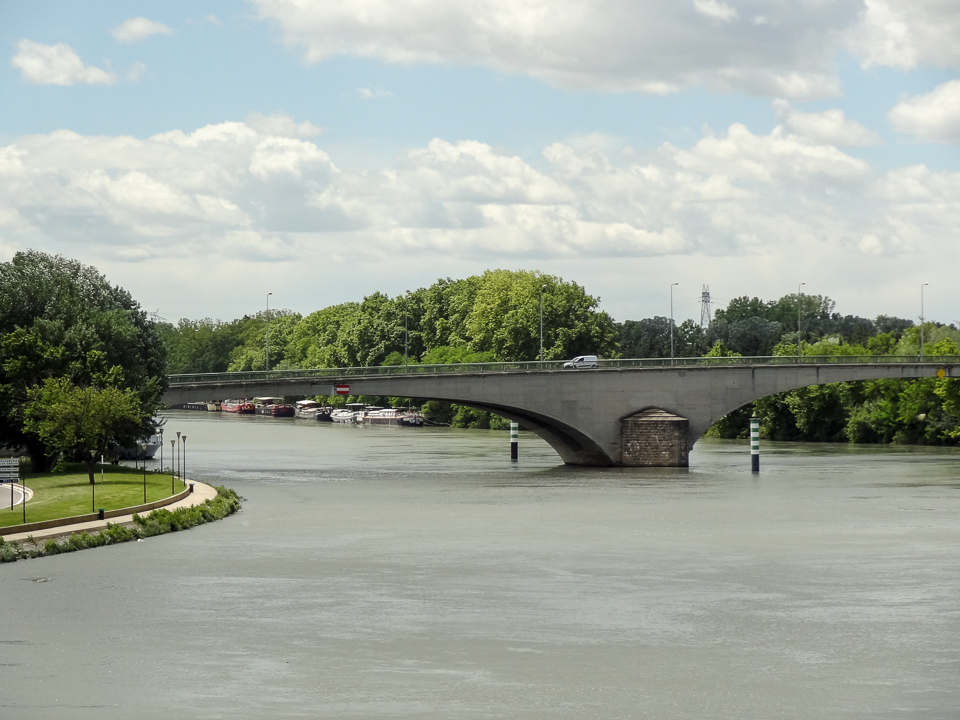
Because the Rhone River floods so often, parts of the bridge kept collapsing. Eventually the bridge was abandoned, but today visitors can walk on the remains.
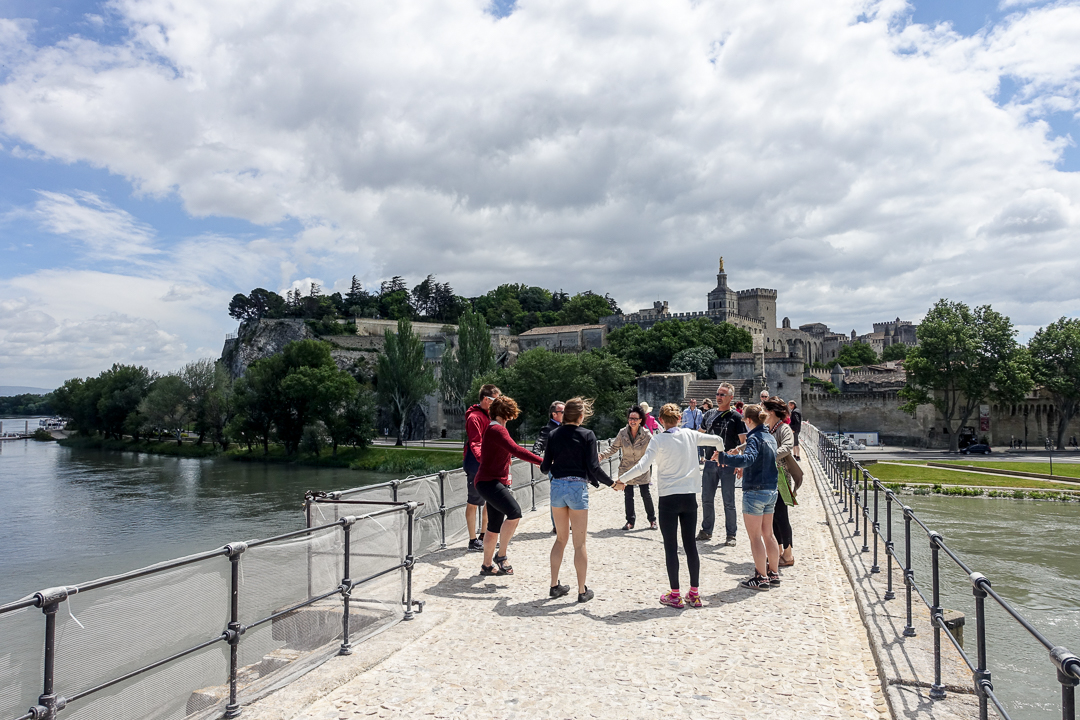
Here are some French folk singing “Sur le Pont d’Avignon”:
- On the bridge of Avignon
- We all dance there, we all dance there
- On the bridge of Avignon
- We all dance there in a ring.
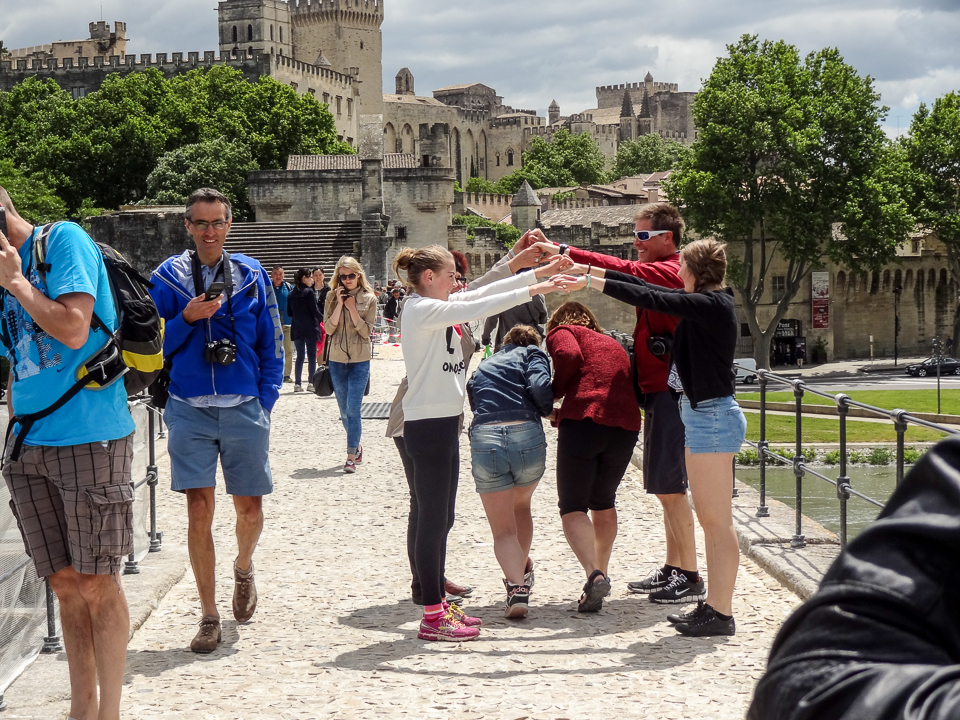
Here they are dancing to it:
- Sur le Pont d’Avignon
- L’on y danse, L’on y danse
- Sur le Pont d’Avignon
- L’on y danse tous en rond
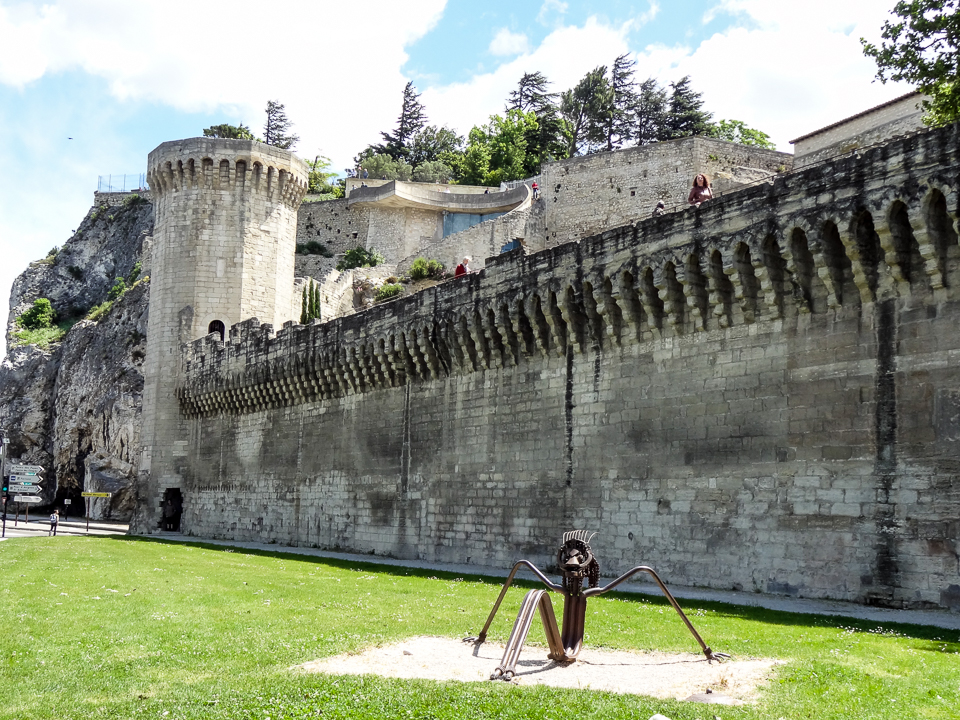
Avignon–where new art meets the old
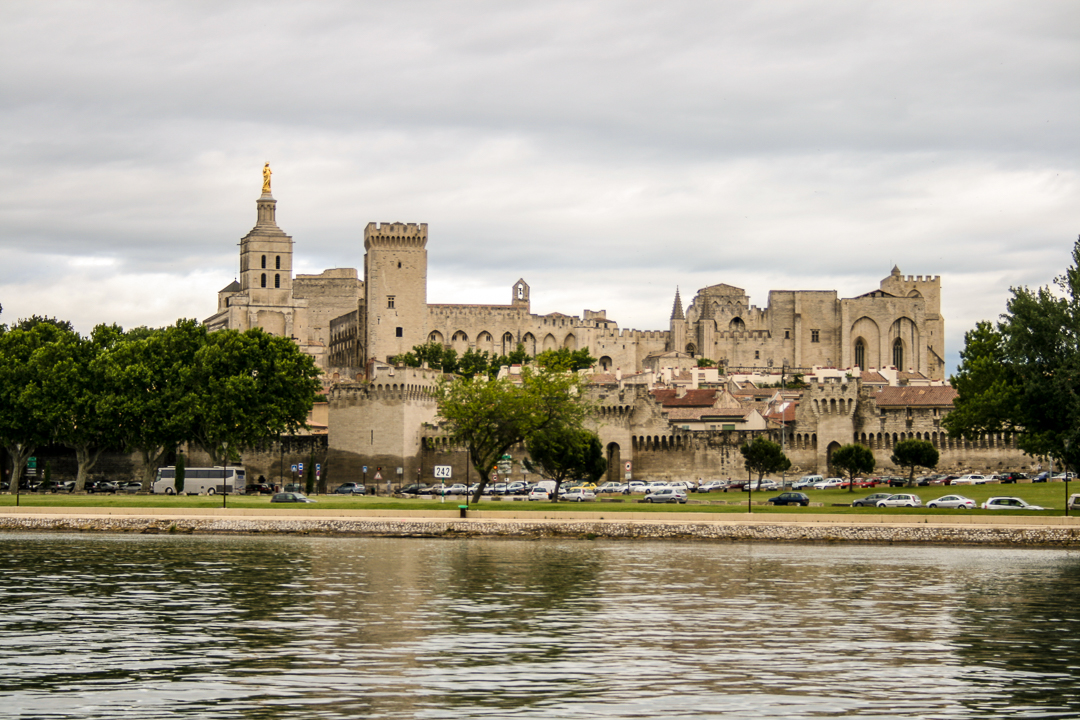
The Palais des Papes is a historical palace in Avignon, southern France, one of the largest and most important medieval Gothic buildings in Europe. One time fortress and palace, the papal residence was the seat of Western Christianity during the 14th century.
Due to its immense size, the Palais was also the place where the general organisation of the Church began to change. It facilitated the centralisation of services and the adaption of operations in order to suit the needs of the papacy, creating a truly central administration for the Church. The strength of the Curia (Church administration), 200 at the end of the 13th century, surpassed 300 at the beginning of the 14th century and reached 500 people in 1316. To this was added over 1,000 lay officials working within the Palais.
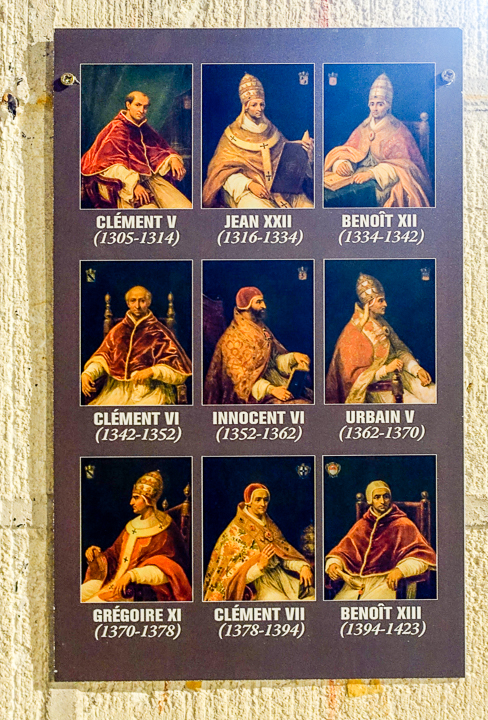
Six papal conclaves were held in the Palais, leading to the elections of Benedict XII in 1334, Clement VI in 1342, Innocent VI in 1352, Urban V in 1362, Gregory XI in 1370 and Antipope Benedict XIII in 1394.
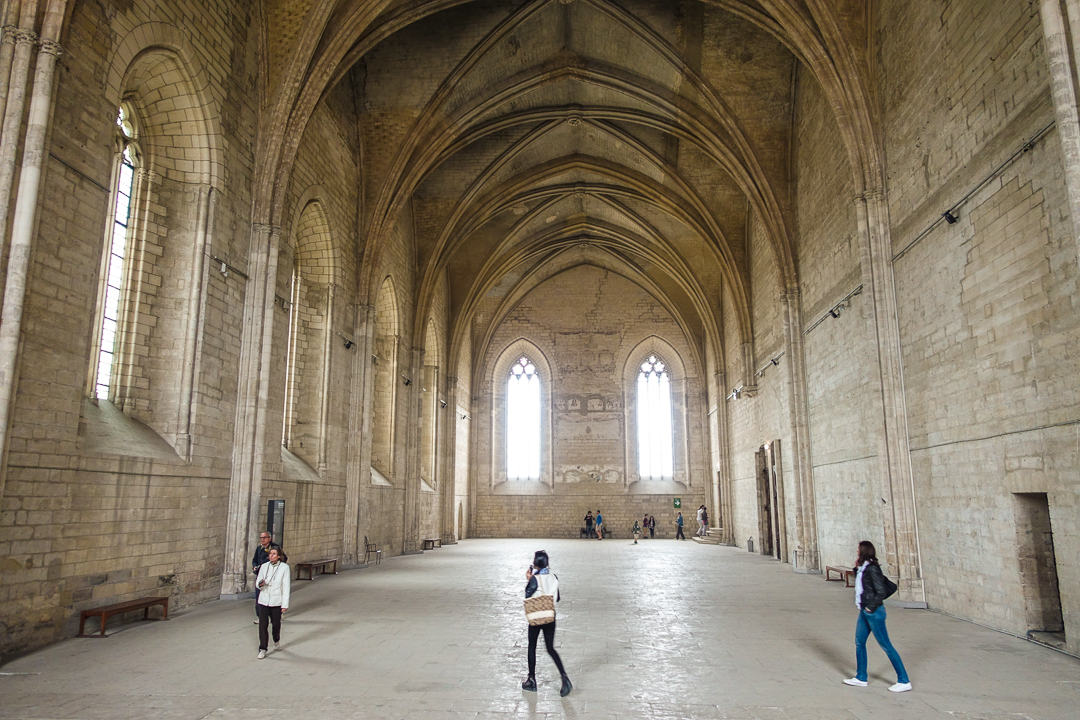
Composers, singers and musicians were drawn to the Great Chapel of the Palais. It was here that Clement VI appreciated the Mass of Notre-Dame de Guillaume de Machault, here that Philippe de Vitry at the pope’s invitation presented his Ars Nova and here that Johannes Ciconia came to study.
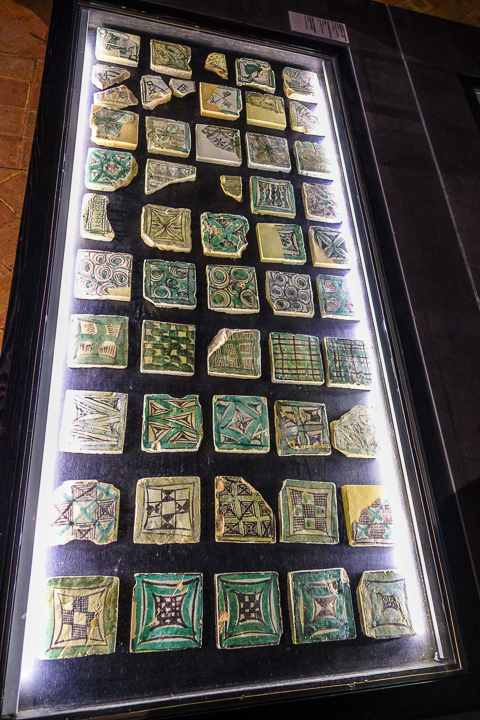
Displayed throughout the monument are samples from the original construction, such as these floor tiles.
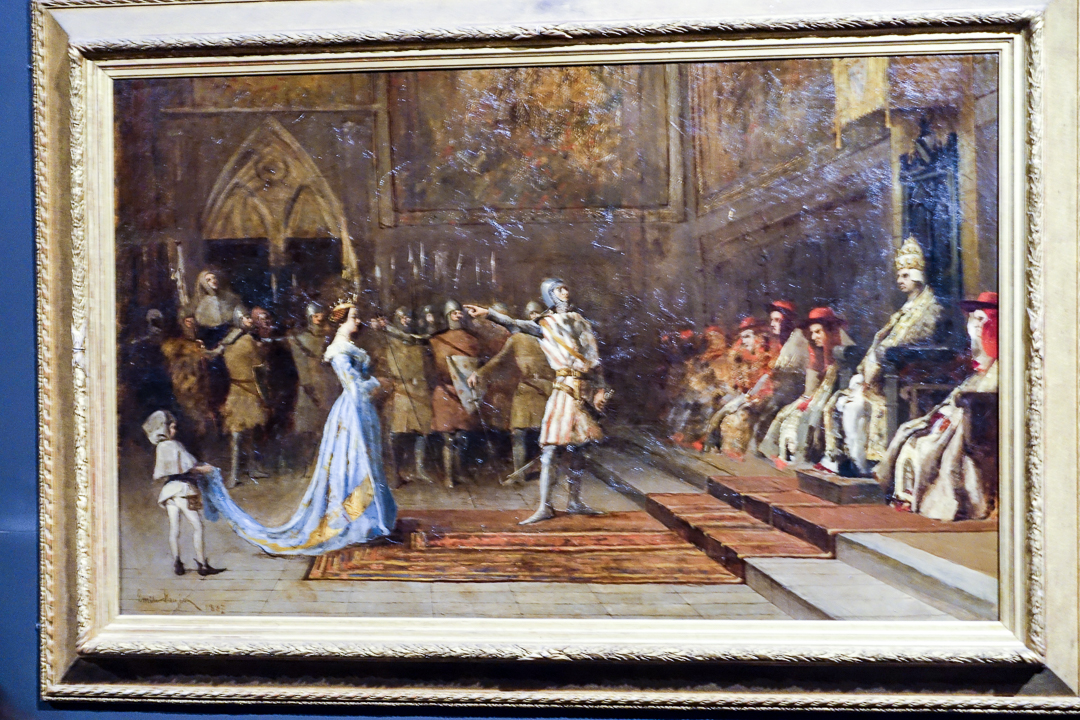
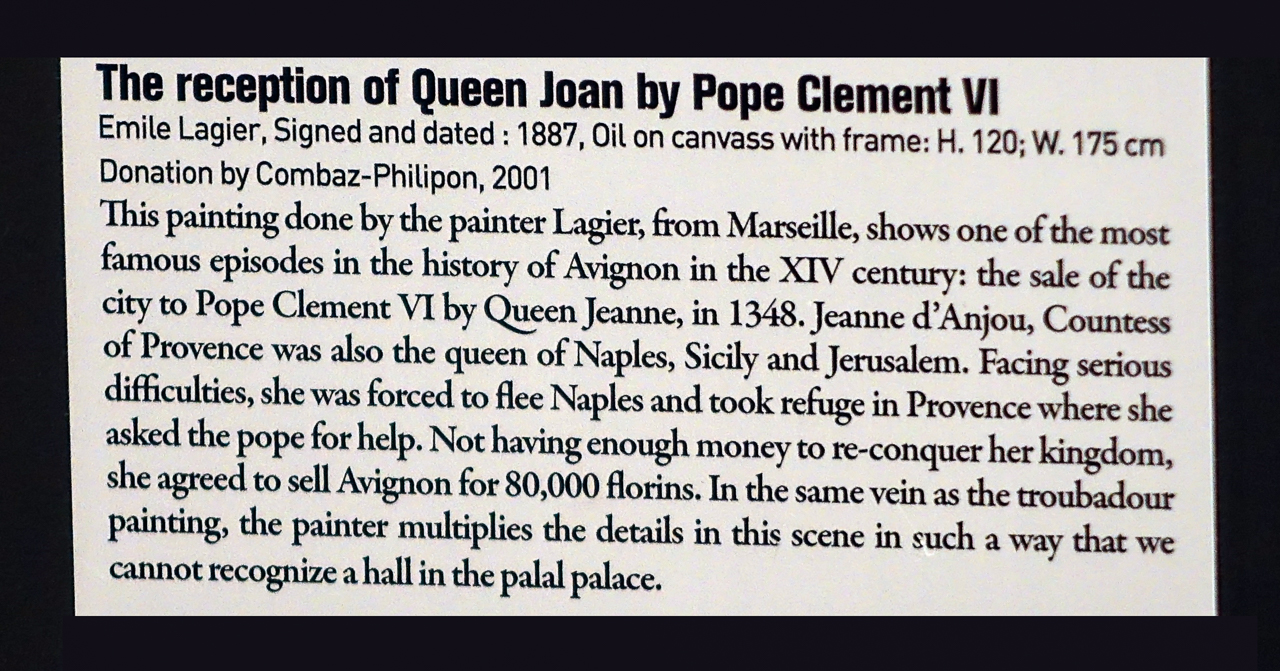
See story depicted by this painting below.
The Palais became obsolete when the papacy found it necessary to return to Rome. The hope of reuniting Latin and Orthodox Christians, along with the achievement of peace in the Papal States in Italy, made the case for returning stronger. Added to that was the strong conviction of both Urban V and Gregory XI that the seat of the papacy could only be the tomb of St Peter.
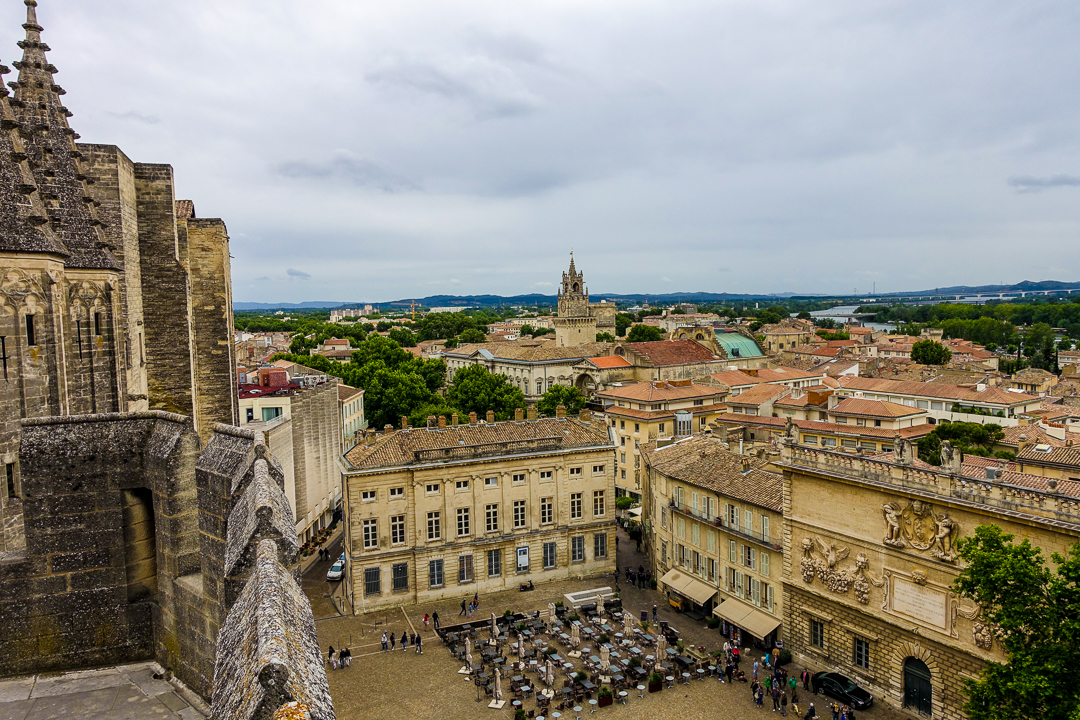
The Palace ramparts provide a commanding view of the town of Avignon.
Bon après-midi
P&J
7 Comments
As soon as I read, “Avignon” I started singing too, Jill!
It will take another half century to get that tune out of my head!
If you’re still in Avignon, the town across the river (Villa Neuve) is well worth a visit, including a great medieval castle, a wonderful farmers’ market (possibly on Saturday) and a plaque honoring the American dead who helped liberate it 1944.
We’ll just have to return some day. We are in Beaune.
I love Avignon, but did I tell you that I used to date Pope Innocent VI?
Believe me, this man was not innocent.
I’m enjoying your journey. Keep it up.
Fleaster
You are hilarious, Flea.
Hugh and I spent 4 days in Avignon about 6 years ago. We took TGV as each additional segment was only $50 per person. It is indeed a beautiful city and region.
It also was the setting for a culinary faux pas, in that I thought I had ordered veal on the order of a schnitzel, when in fact it was veal liver! An excellent example of why one should learn French! All of us hope you continue to indulge yourselves on your journey. If you start missing Mexican cuisine, it’s time to come home.