
What a beautiful day — to visit a cemetery.
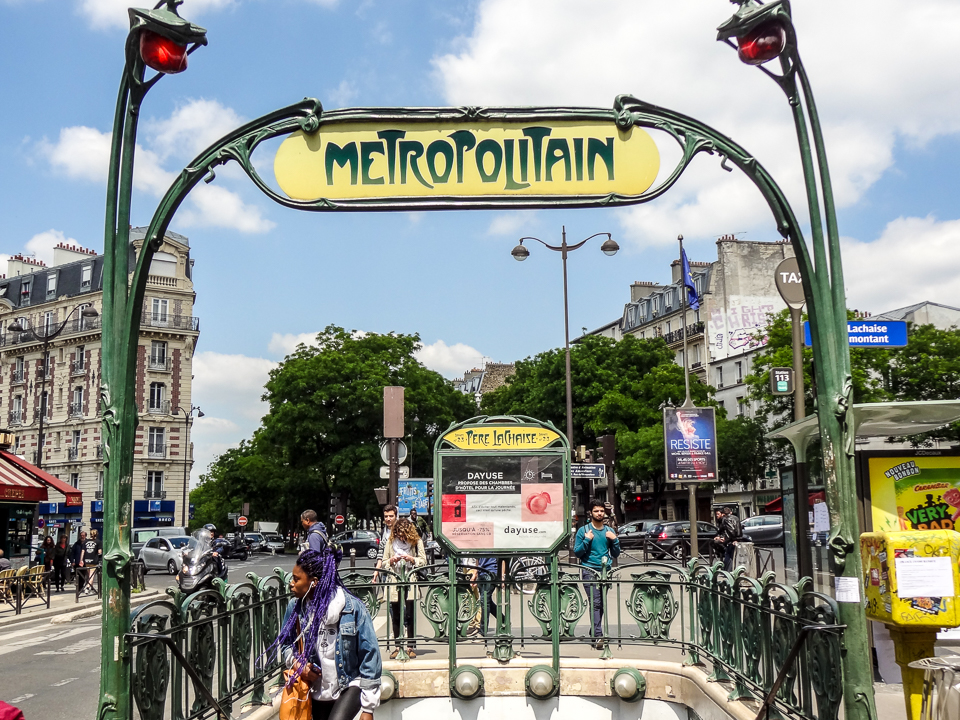
Early in the morning we took off on the metro to Père Lachaise Cemitaire to see the elaborate tributes to the rich and the famous of Paris.
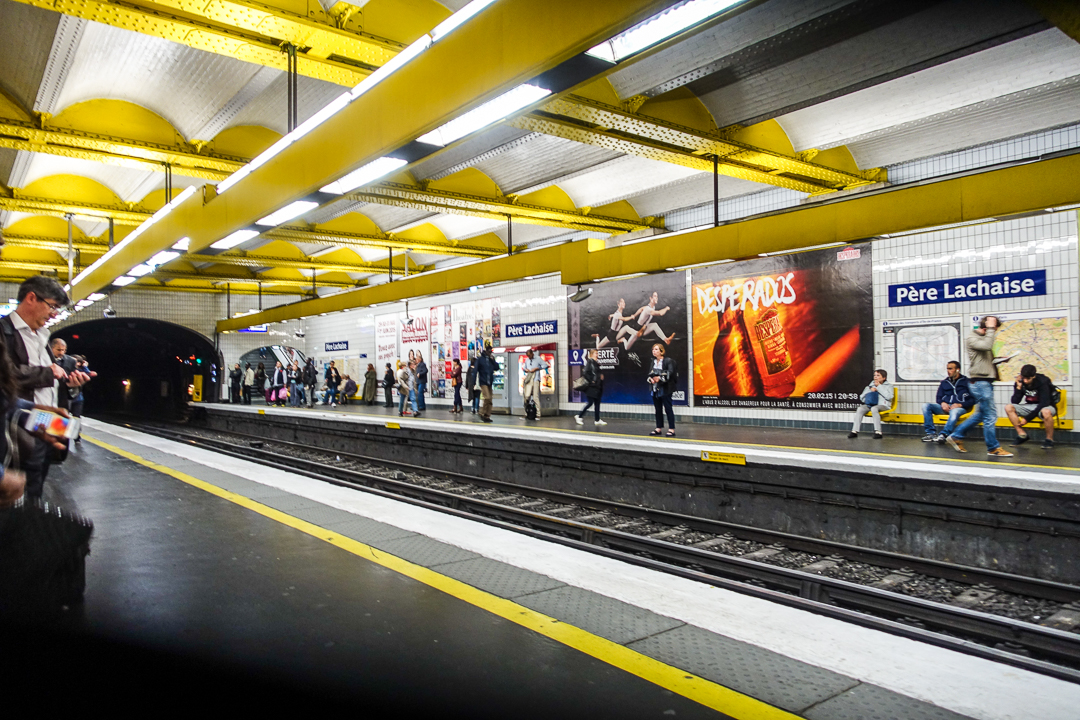
We were only going to stop for an hour and ended up staying half a day.
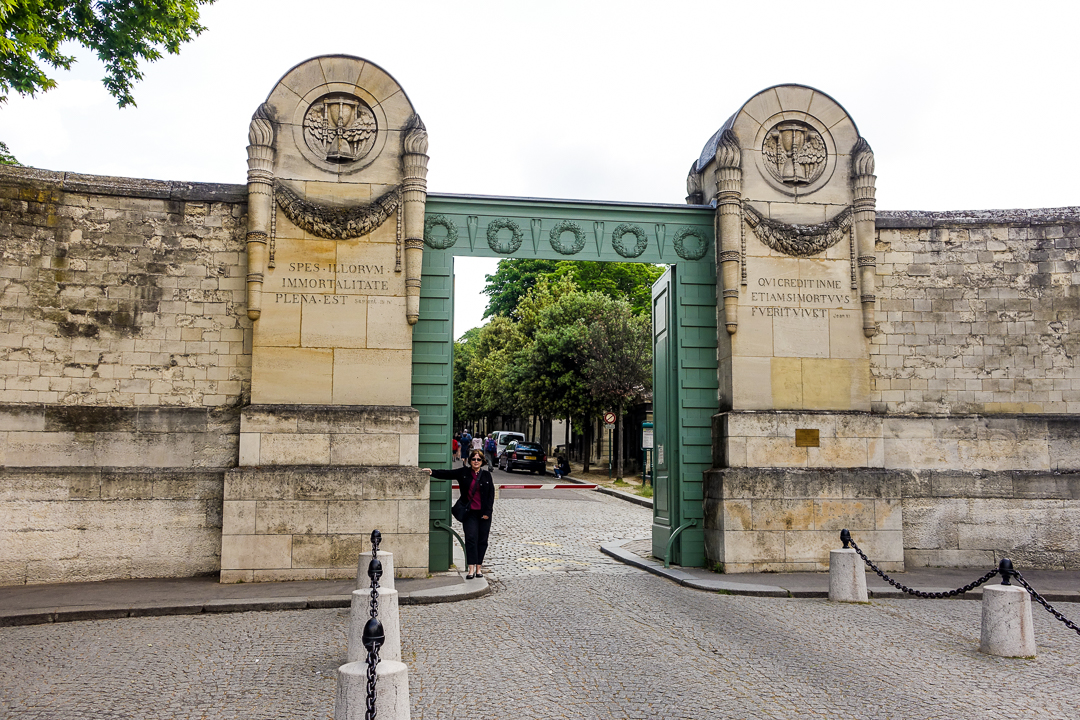
Frankly, this place in the 20th arrondissement blew our minds.
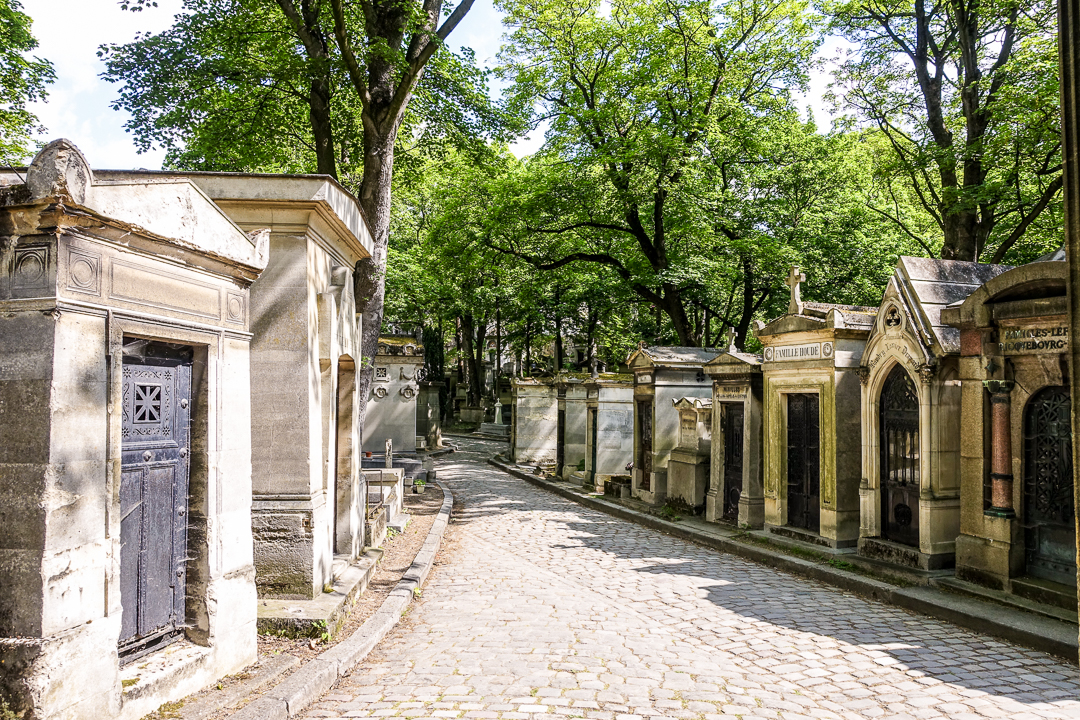
There are over 70,000 graves here, one more ornate than the next. The cemetery is an arrondisement all to itself. We ran across many famous names of artists, musicians, actors, singers, dancers and the victims of war and other mass tragedies.
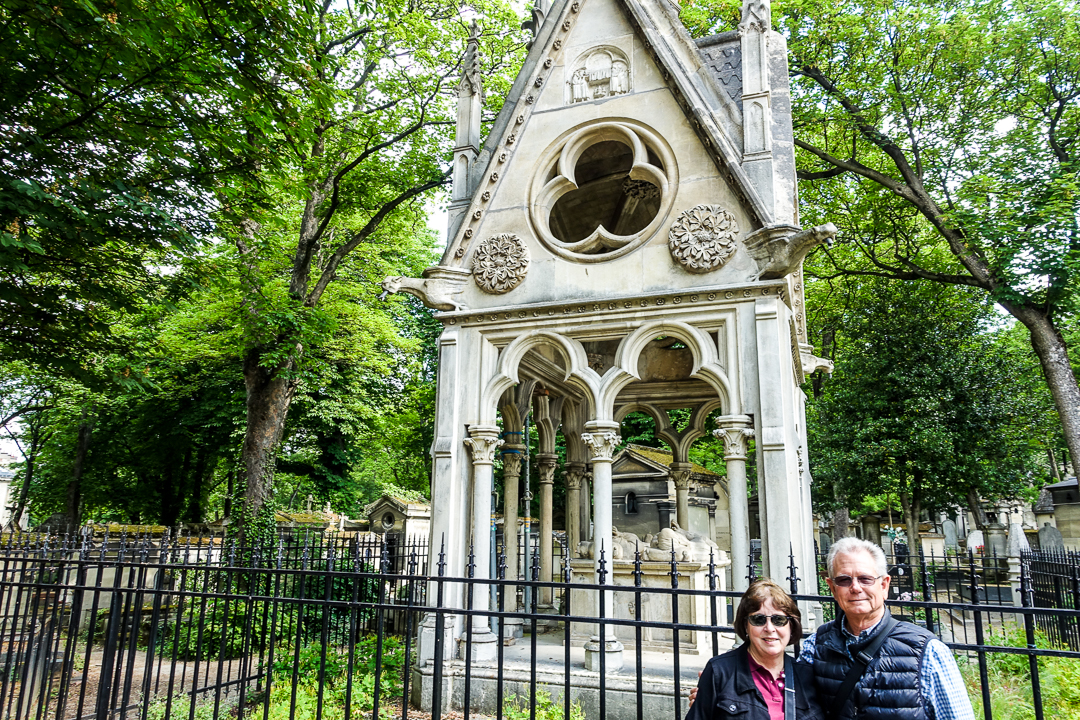
This is the tomb of Abelard & Heloise, the famous lovers from the Middle Ages. Their sad story ends here. Abelard was a famous French philosopher, who was hired to teach Heloise, a rich young noble woman. They fell in love, had a child out of wedlock and then a secret marriage. When her uncle found them out, he sent her to a nunnery and had poor Abelard castrated [a bit severe, don’t you think!]. For the rest of their lives, they sent each other love letters. Today visitors leave love letters around the grave. The couple was buried elsewhere but, years later, Napoleon had them exhumed and buried at this famous cemetery.
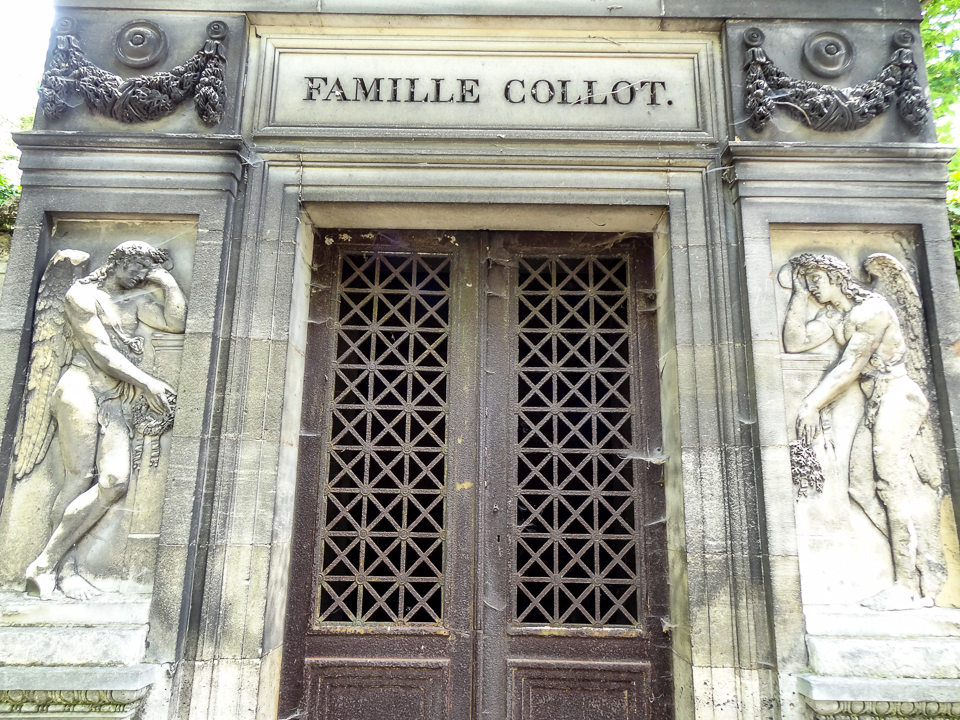
As we walked on the cobblestone pathways, we were amazed at the stunning architecture that stood as testaments to so many famous people.
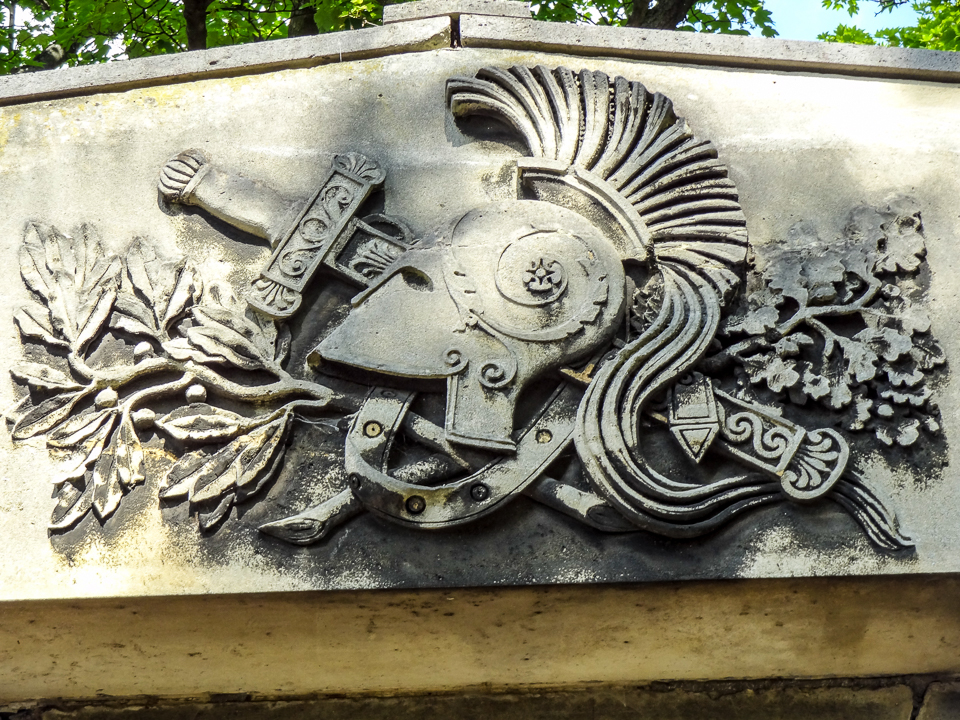
Incredible detail outlines many of the tribute stones.
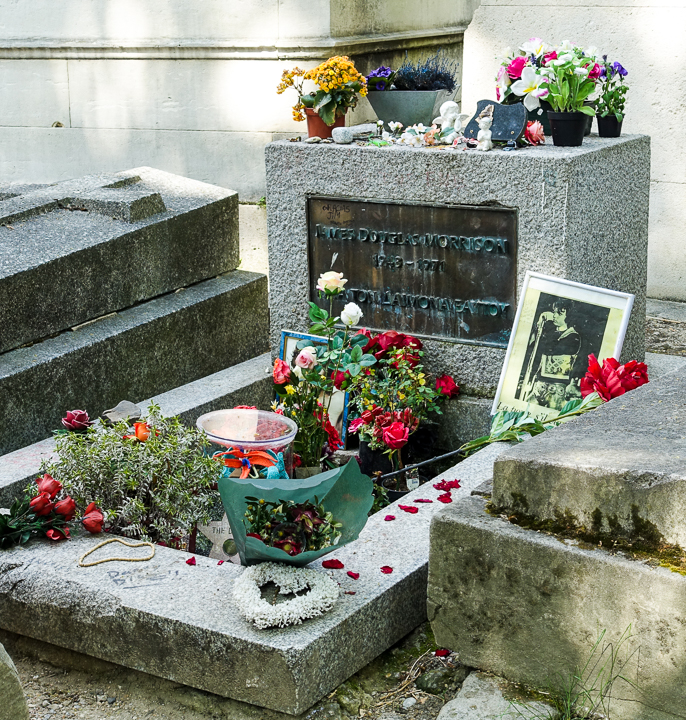
One of the most visited gravestone is that of Jim Morrison.
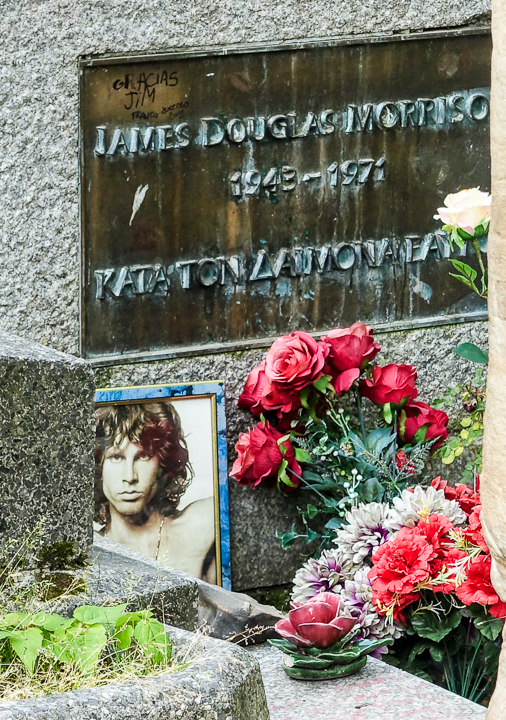
Jill saw an old hippie in tears, standing by Morrison’s grave. He looked as if he had lost a close friend or beloved family member.
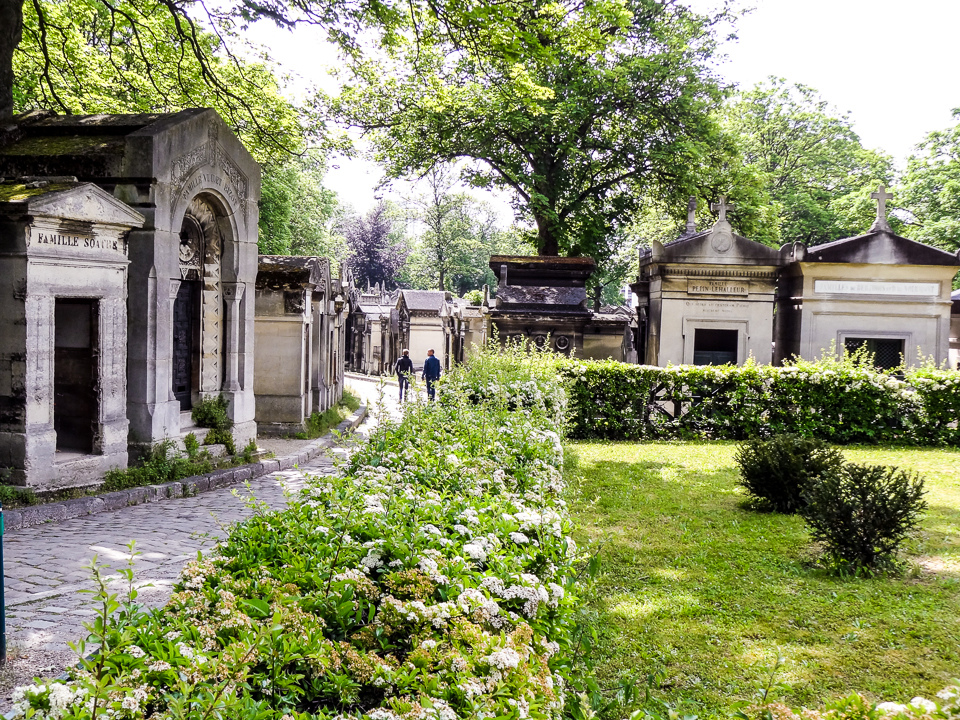
Entire areas were reserved for those fallen as a result of war.
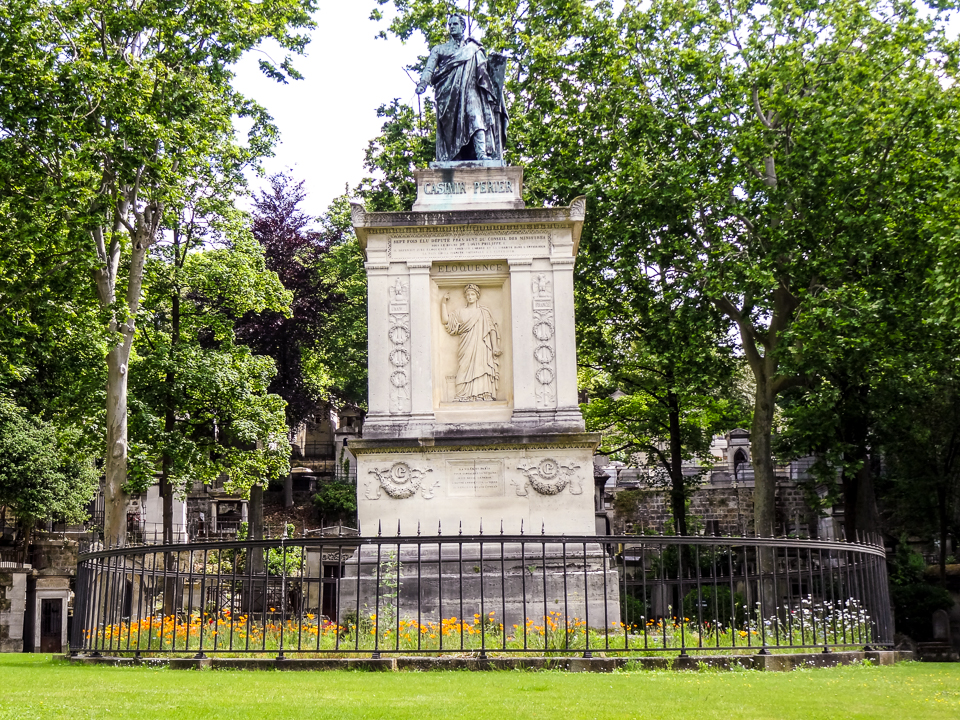
Some French heroes earned huge plots of real estate.
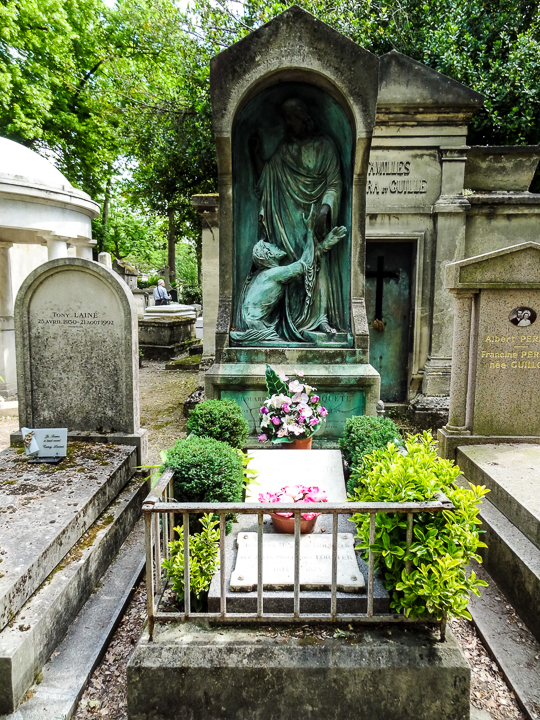
The statuary was amazing.
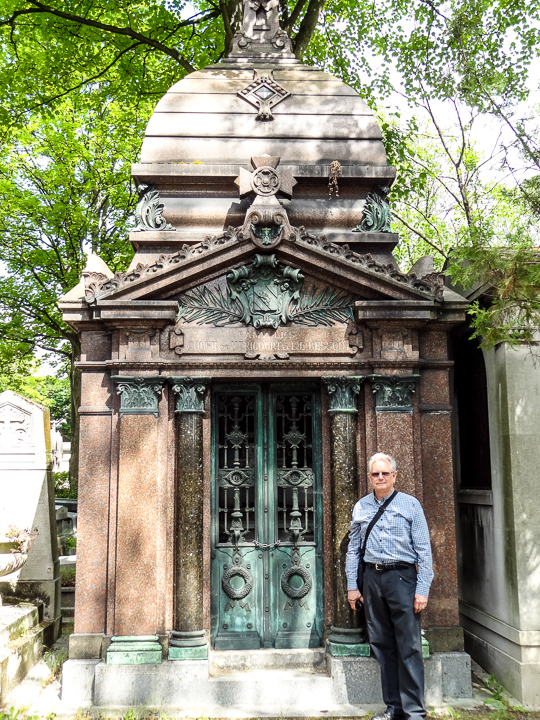
Holy cow, we think we will cancel our Neptune Society contract and purchase this family crypt. Oh, dang it, we are not famous enough or French enough.
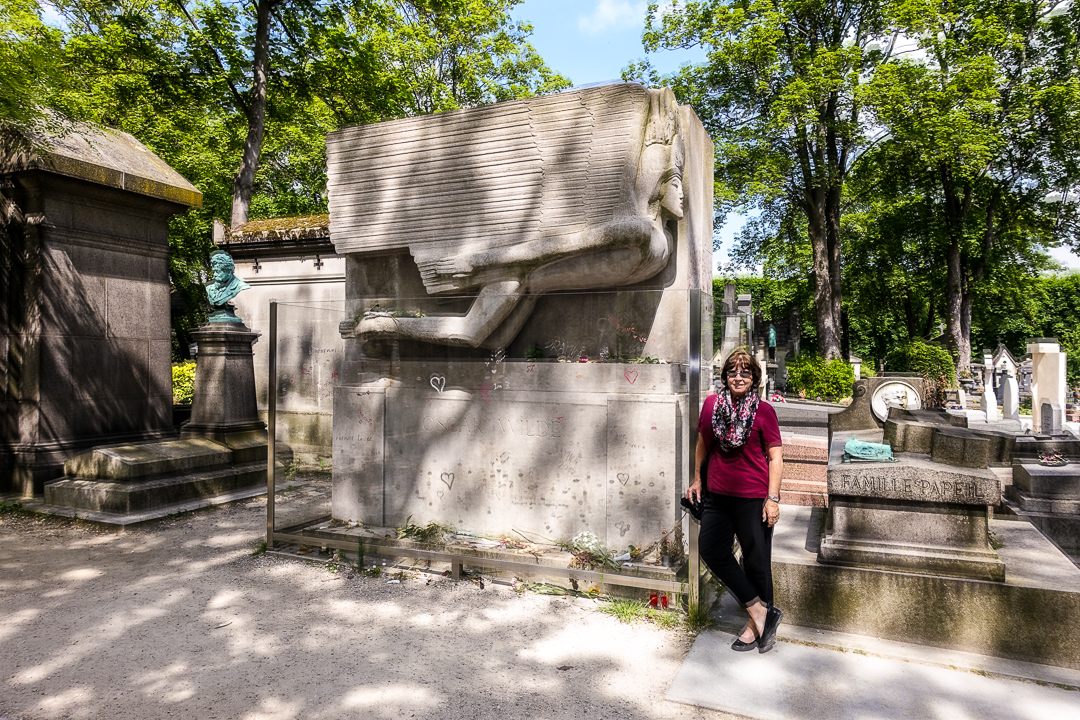
Jill, hanging with the bad boy, Oscar Wilde, the famous witty writer who was banished from England for “gross indecency.” {He was gay.} On his grave are his prophetic words: “And alien tears will fill for him / Pity’s long-broken urn, / For his mourners will be outcast men, / And outcasts always mourn.” A glass barrier was put around his grave because so many people left kiss marks on the grave.
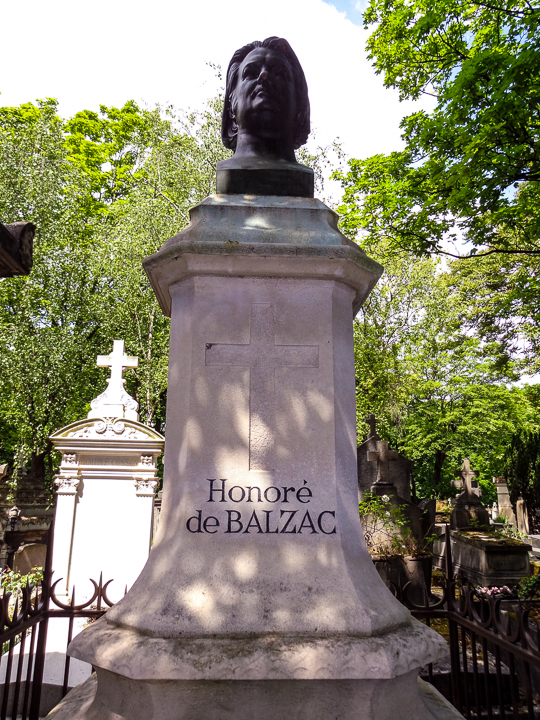
Other famous writers buried here are Marcel Proust, Gertrude Stein, Moliere, Colette and Honore de Balzac.
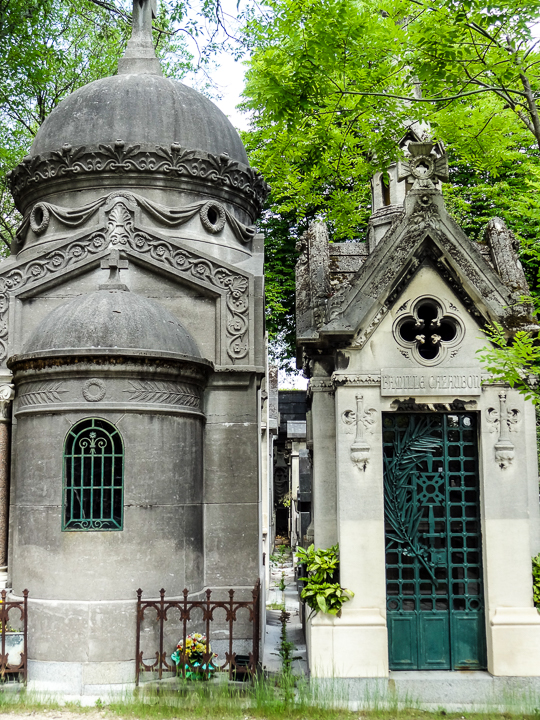
Many people in the performing arts were buried here: Chopin, Sarah Bernhardt, Simone Signoret and Yves Montand, to name a few.
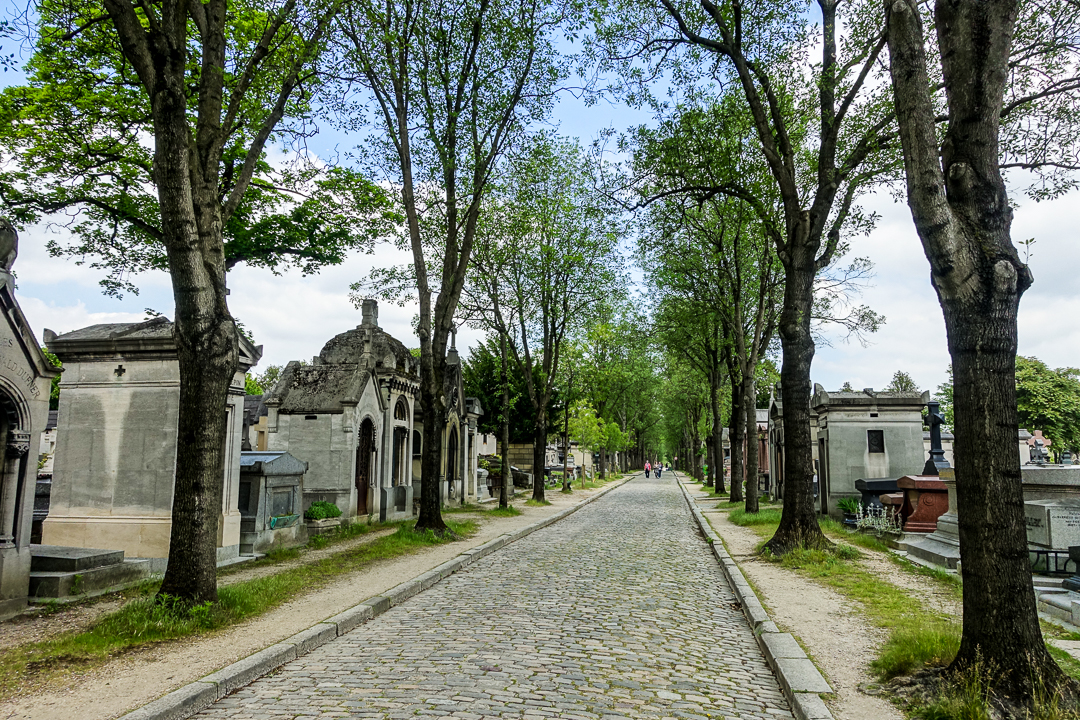
We walked for hours. The cemetery has many levels, so we climbed and climbed and climbed.
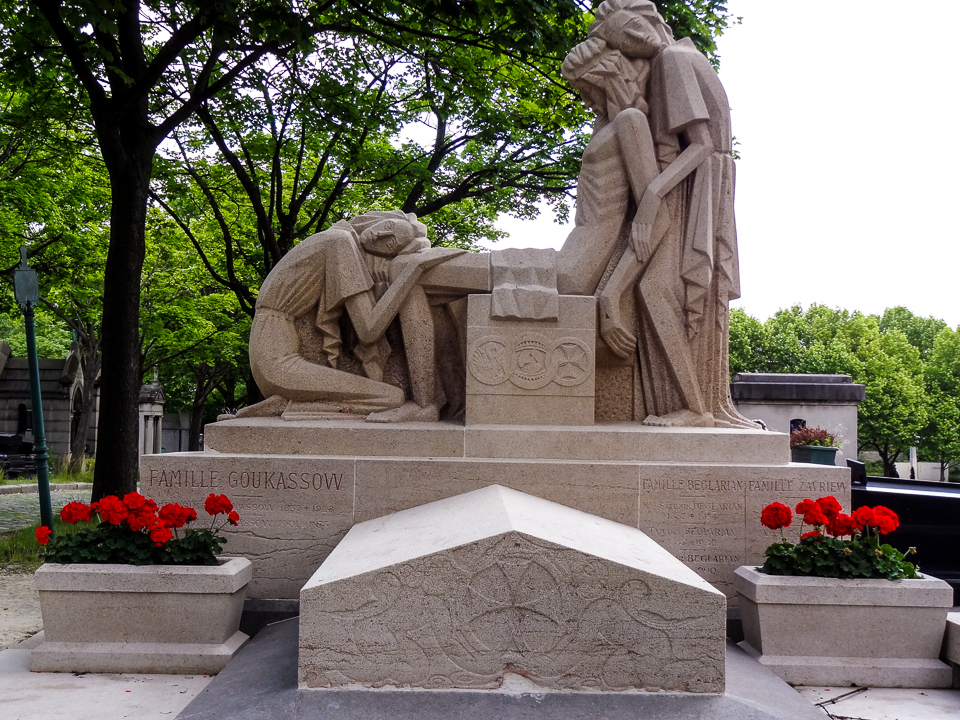
Each gravestone was more spectacular than the next.
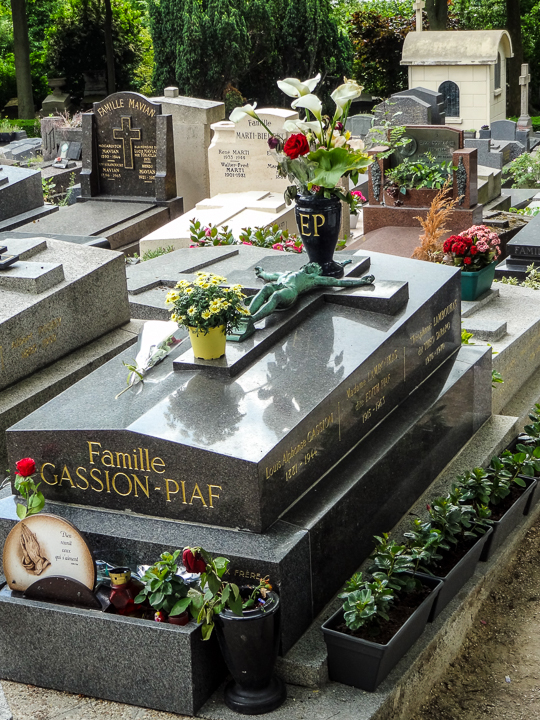
The final stop for the little sparrow, Edif Piaf. Many other singers and dancers of the past are here, too, like Isadora Duncan.
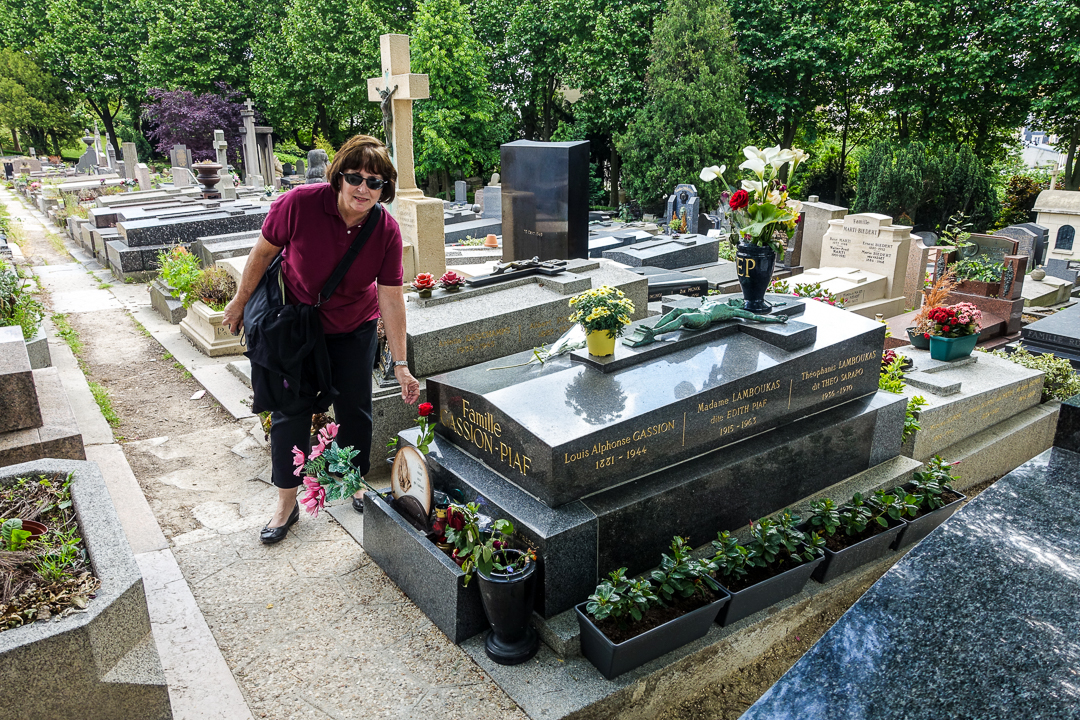
A red rose is emblematic of the chanteuse who sang “La Vie en Rose.”
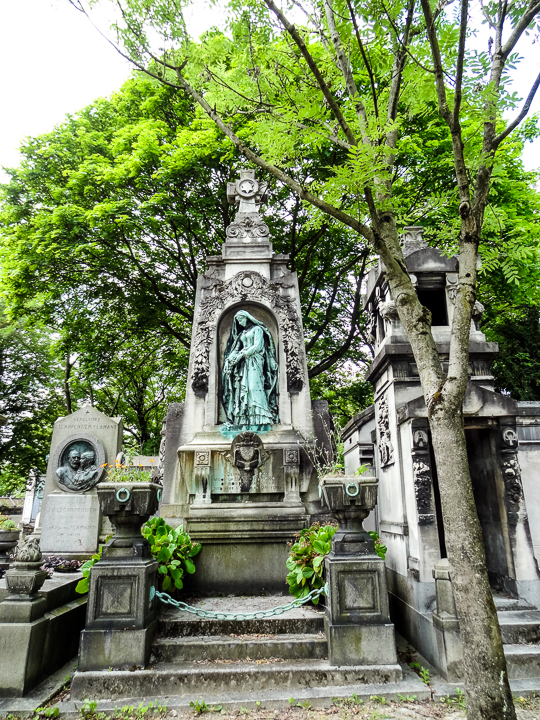
What is really creepy about this cemetery is that if no one pays for the upkeep of a plot, the body is exhumed as if it were a delinquent tenant and a new body is put in its place. MON DIEU! What happens to the remains is unclear. Off to the crematorium?
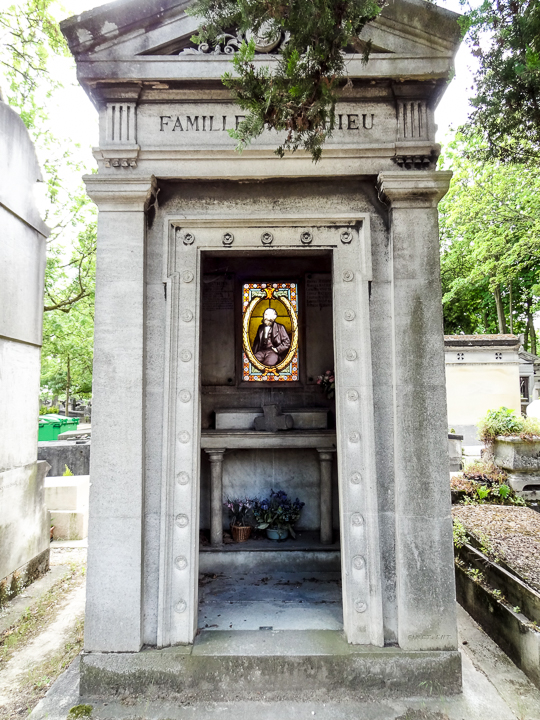
Inside some of the crypts, we spotted a lot of stained glass and altar pieces.
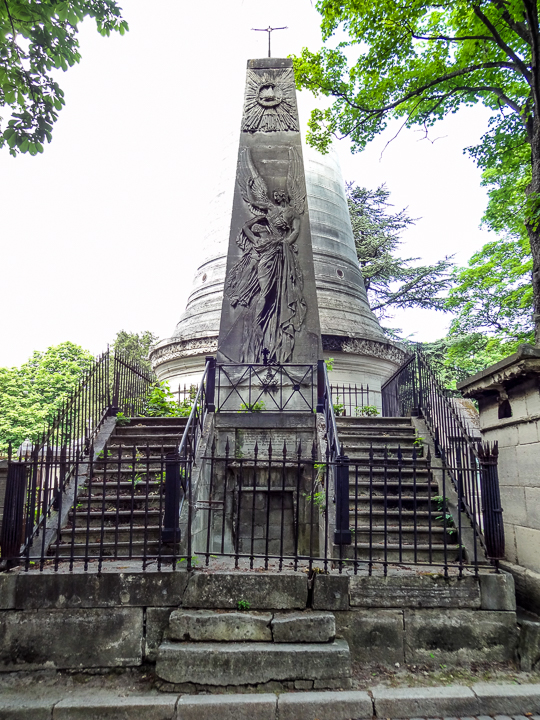
Holy phallic symbol
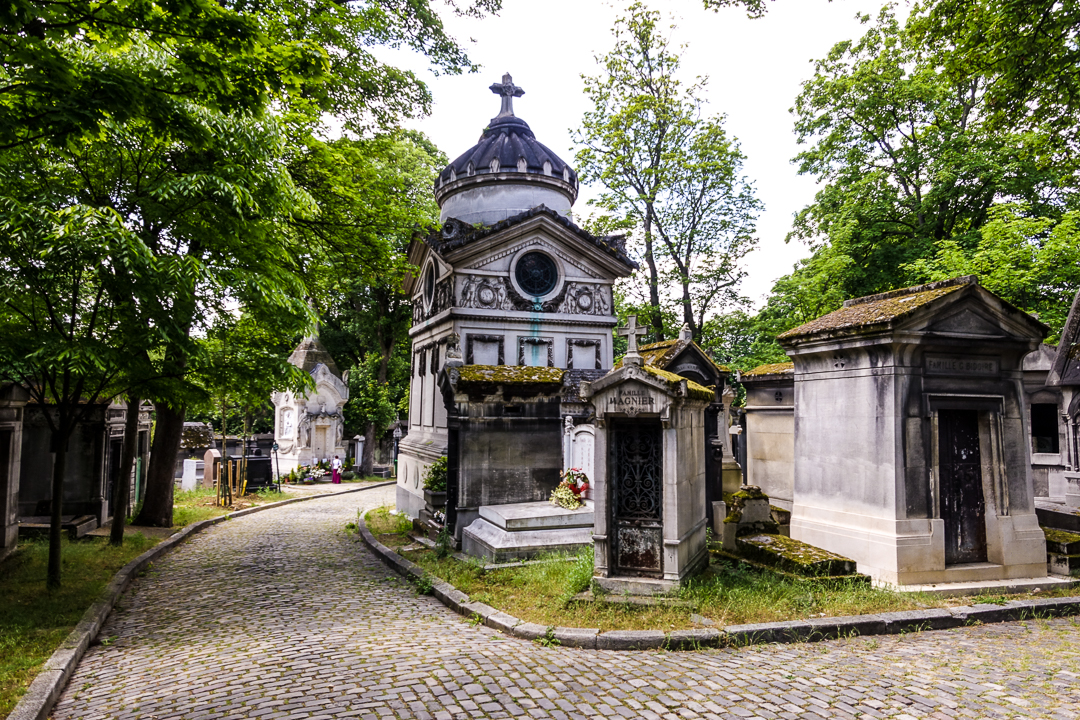
While we were here, a funeral was taking place. The family of the deceased hired a band to play “When the Saints Go Marching By.”
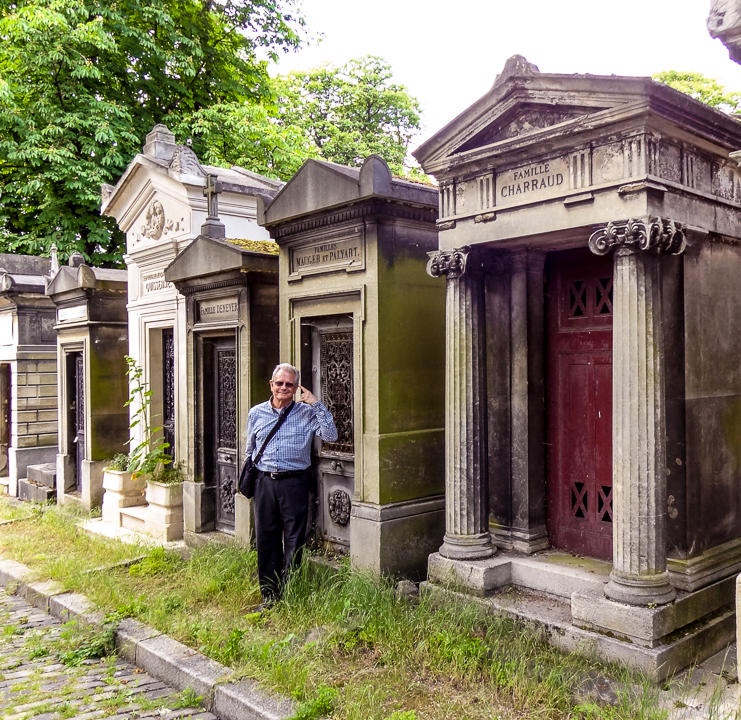
Pete thought that a line of these sites looked like telephone booths. Must be the British Ex-Pat section.
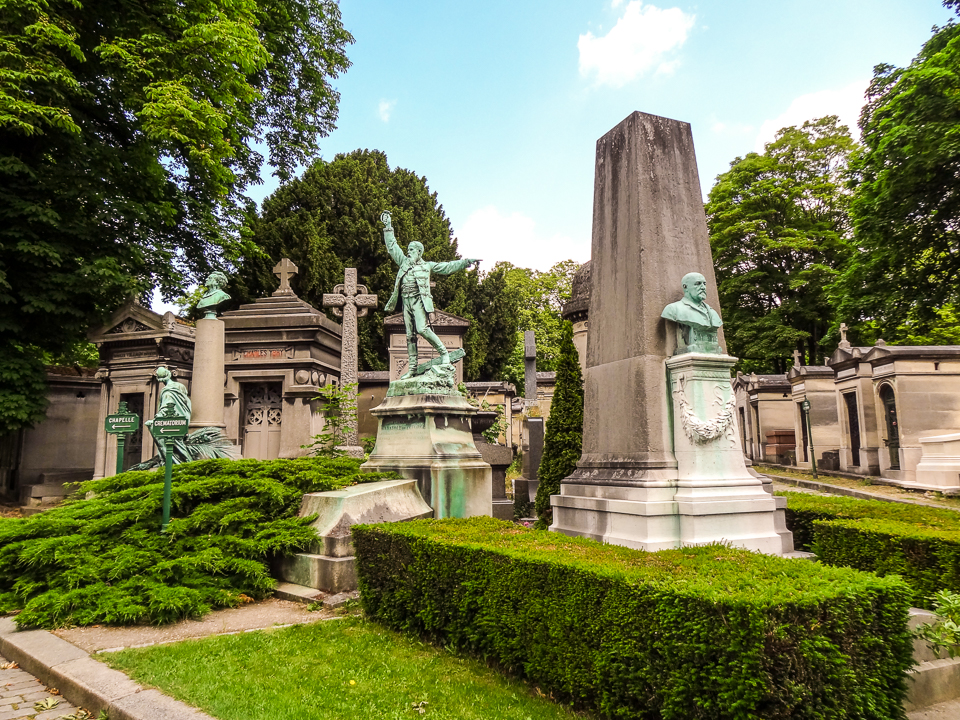
As we walked we spotted the graves of many famous artists like Eugene Delacroix, Gericault, Modigliani and . . .
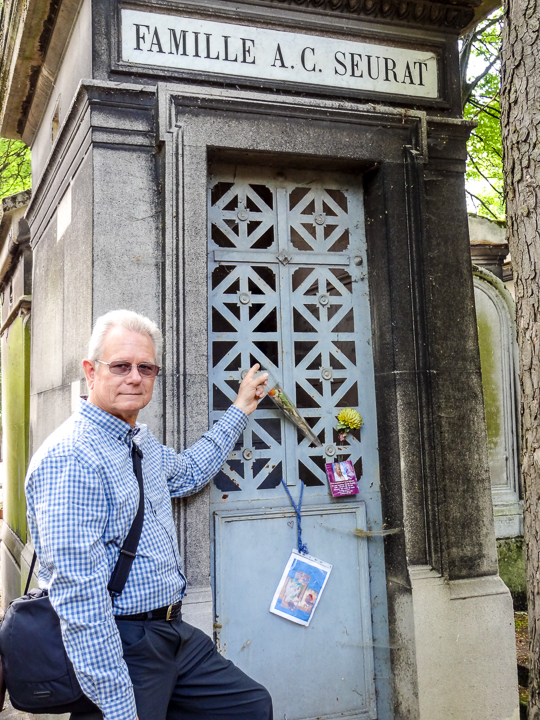
. . . that of pointillist George Seurat.
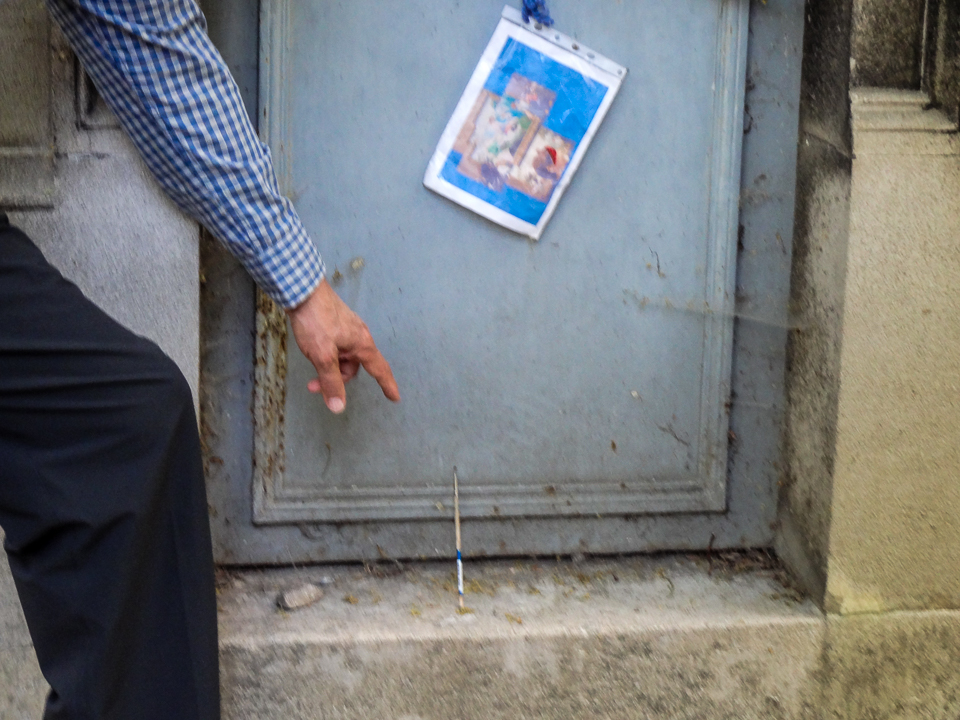
Someone left a tiny paint brush at the base.
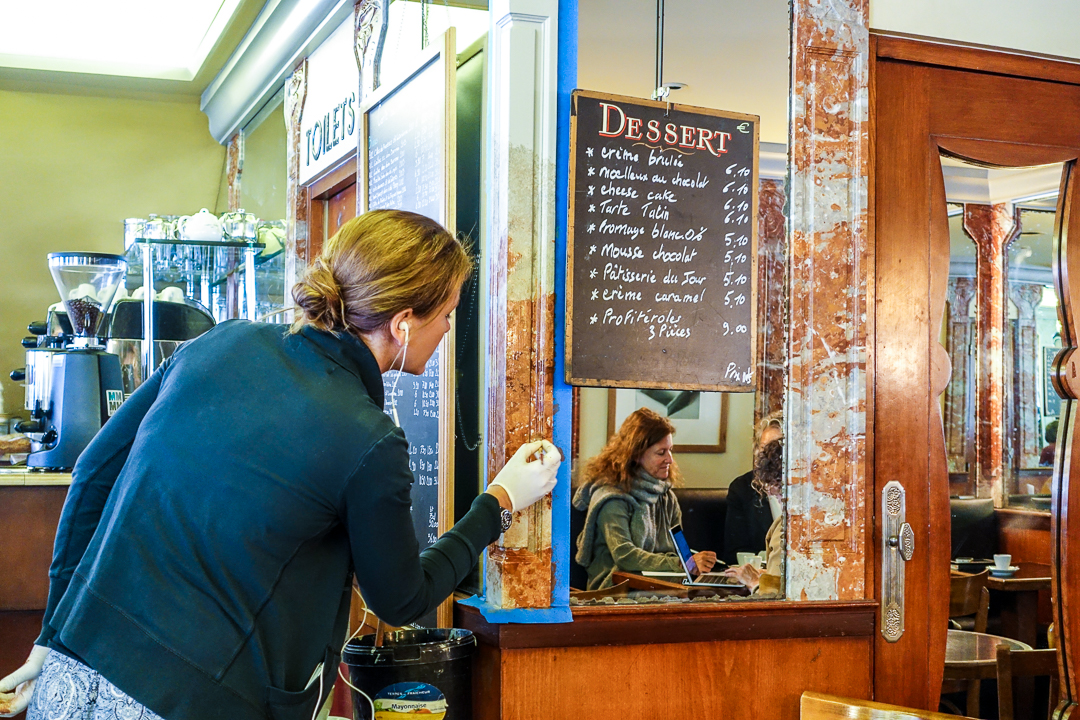
We stopped at a corner café for a light breakfast and learned something about the “marble” used in some interiors. We found this woman with paint brush and palette of grey and red-brown paint colors busily turning plaster into faux marble.
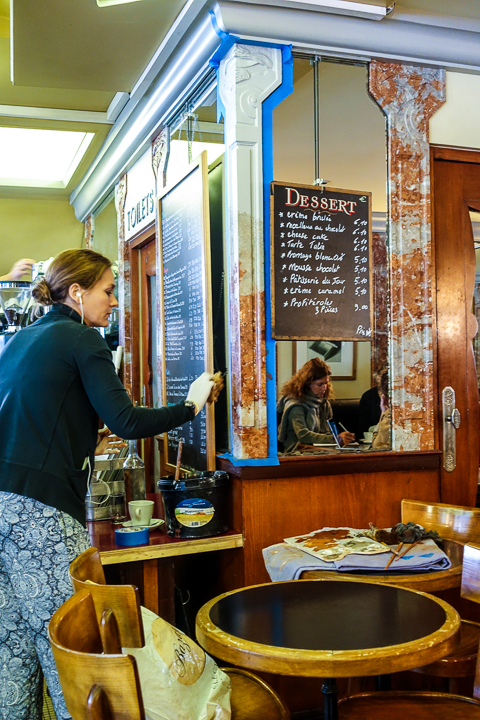
Here she carefully blots her fresh paint with a sponge to achieve the desired effect.
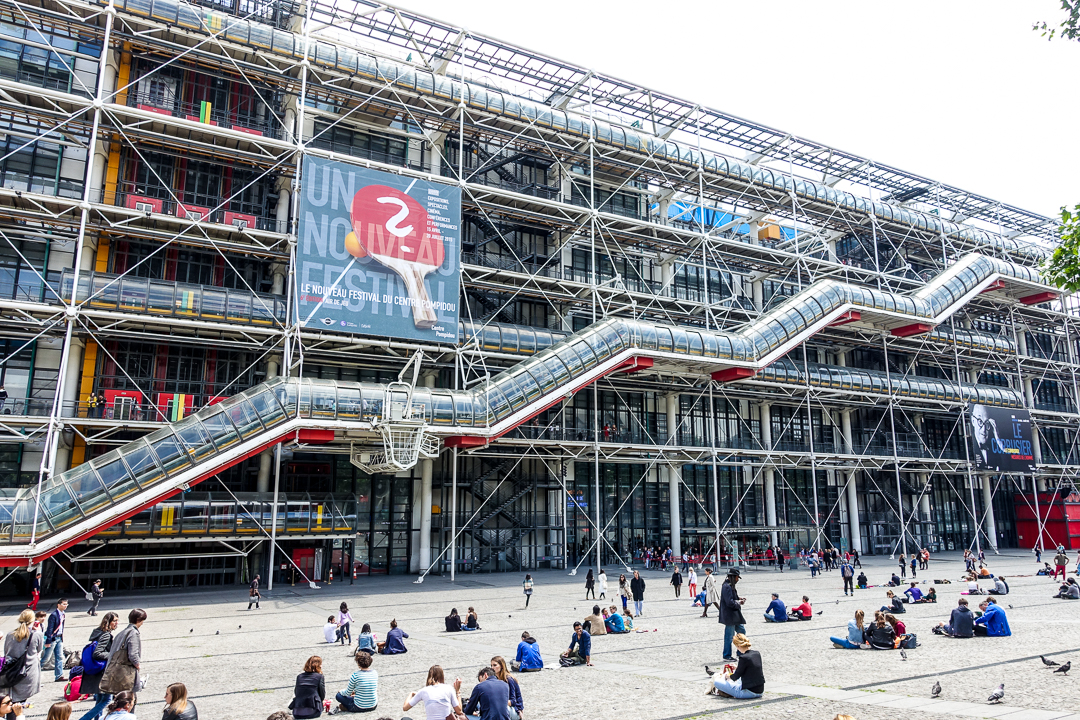
In the afternoon we visited the George Pompidou Museum, which specializes in modern art, mostly 20th and 21st century pieces. One of the architects of this tubular structure is Renzo Piano.
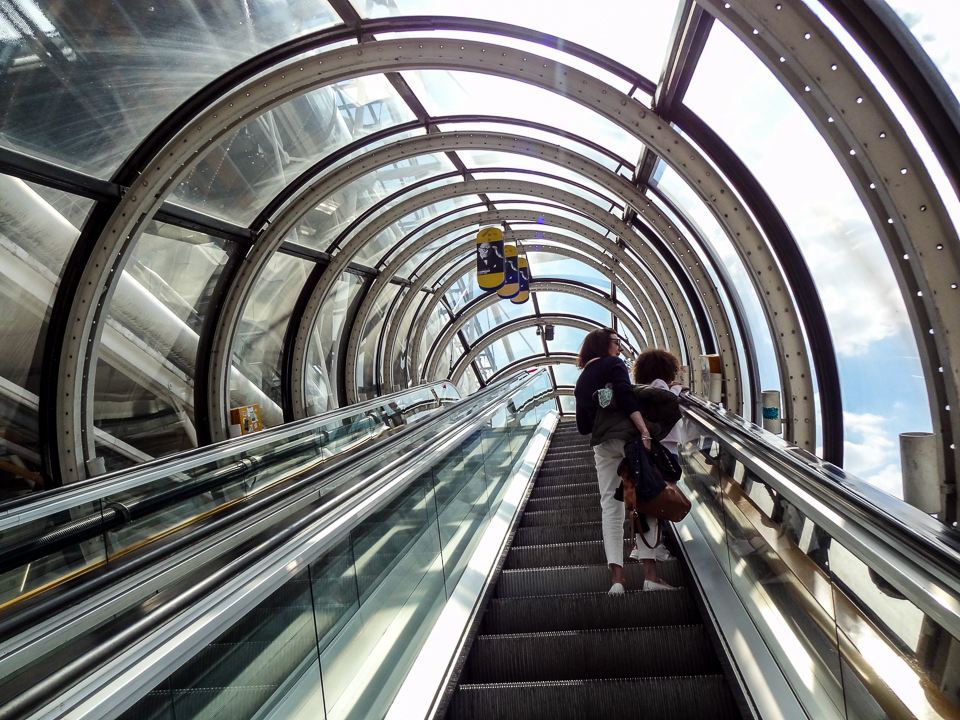
Up we went in the tube to the 5th level.
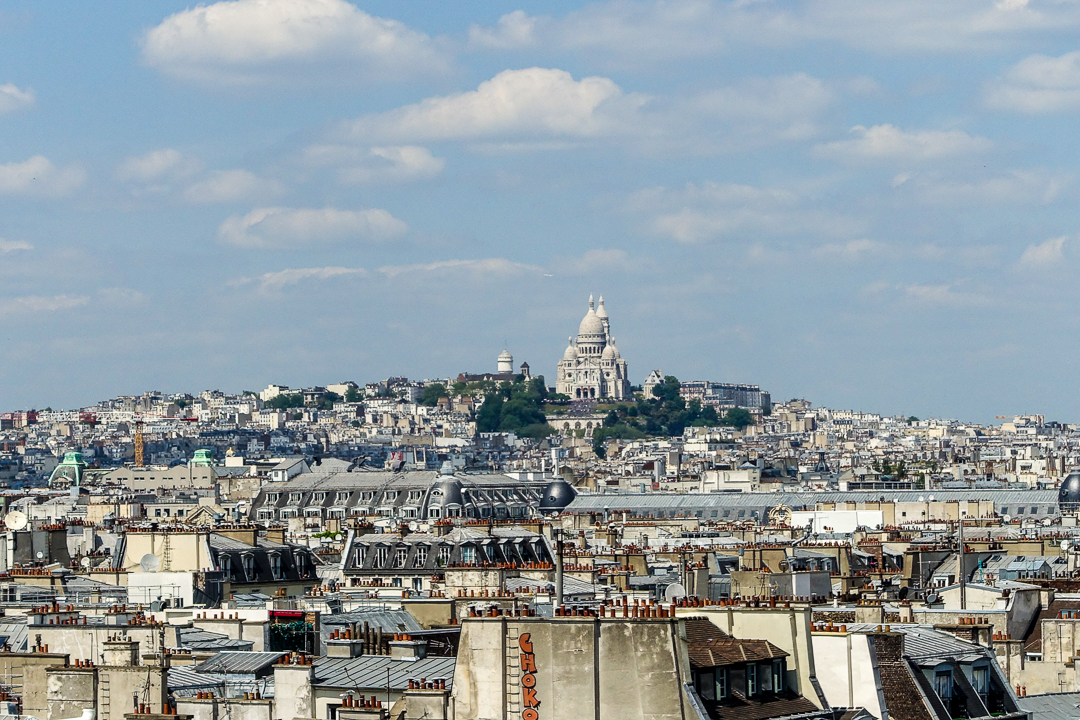
The top offers great views of the more iconic structures of Paris, like Sacre Coeur and le Tour Eiffel.
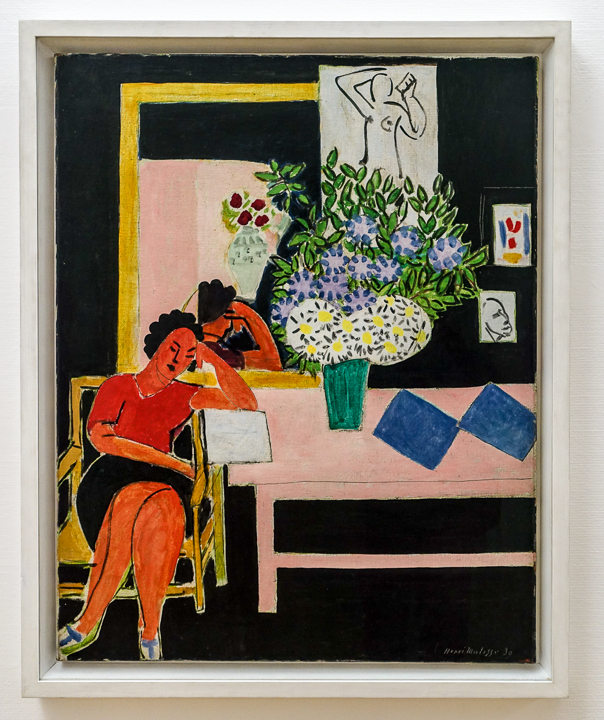
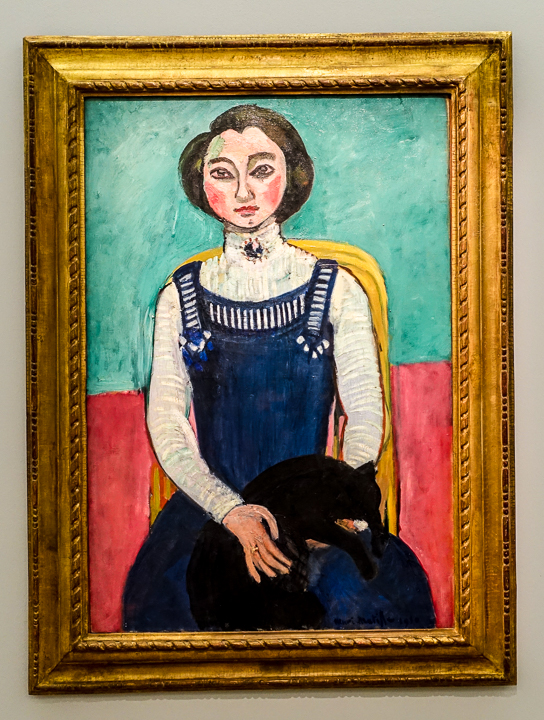
Like le Muse d’Orsay the Pompidou collection is arranged sequentially and begins with Matisse paintings, mostly during his Fauvism period. Art starts to become less representational at this point on its way to full abstract art.
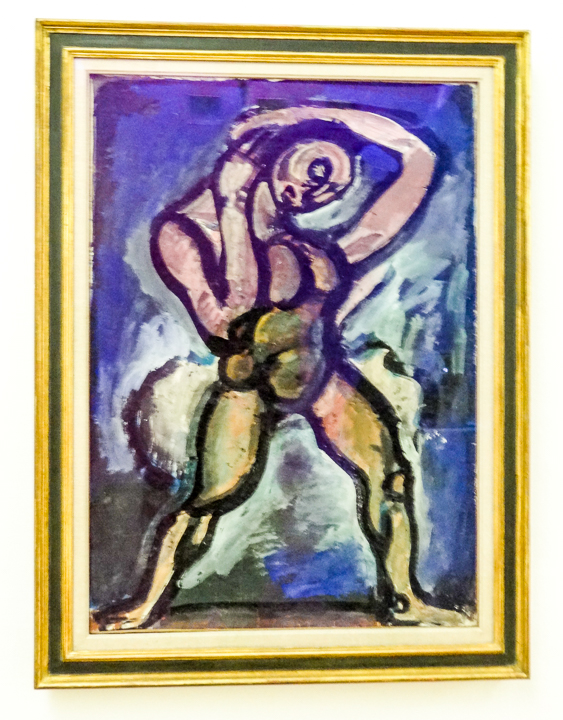
French painter George Rouault’s Fauvist works often mimic the effect of stained glass
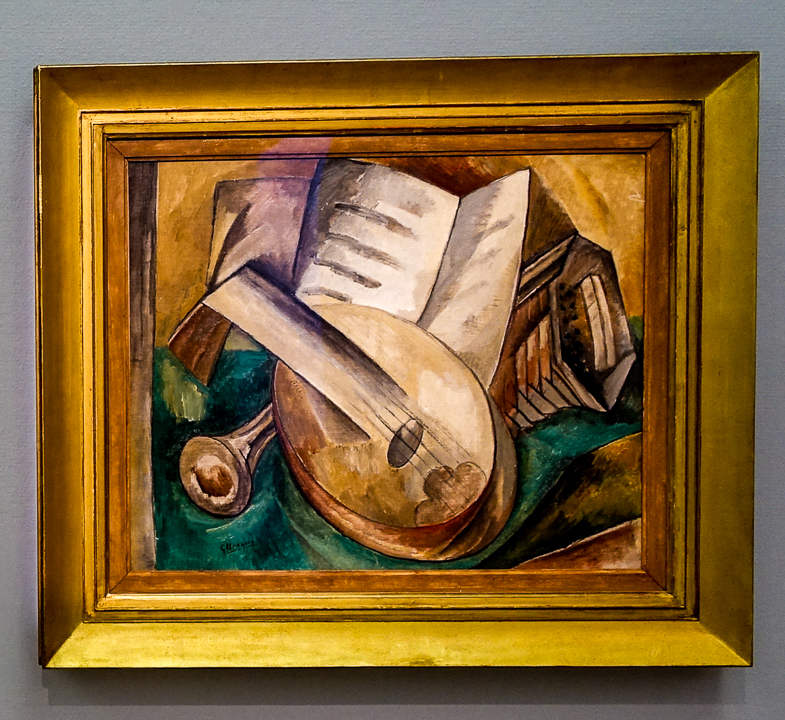
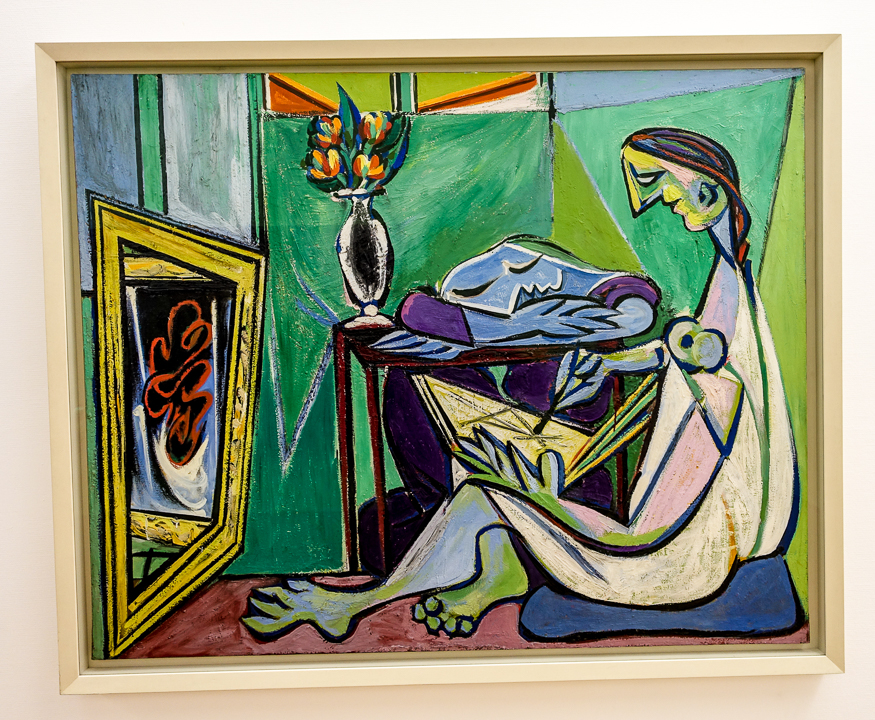
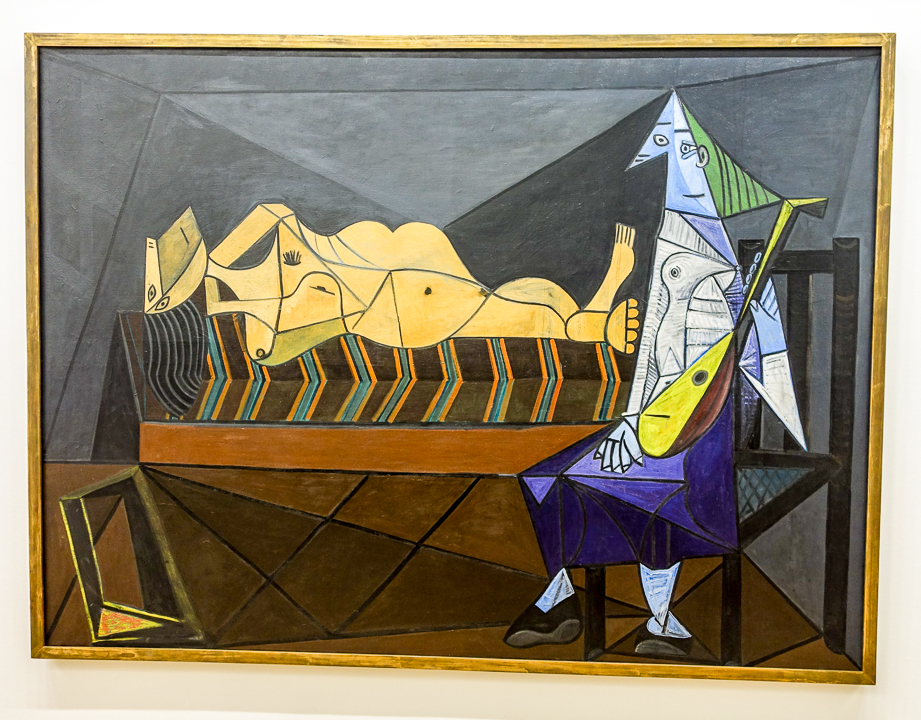
George Braque and Pablo Picasso initiated the cubist movement. Early on their works still had representational features. We can clearly see the subjects, but they are put together in geometric shapes.
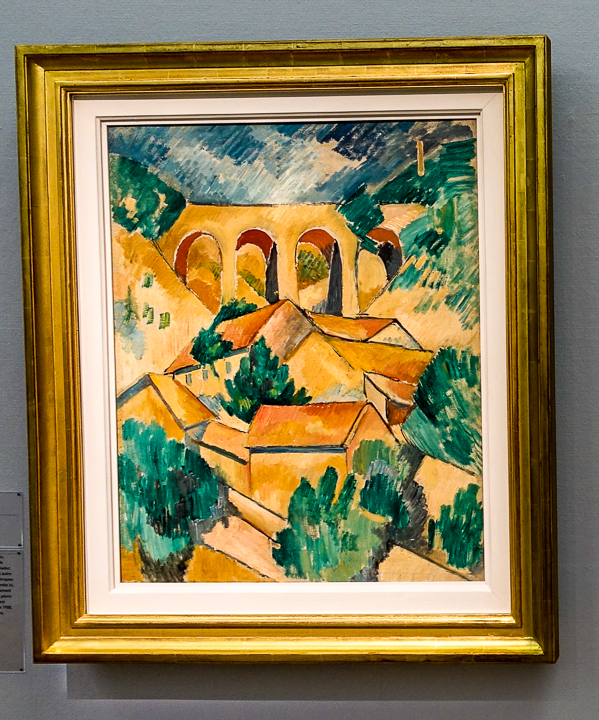
As art evolved in the 20th Century, artists like Braque and Picasso toyed with the idea of multiple perspectives. In the above painting we see a town from all different angles, some upward, some downward.
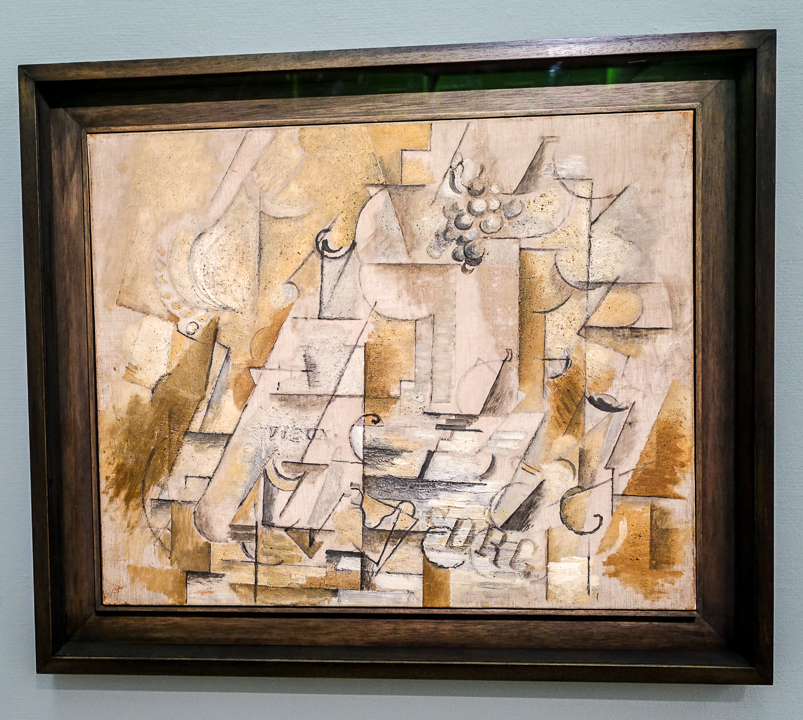
As time passed artists experimented in analytical and synthetic cubism, where a subject is deconstructed and put back together in a random fashion, like a collage.
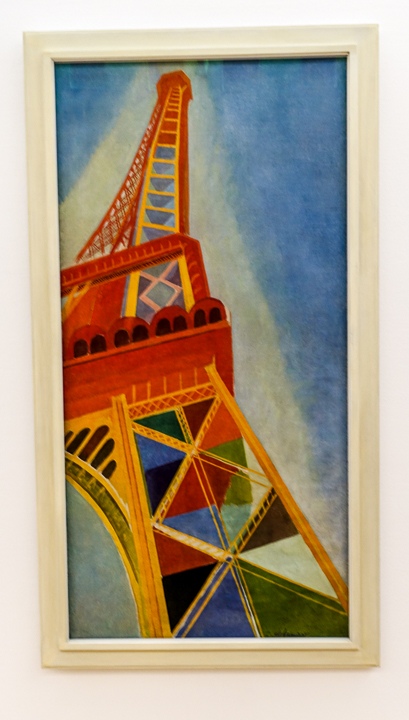
The collection had a wonderful section on Kandinsky, the father of abstract art. Once again we see his works evolve from representational art, like the painting of the Effel Tower above, to non-representational art.
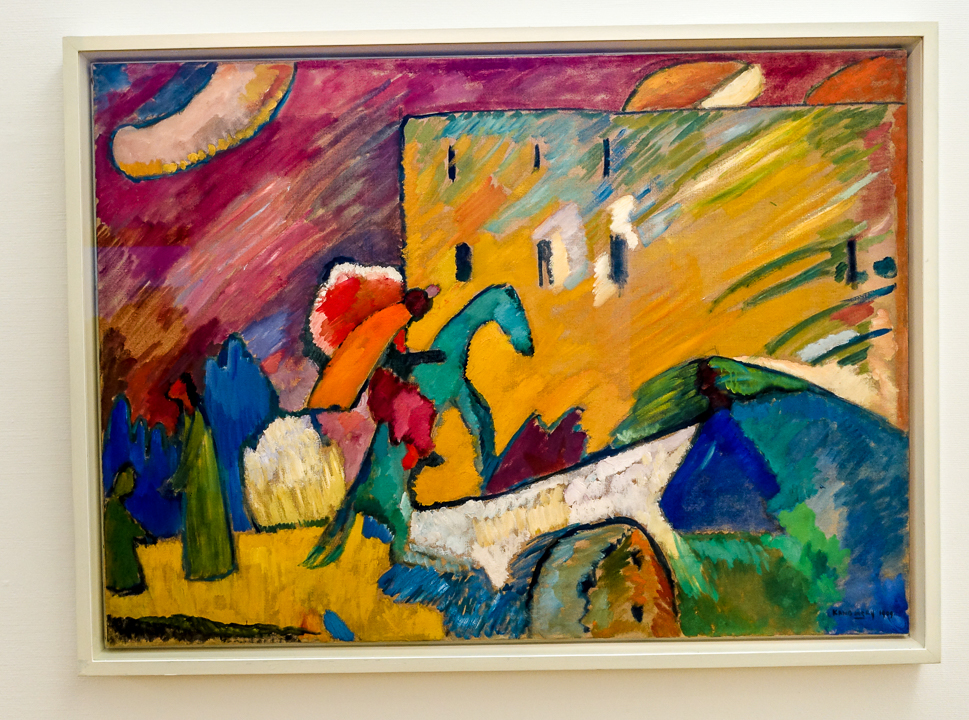
Here we have the bridge between representational and full abstract art. We can still see a horse, a rider and a bridge.
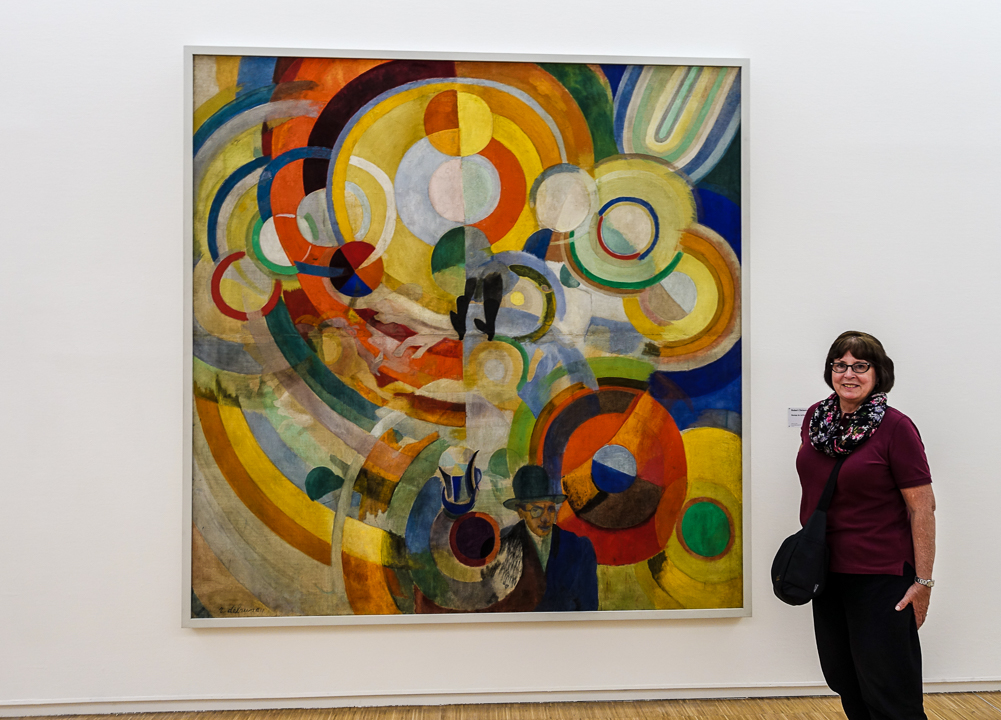
Here we see the propellers of Charles Lindbergh’s plane, celebrating his crossing of the English Channel.
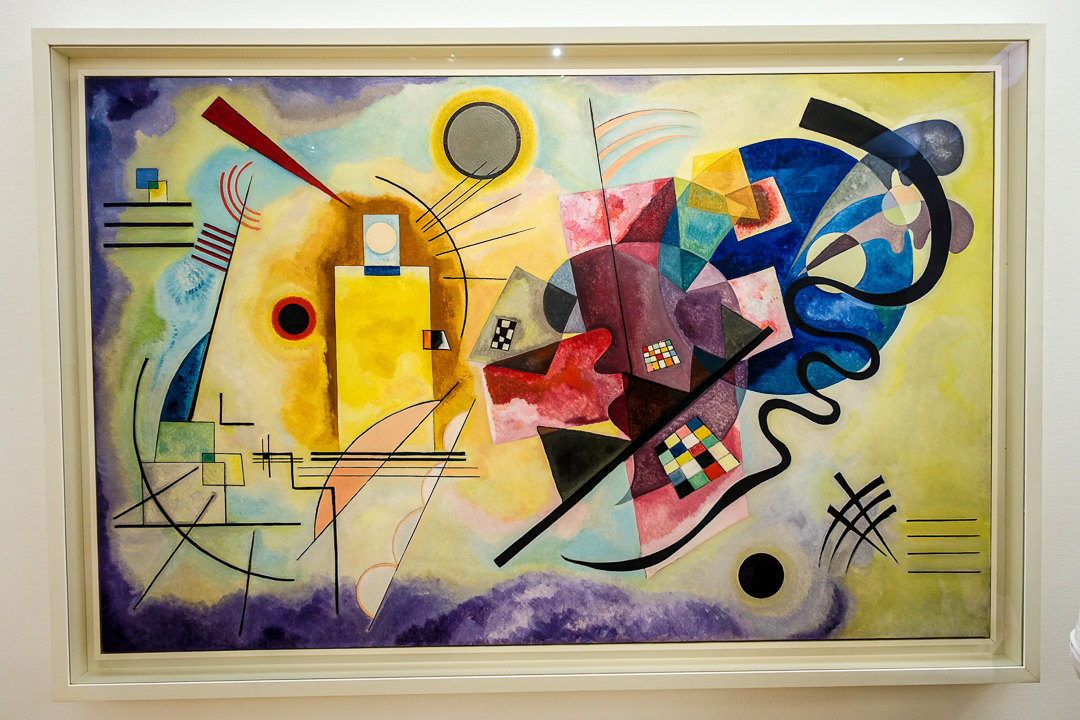
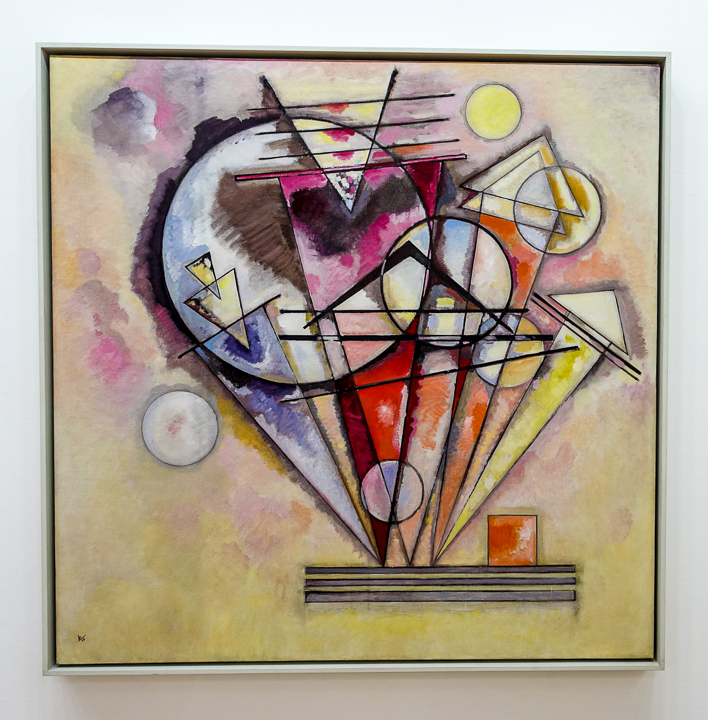
But here we see only Kandinsky’s shapes, lines and color. Here is the beginning of abstract art.
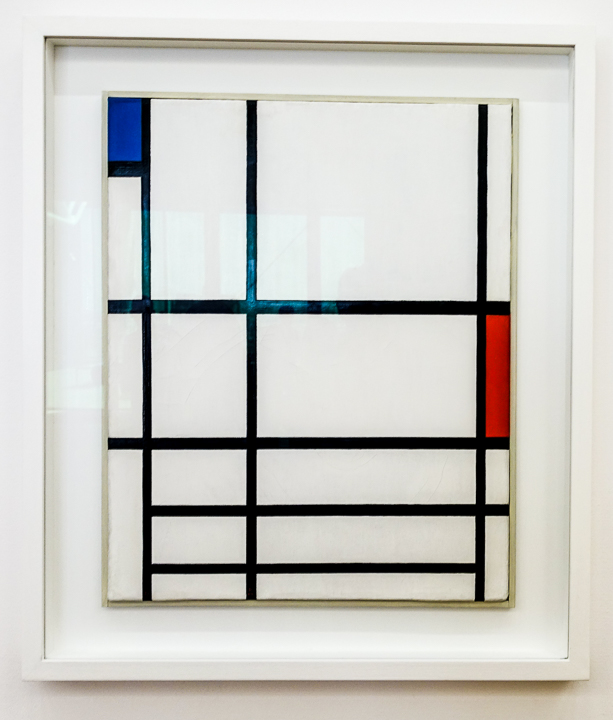
Mondrian followed, with his famous patterns.
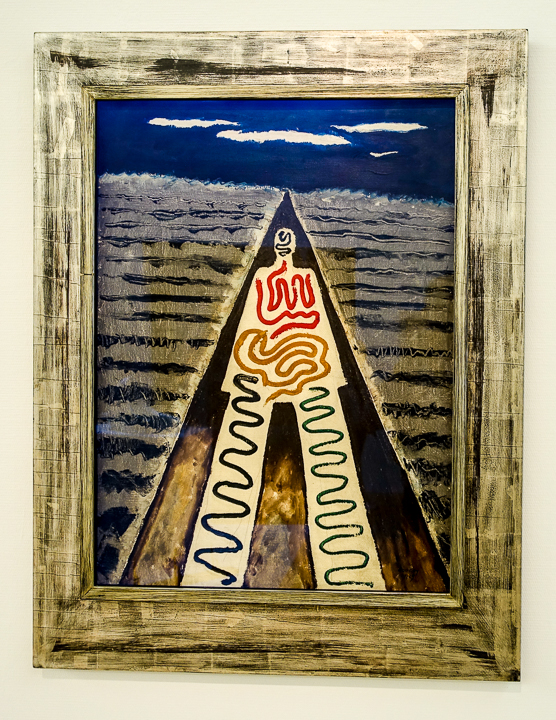
Of course, some artists scoffed at all these formal schools of art. They loved to poke fun at how artists take their brands of art so seriously. They selected a random word from the French dictionary and called their school “Dada,” which means “hobby horse” in French. The school is really a movement of anti-art.
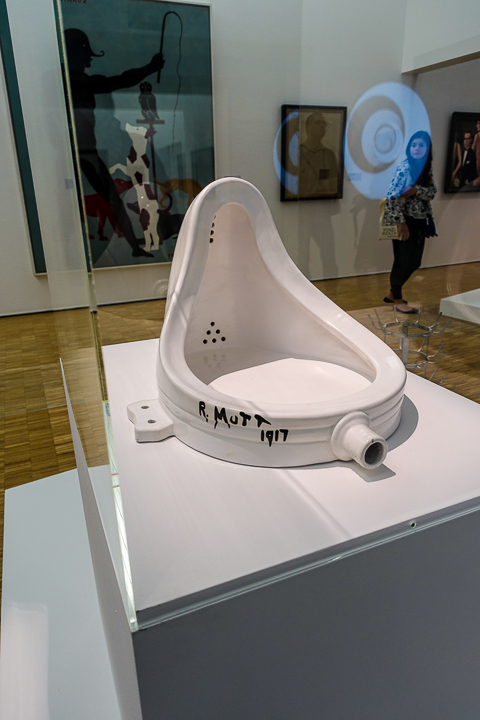
Here is Man Ray’s infamous urinal as a form of art.
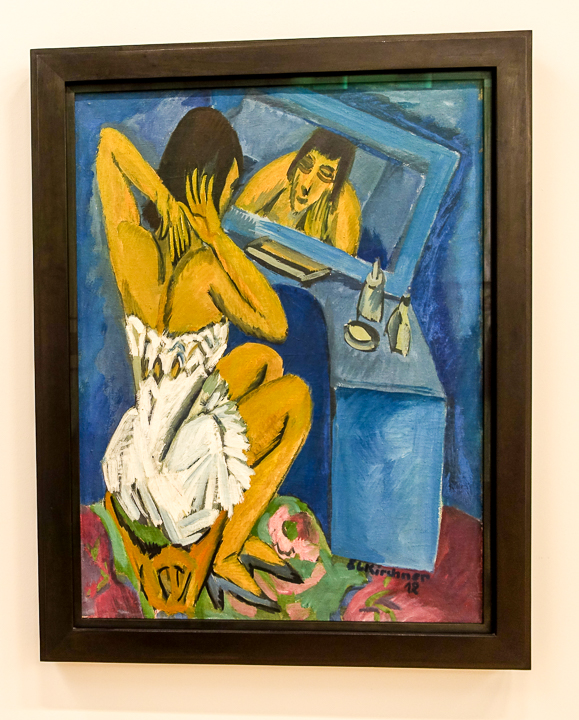
We saw many examples of German Expressionism, which Hitler called “degenerate art” and wanted to destroy. Unfortunately, the painter Ernst Kirchner killed himself after being denounced as a degenerate painter, but some of his paintings survived. Several hundreds of his works were destroyed by the Nazis.
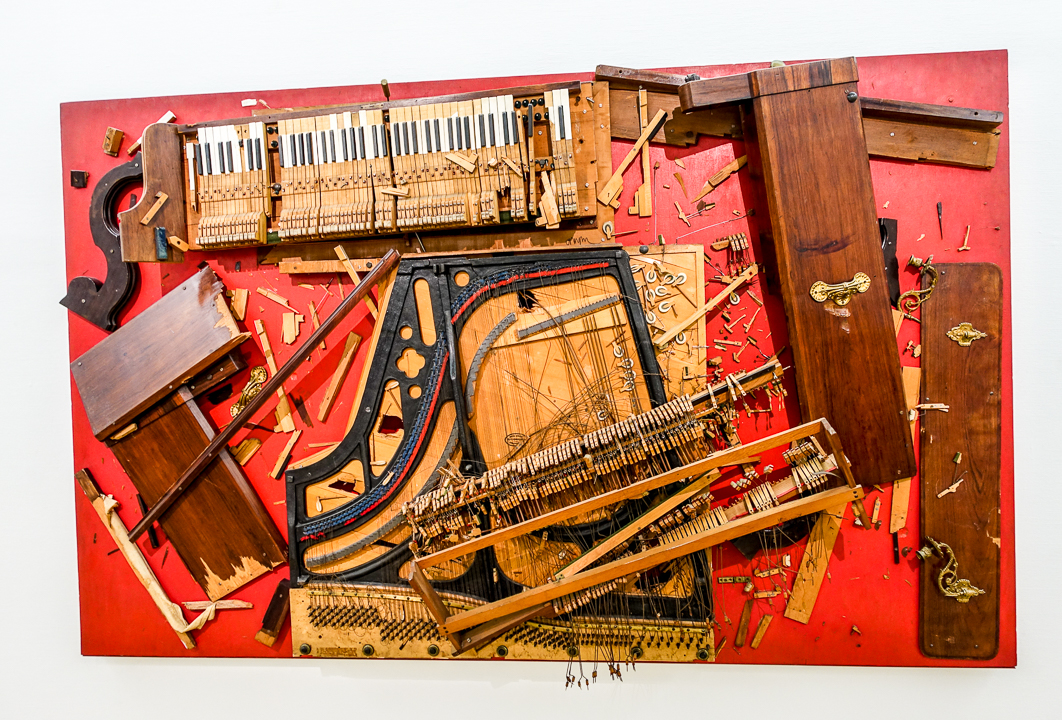
The rest of the museum was devoted to more recent art. We walked quickly through this section. Some people call this period “the death of art.” This anarchistic piece is called “Chopin’s Waterloo,” by Arman, 1962. What a mess.
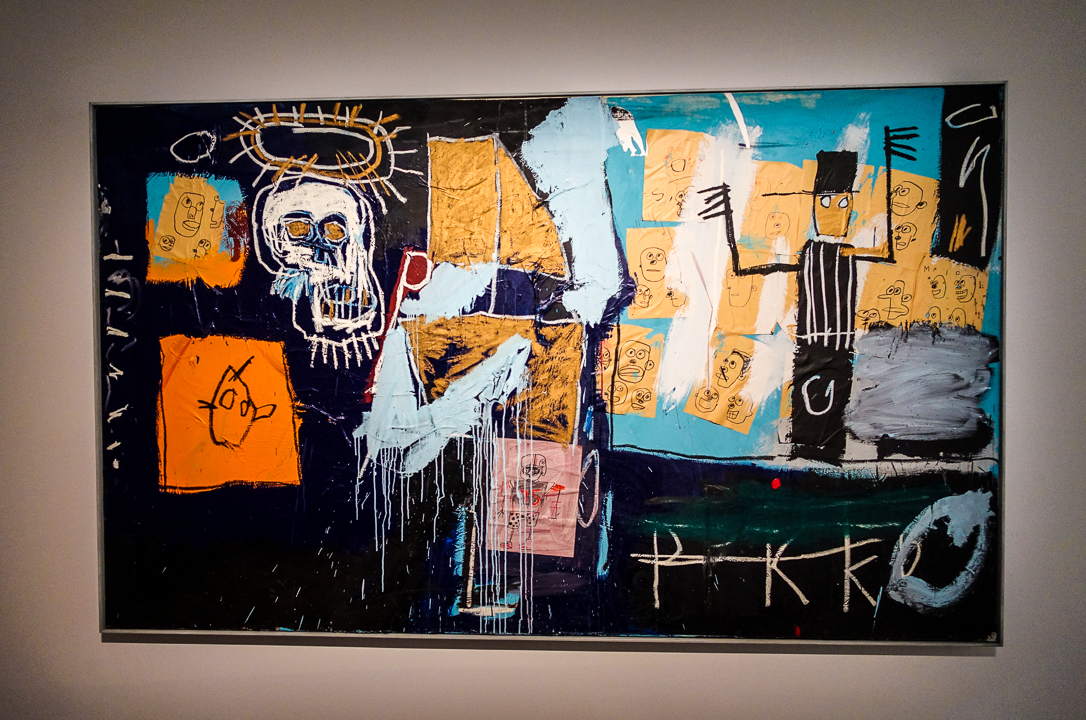
Even the New York graffiti artist Jean-Michel Basquiat had a piece in the museum.
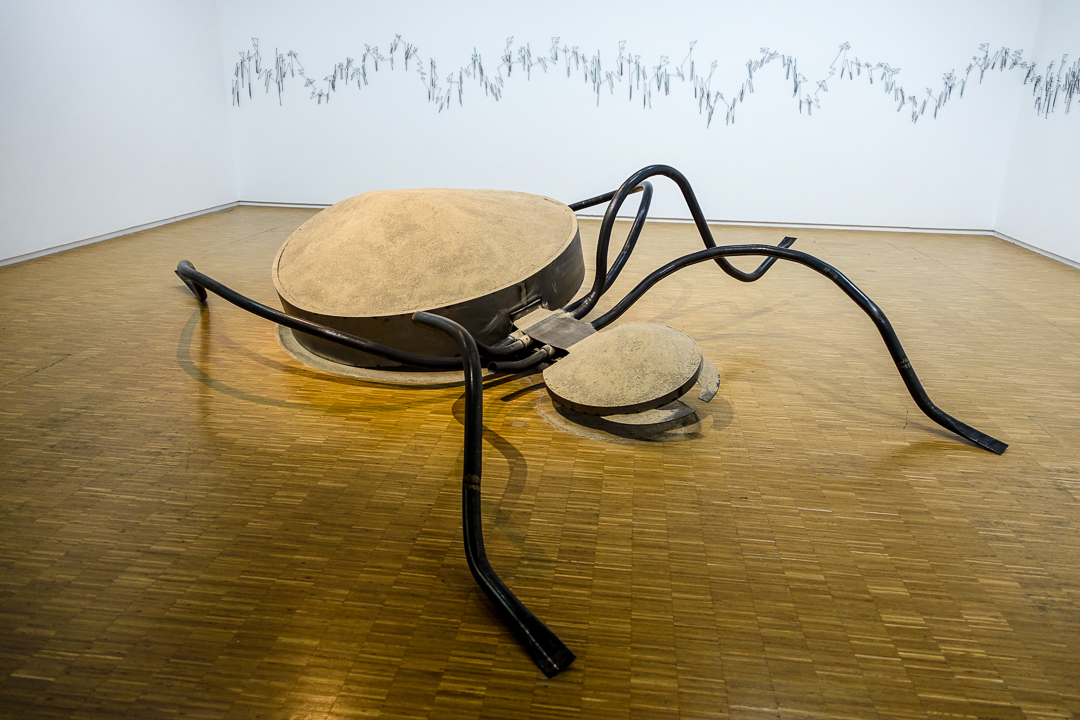
We are sending this piece to the Steckers to put in their backyard.
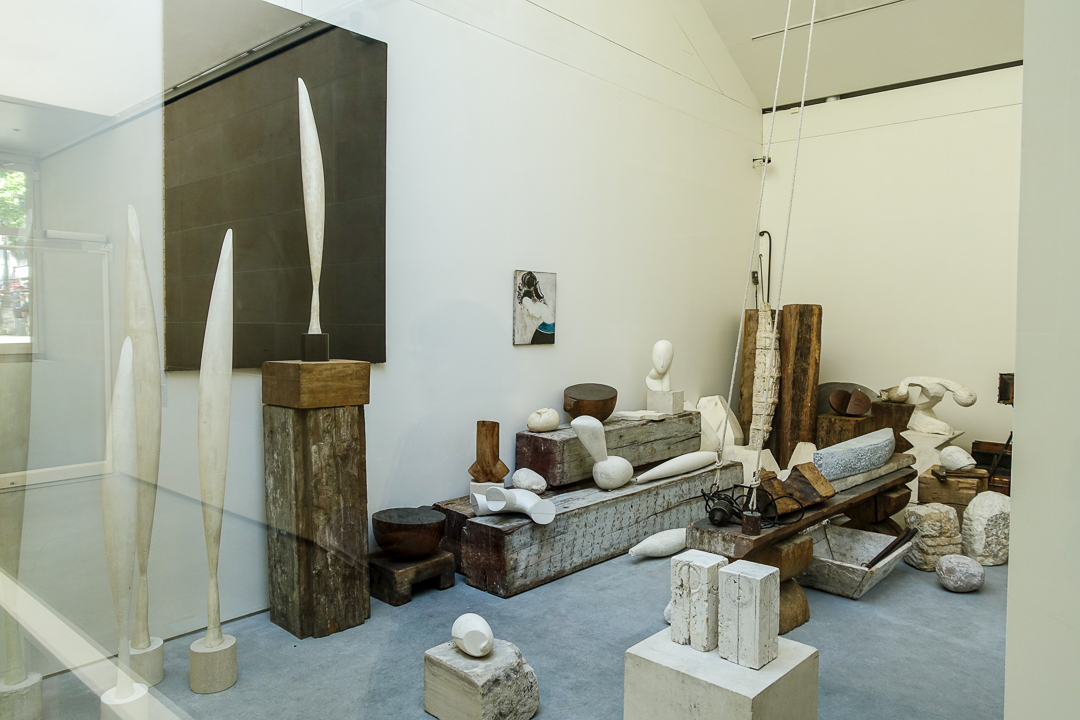
A special building adjacent to the main museum housed some of Constantin Brancusi’s works, such as some of the “Birds in Flight” pieces.
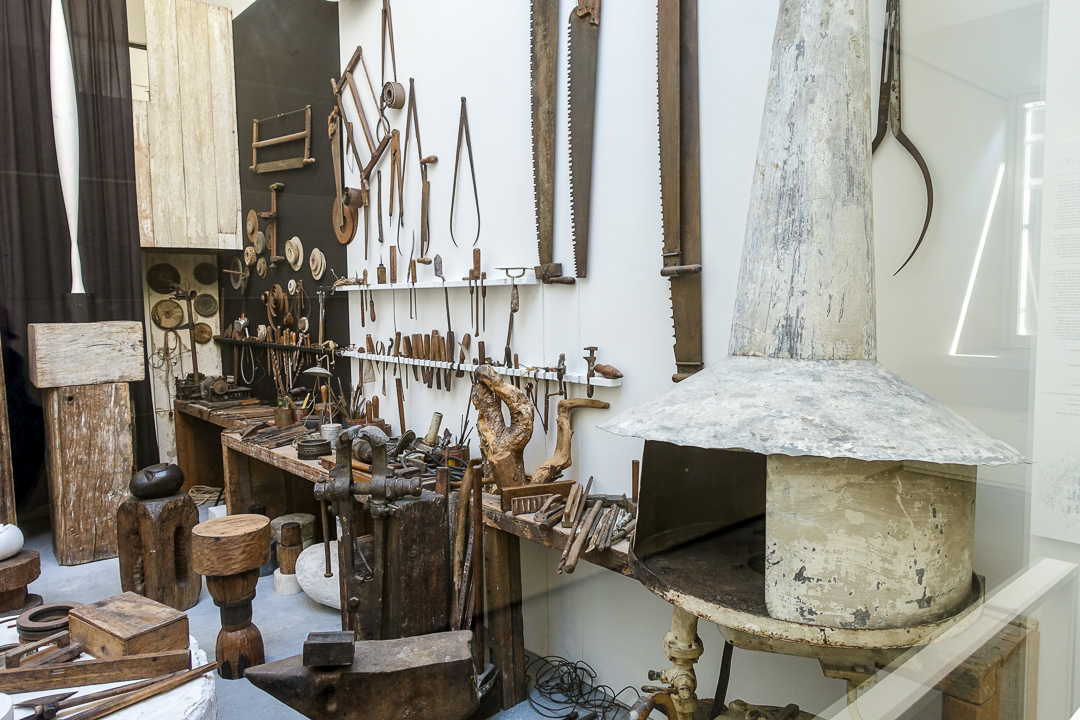
It also housed some of the tools of the sculptor.
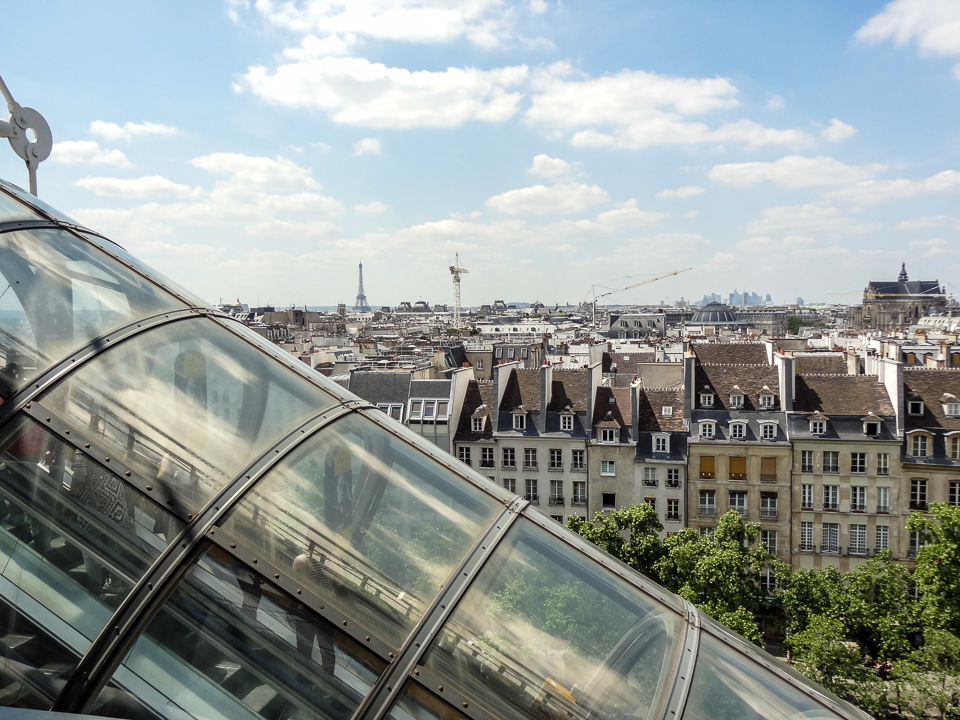
After overdosing on modern art, we took the tube back down and took the metro back to our hotel.
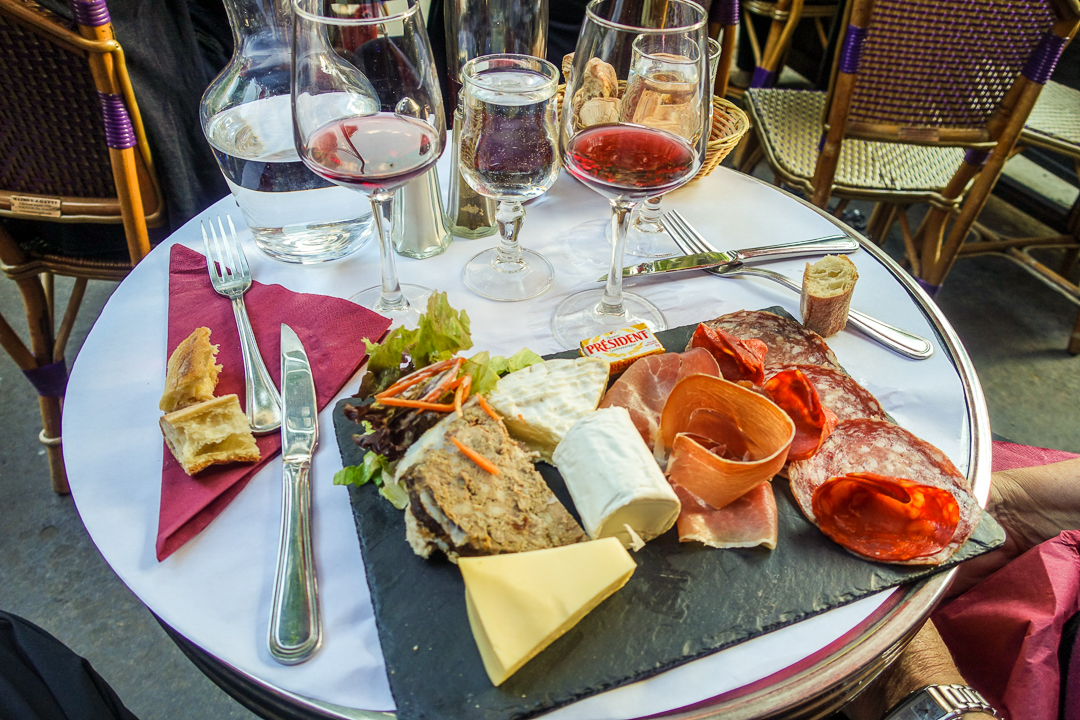
Later, we supped at a local sidewalk café, where they served us a pâte, cheese and charcuterie platter. We slept well after all the walking, eating and blogging.
À demain!
P&J
7 Comments
How many cemeteries do you visit in CA?
I do prefer the art work collection at the Pompidou museum better.
Aren’t you at the end of your trip?
Flea
We have not been in a California cemetery, except for during an actual funeral service. We have toured the St Louis Cemetery in New Orleans though, but it has nothing on Pere Lachaise in terms of size and architectural interest. Many tours are given in Pere Lachaise, a great place to spend Halloween Eve with all those talented French spirits! Lots of young folk love this place, but most are not as close to meting the grim reaper as we.
We return home June 2nd, so we are beginning to pack. Hope to see you soon. Hugs.
Re: Flea’s message, Sunnyside Mausoleum & Memorial Garden (Forest Lawn) is interesting to visit. As my grandparents and other relatives are interred there, we spent quite some time there as children. According to the Long Beach Historical Society website,
“Today people from around the world are drawn to the Mausoleum to not only the impressive architecture, but to see the Foucault Pendulum. It is one of the largest of its kind in existence. It keeps accurate time as it makes one complete revolution every 42 hours and 48 minutes.”
It is definitely worth a visit. Have not been there in years but…think I will go soon.
You have inspired us. Just sent an email to gang re: 15 day (onboard) viking cruise through France.
Have a safe journey. Looking forward to seeing you. Missing you.
We haven’t been there yet. We are winding up our Paris leg and are looking forward to catching up with you. Missing you, too.
Hey! Speaking of cemetaries, have you ever been to the Hollywood Forever? Hugh and I might go see “Modest Mouse” there on Aug. 21. It is sold out but you can buy tickets on StubHub. It is a lawn setting (if there is still any grass left). You might want to go to YouTube and see their song “Float On” with it’s whimsical video. If they have their video on a large screen while they perform it could be terrific.
Keep those dialogs and photos coming – they are amazing – I will forward the whole trip to Ron Magneson.
We have heard that these evenings are fun. They even have weekly movie nights, where people picnic on the lawn alongside the deceased Hollywood elite. CU soon.
Cemeteries are intriguing. Lots of stories to be found. We just toured the large cemetery in Savannah, the huge crypts for the men of war. Looking forward to seeing you soon. Missed you.