
We took a long detour from RTE 66 to take in some of the treasures of New Mexico.
No two places could be as dissimilar as the Valley of Fires & White Sands National Park. Let’s just call them “Ebony and Ivory” or “Hell and Heaven.”
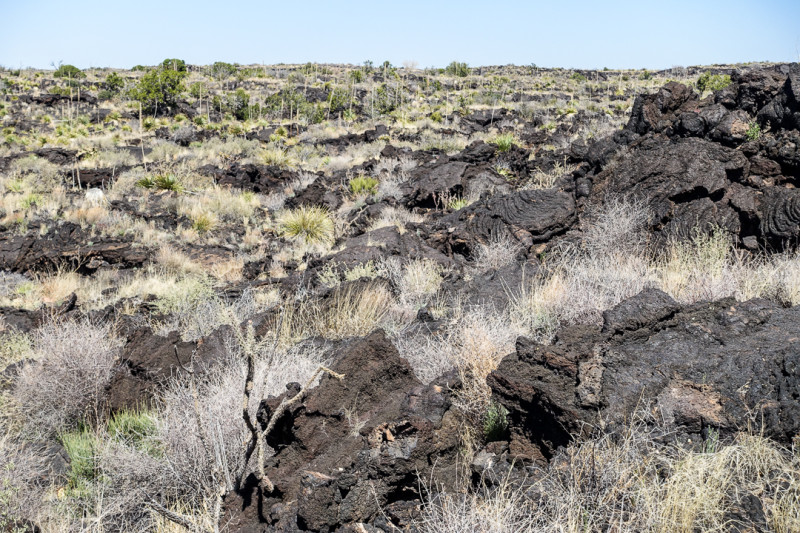
Walking through the Valley of Fires, we couldn’t help but think of the early settlers traversing this unforgiving terrain; they must have thought they had crossed over into Hell. Walking across the hardened lava is like scaling a field of broken glass – slippery and sharp.
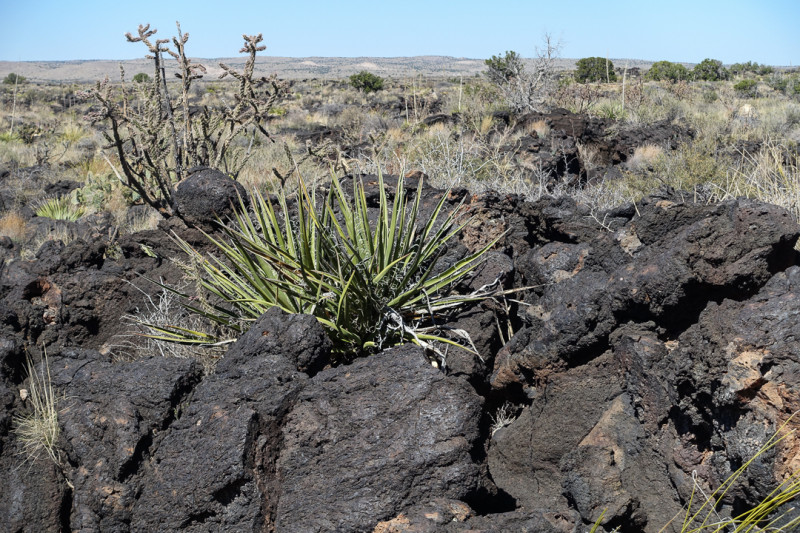
Extrusions from the earth’s crust – very thin in this area – created the harsh, but beautiful, Carrizozo Lava Flow.
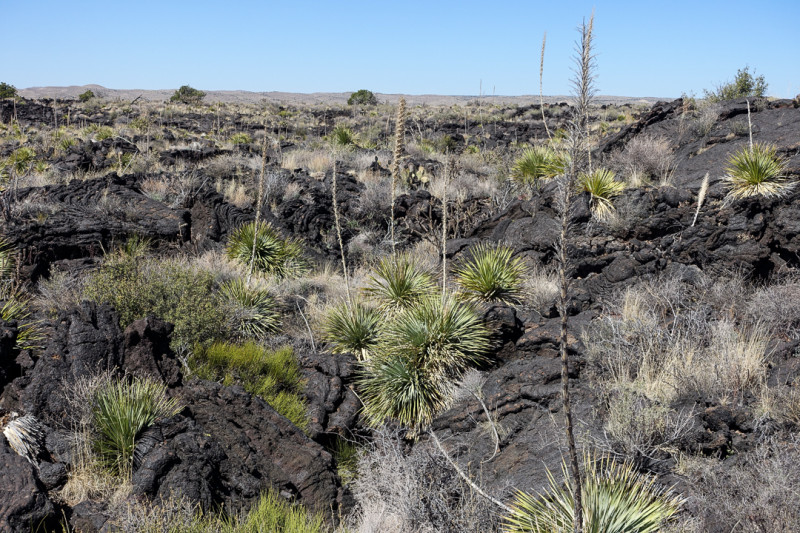
This area is 2-5 miles wide and 44 miles long. In certain spots the lava is 165 feet thick and has a surface area of 127 square miles.
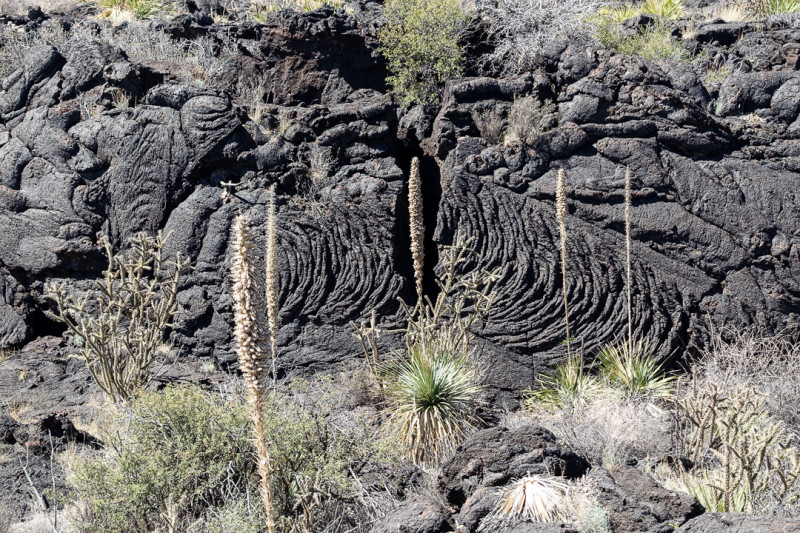
Around 1,500-5,000 years ago, lava vents oozed lava that flowed on the earth’s surface. Only the hardiest plants grow here, such as yucca (New Mexico’s state flower).
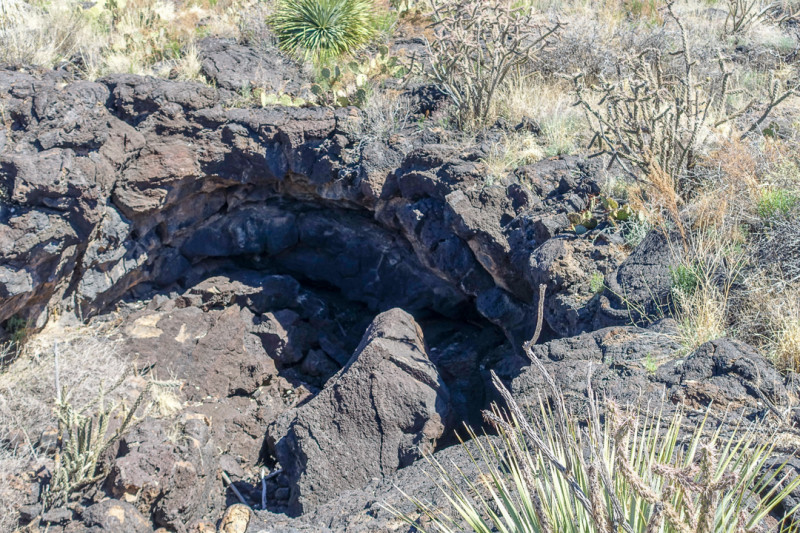
Gas bubbles that collapsed as the surface cooled formed these large holes.
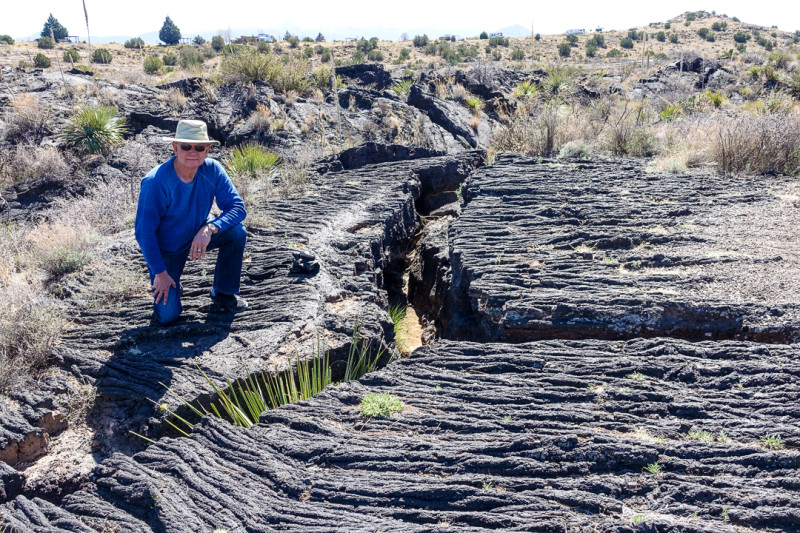
Pete is on top of a pressure ridge, “formed as the lava surface cooled and hardened, while still molten lava underneath continued to move under the crust . . . .
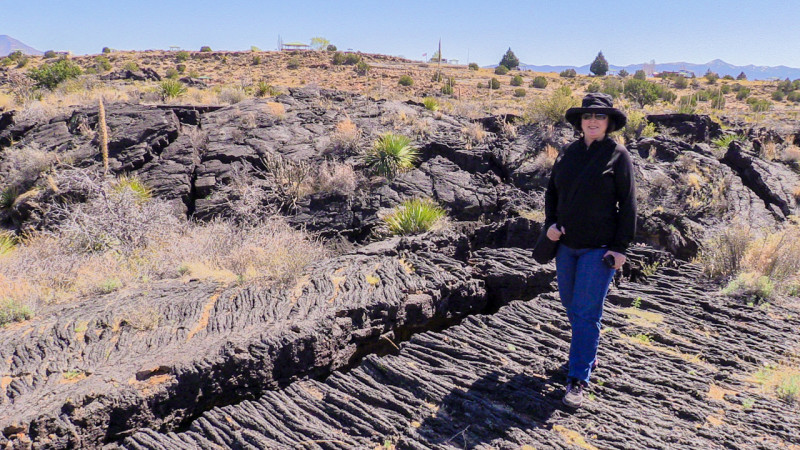
. . .The cooler lava surface pushed against the sandstone, bending upwards. As it solidified, it developed a large rack along the ridgeline.” The Valley of Fires Nature Trail brochure was sure helpful!
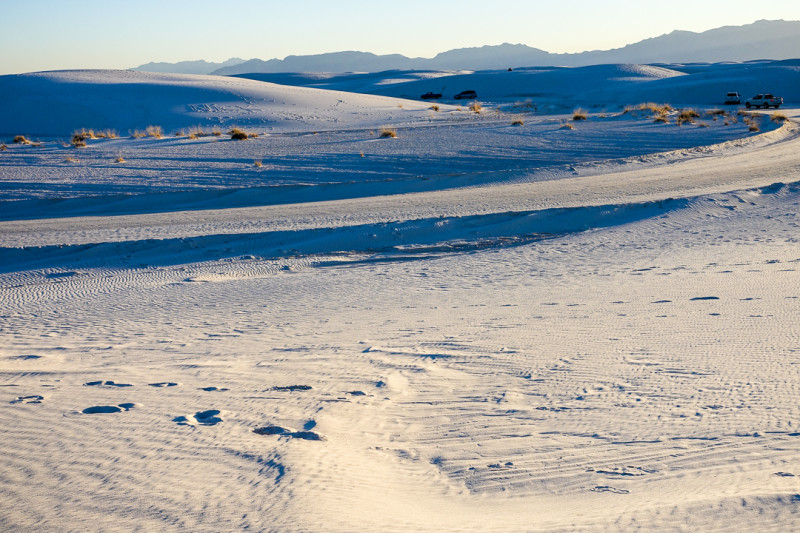
Our next stop was White Sands National Monument in the Chihuahuan Desert, outside of Alamogordo, NM. And, no, this is not snow.
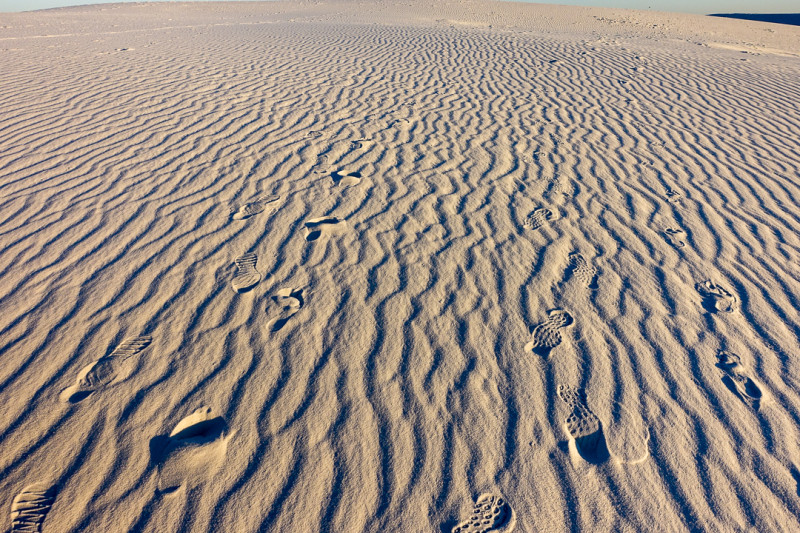
The glistening sand and wave-like dunes of gypsum cover 275 square feet. It is the world’s largest gypsum field.
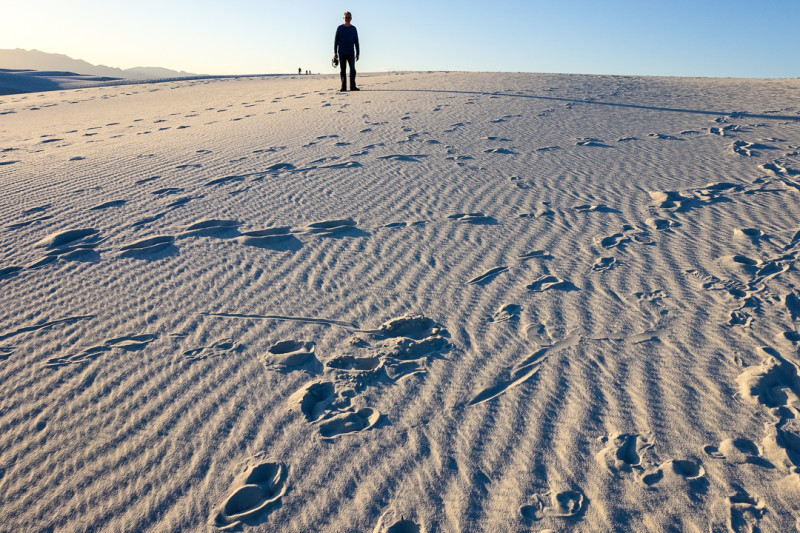
Ever-changing, the sparkling dunes build up, peak, then collapse; but they constantly advance. The powerful southwest winds drive the sand to cover everything in its path.
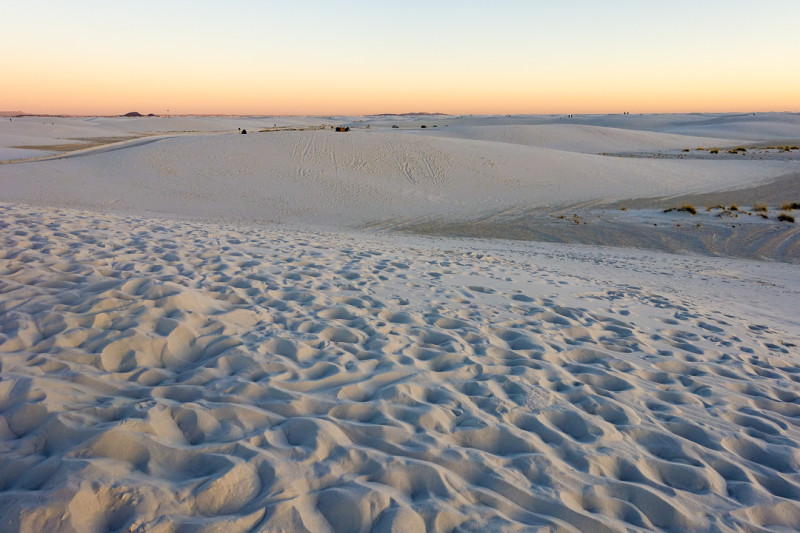
We were told that sunset was the best time to see this white wonderland.
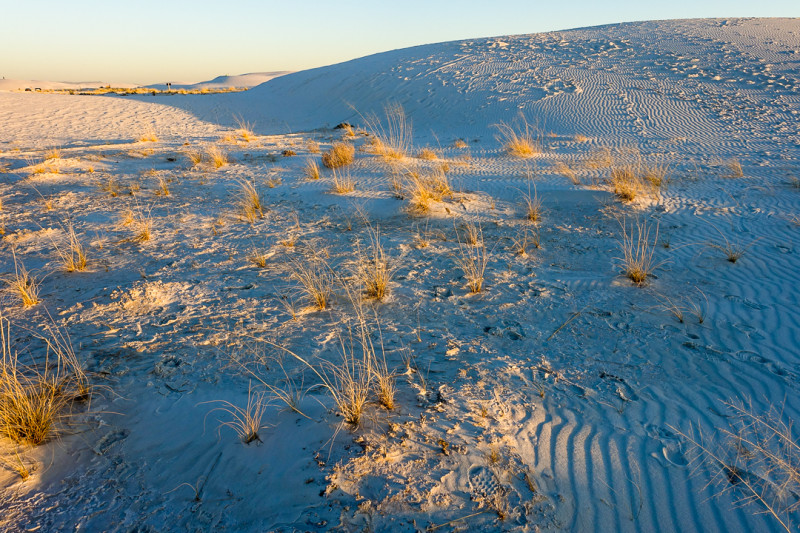
Photos look best on these inter-dune flats in the low light of sunrise or sunset.
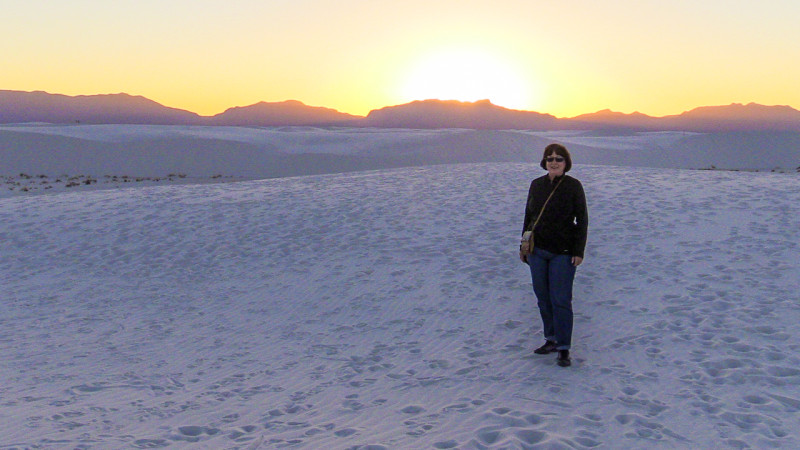
Women of a certain age look better in low light, too!
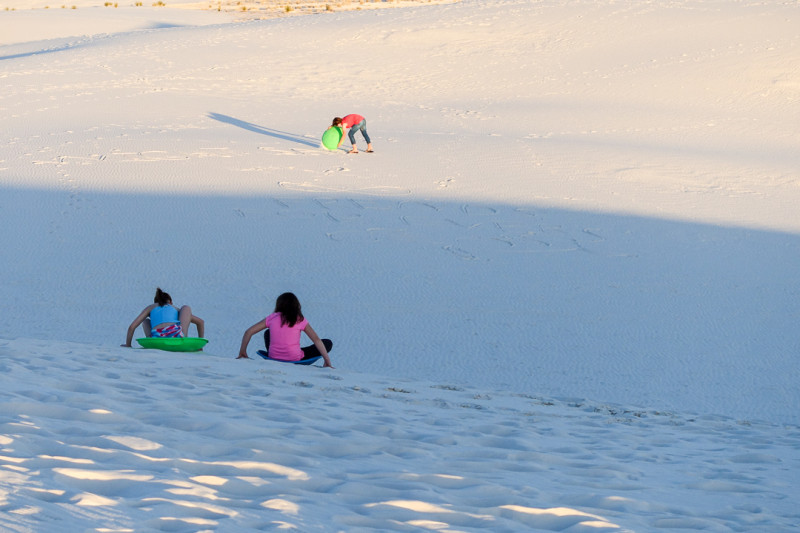
Children enjoy sliding down the dunes. Our motel provides dishes on request.
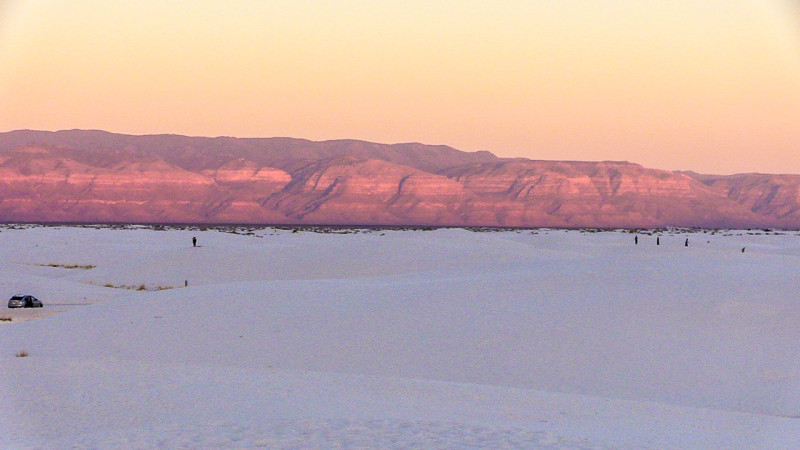
According to the White Sands brochure, a shallow tropical sea once covered this area. “The sea rose and fell repeatedly over millions of years, leaving gypsum deposits behind as the water evaporated. After millions of years under water, this region rose up and the sea retreated.”
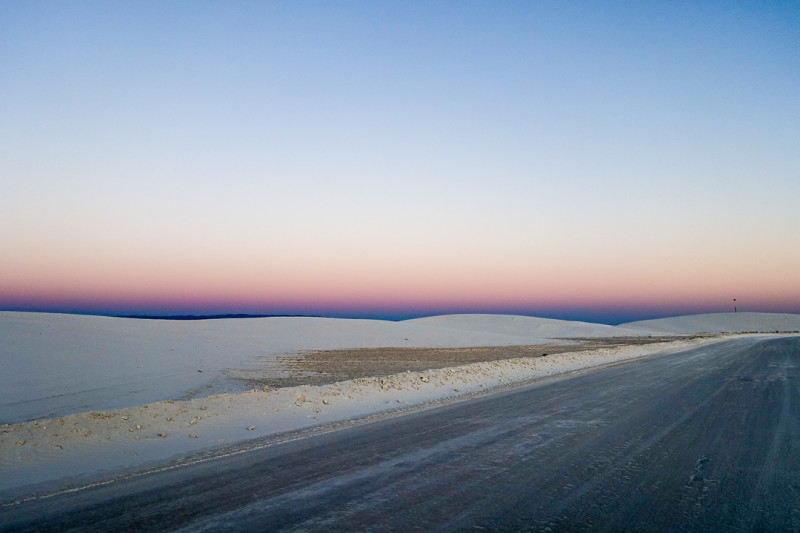
Sundown turns all the whiteness into a rainbow of hues.
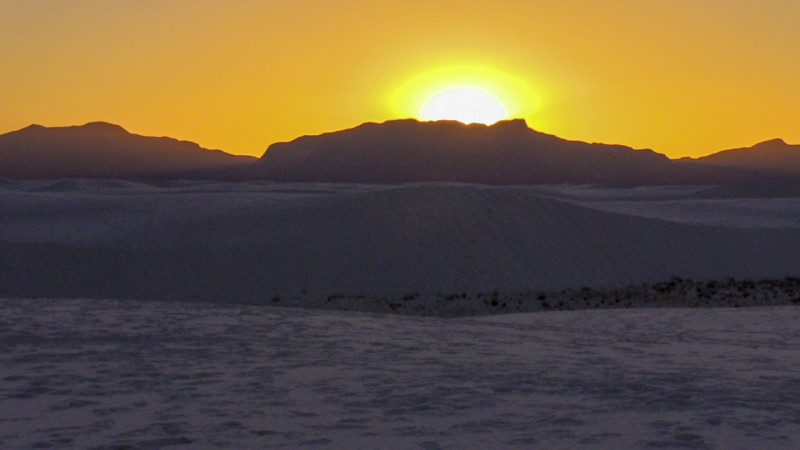
What a stunning place. If the Valley of Fires is Hell, then White Sands must be . . .
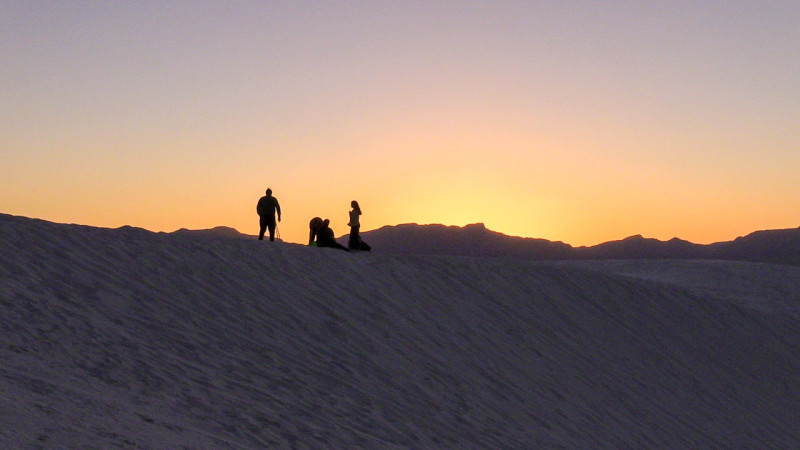
Heaven.
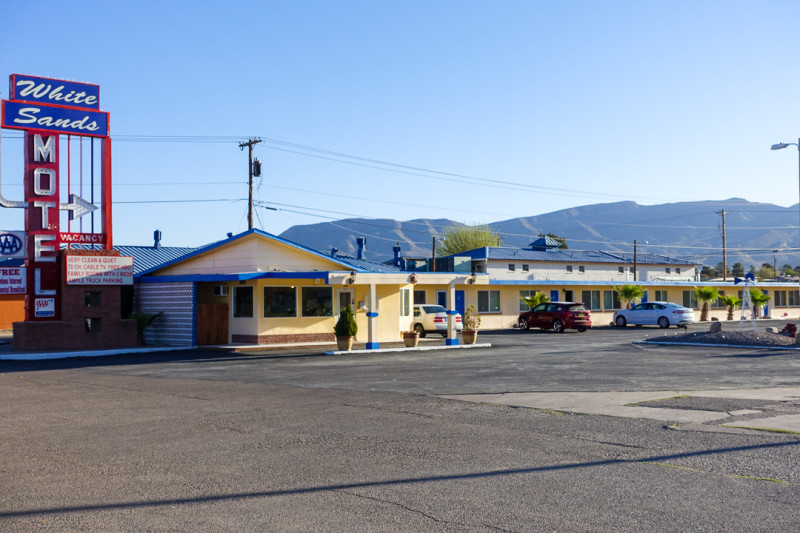
Our retro motel court. We chilled with some bikers on vacation, who turned back from White Sands. All that fine sand is not good for choppers. Our visit brought back memories of WSMR from another life for Pete.
3 Comments
these photos are amazing, hard to believe how beautiful this trip has been, even the black lava shots are so interesting, the white sands and sunsets make for a romantic time I would say. You both look fantastic. XXX
The isolation, the fantastic colors. Beautiful.
White sands has always been on my bucket list. The starkness is hauntingly beautiful,