
Welcome to Bourgogne (Burgundy). Life is all about wine in the Cote d’Or department of eastern France.
Burgundy wine (Bourgogne or vin de Bourgogne) is wine made in the valleys and slopes west of the Saône River, a tributary of the Rhône. The most famous wines produced here—those commonly referred to as “Burgundies”—are dry red wines made from pinot noir grapes and white wines made from Chardonnay grapes.
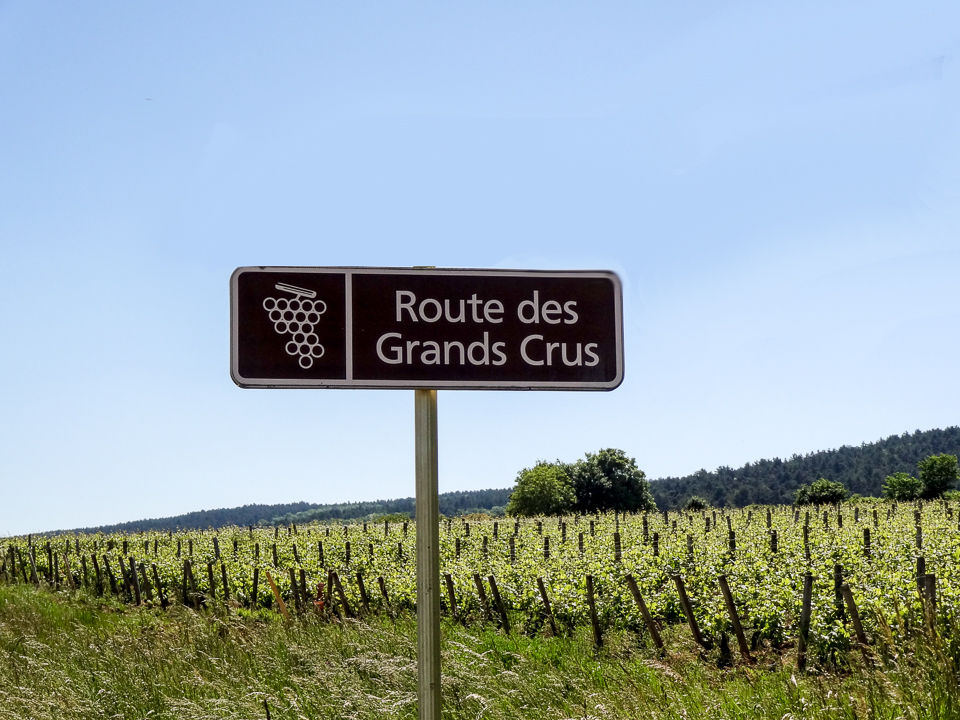
The road (D122) of some of the world’s greatest wines. We started our journey on the wine road in Dijon. The road travels past all Grands Crus in Cote-de-Nuits from Gevrey-Chambertin to Saint-Georges.
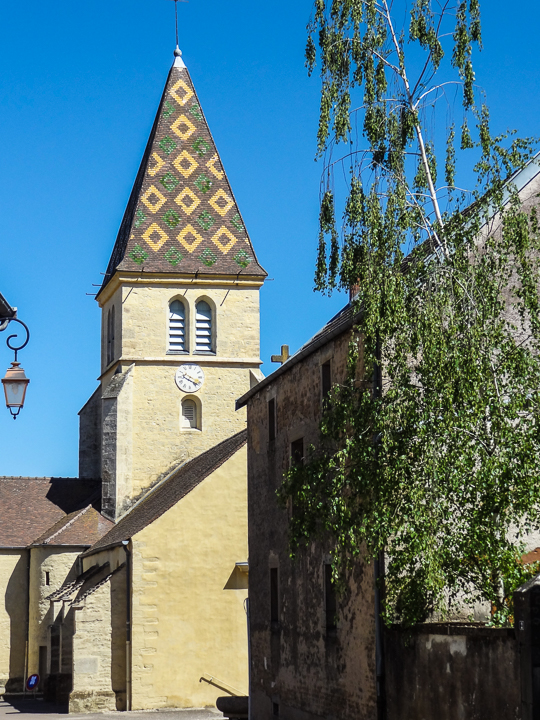
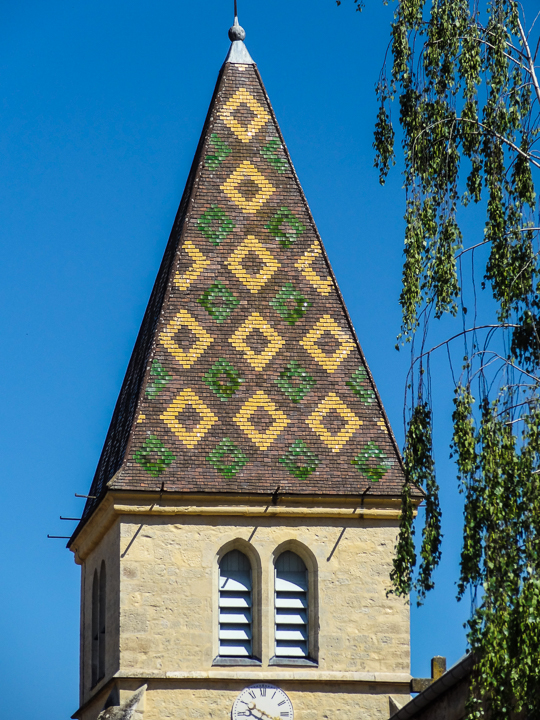
This region is noted for its colorful rooftops, so we will post some of them as we see them.
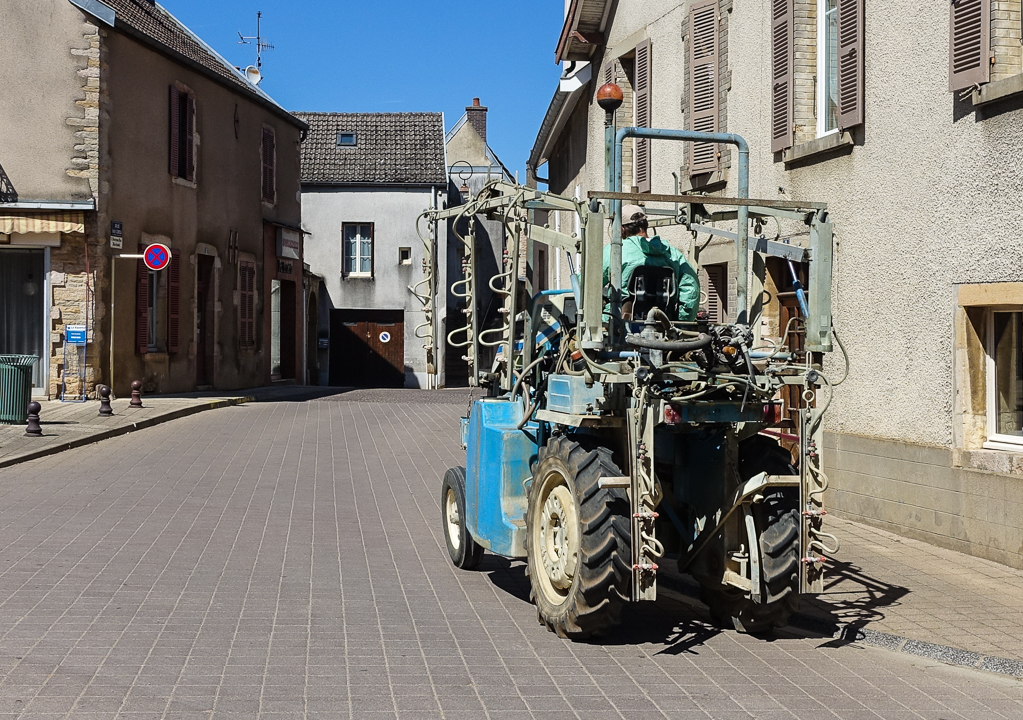
The tractors used to cultivate the vineyards are so different here. The machines are purpose-built to straddle the close spaced vineyard rows. We also spotted horses, with plows attached, working the vineyards as well.
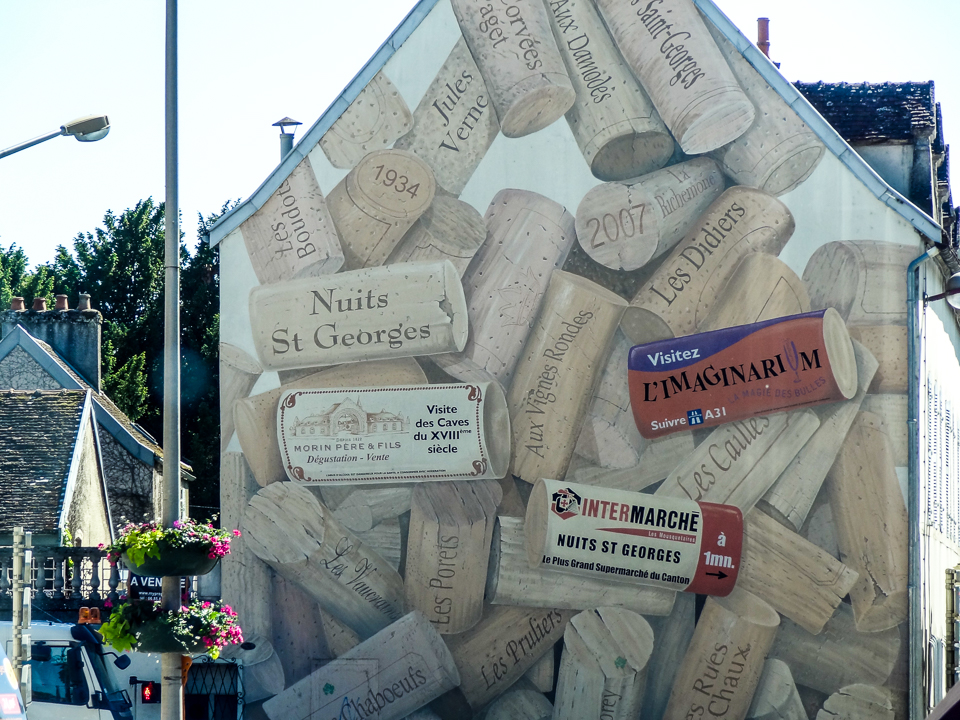
Burgundy has a higher number of appellations d’origine contrôlée (AOCs) than any other French region, and is often seen as the most terroir-conscious of the French wine regions. The various Burgundy AOCs are classified from carefully delineated Grands Crus vineyards down to more non-specific regional appellations. The practice of delineating vineyards by their terroir in Burgundy goes back to medieval times, when various monasteries played a key role in developing the Burgundy wine industry.
Early Burgundian wine history is distinctly marked by the work of the Cistercians with the Catholic Church being the principal vineyard owner for most of the Middle Ages. Receiving land and vineyards as tithes, endowments and as exchanges for indulgences, the monks were able to studiously observe the quality of wines from individual plots; and over time they began to isolate those areas that would consistently produce wine of similar aroma, body, color and vigor and designate them as crus.
Following the success of the Bordeaux Wine Official Classification of 1855, the designations of grand cru and premier cru were developed and expanded on in the 1930s with the creation of the Appellation d’Origine Contrôlée (or AOC) system.
24 grands crus (supreme accolade awarded to certain climats [plots]) are produced in the Côte de Nuits, in other words, all the red Burgundy grands crus with the exception of Corton (in the Côte de Beaune).
The bottle label gives the name of the climat followed by the expression “grands crus”: Chambertin, Chambertin-Clos de Bèze, Chapelle-Chambertin, Charmes-Chambertin, Mazoyères-Chambertin, Griotte-Chambertin, Latricières-Chambertin, Mazis-Chambertin, Ruchottes-Chambertin, Clos Saint-Denis, Clos de la Roche, Clos des Lambrays, Clos de Tart, Musigny, Bonnes Mares, Clos Vougeot, Echézeaux, Grands Echezeaux, La Romanée, La Romanée-Conti, Romanée Saint-Vivant, Richebourg, La Tâche, La Grande Rue.
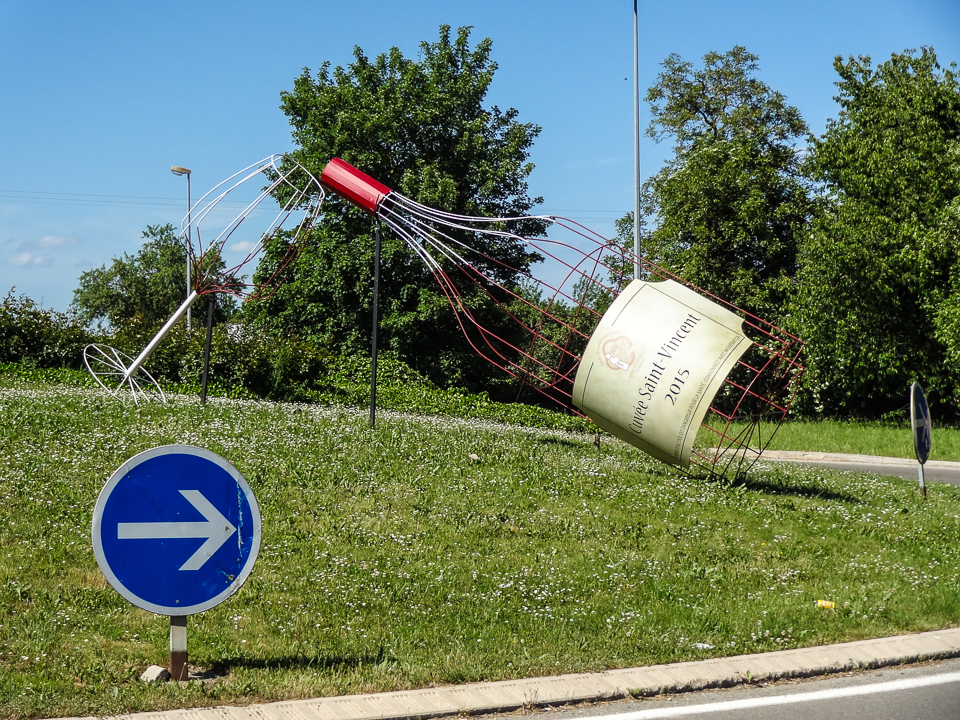
Wine symbols surround us in the Cote d’Or, even in the roundabouts.
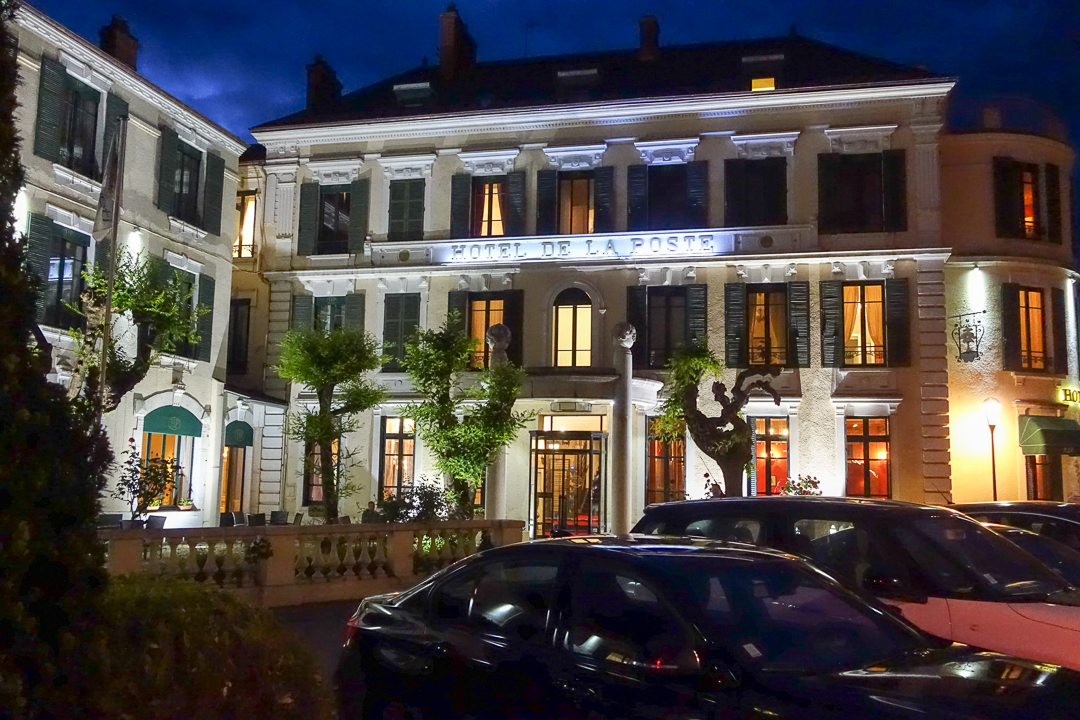
We arrived in Beaune, the capital of Burgundy, and stayed at Le Hotel de Poste for 2 nights. The hotel was full of American tourists, some with whom we had wonderful conversations.
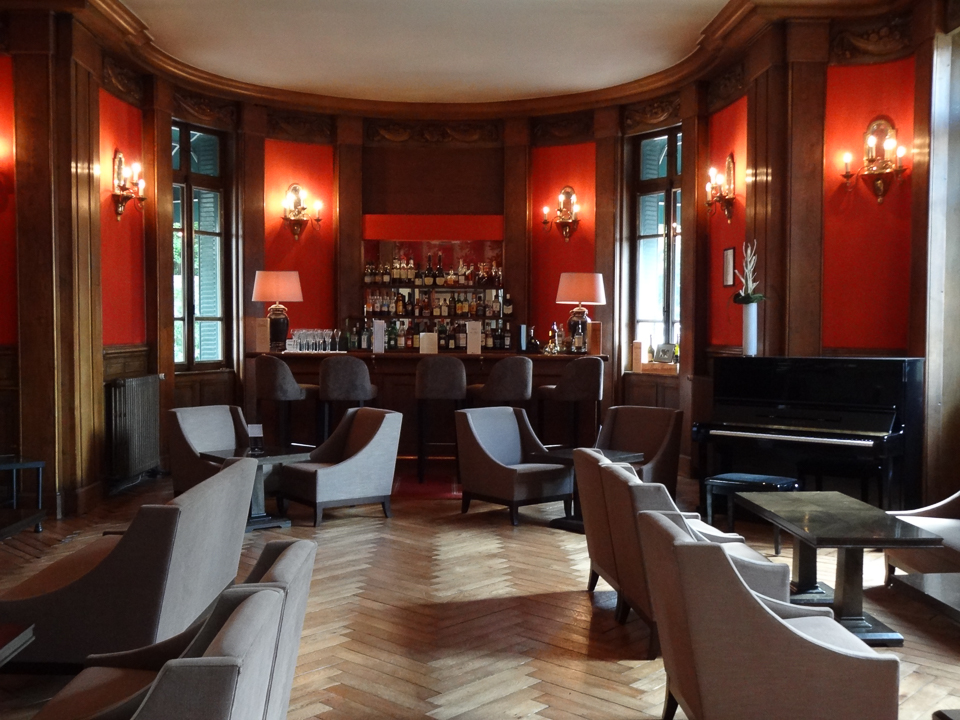
Le bar d’Hôtel de Poste
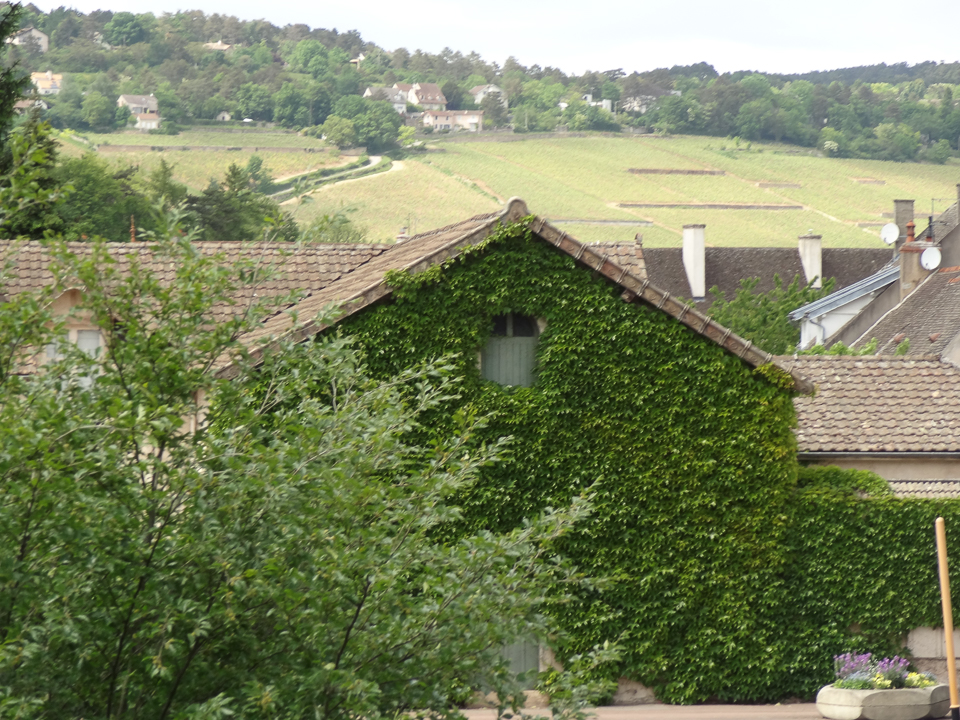
Vineyards surround the walled city of Beaune.
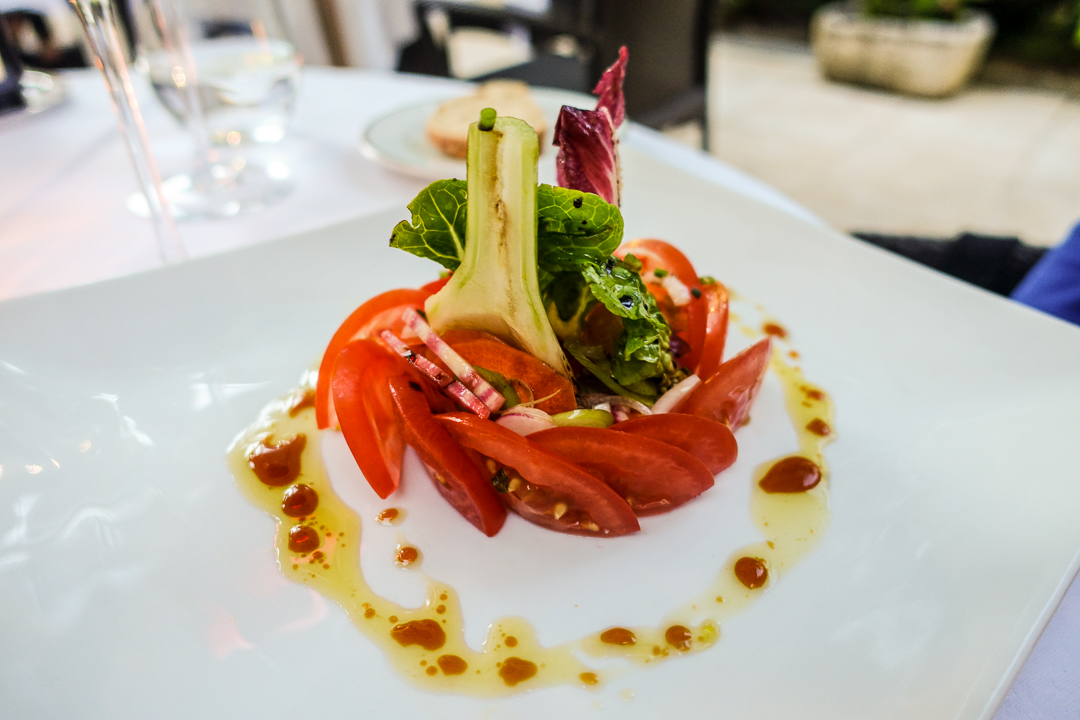
Because many restaurants in the area were closed on Monday, we ate dinner Bourgogne (Burgundy) style at Le Renais, the hotel’s elegant and highly esteemed al fresco restaurant. C’etait tres delicieux!
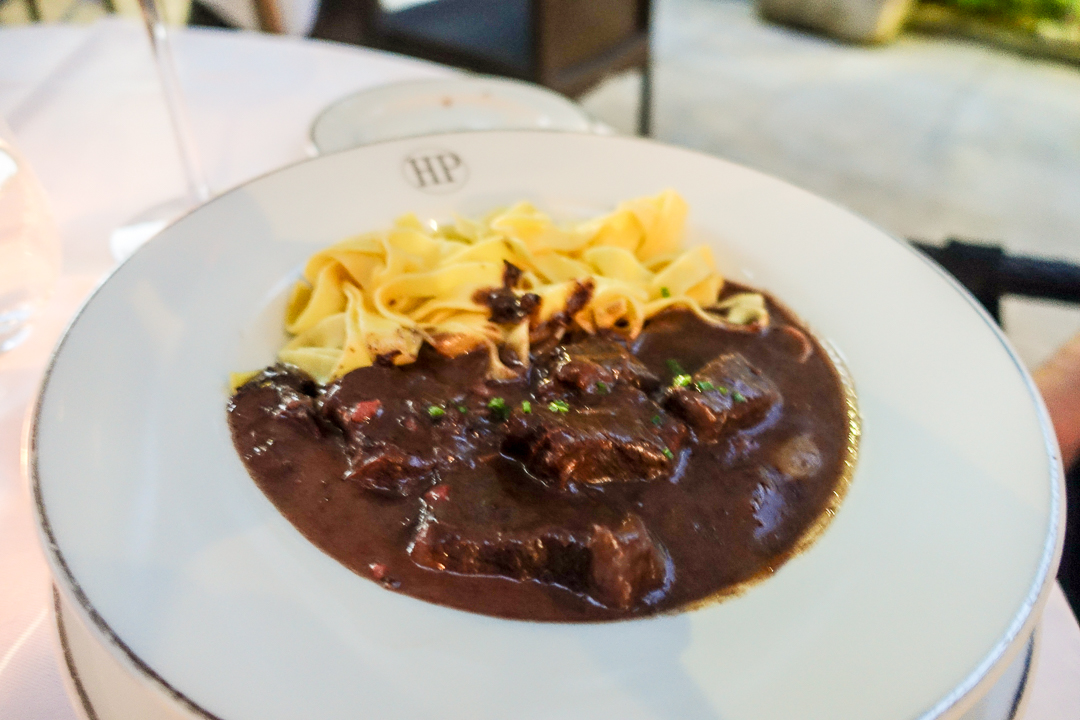
We went full native and ordered Boeuf Bourgogne.
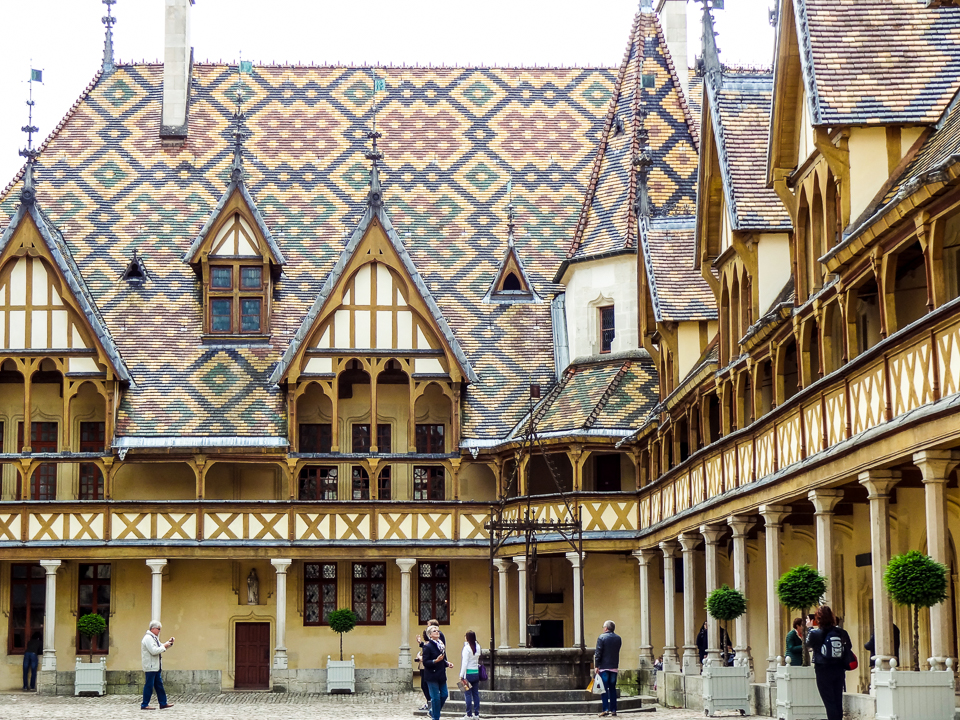
The next morning we visited the Hotel of God (l’Hotel Dieu, Hospice’s de Beaune), once a hospital for the poor that was supported by a wealthy nobleman. Most people in Beaune after the Hundred Years War were in a bad way as a result of the war as well as the plague, so the chancellor to one of the Dukes of Beaune built a charitable hospital for the poor. The hospital owned its own vineyards and auctioned its wine to produce funds to help support expenses.
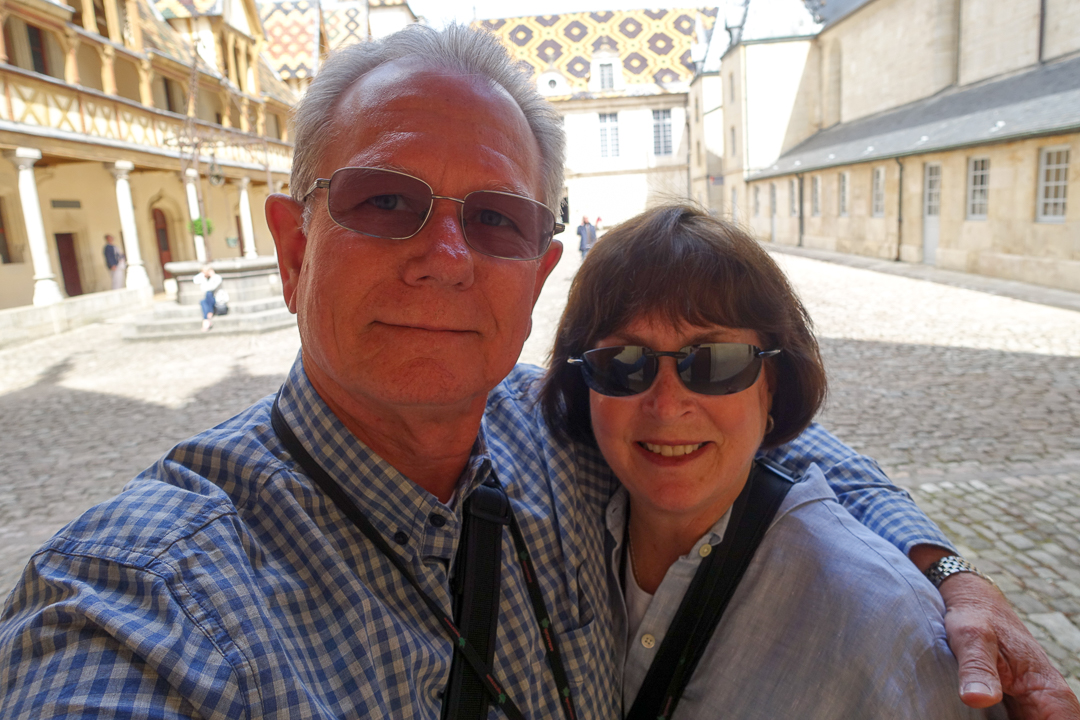
We took our first selfie in its courtyard. A pair of two-storied buildings surround the cobblestone grounds.
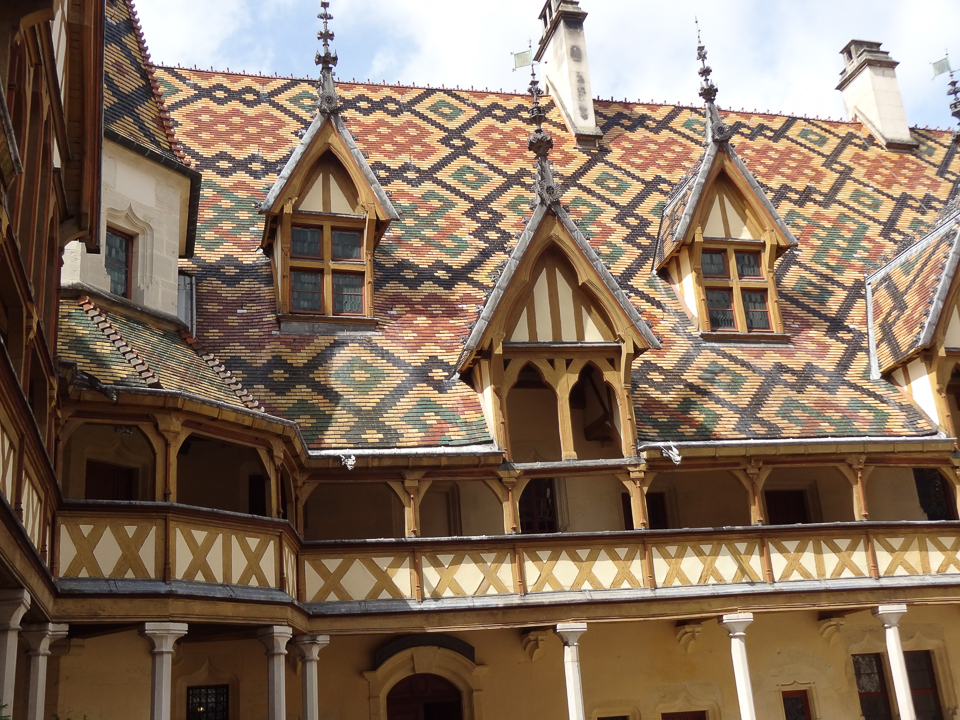
Half-timbers, dormer windows and colored tile compose its architecture.
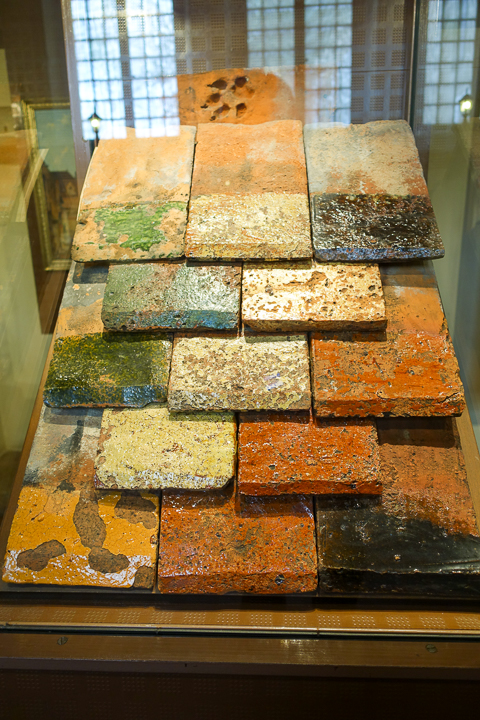
A sampling of the colored roof tiles
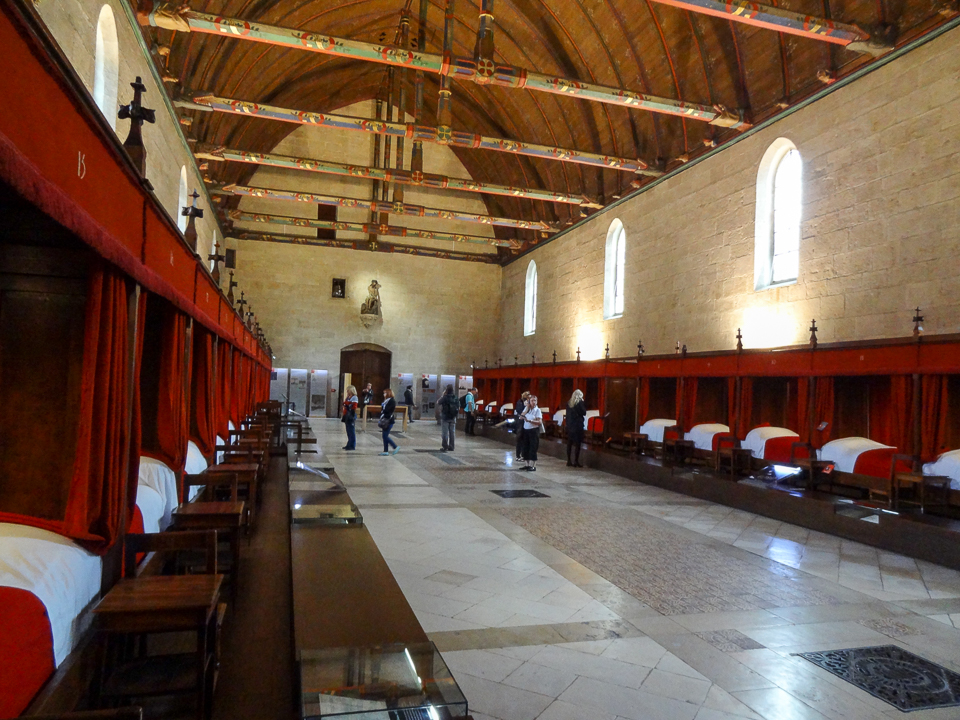
The old, the sick, orphans, pregnant women and the hopeless were all welcome here. At the end of the hall is a small chapel.
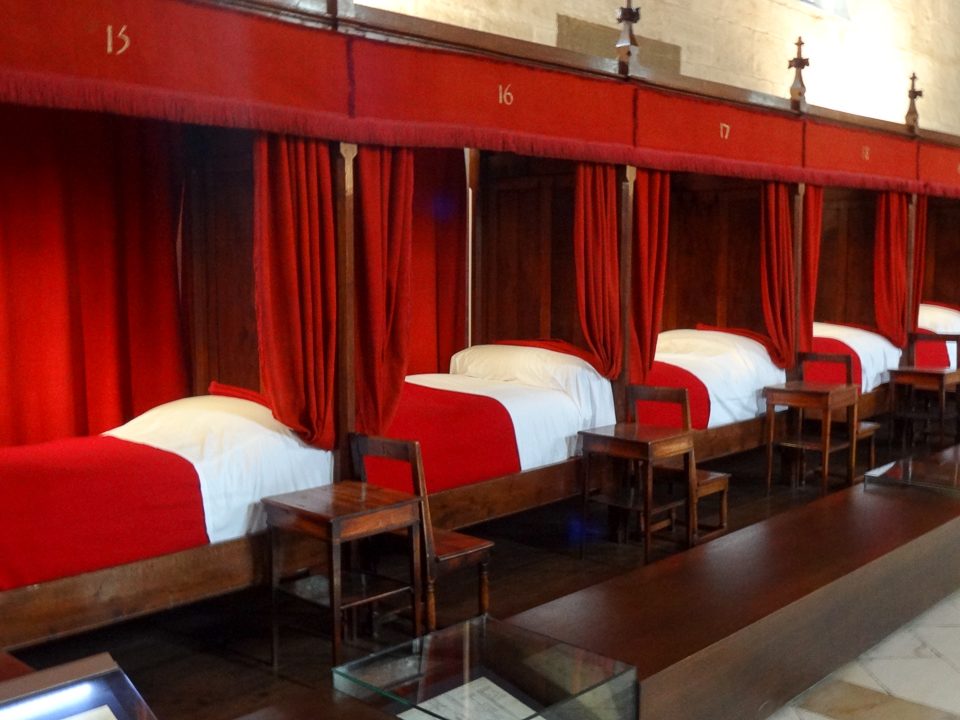
Clean, well-organized and very red, the Hotel of God showed that some wealthy aristocrats were not blind to the needs of the lower class, who often lived in destitution.
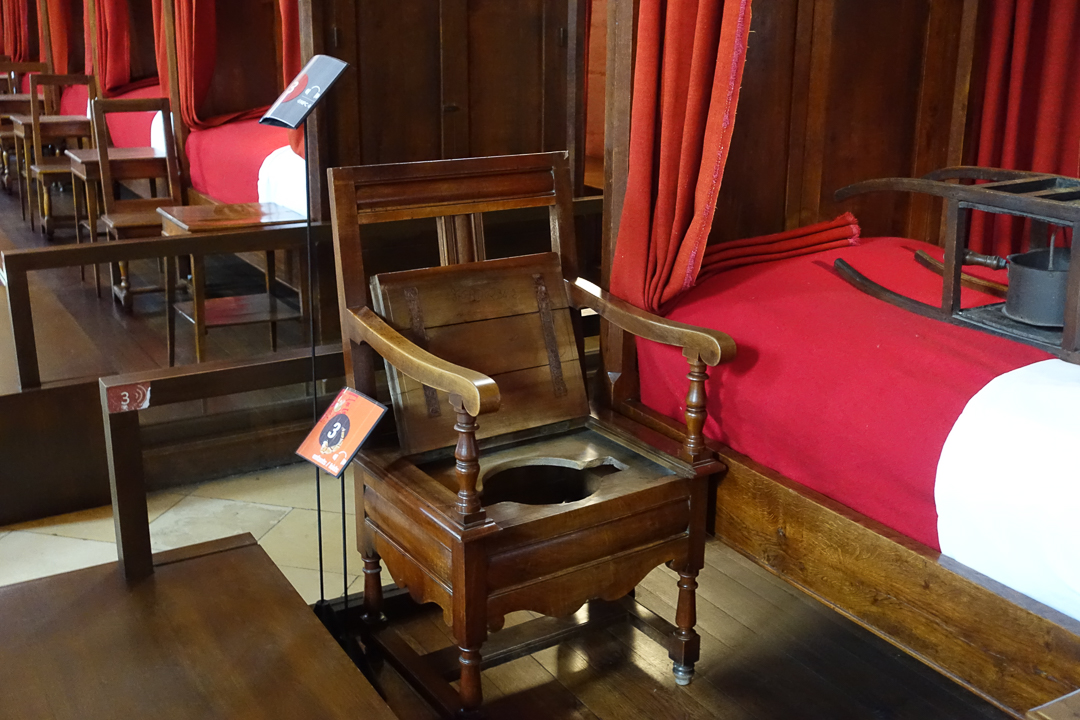
An early chamber pot in a seat
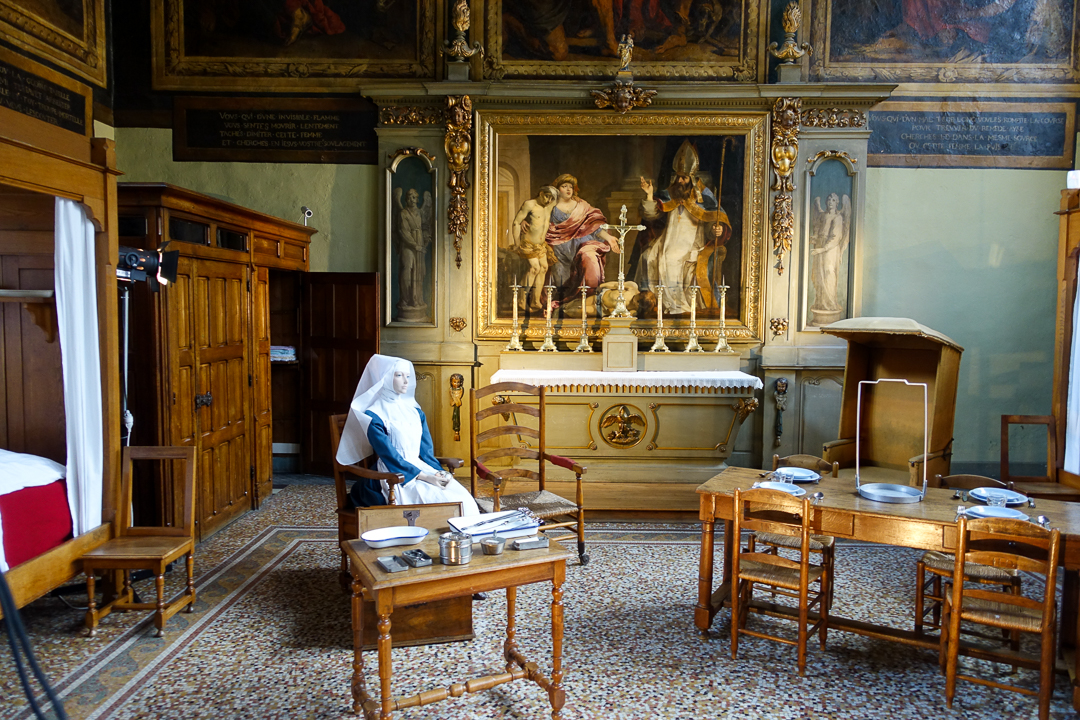
The more upscale room reserved for wealthier patients
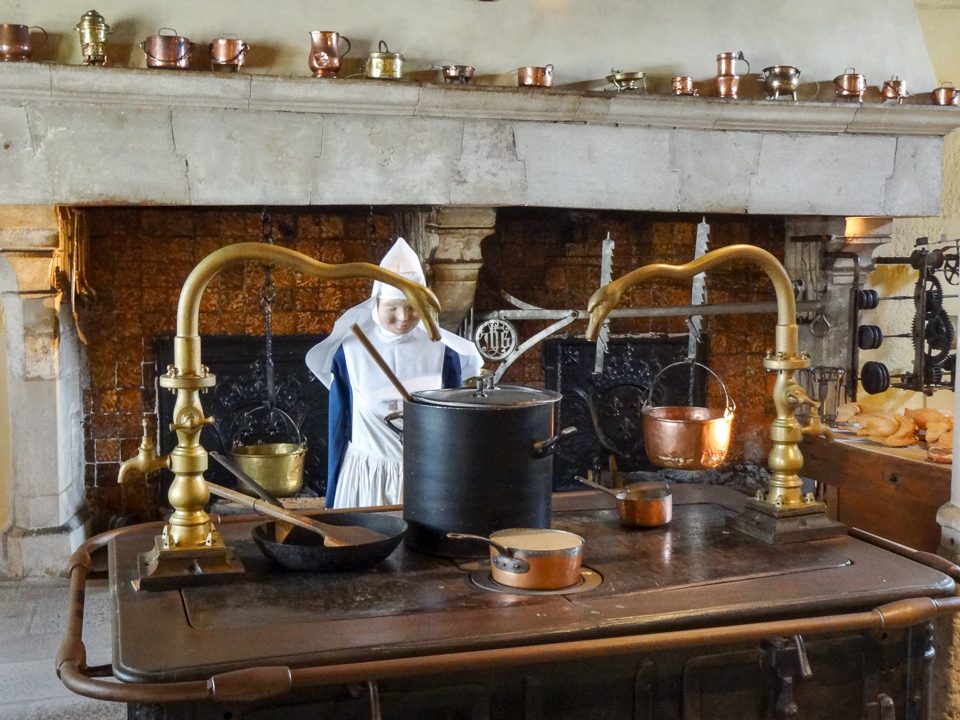
The soup kitchen. Other rooms showcased medical instruments (including an enema one gives oneself to preserve one’s dignity), hospital furniture, apothecary medicine, and decorative tapestries & altar pieces. There was a huge open room where the staff placed those knocking on heaven’s door, for the staff wanted to separate the dying from those who had a fighting chance. The hospital also had a discreet exit, used to quickly remove those who did not make it.
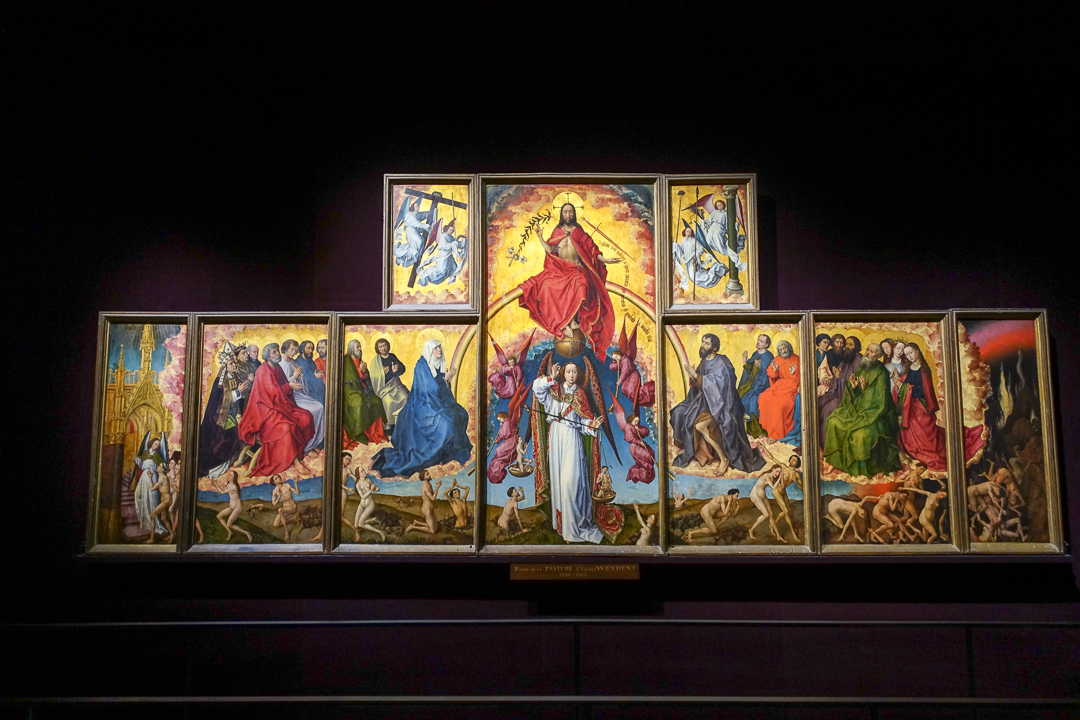
The philanthropist who started l’Hotel Dieu was concerned with the idea of salvation, especially his own. Many works of art depict this theme. In the tableau above, those going to heaven defy gravity, while those going the other way are stuck in the earth. Stretch the picture with your fingers to enlarge it.
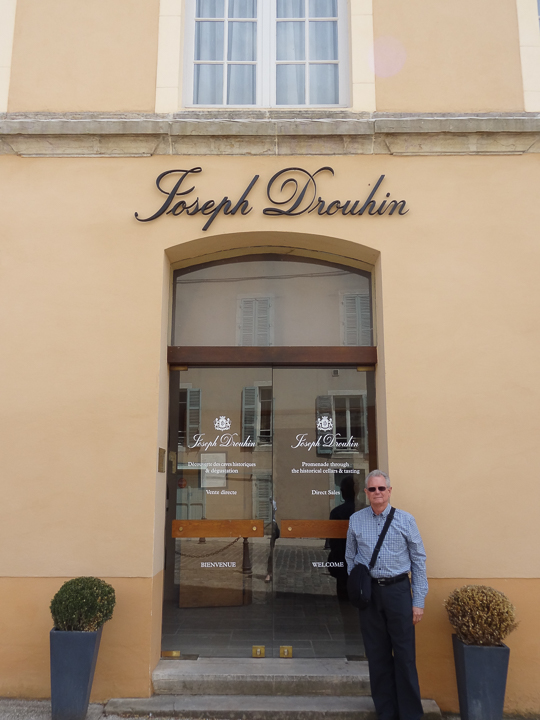
After touring of the hospital, we had an appointment at Maison Joseph Drouhin for a tour of their caves (cellars) and a wine tasting. Founded in 1880, Joseph Drouhin cellars are located in the historical Cellars of the Dukes of Burgundy and the Kings of France in Beaune (12th-18th centuries).
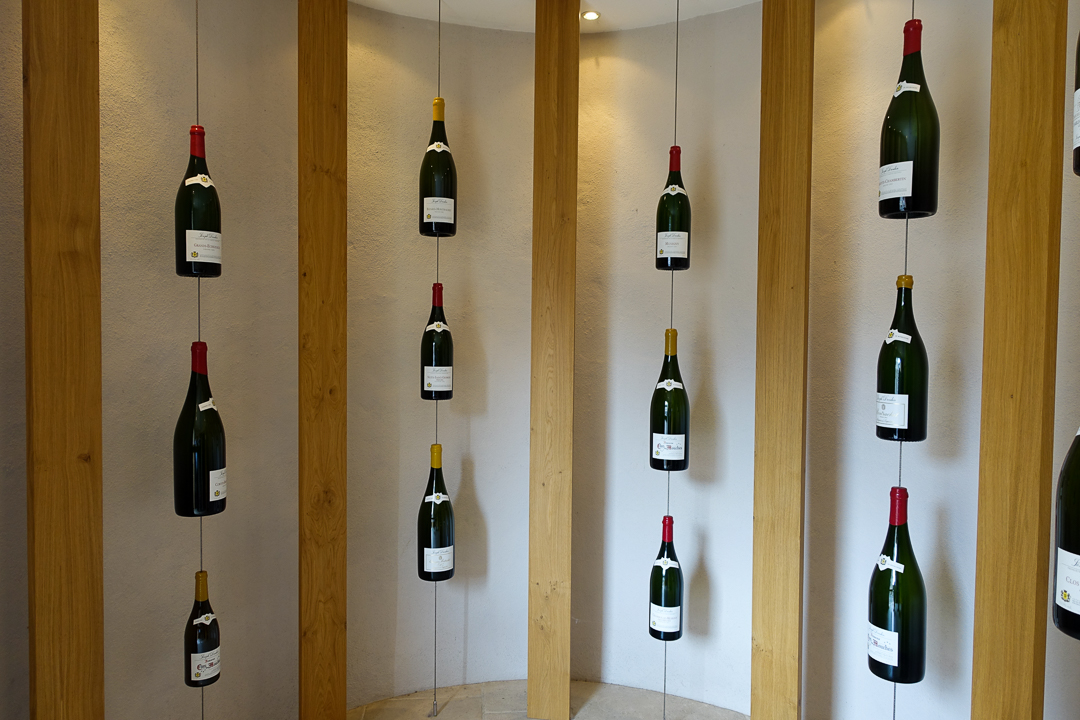
Some of Domaine Joseph Drouhin wines displayed in their showroom. The Drouhin family also has a vineyard and winery in Willamette Valley, Oregon. We are members of that wine club and our tour in France was arranged in advance.
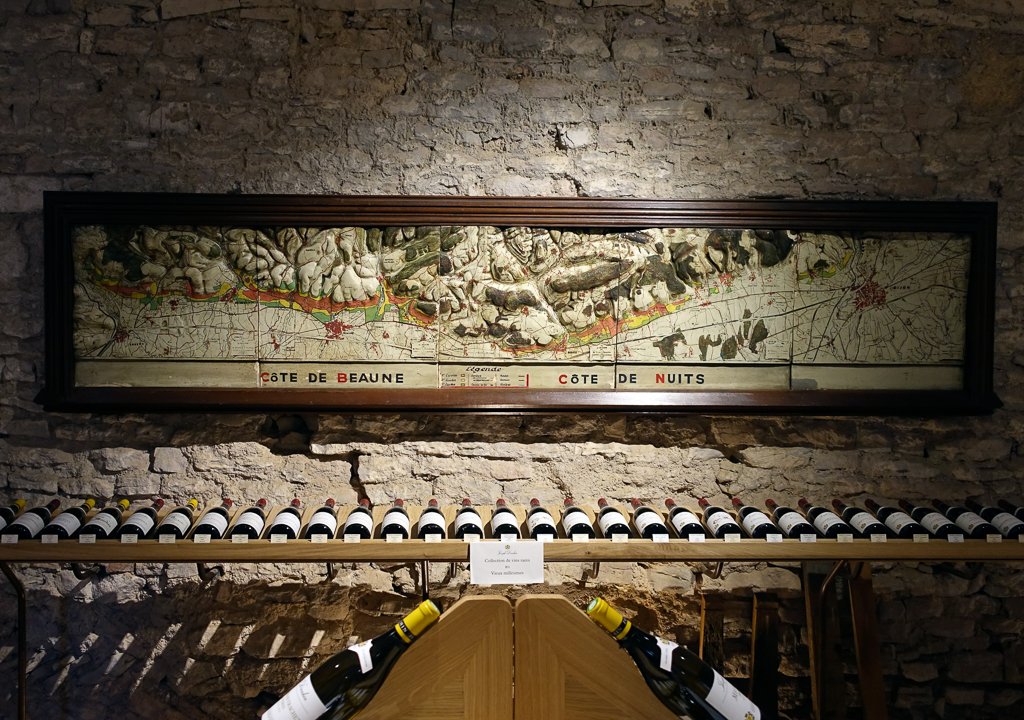
A large relief map of the Côte d’Or showing all of the appellations and climates.
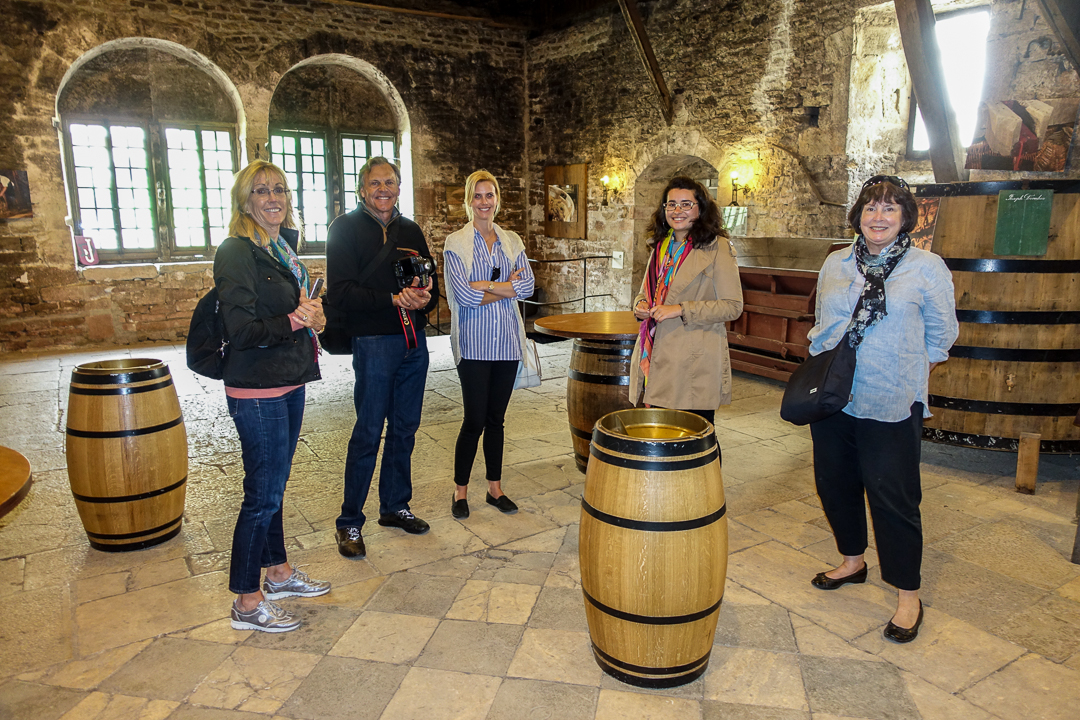
We were joined on our tour by another family from Southern California (Huntington Beach). The daughter is a first level Sommelier who works as a freelance wine writer. Our tour was led by a wonderfully knowledgeable young French woman who had recently received her masters degree and had joined the staff at Drouhin.
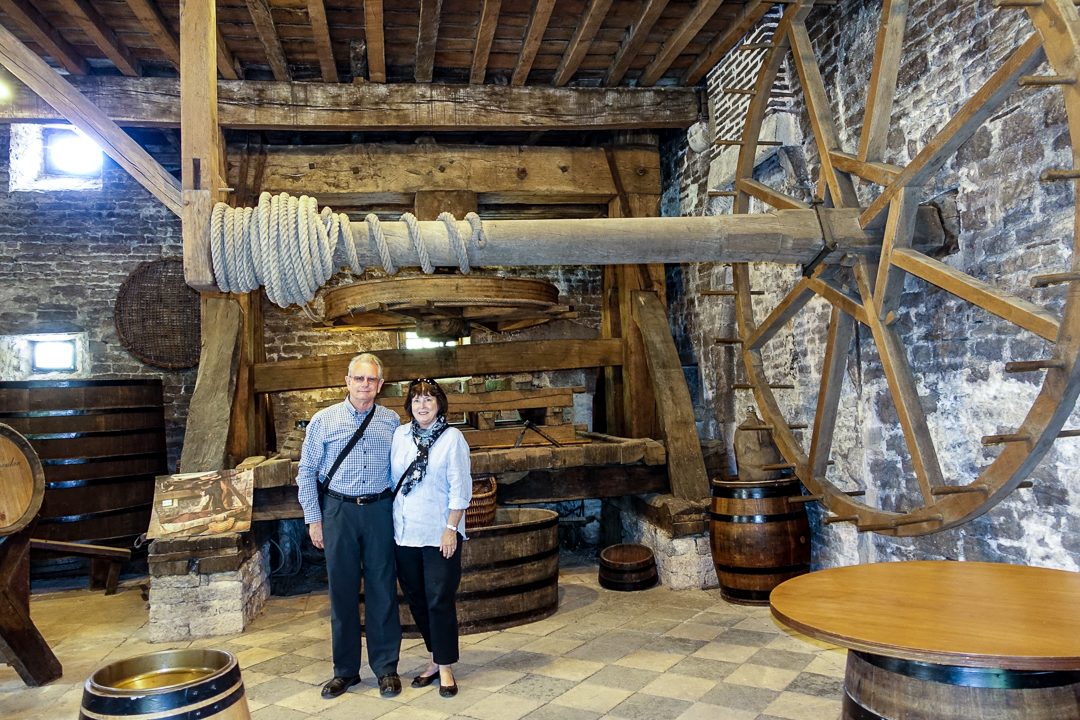
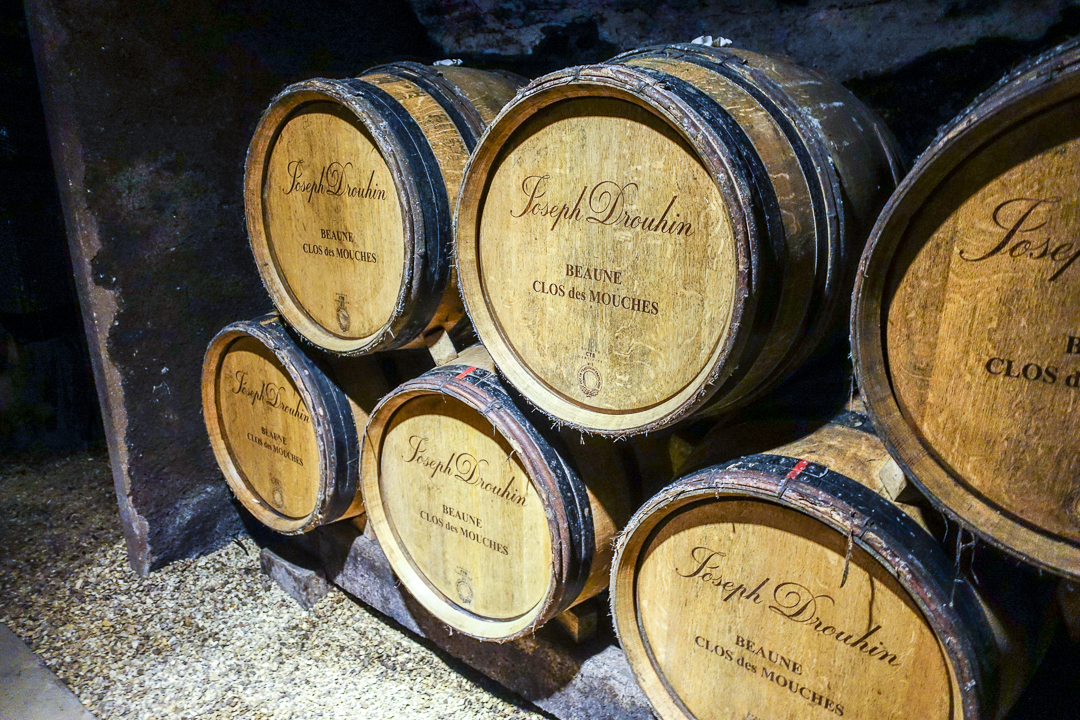
This wine press from the 16th century (we think we remember) was most recently used in 2005 to press Drouhin’s flagship premiere cru Clos des Mouches
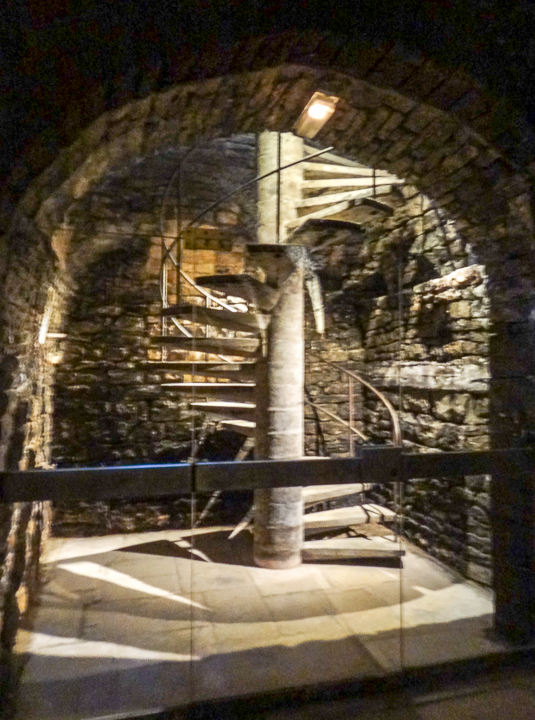
An old staircase leading to the caves. which run beneath much of the old city of Beaune.
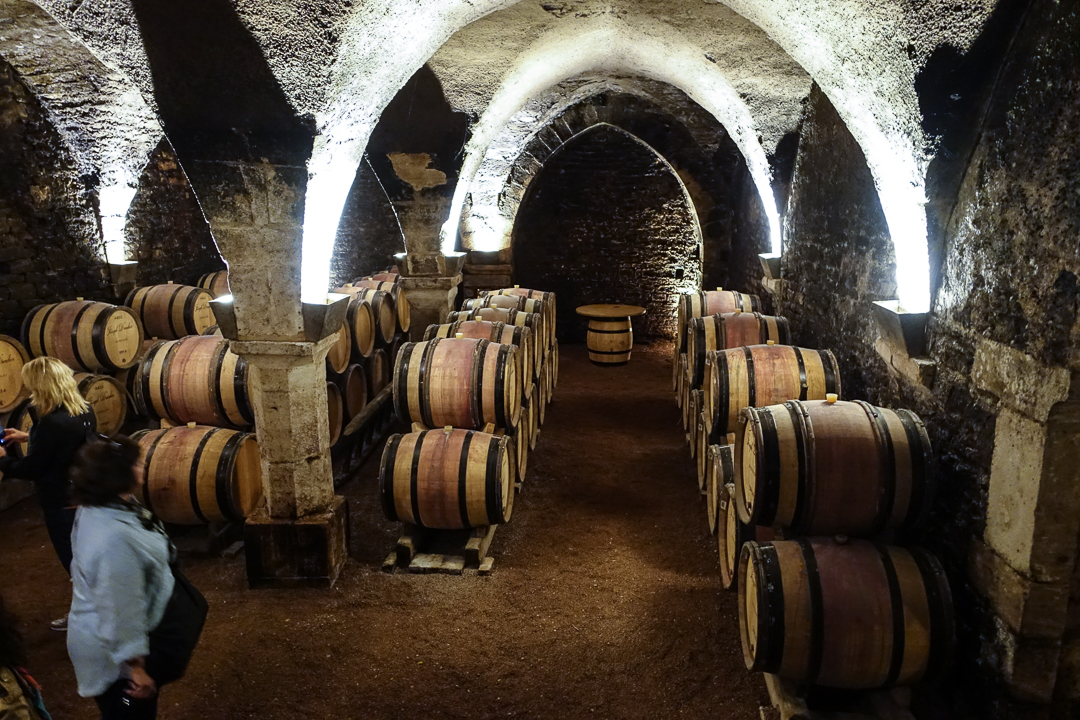
One of many wine cooperage areas in the caves.
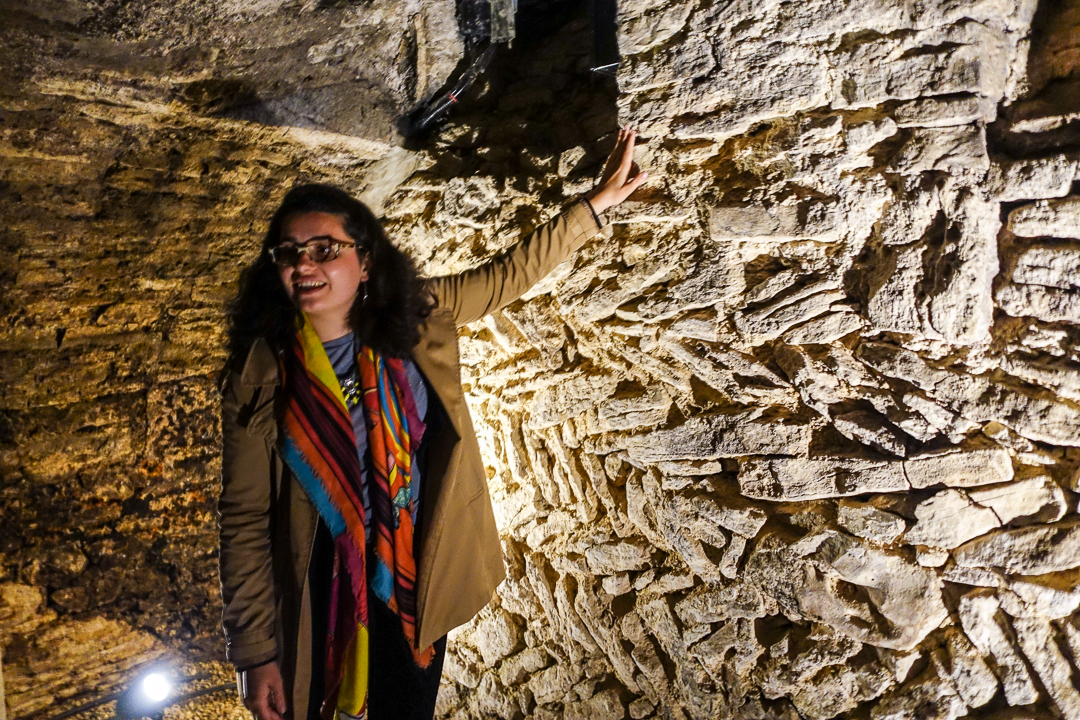
Our guide points out the different stages of the cellar expansion that are visible in the way the stones have been set in the cave walls.
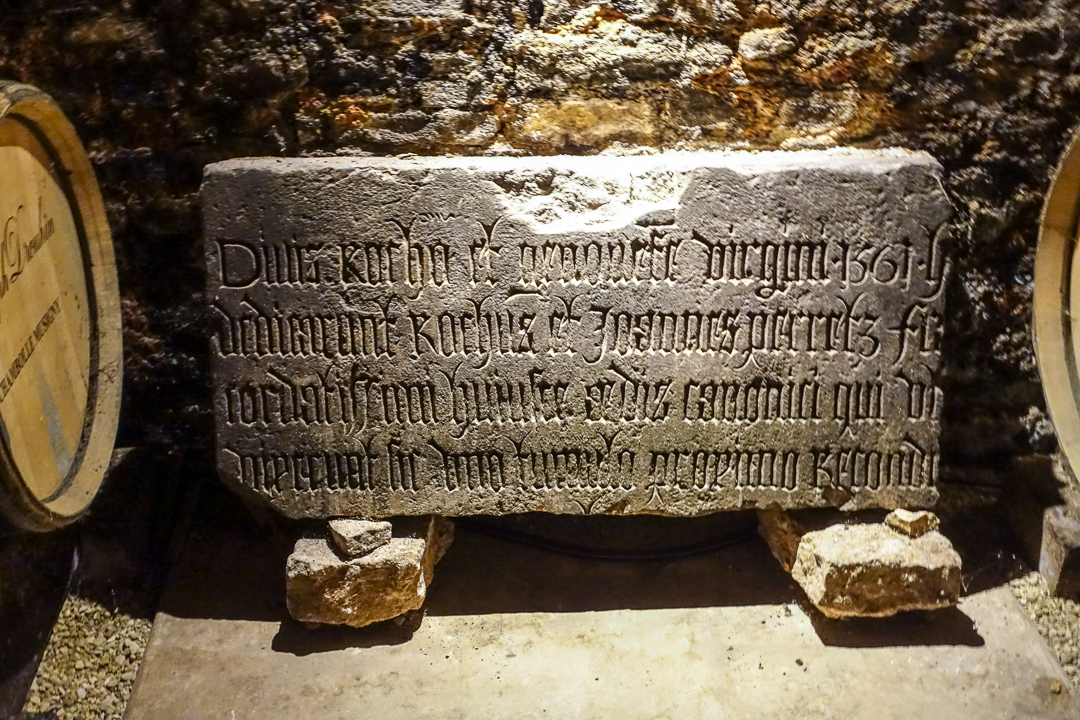
Some Roman artifacts, dating back to earliest use of the cellars.
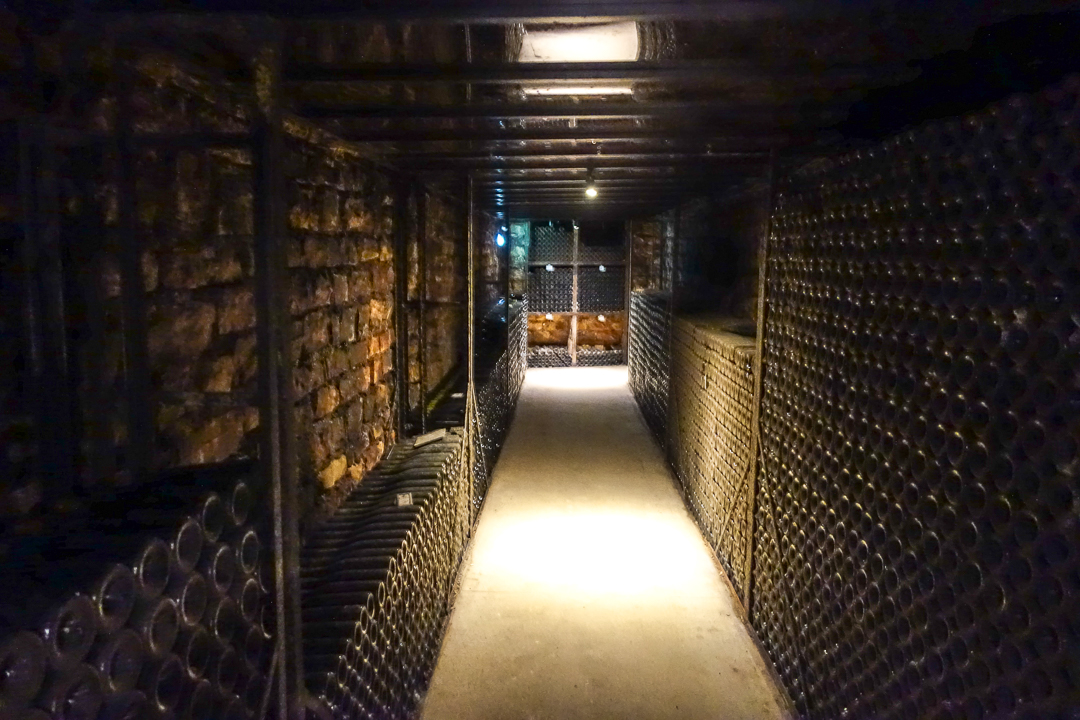
The cave corridors are lined with bottle storage.
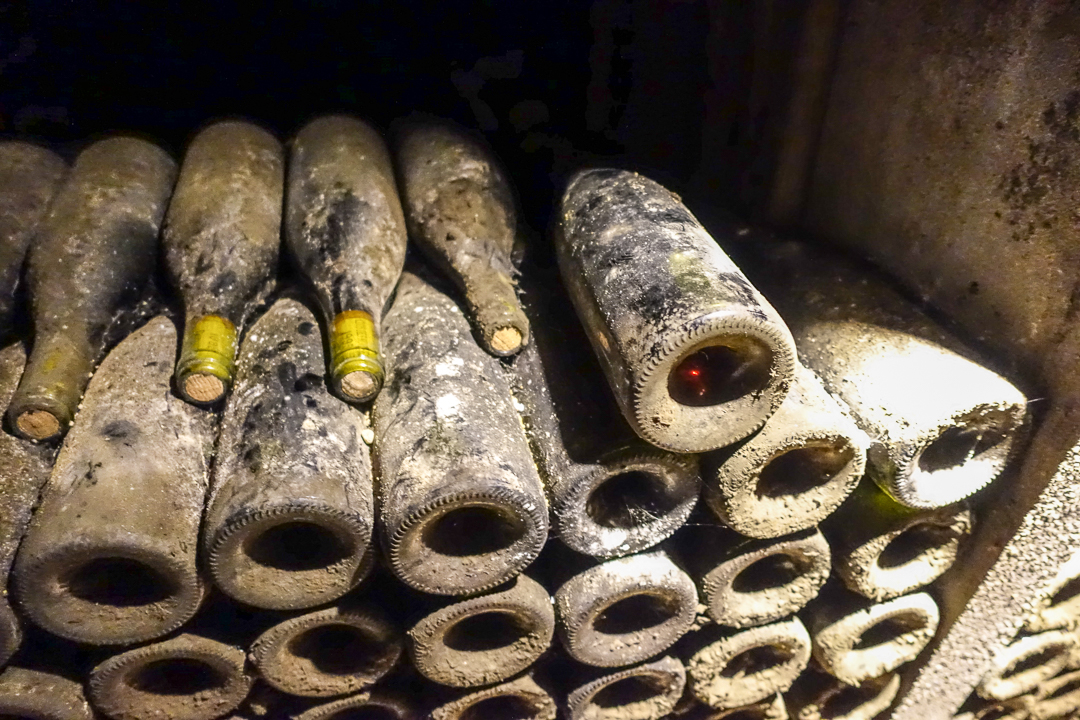
The older bottles show mold growth.
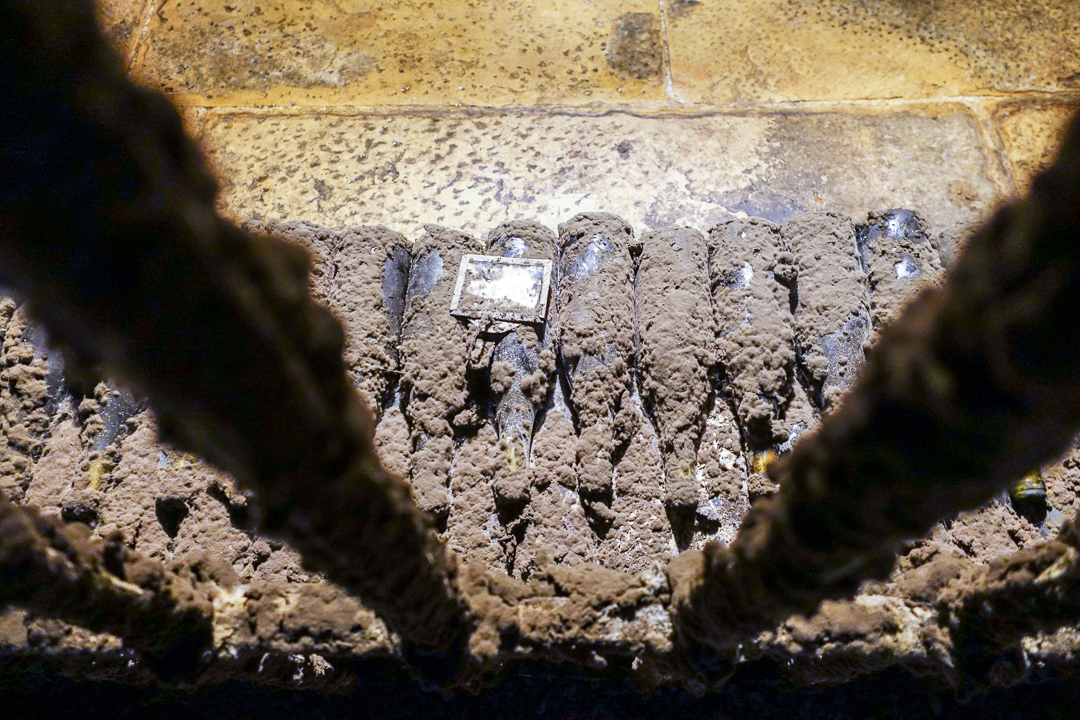
The really old bottles are almost buried in mold. If all else fails, Drouhin could go into the penicillin manufacturing business.
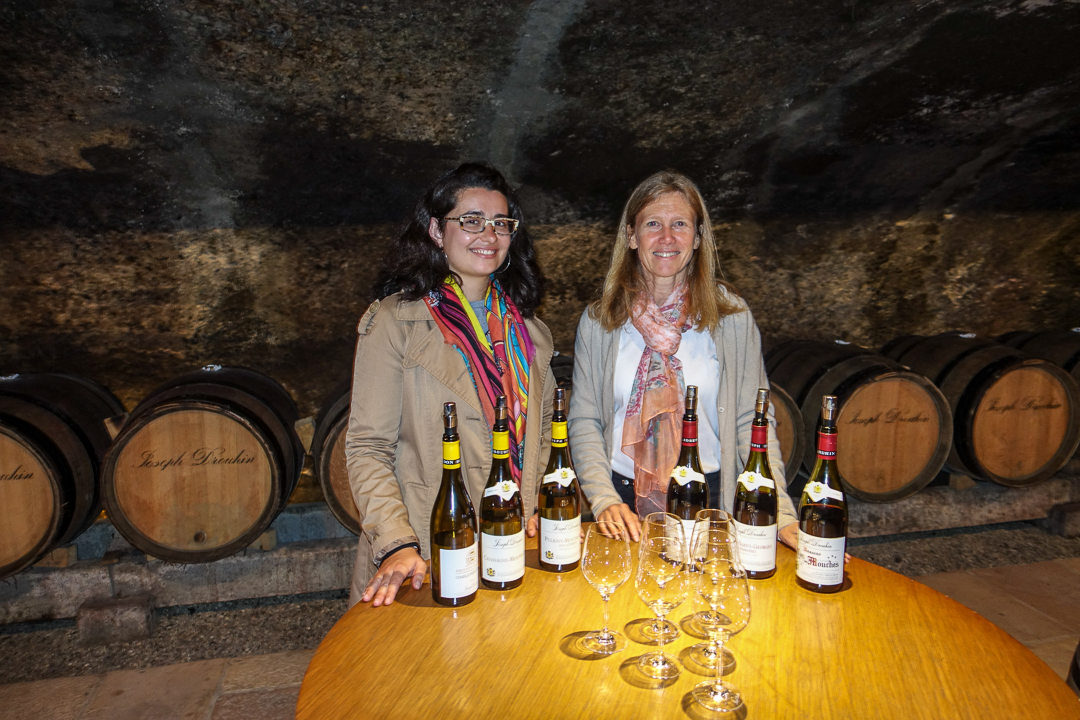
Veronique Drouhin, the winemaker (oenologist), for both the French and Oregon wineries, came to meet us. She was leaving for Oregon the next day (a trip she makes about once a month). Veronica and her three siblings are the fourth generation of the Drouhin family and now run the family business.
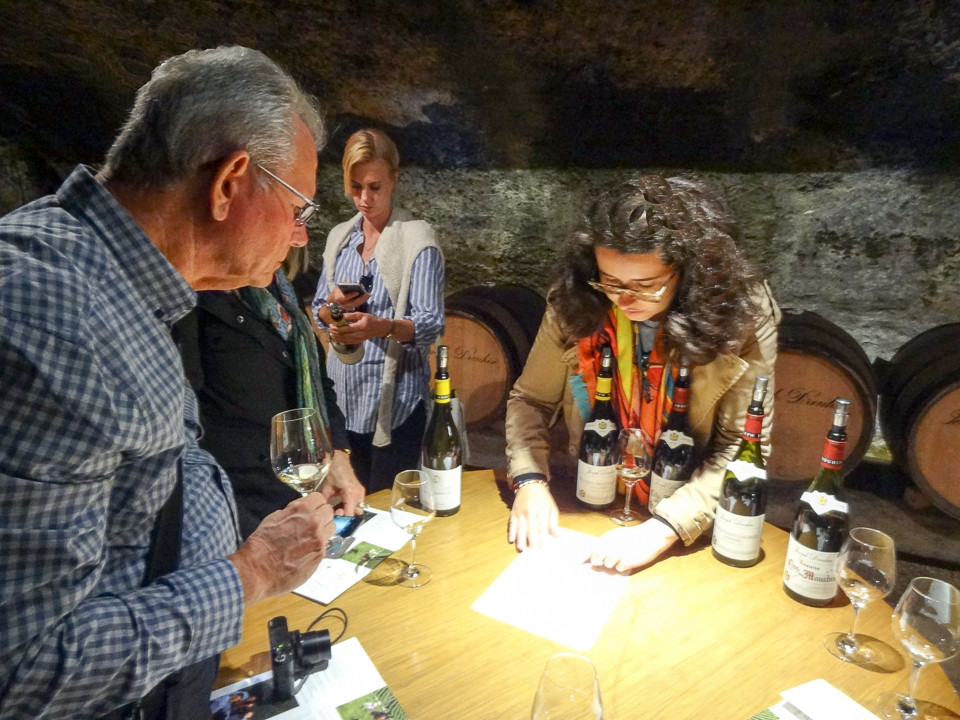
Pete is getting a lesson in the role of “terrior” in determining climats in the Côte d’Or
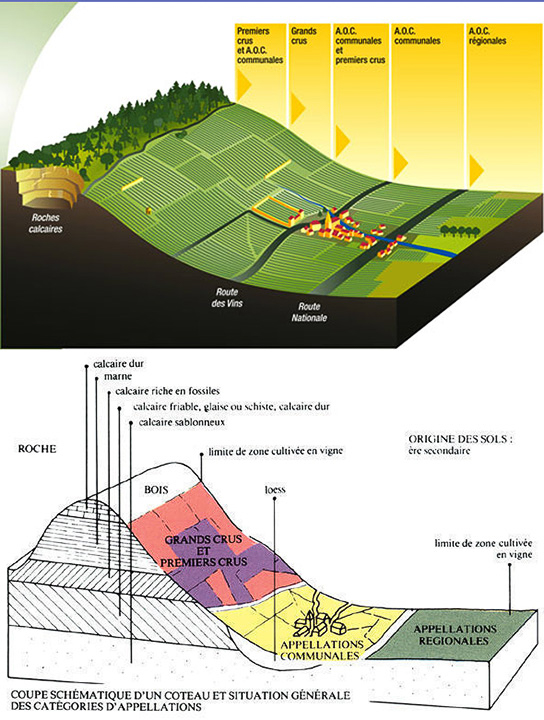
We learned that appellations have been historically assigned to various climats in Burgundy. A winery might have only one or two rows of grapes in a particular climat.
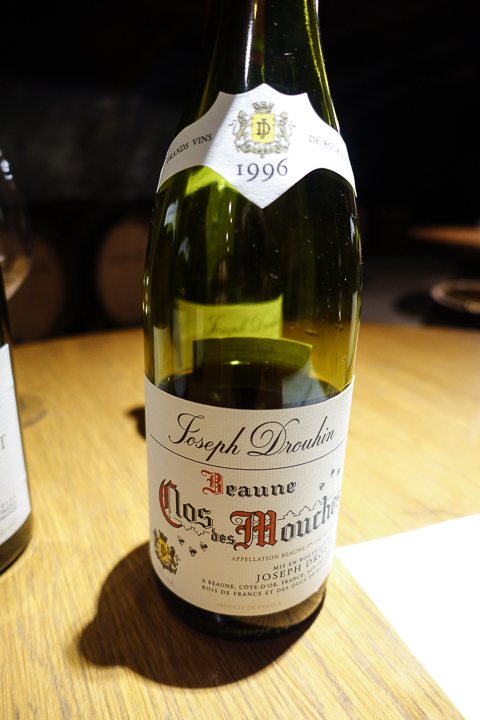
We had the opportunity to sample this 1996 bottle of Drouhin’s flagship wine. Very tasty.
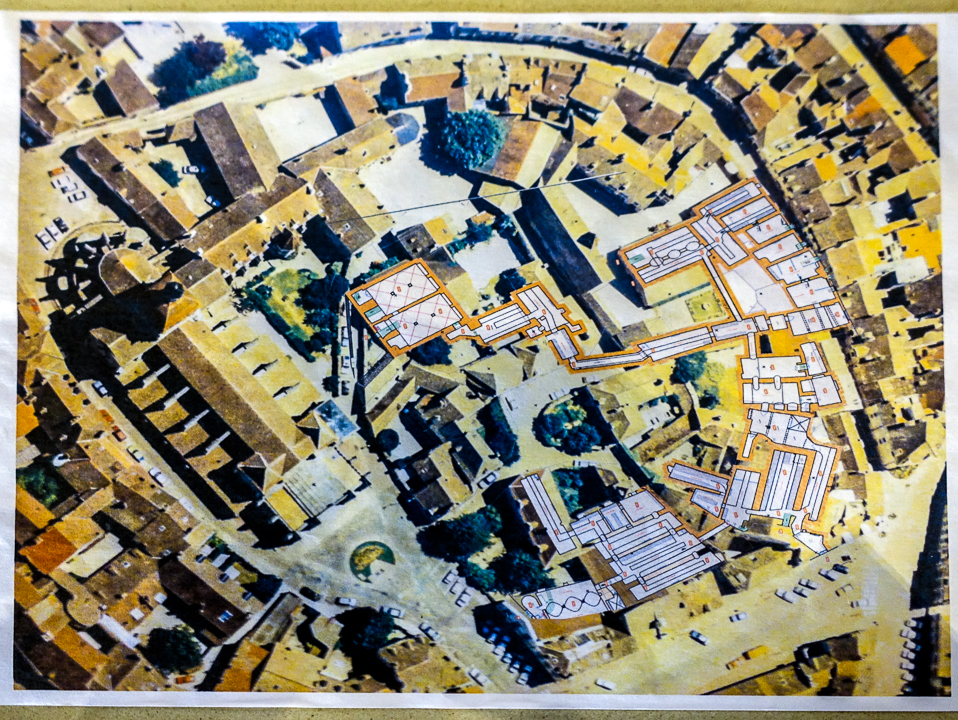
This photograph of Beaune shows Drouhin’s underground cellars. All the white areas overlaid on the photo represent the location and shape of the underground caves and passages.
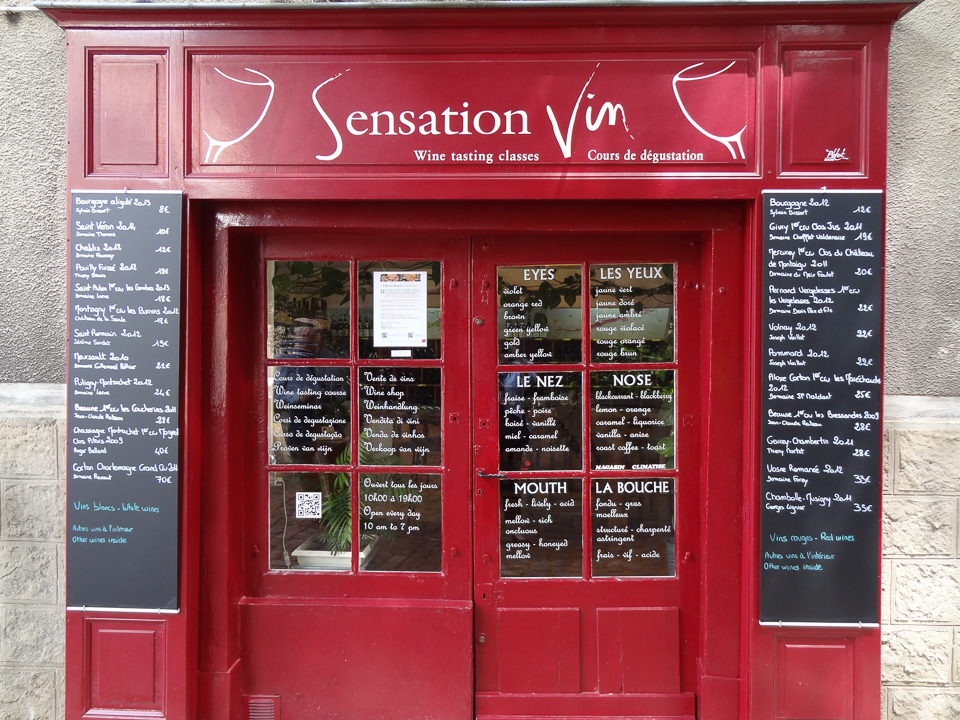
Wine tasting classes are a major activity in Beaune.
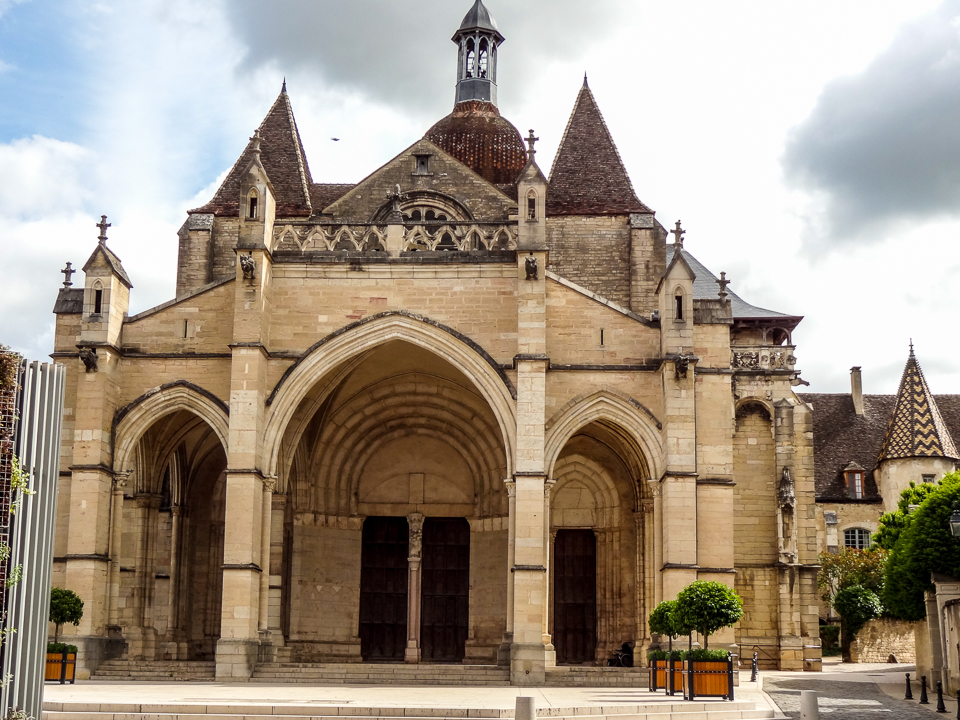
The Basilique Abbey Notre Dame de Beaune, adjacent to Joseph Drouhin, was built in the 12th century and is a good example of Burgundian Romanesque architecture.
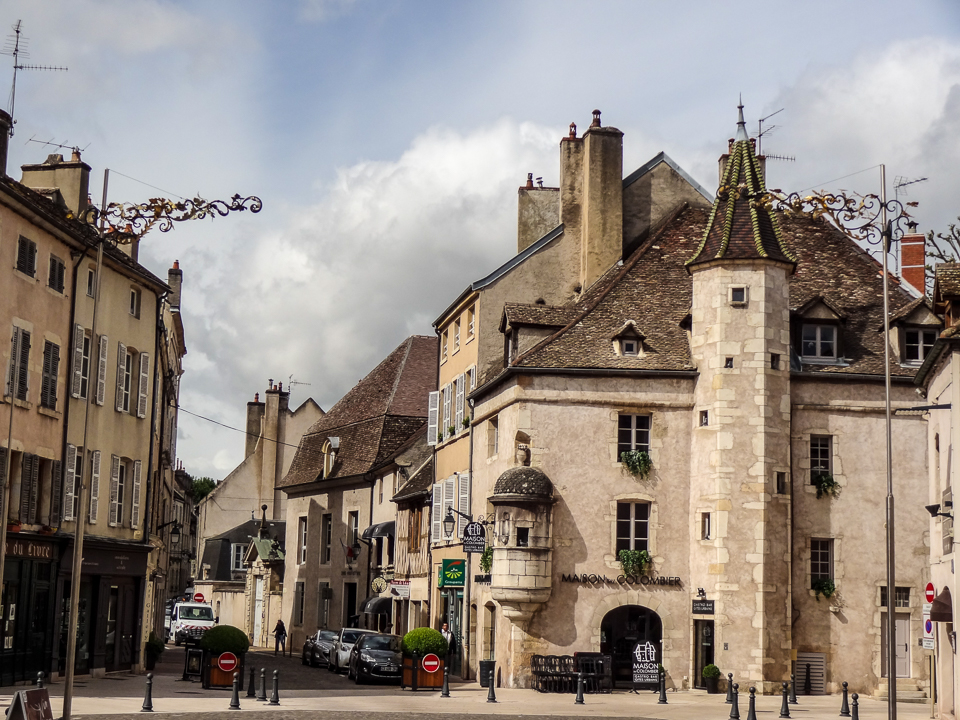
Beaune is a picturesque town, full of restaurants, cafes, patisseries, wine bars and . . .
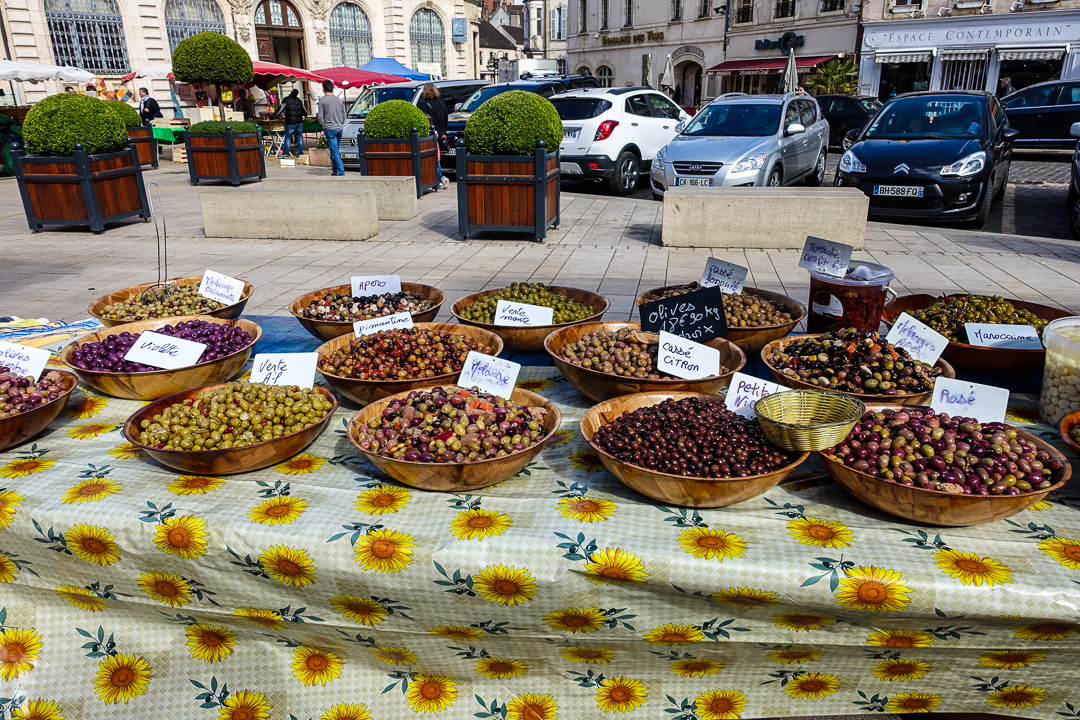
. . . street markets. Look at all those olives and . . .
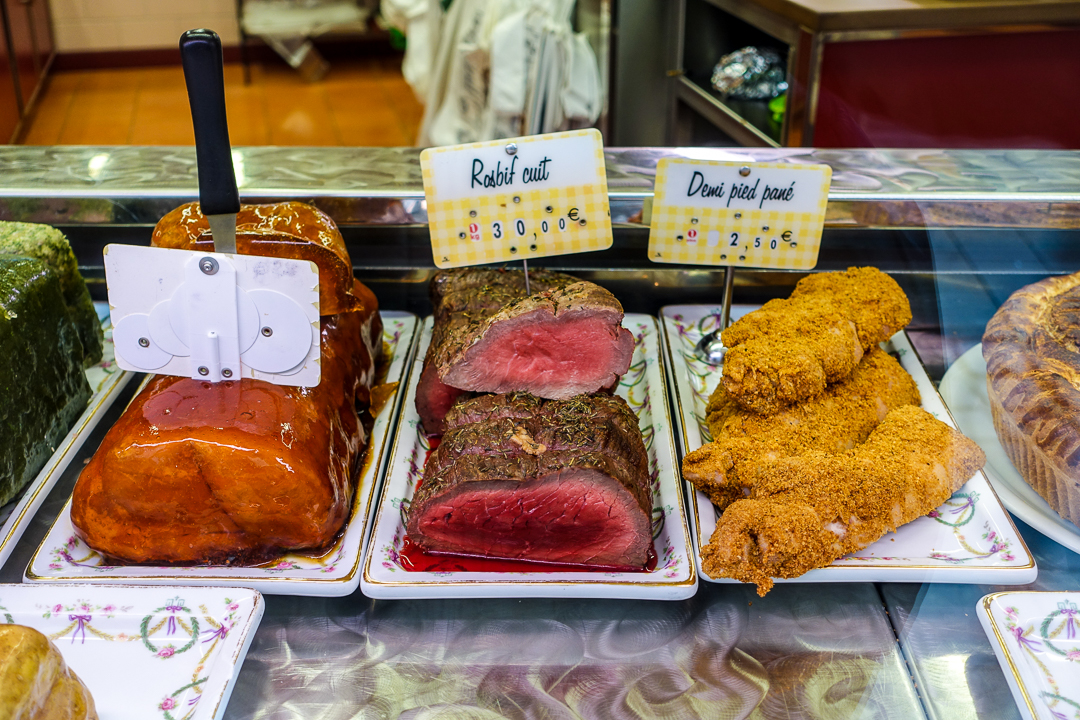
. . . meats and . . .
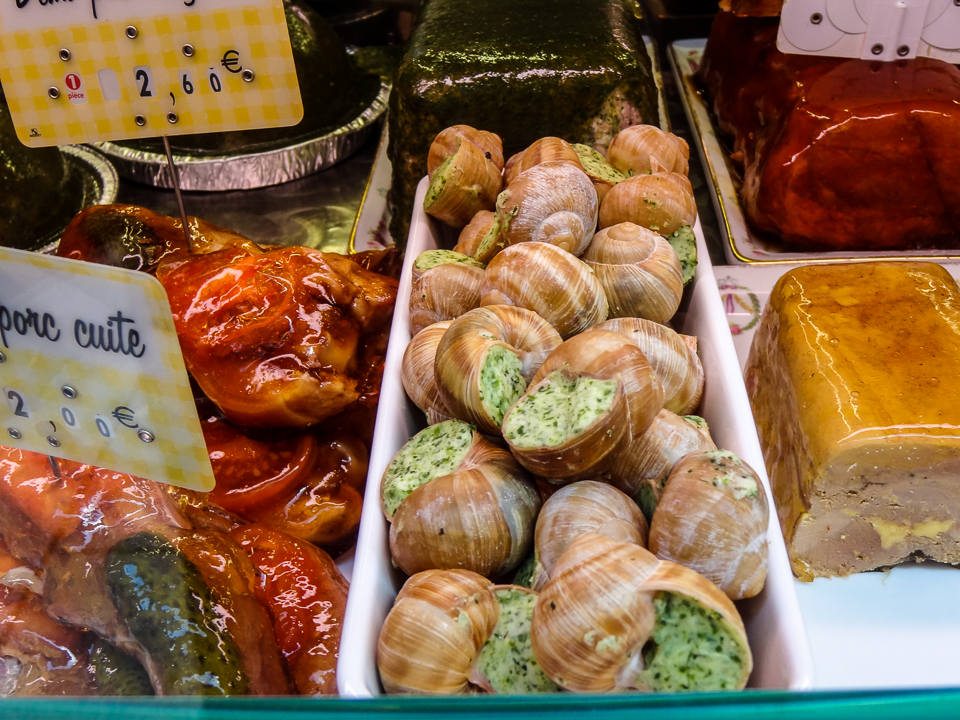
. . . escargot for sale.
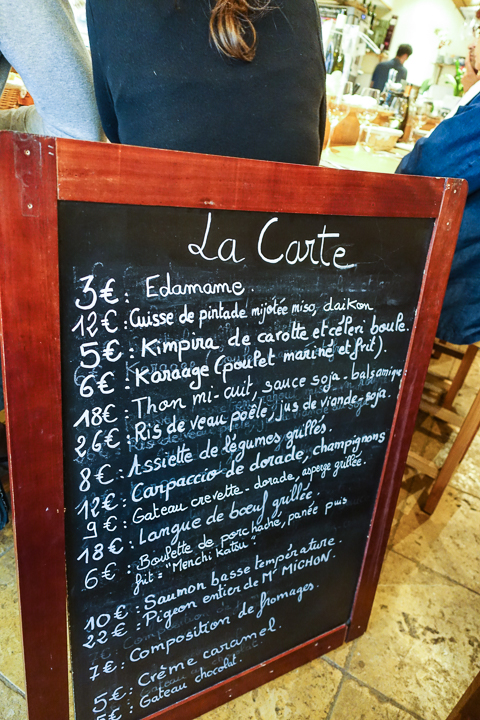
We won the lottery for dinner as we succeeded in getting reservations at La Lune, the hottest restaurant in town. Check out the reviews on TripAdvisor (which has deemed it the top restaurant in Beaune) by clicking here: La Lune.
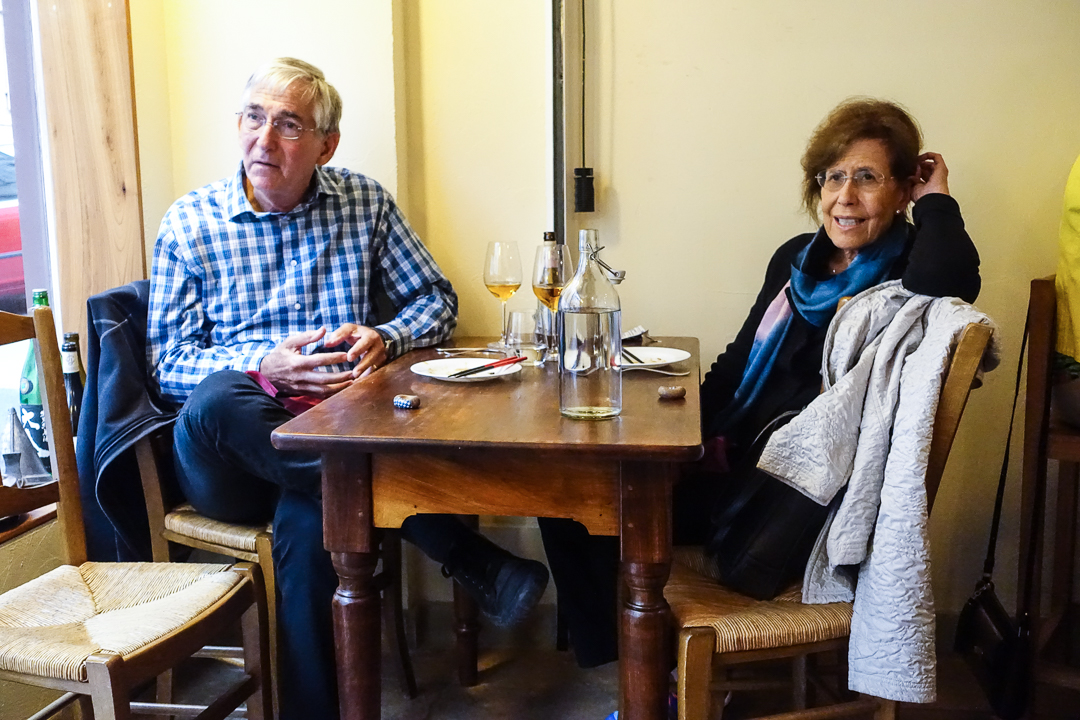
Here, we met an American couple from Florida, who were staying at the same hotel. We recognized each other because they ate at the same restaurant as we the night before. We talked for hours about travel, food, France, politics, and books. The last 2 books Jill had read were the last 2 books they had read. What a lively conversation and evening.
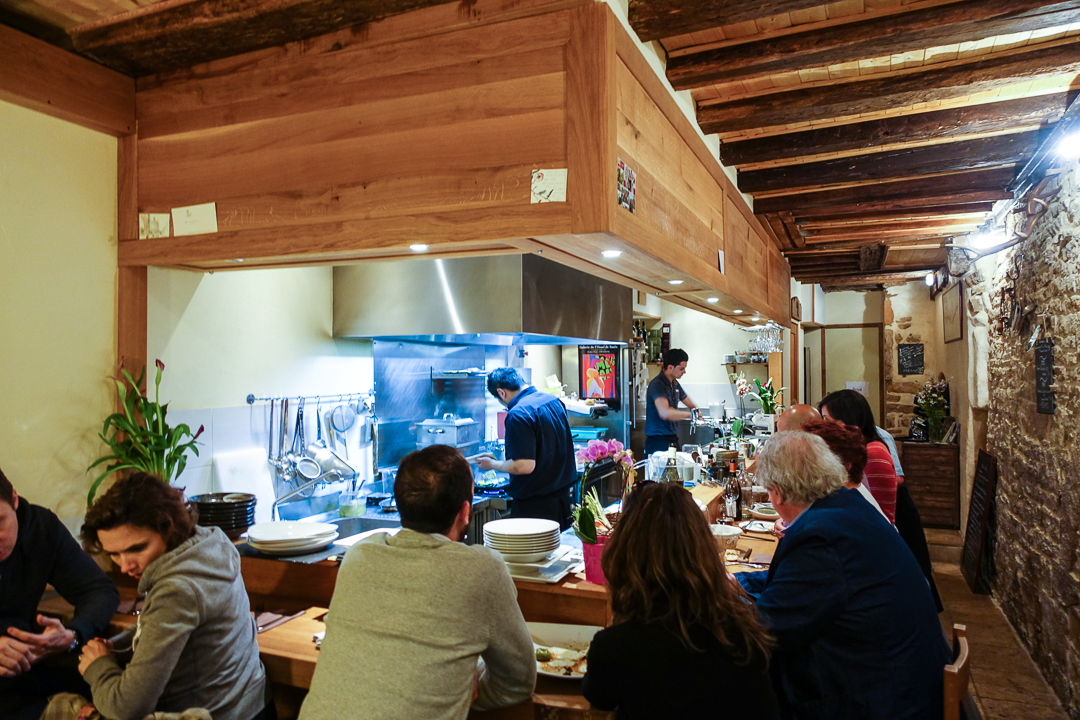
La Lune is a Français-Japonais tapas style restaurant with very few tables. In fact, it has only 18 seats.
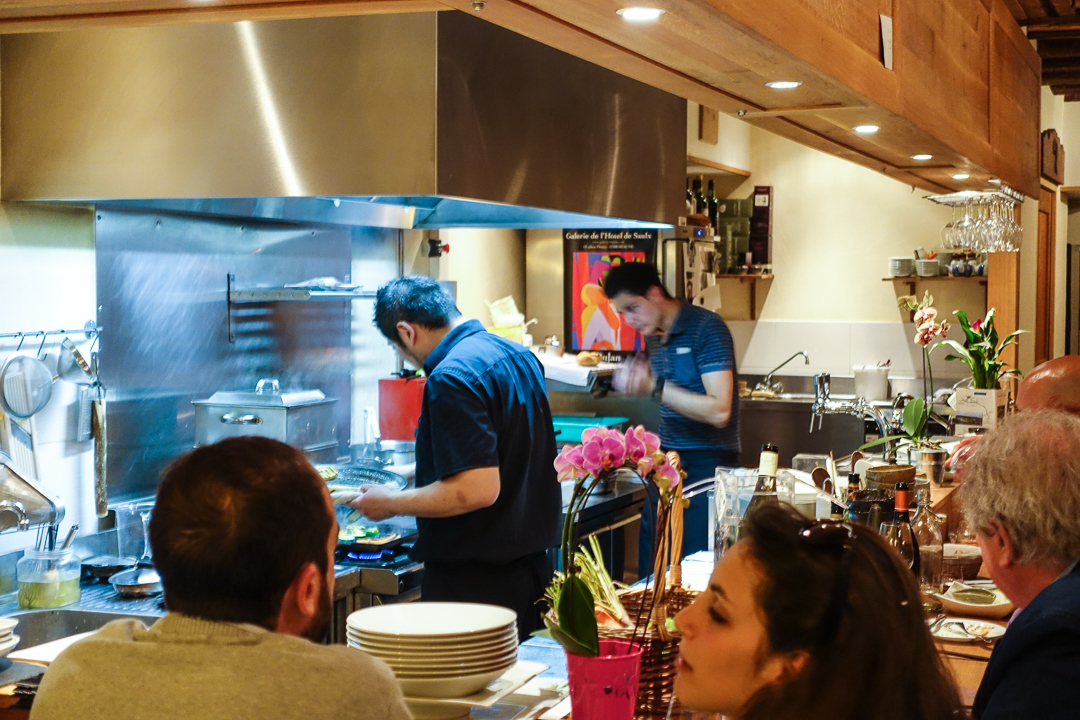
It was a 2 man show, and what a show it was. These two dudes do everything: wait tables, wash, and cook.
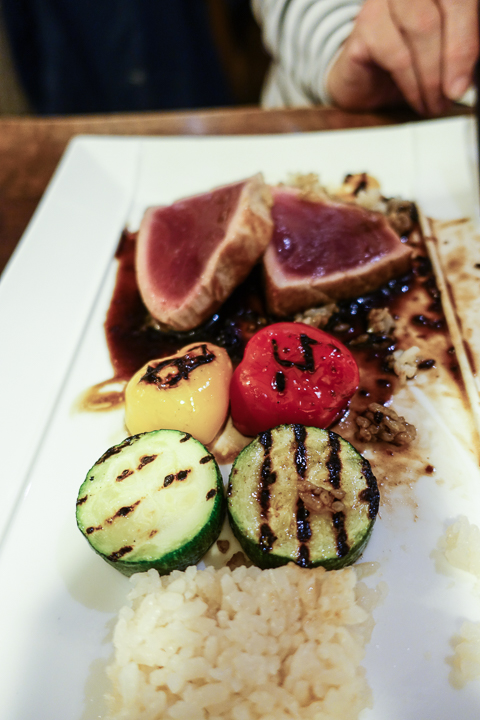
Seared tuna as soft as butter. We had already gobbled one down before we took this picture.
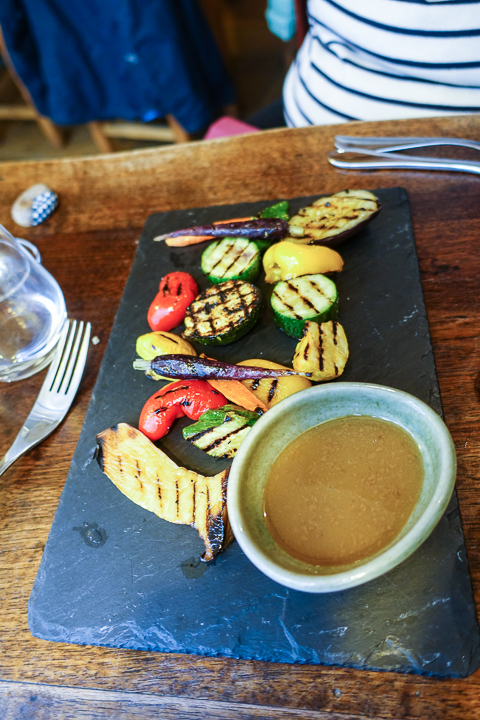
Grilled veggies in a garlic sauce to die for. Although we have dined at some establishments that provide excellent haute cuisine, the new cuisine restaurants run by youthful French chefs are really exciting and are packed to the rafters. This place stays open until 1 am.
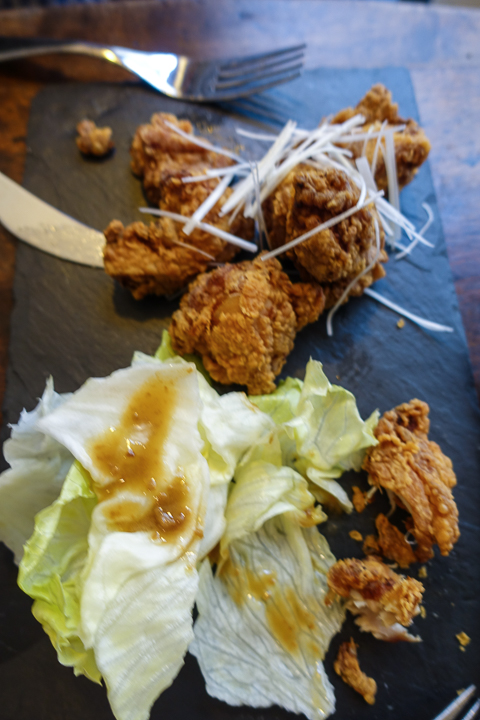
Chicken drenched in a miso sauce and deep fried in a light batter. We also had an amazing shellfish gateau, but the picture did not come out well. All this goodness for 41 Euros inclusive of tip. Où, là là!
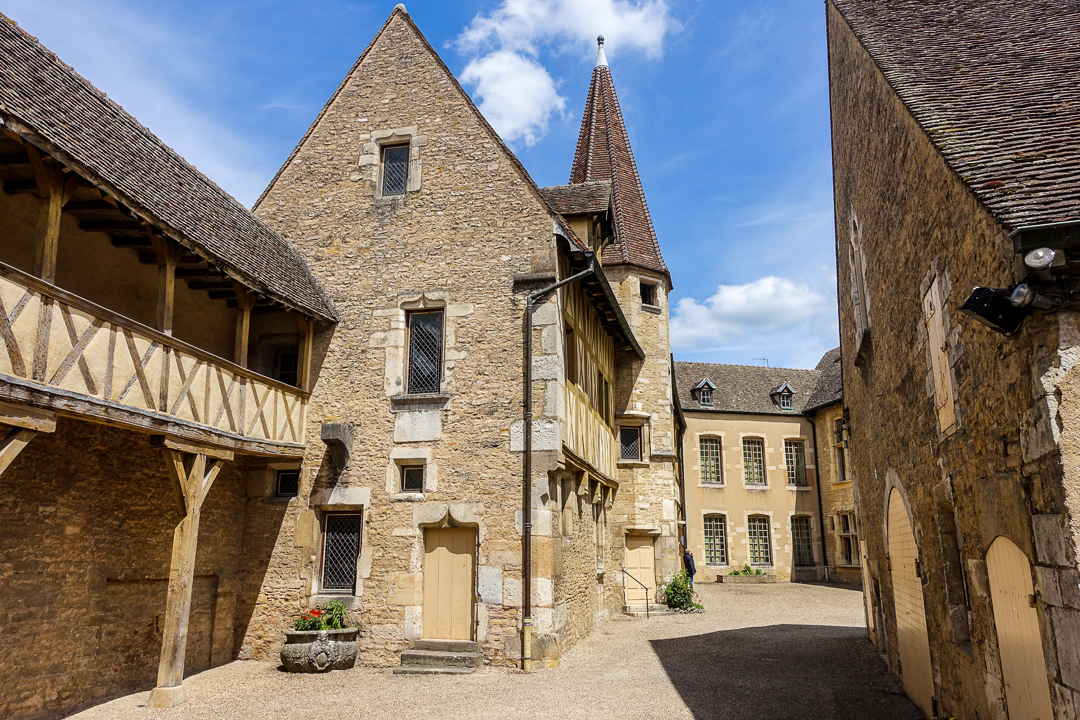
The next day we visited the wine museum as part of our ticket package. It housed various artifacts from the city’s major industry.
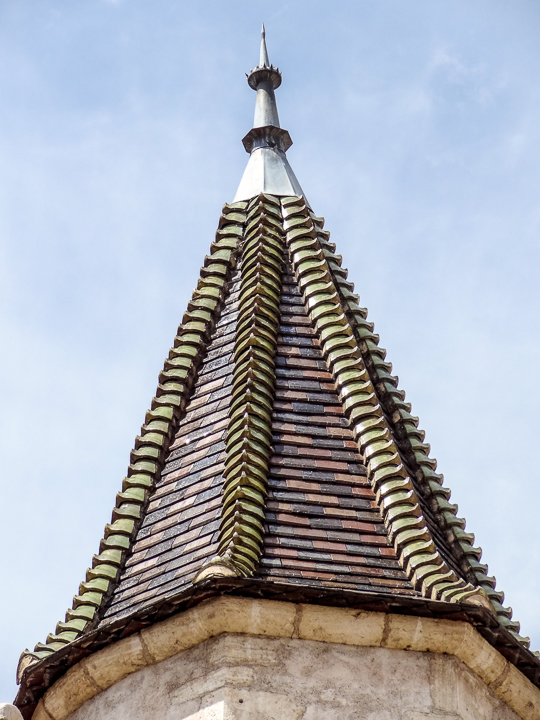
More colored tiles
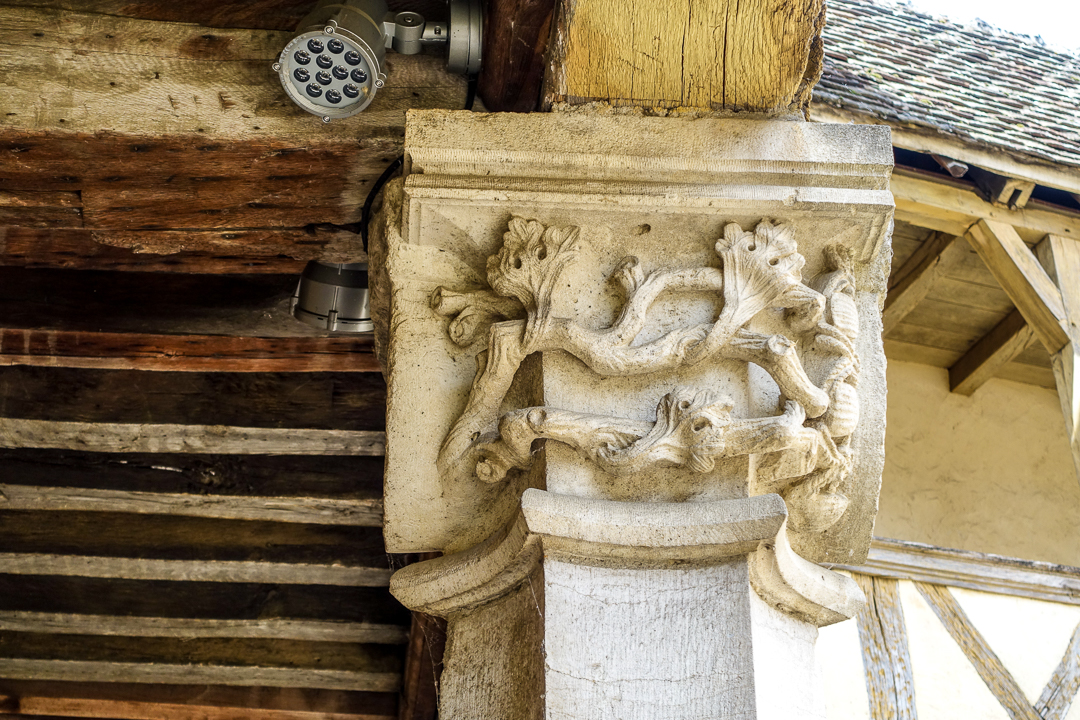
Vine motif relief
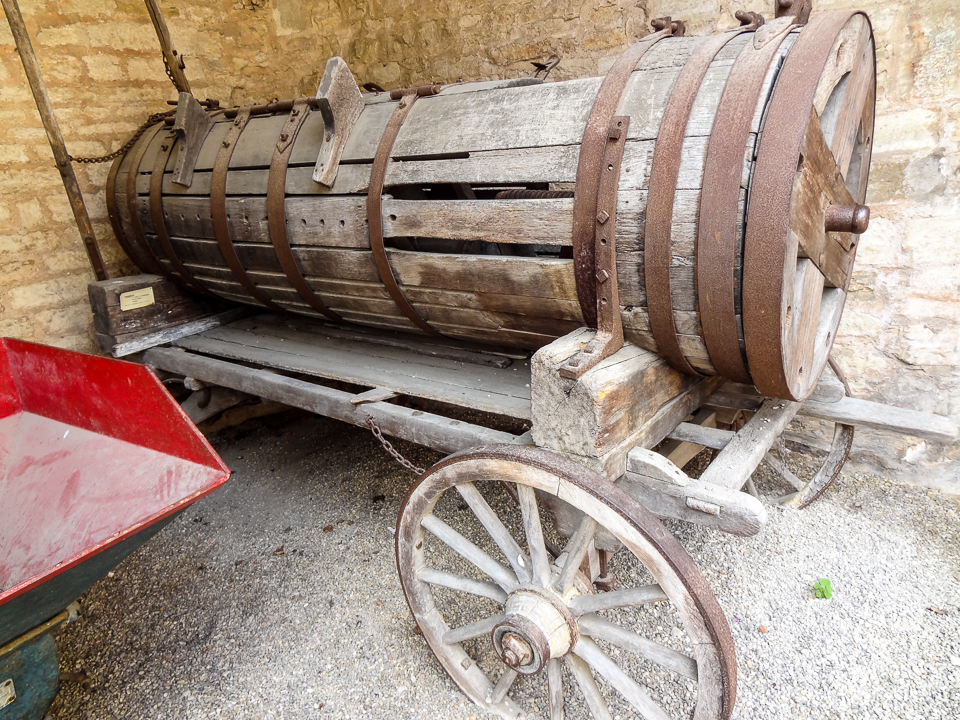
Vineyard antiques
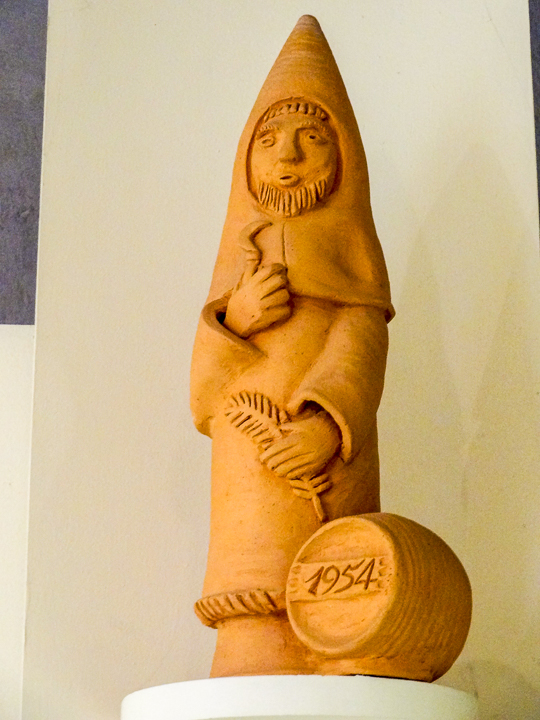
Holy wine
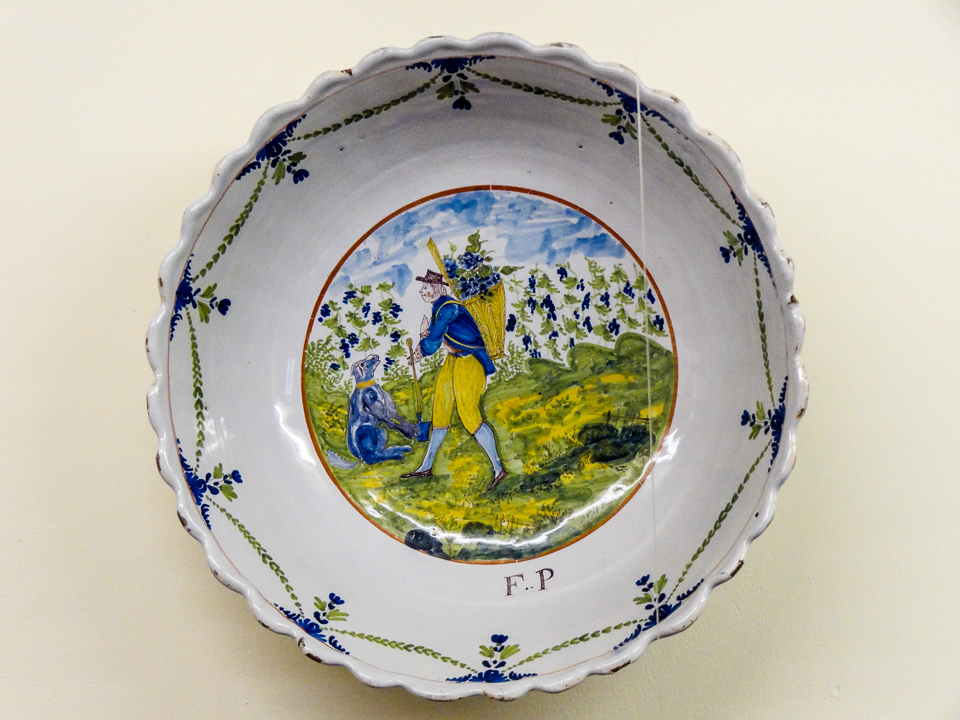
Art centered around wine
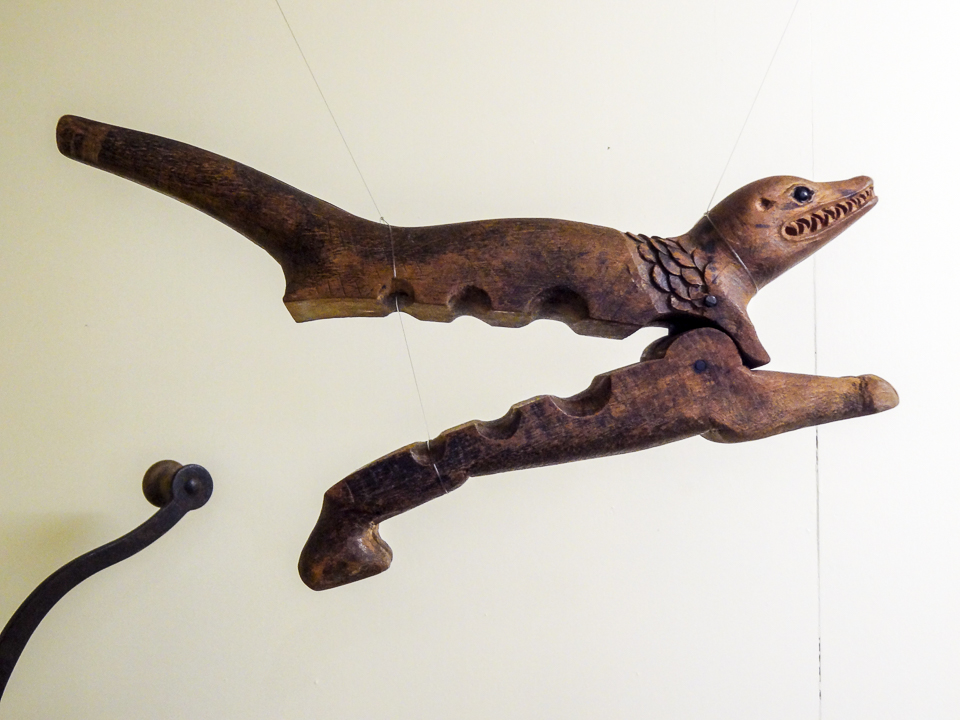
The museum has a gallery of unusual bottle devices.
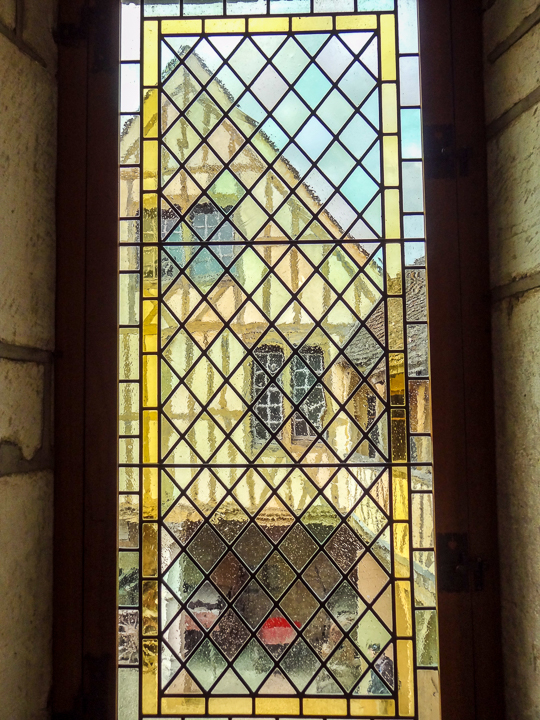
Half-timbers and stained glass windows provide the framework for the museum.
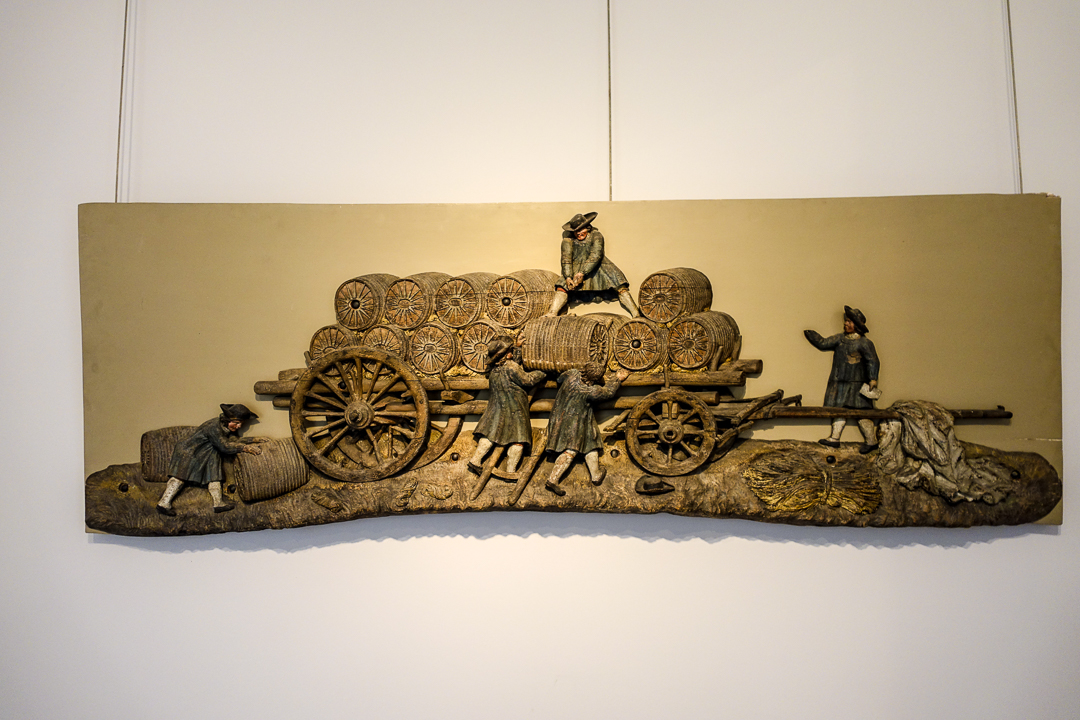
3D wine art
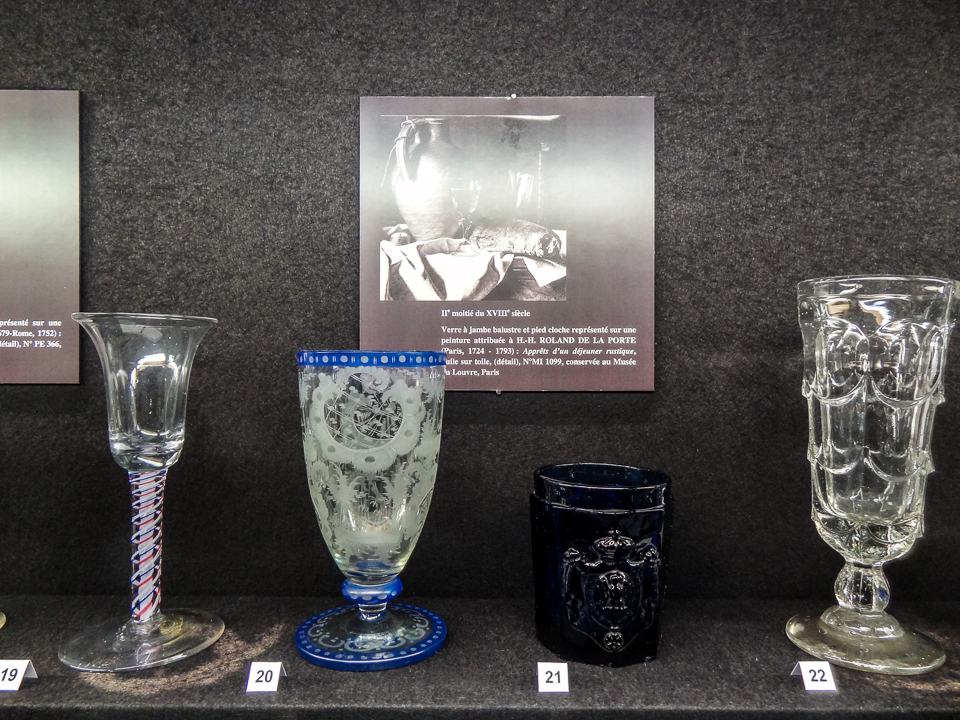
Antique wine glasses
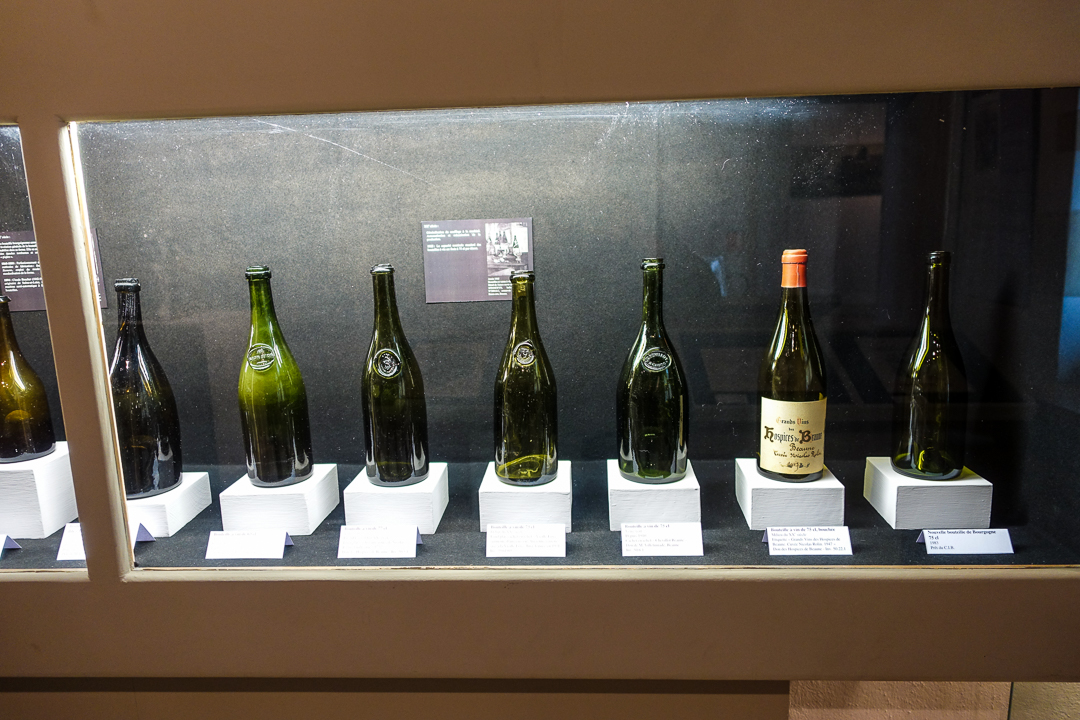
Les bouteilles anciennes (old bottles) of well known pre-war (WW2) vintages
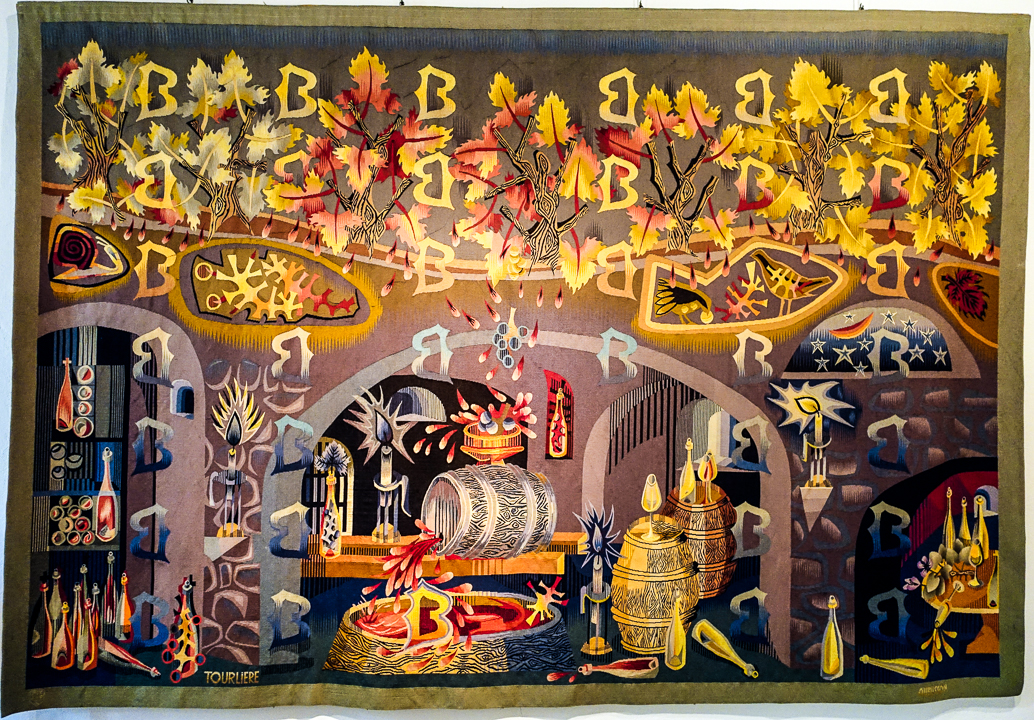
A tapestry celebrating Beaune (note all the “B” symbols) and its wine
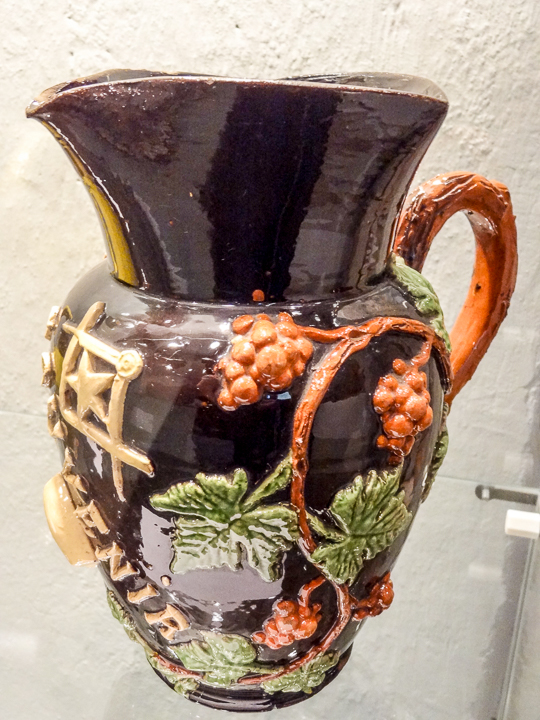
An old 19th century wine vase
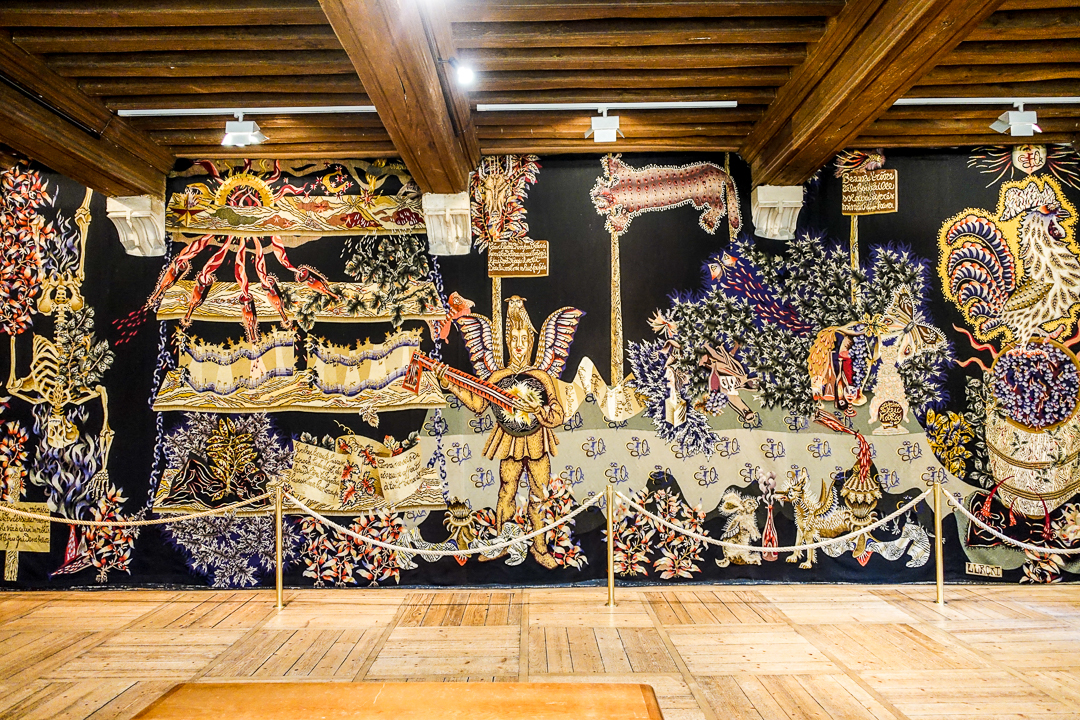
Wine, Wine and more wine, the divine fruit of the vine
A votre santé!
P&J
4 Comments
Brings back so many memories. They really pride themselves on the mold there. I guess when you build a cellar that is constantly around 55-60F, no sunlight and 80%+ humidity all the time, you invite mold. It’s great climate for wine making and storage, but the mold loves it. We were told by many wine makers that is a sign of a healthy wine making operation, so much so that they take pride in their mold. The more mold, the better the wine must be sort of thing.
Cheers to their terroir and the resilience of their grapes without irrigation and pesticides, it makes for stronger and deeper vines and I believe the taste shows as notably more complex (while often having less alcohol so it comes off smoother). Subtle yet complex with great minerality – It’s still the reason I prefer a French Bugrundy to an American Pinot.
Thanks for the great pictures and a stroll down memory lane! It’s been 6 years since we were there and it feels just like yesterday.
We thoroughly enjoyed our visit to Beaune. We came away with a much better appreciation of French wine. We can now navigate the French wine selection at Trader Joe’s or COSTCO to a better result.
You two look happy and sober amidst all that wine. What an interesting tour you took!
I loved La Lune, the Japanese restaurant. Wish it were in our neighborhood.
Fleaster
The trip is getting better. I cannot believe the great weather you are enjoying.