
Toward the weekend we headed north-easterly to the Alsace region. Our first stop was Colmar, which calls itself “the capital of Alsatian wine.” We really are not fond of Alsatian wine (nor are the Burgundy wine snobs), so we skipped all the wine tours and wandered through the storybook streets. This is the town that provided the inspiration for the setting of Howl’s Moving Castle, the popular Japanese animated film. Colmar is near the German border, so there is a blend of German and French cultures here as you will see.
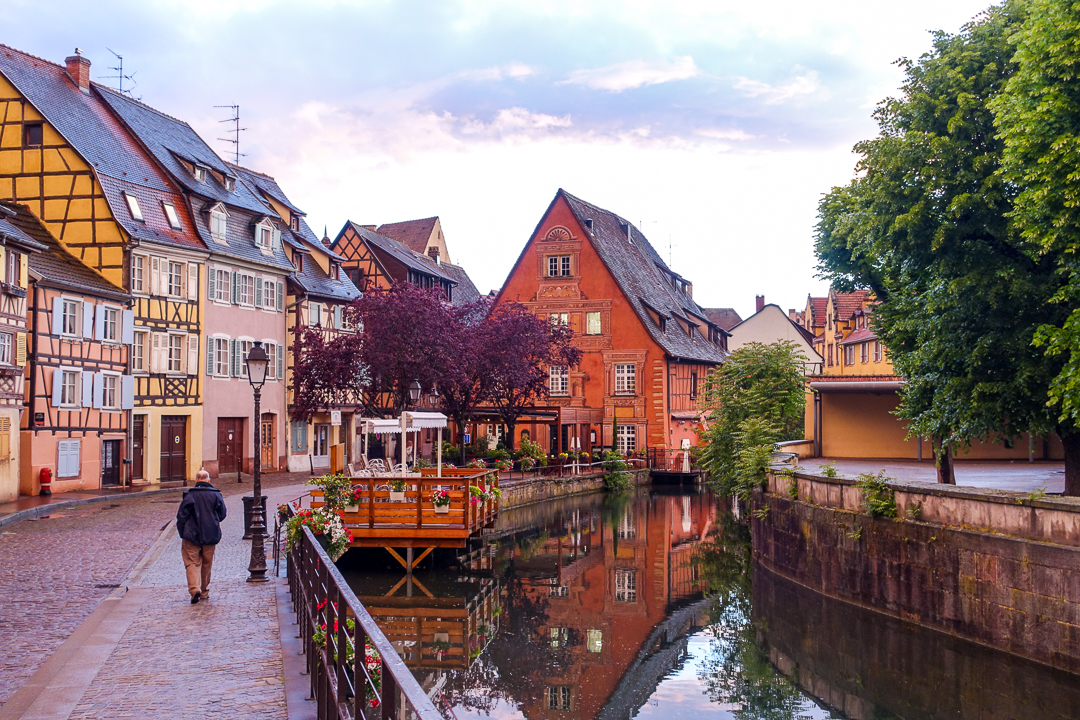
Our hotel was in a section called “Little Venice” because of all the canals that meander throughout the area. They lead to the Rhine River.
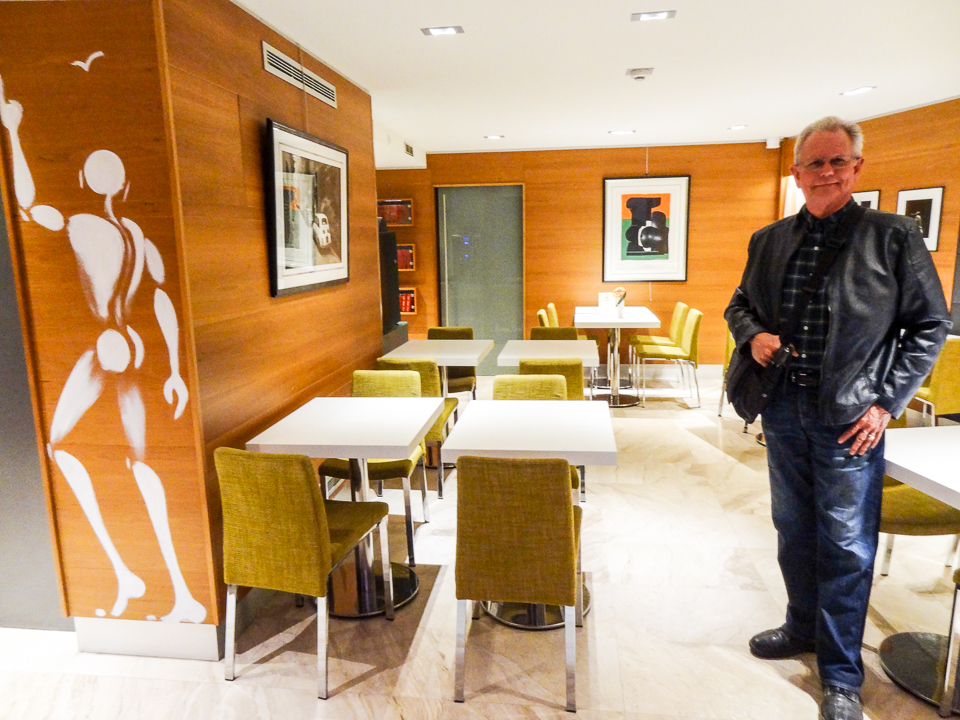
The outside of our hotel was adorned with half-timbers and stained class; the inside was all high tech modern. ALSACE: a blend of French and German, a blend of old and new.
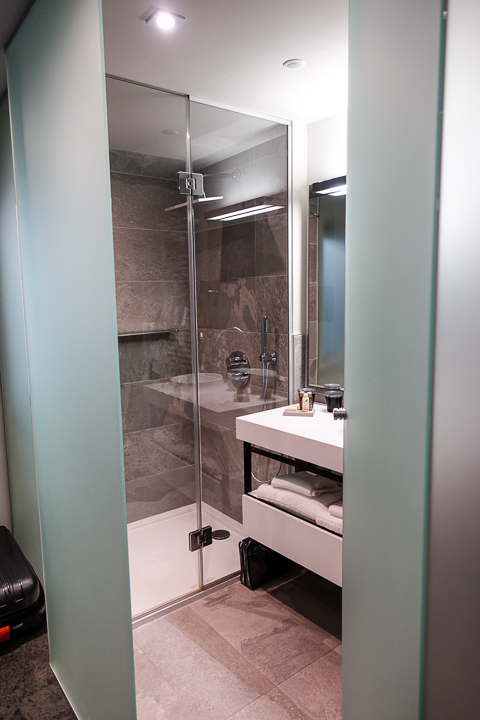
THE OLD: Half timber ceilings THE NEW: state of the art bath & high speed internet.
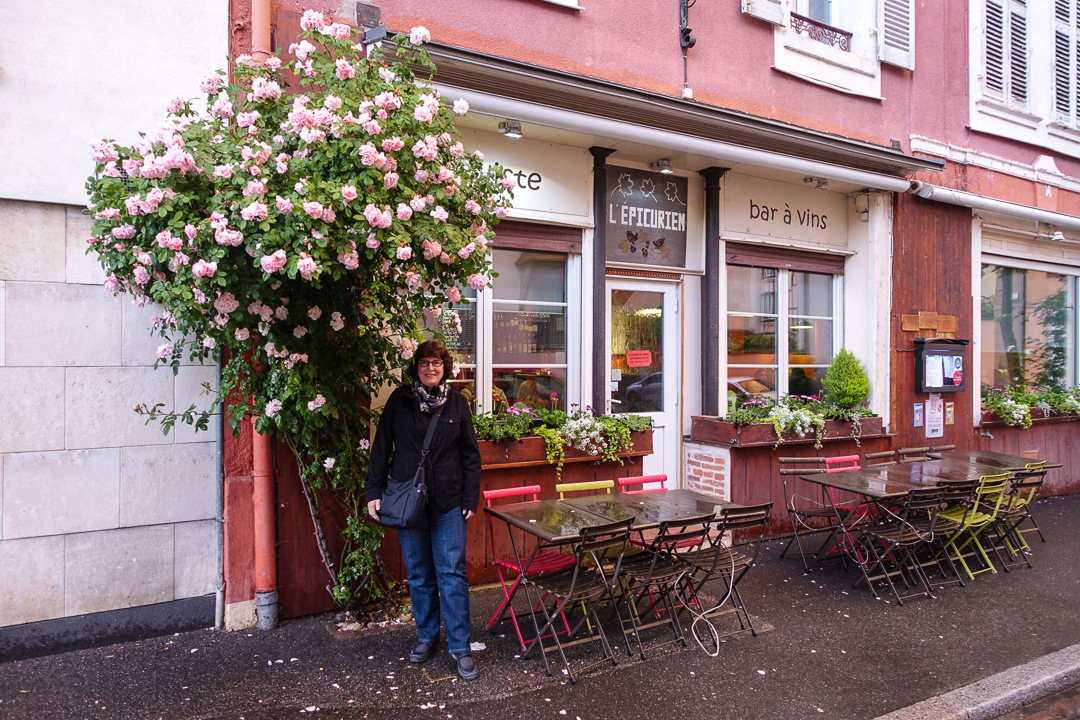
Arriving in the late afternoon on a rainy day, we took a quick stroll and then had some dinner at the popular Restaurant L’Epicurean. Again reservations are a must. The place turned away all customers without them.
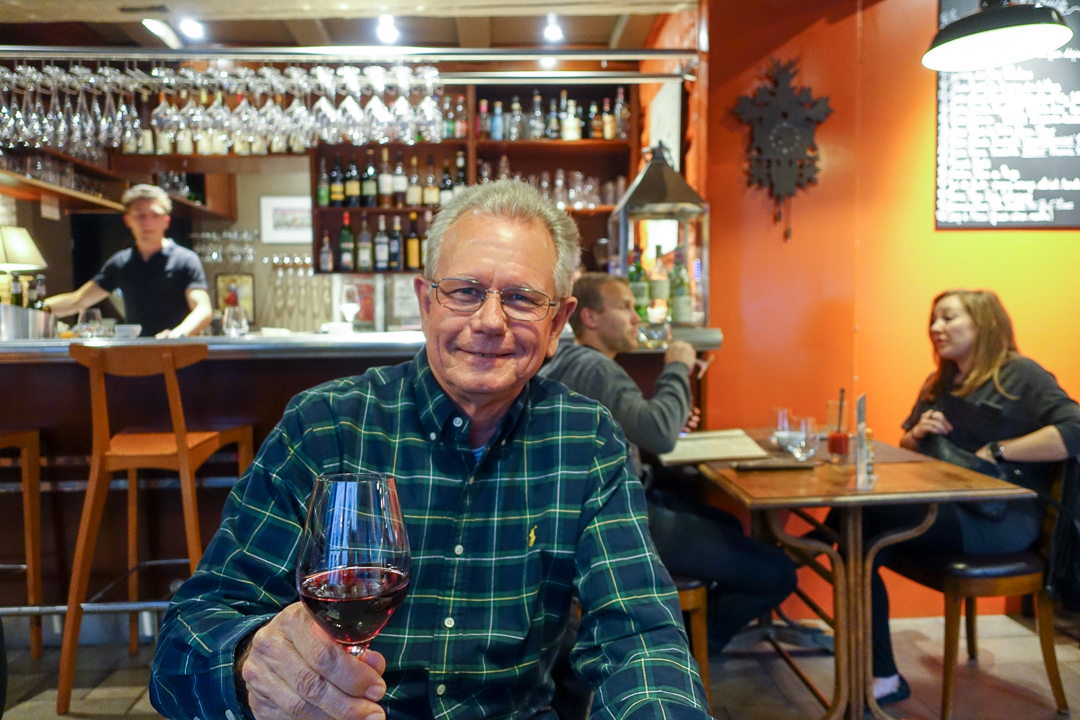
Ah, yes, two days without driving.
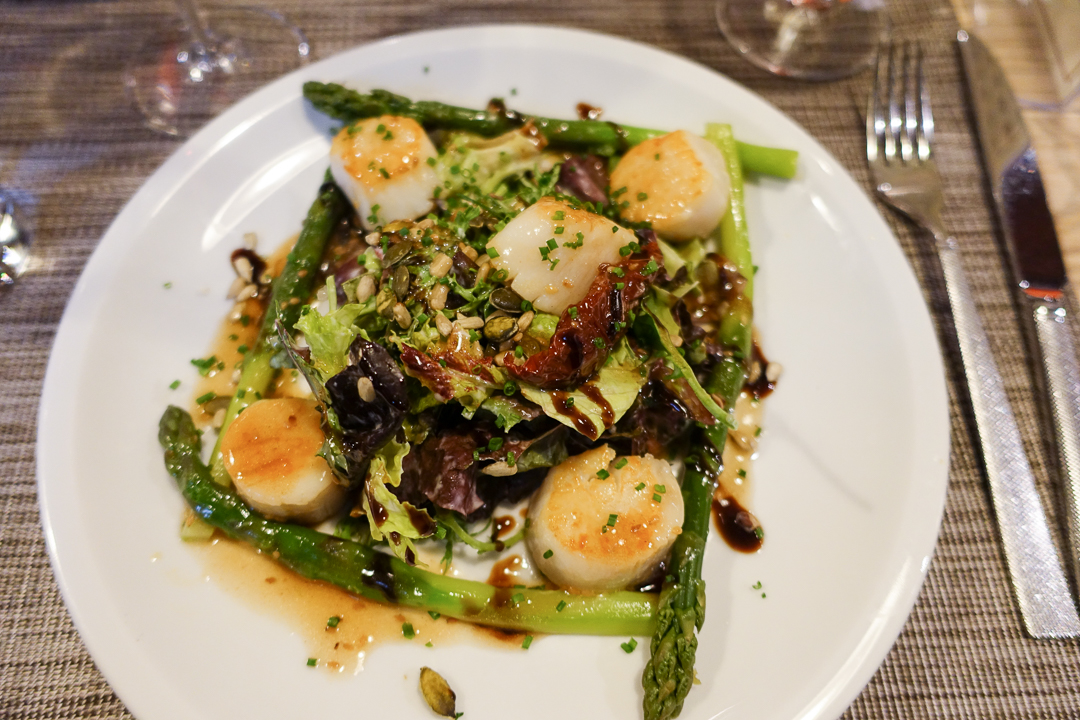
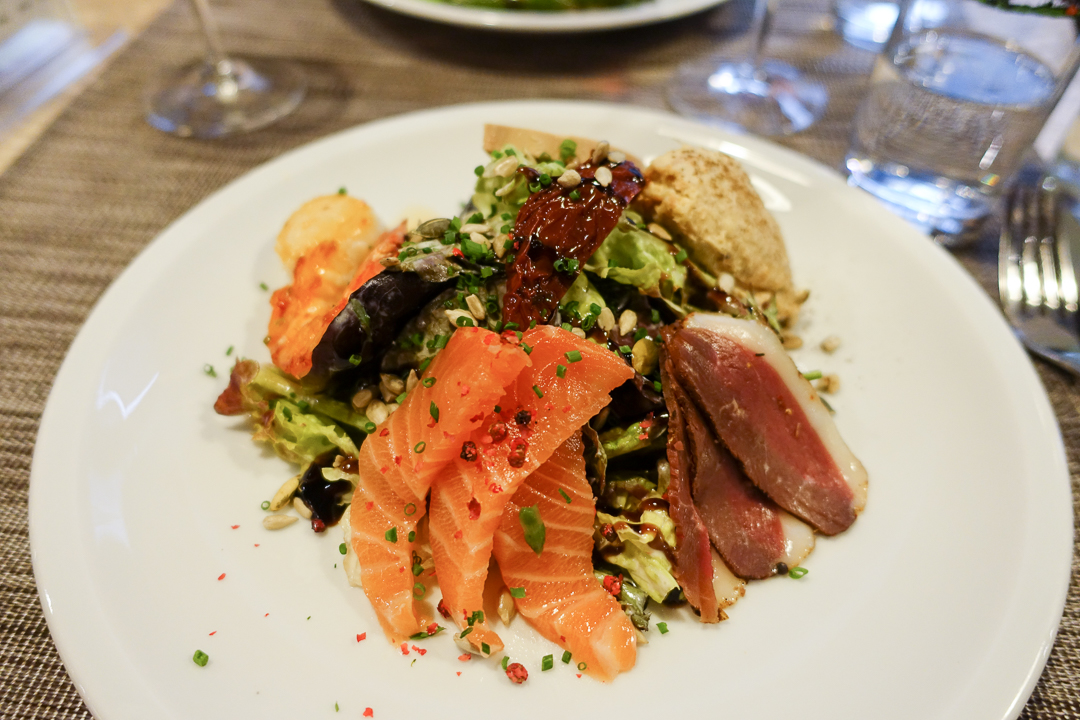
These were just the first course. Out of shame, we won’t post photos of the beef and veal dishes that came next. We skipped dessert.
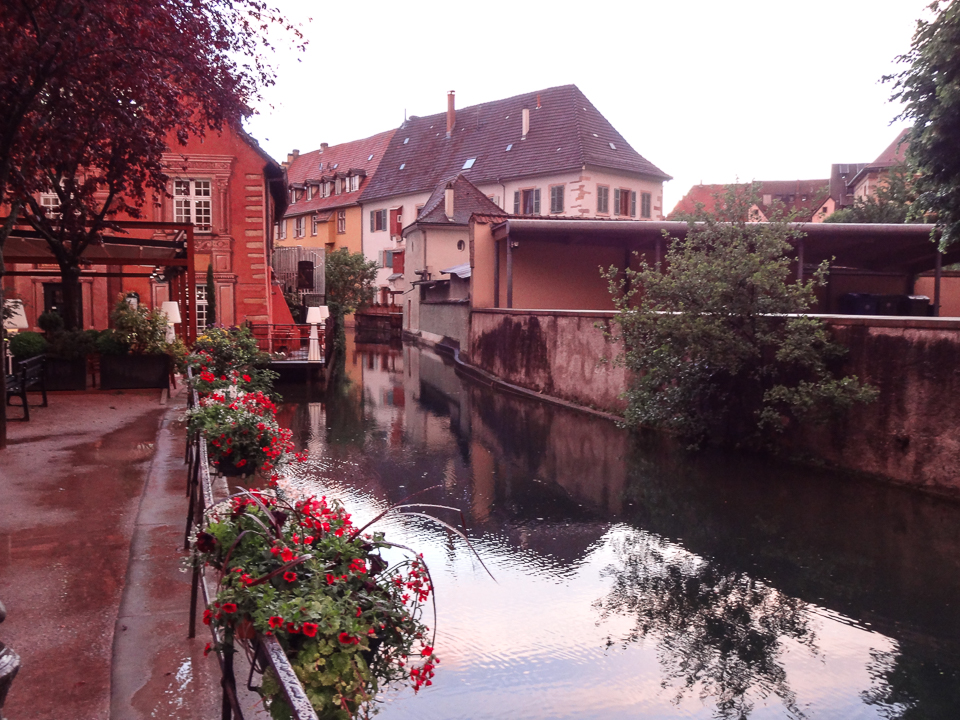
One of the canals near our hotel
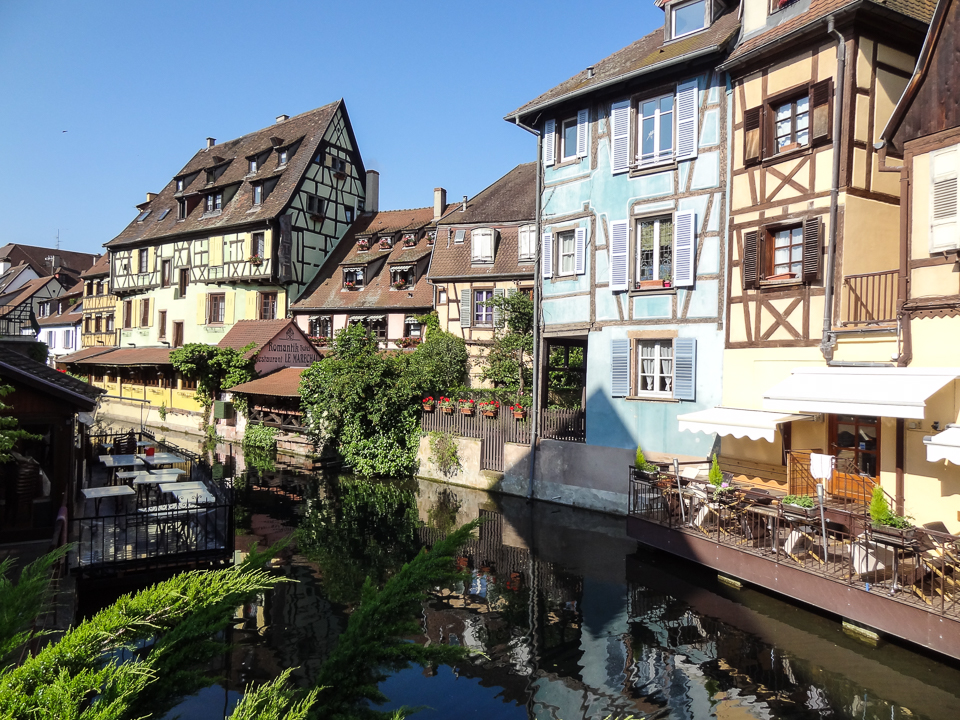
The sun came out the next morning as we investigated the town.
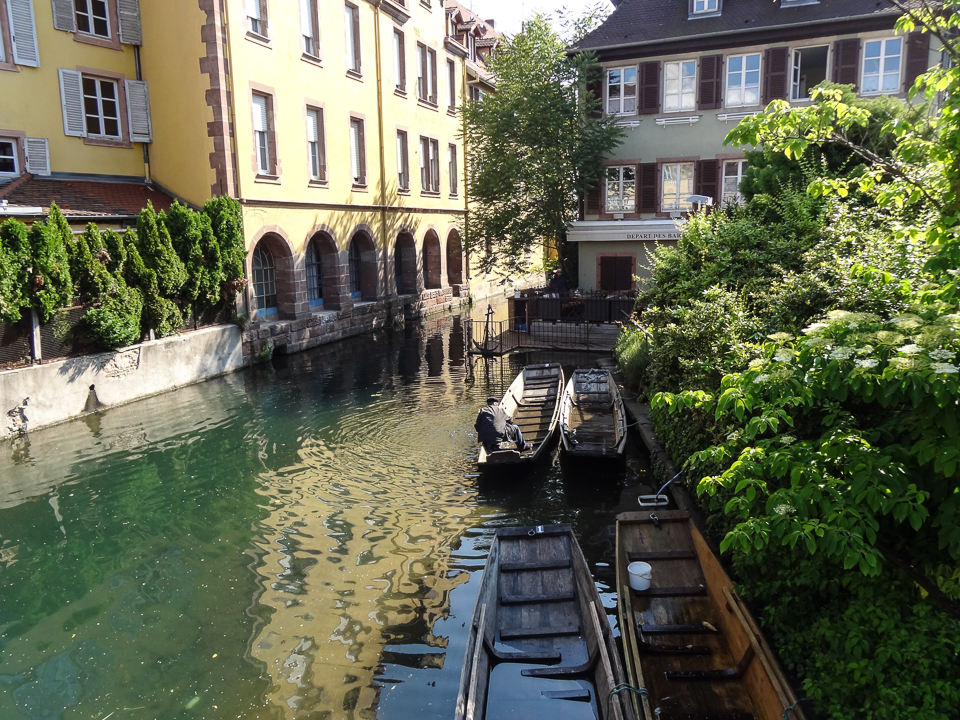
A man was baling water out of the gondolas after the rainfall the night before.
La Petite Venise looks like Venice, but is much cleaner.
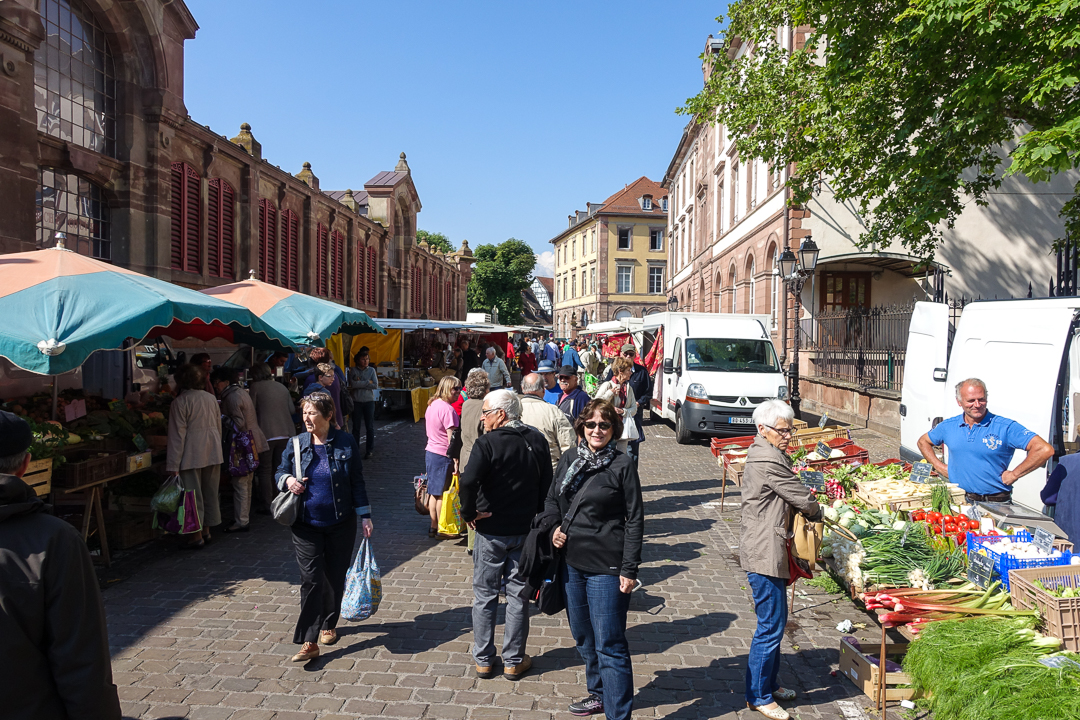
It was market day, so the streets were full of shoppers in the marche ouvert (open market). Many of them carried big wicker baskets or sacks full of fresh produce.
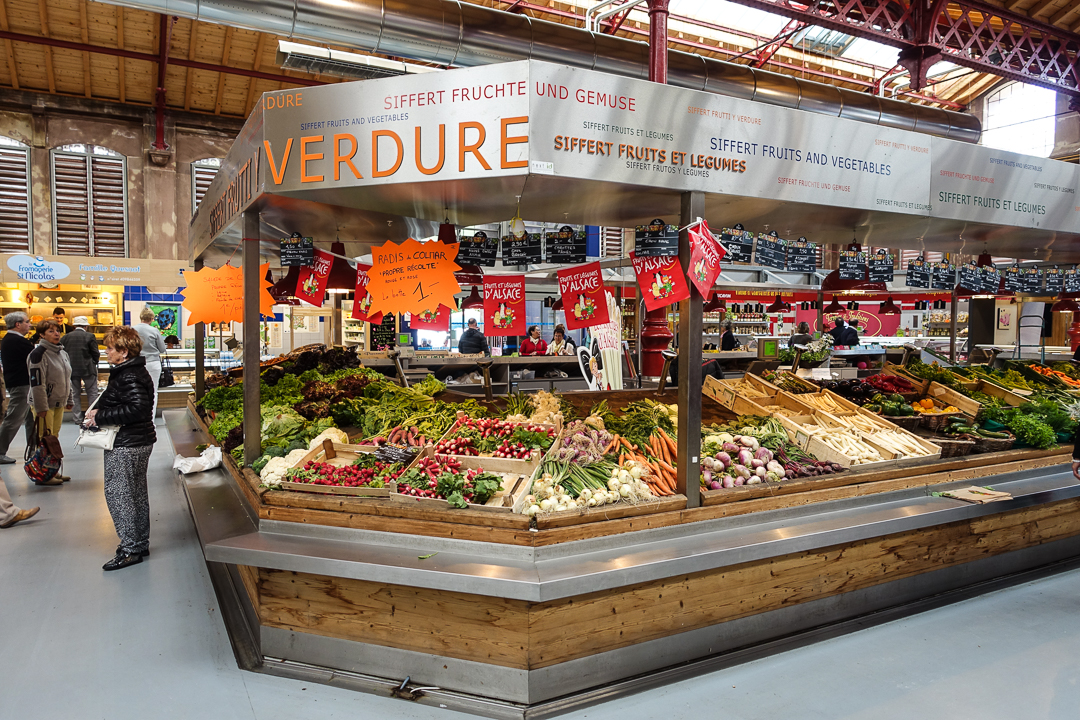
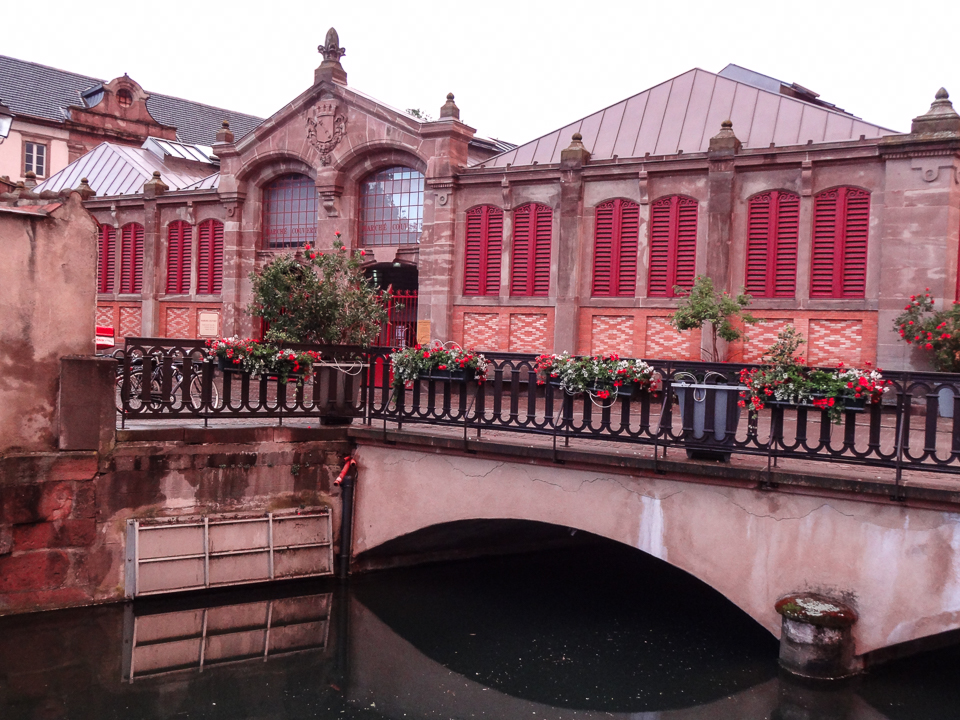
The open market is next to the famous Marche Couvert (covered market), where you can buy fresh produce, cheese, meats, Foie gras (French) or . . .
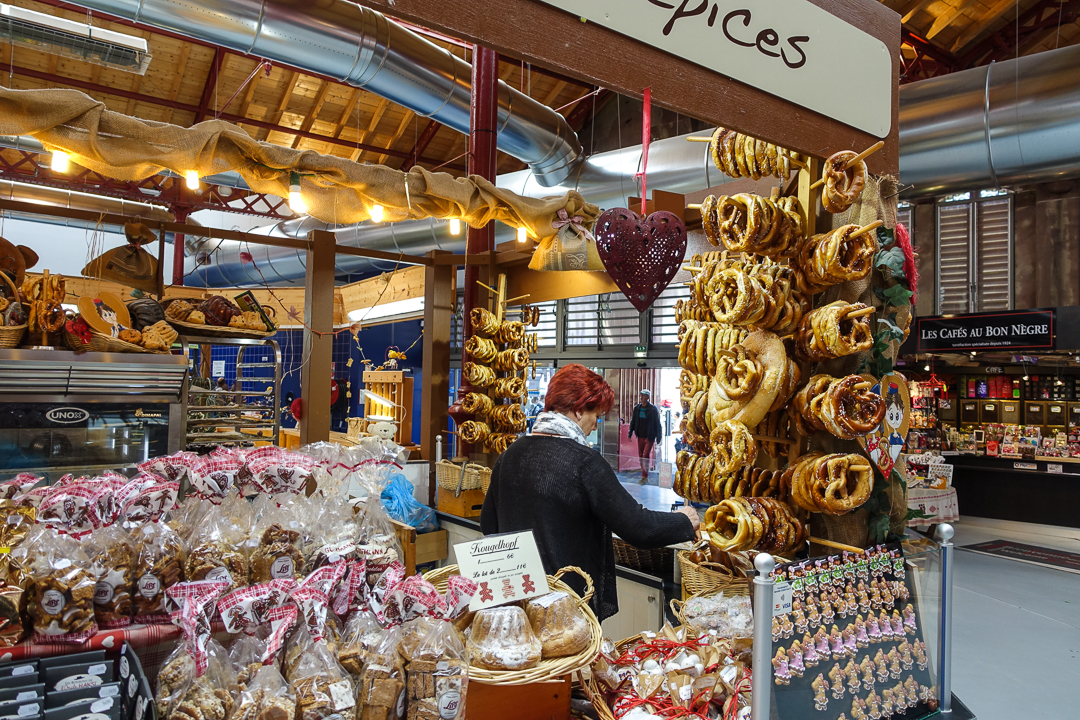
German products such as pretzels.
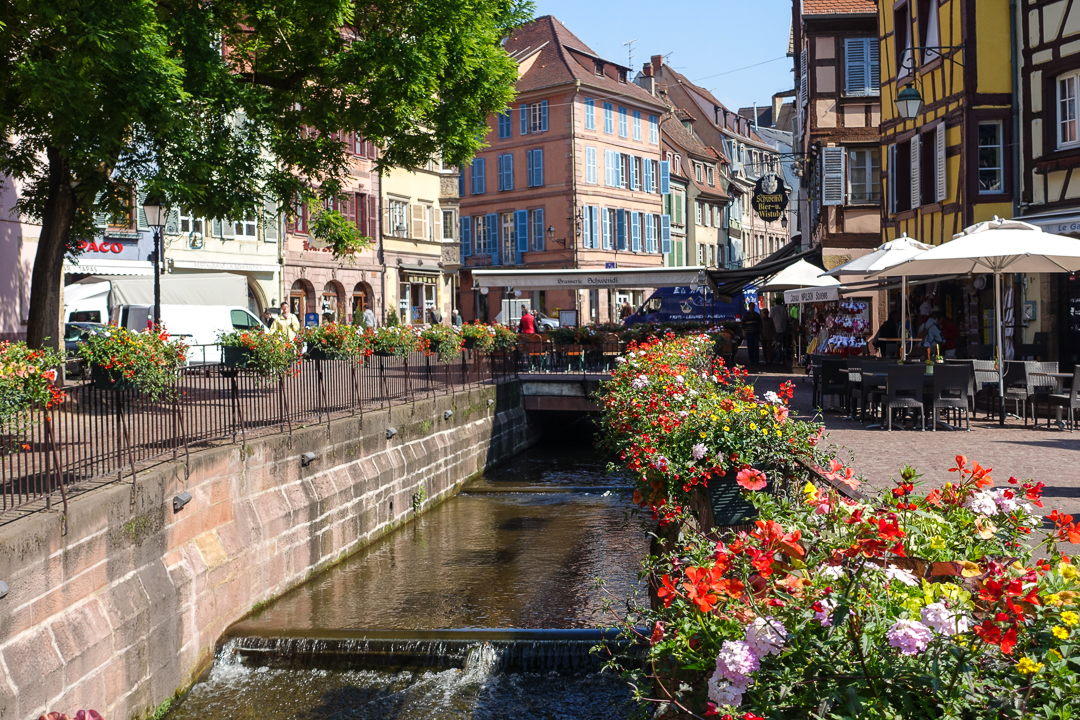
The flower boxes lining the canal bridge railings are reminiscent of Amsterdam.
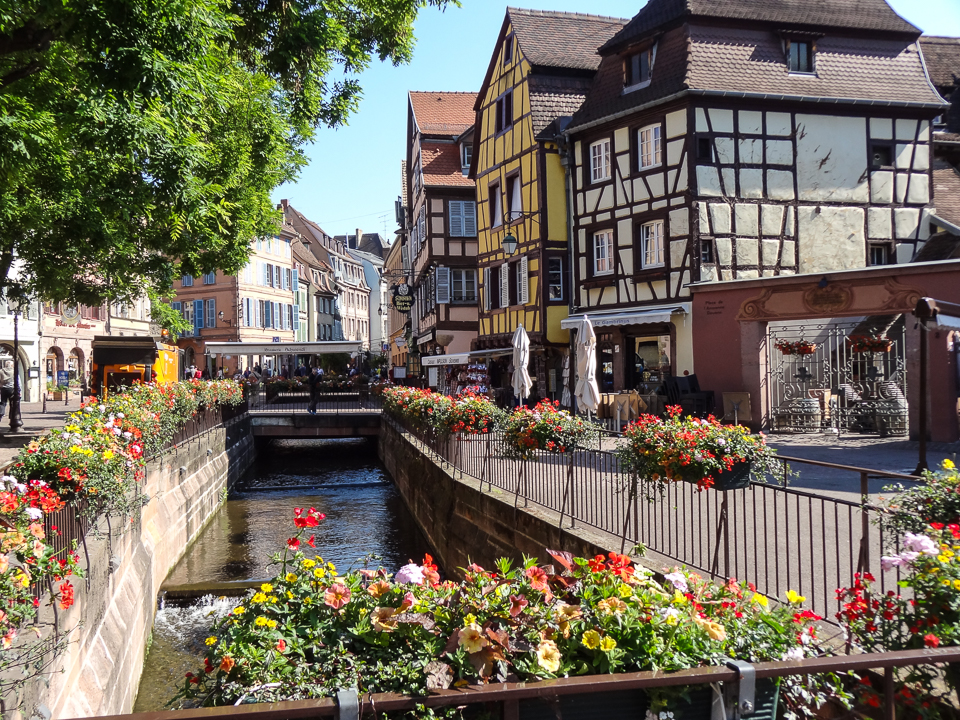
The Fishmonger District, now called “Old Town”
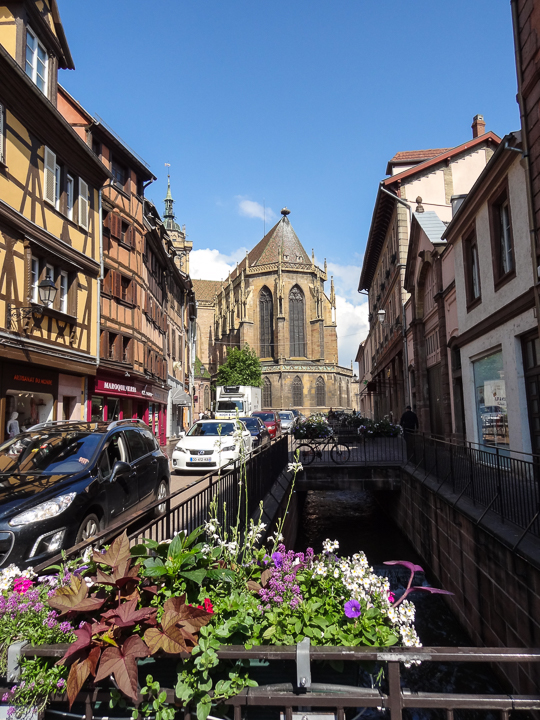
L’Eglise St-Martin was built between 1235 and 1365 but has undergone several reconstructions after being destroyed numerous times. European history surely includes many destructive eras.
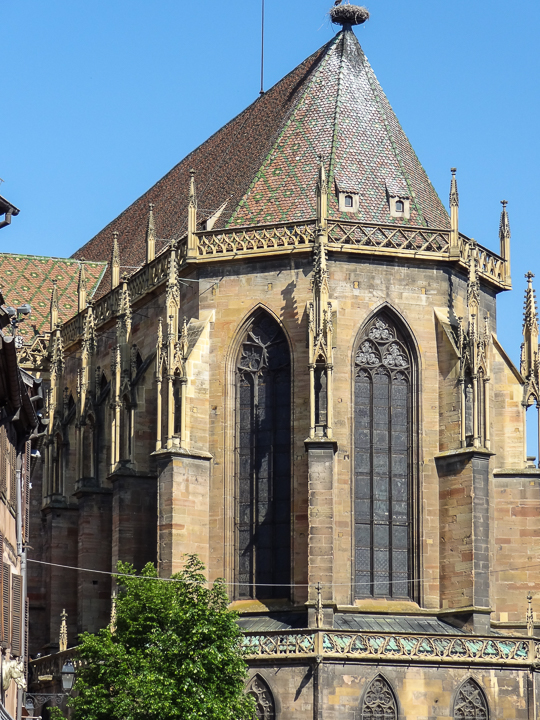
The roof had those colorful tiles as we had seen in the Bourgogne region.
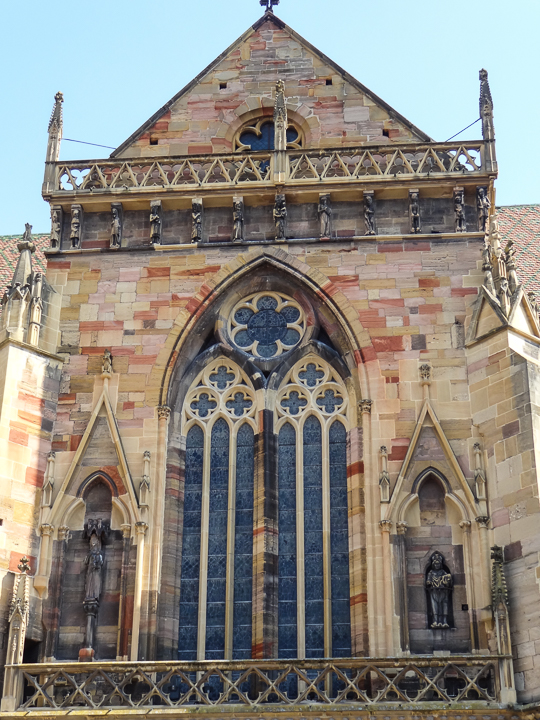
Many gothic features–like pointed arches & stained glass–and baroque features, like its statuary and pipe organ.
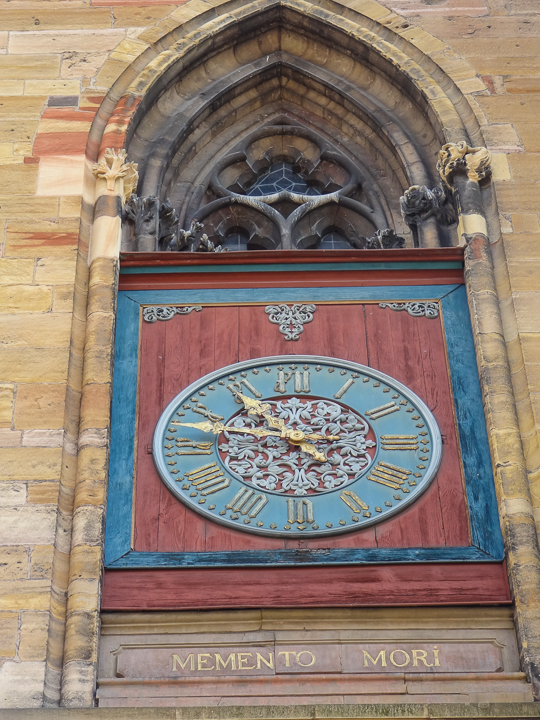
The classic medieval warning, Memento Mori (“Reminder of Death”): Death can come at any time, so be prepared (eat lots of rich food and drink lots of wine like Epicurius — just kidding). In reality, it means you can’t take your possessions with you, only your good deeds–so cleanse your soul (and your pockets) now.
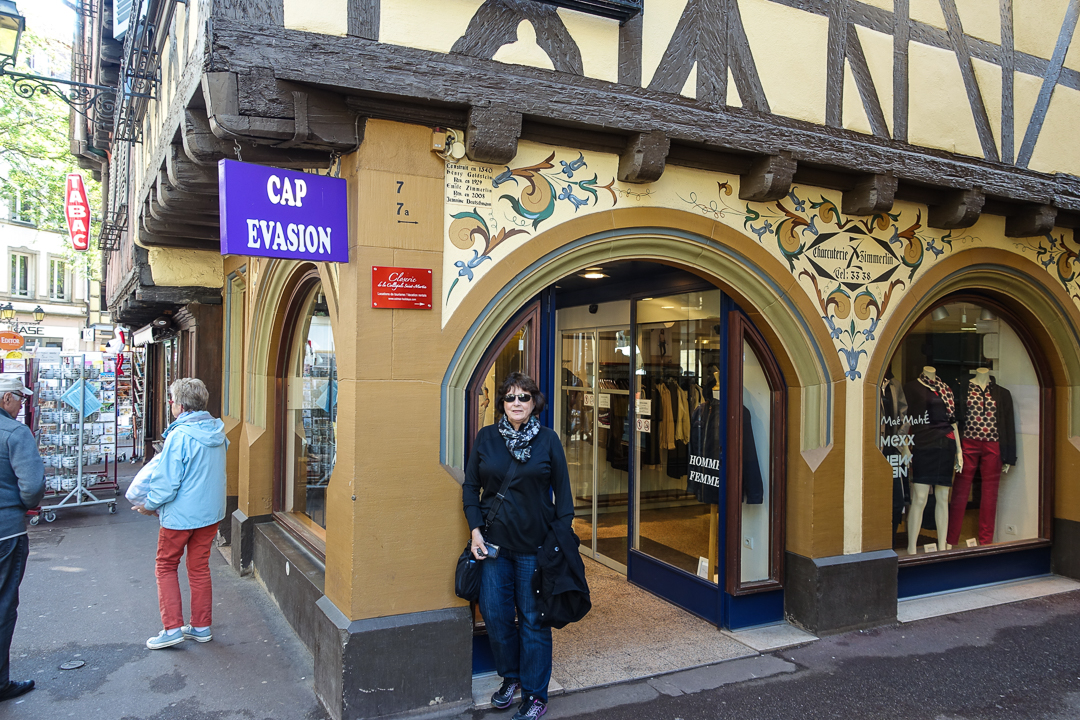
Colorful detailing adorns the timbered buildings . . .
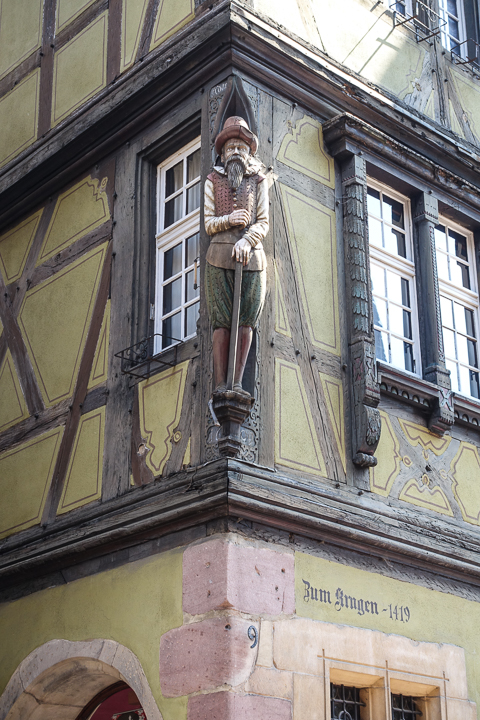
. . . such as this corner statuary.
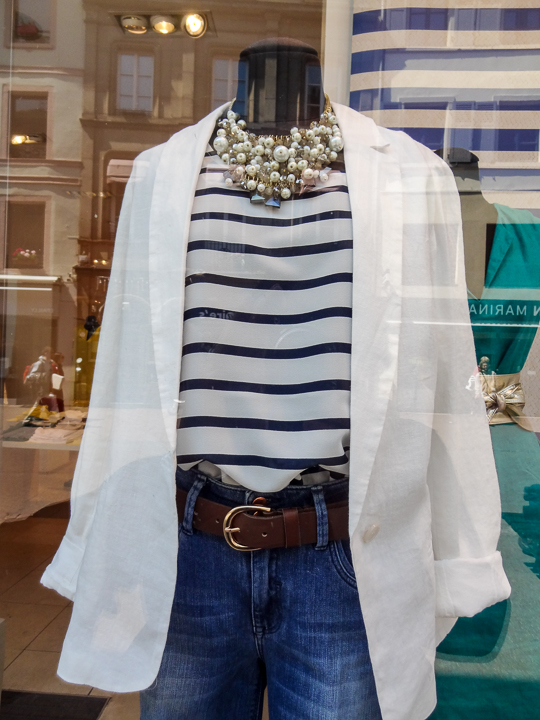
FASHION ALERT: Although almost all women in France wear the ubiquitous colored scarf around their necks, fashionably knotted, we noticed some young ladies wear gaudy jewels with their jeans, like the look in this display case.
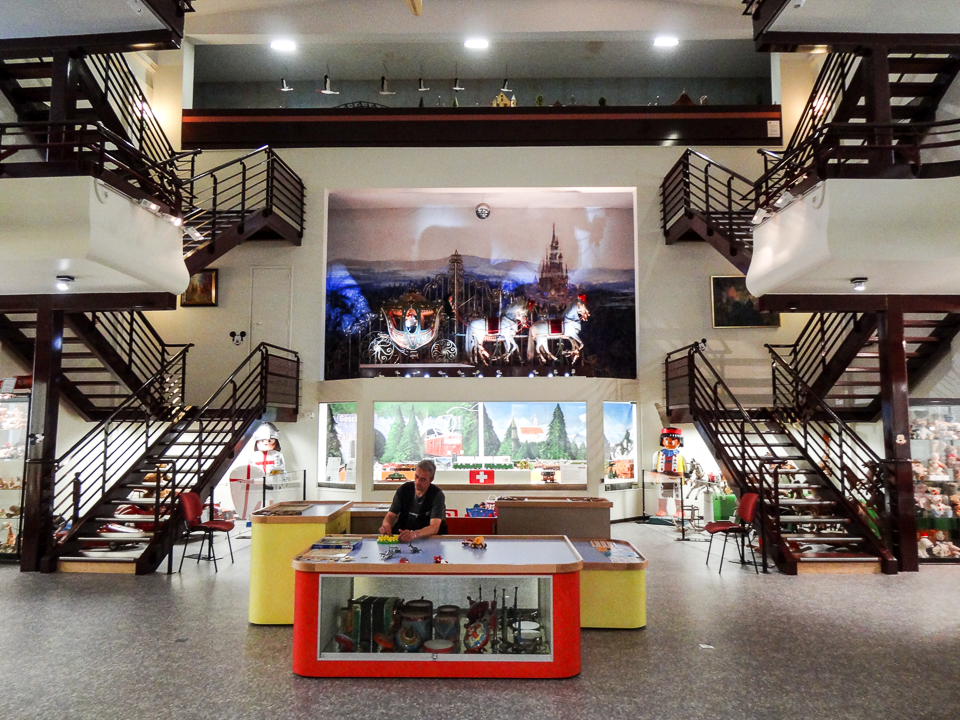
Around noon, we stepped into Colmar’s Museum of Toys.
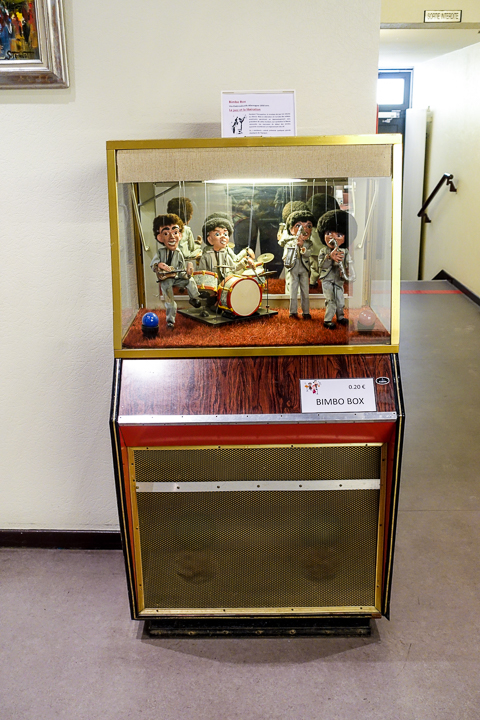
This museum had many hands on displays. By pushing a button . . .
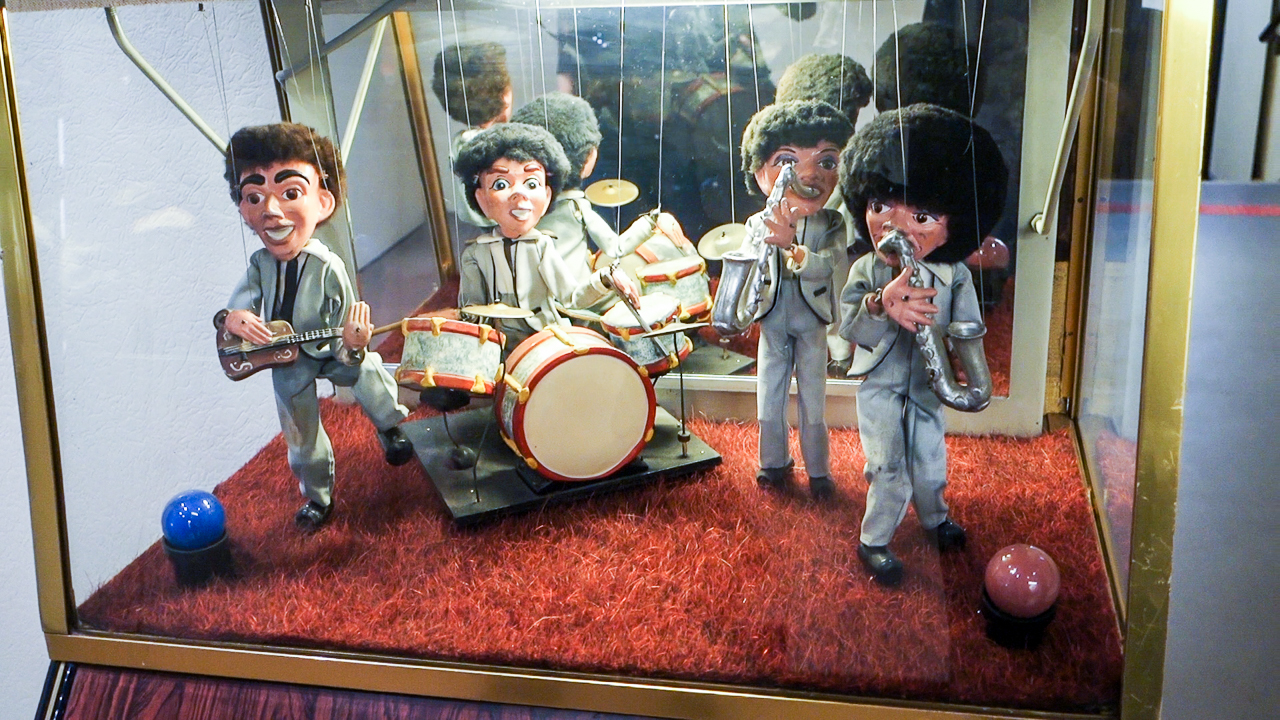
. . . we listened to these puppets play jazz and sing.
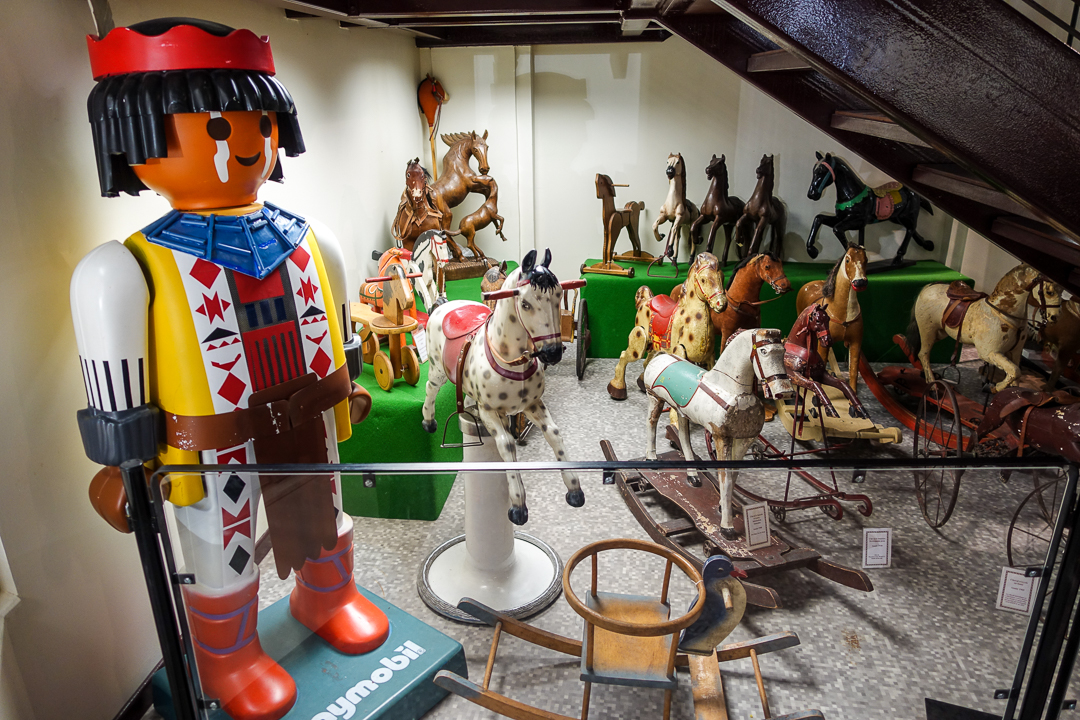
Hobby horse display
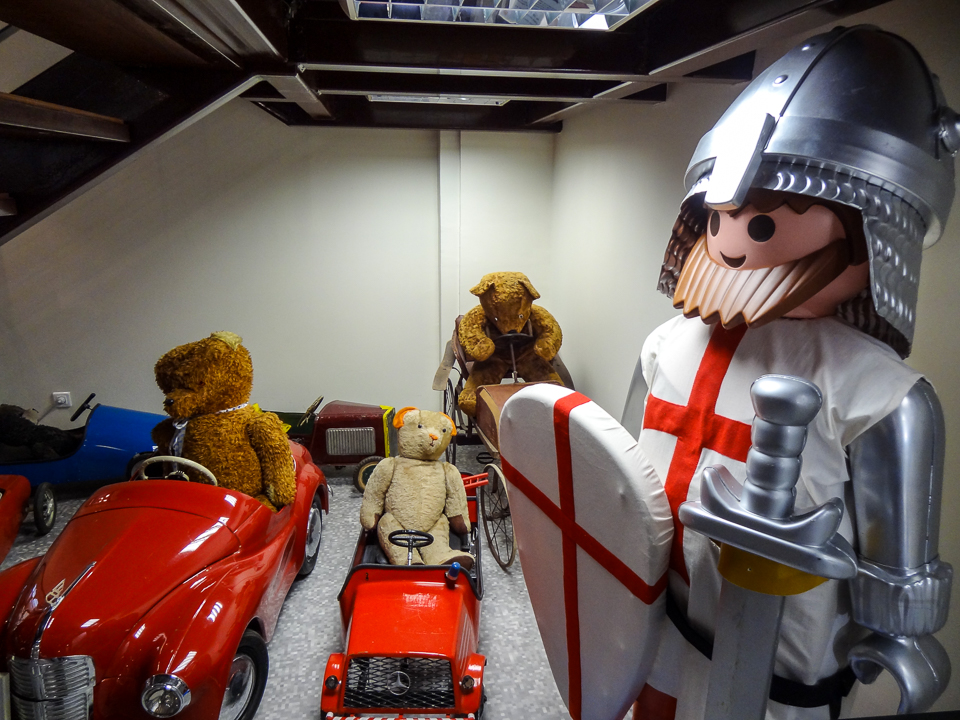
Teddies having mid-life crises
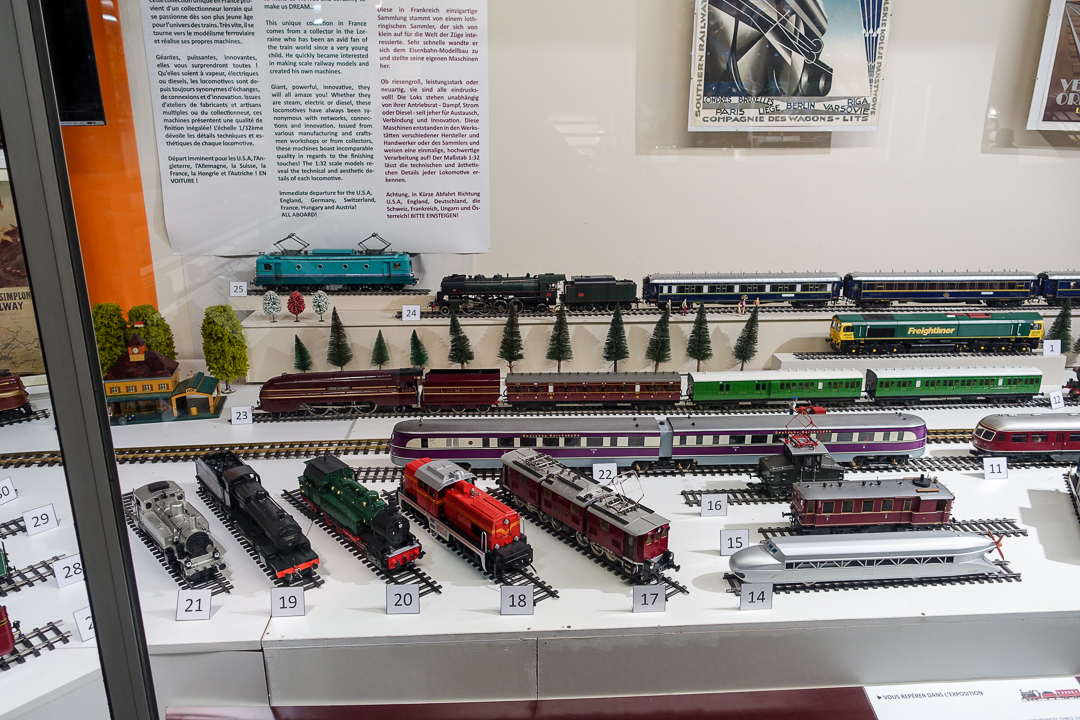
The museum had impressive train displays.
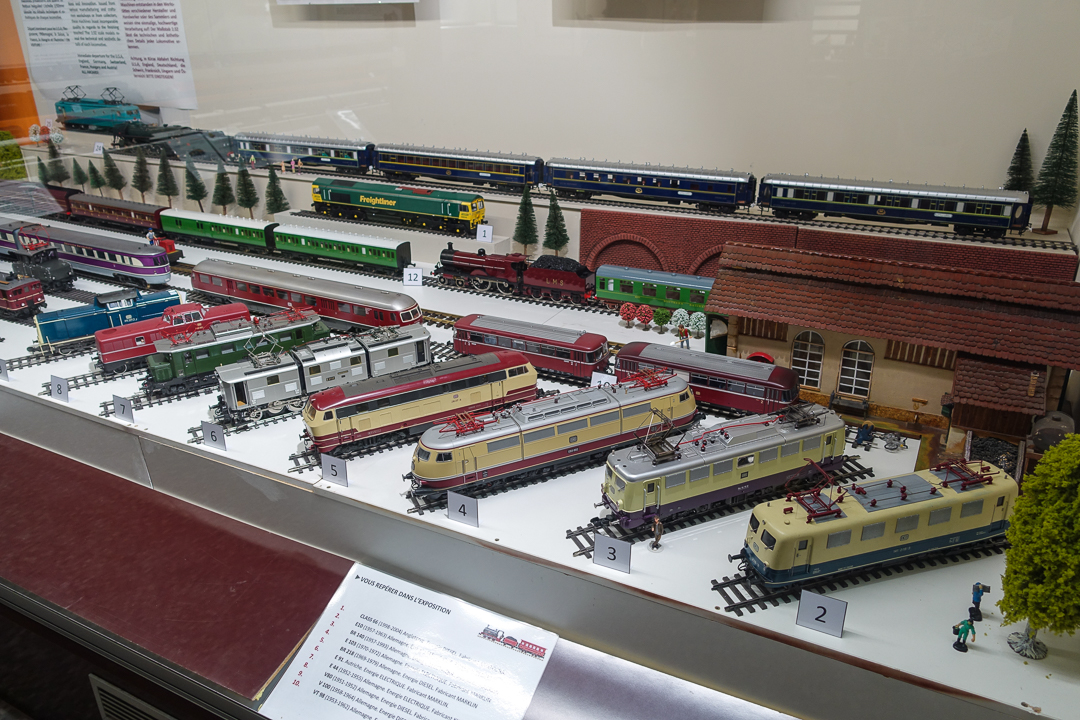
Trains of all gauges were on display. Both diesel and all electric locomotives were shown.
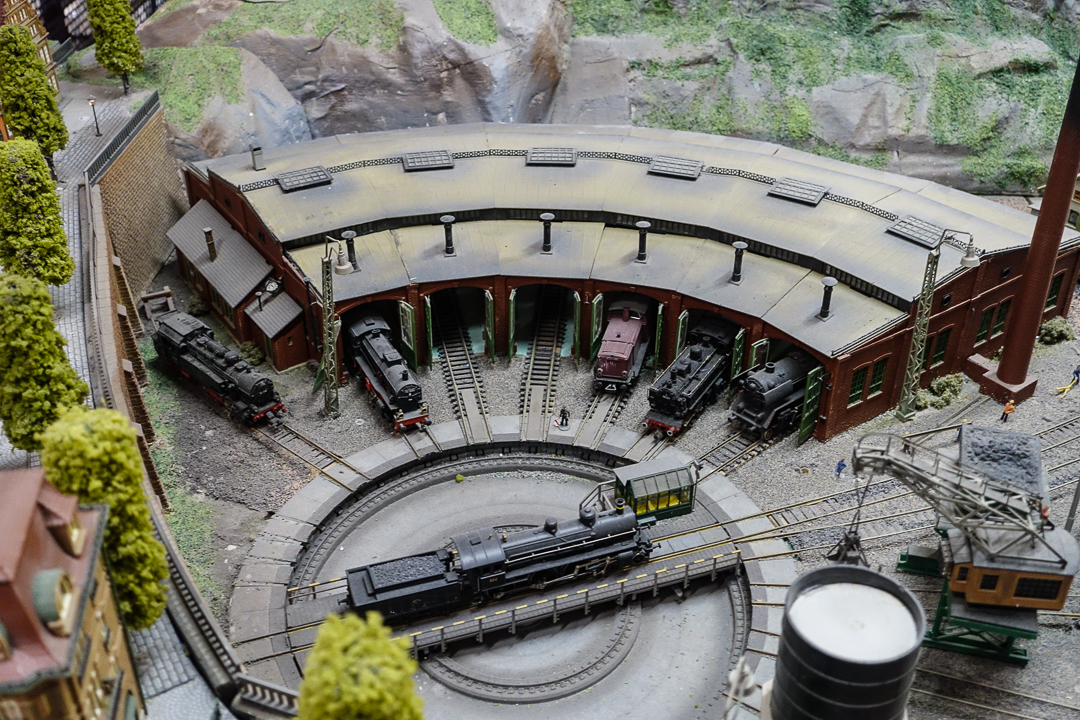
There was a large operating HO scale layout featuring a roundhouse turntable.
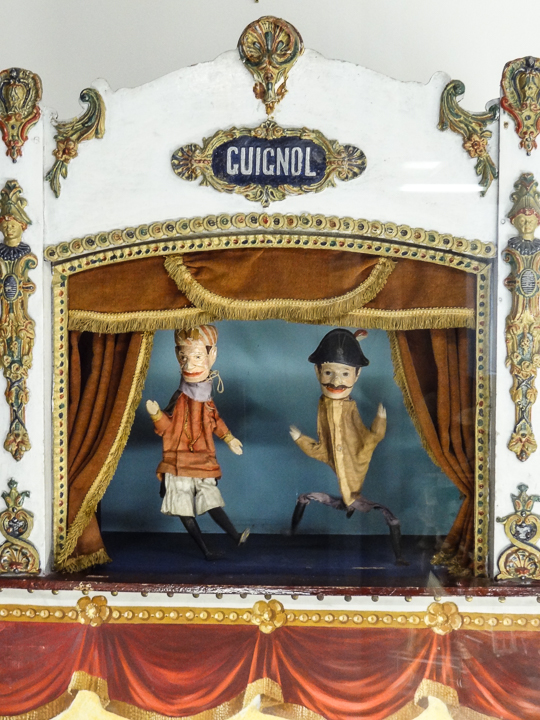
A section was reserved for French puppetry and Grand Guignol Theatre.
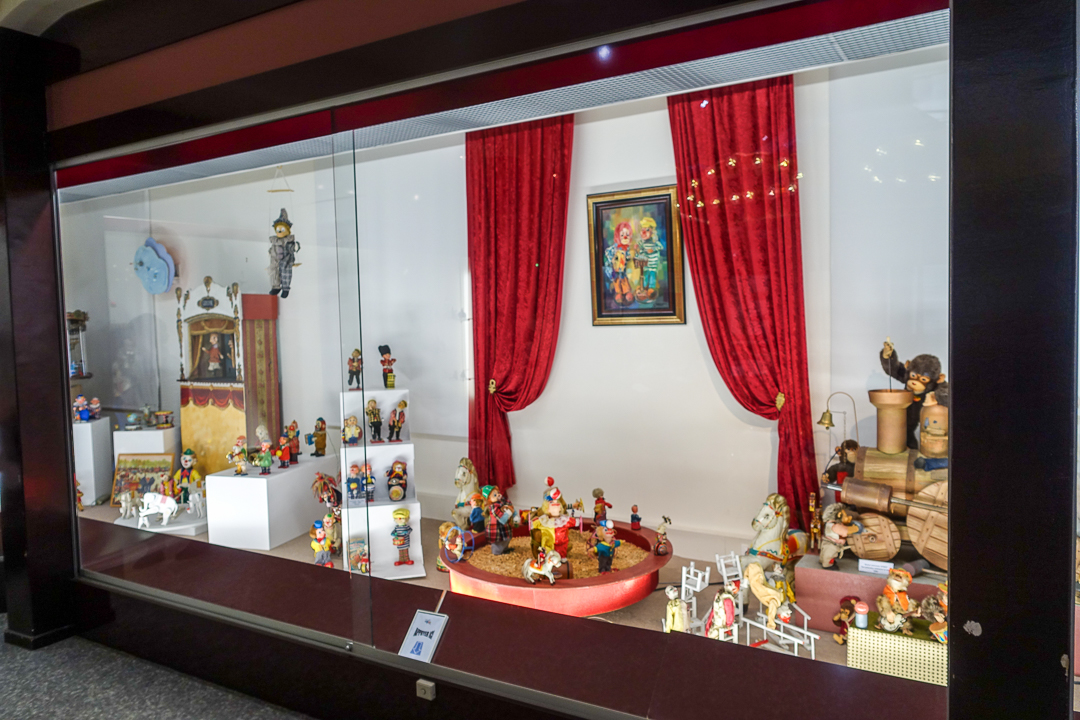
In this showcase when you push the button, . . .
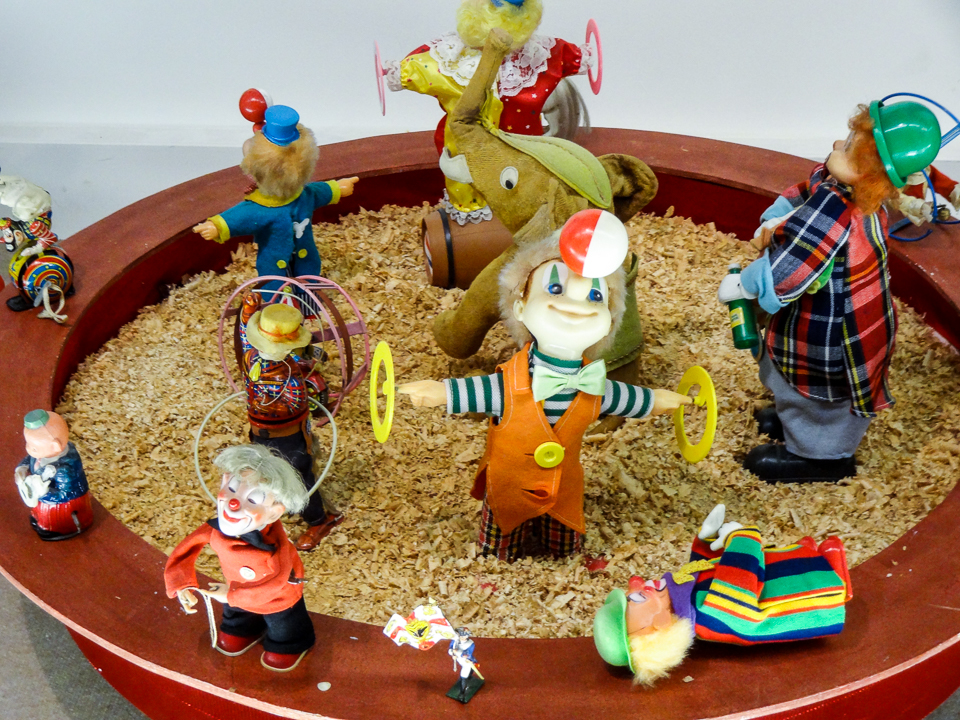
. . . the clowns perform. Wow, this reminded Jill of Chucky, the clown. Ugh, where’s the knife?
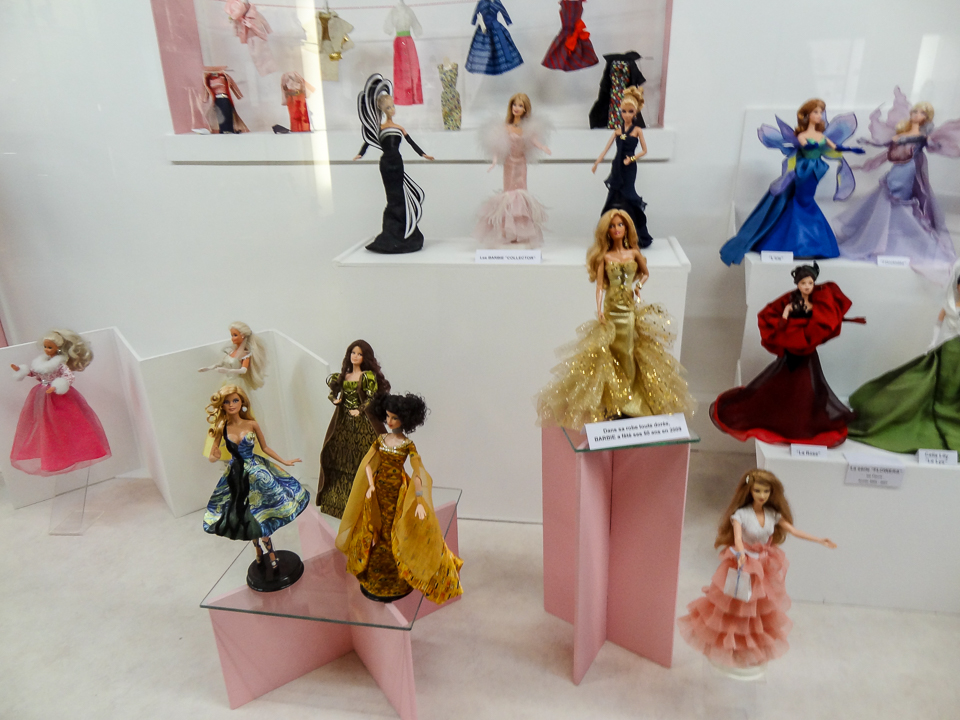
The museum included case after case of Barbies. We have never seen so many Barbie dolls.
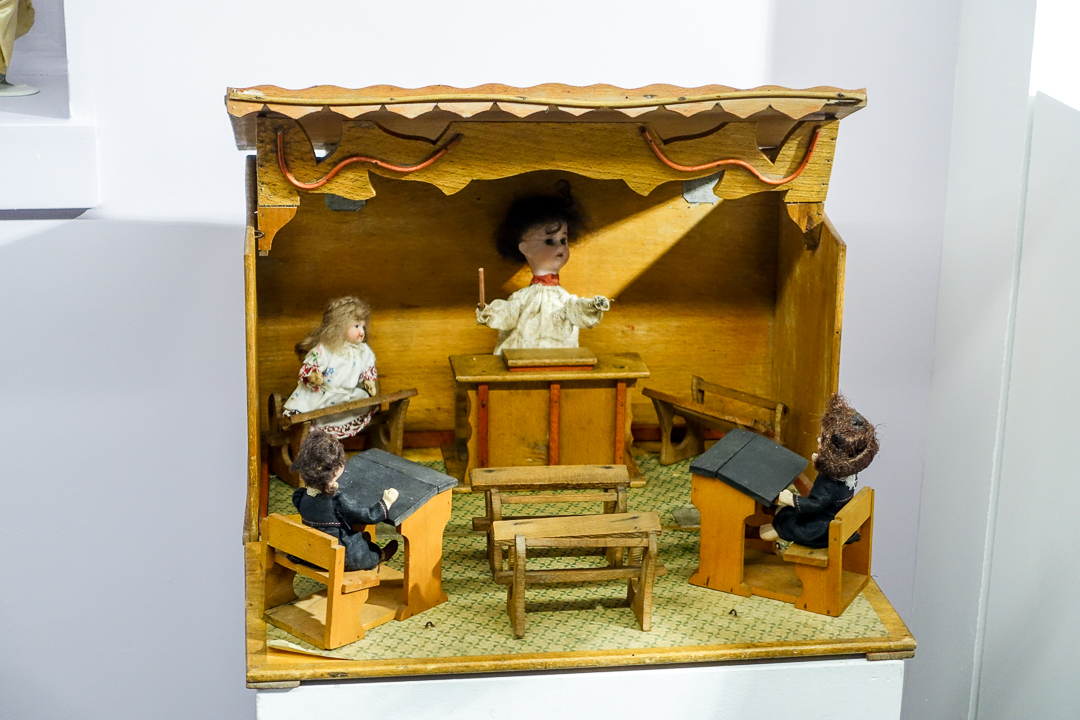
We did not include in this blog, the rooms full of scary dolls. We’ll just refer to them as the Stephen King rooms. This display looks like Jill at the podium.
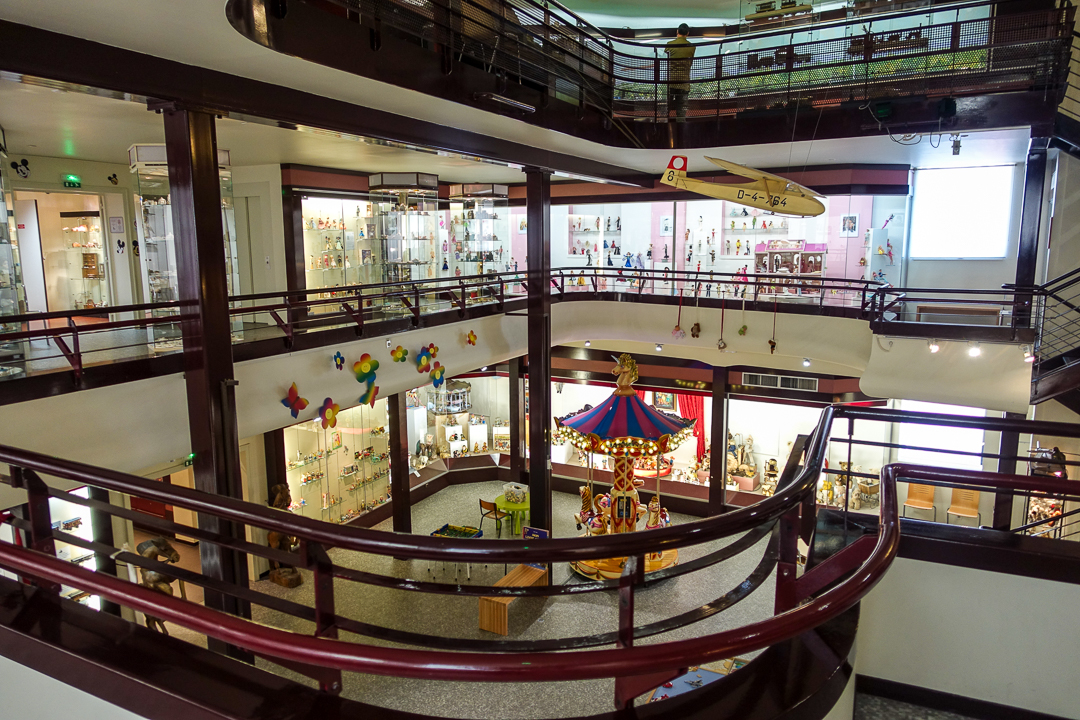
A beautiful collection of toys.
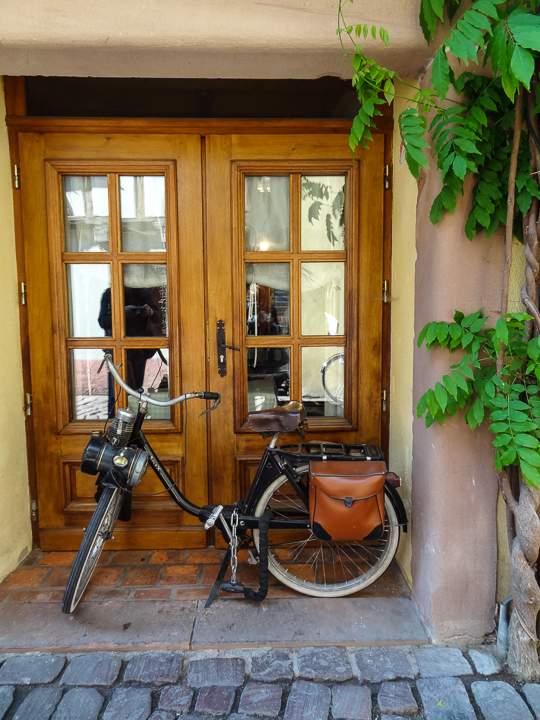
For dinner, we decided to eat an authentic Alsatian meal, so we made reservations at Winstub de la Petite Venise.
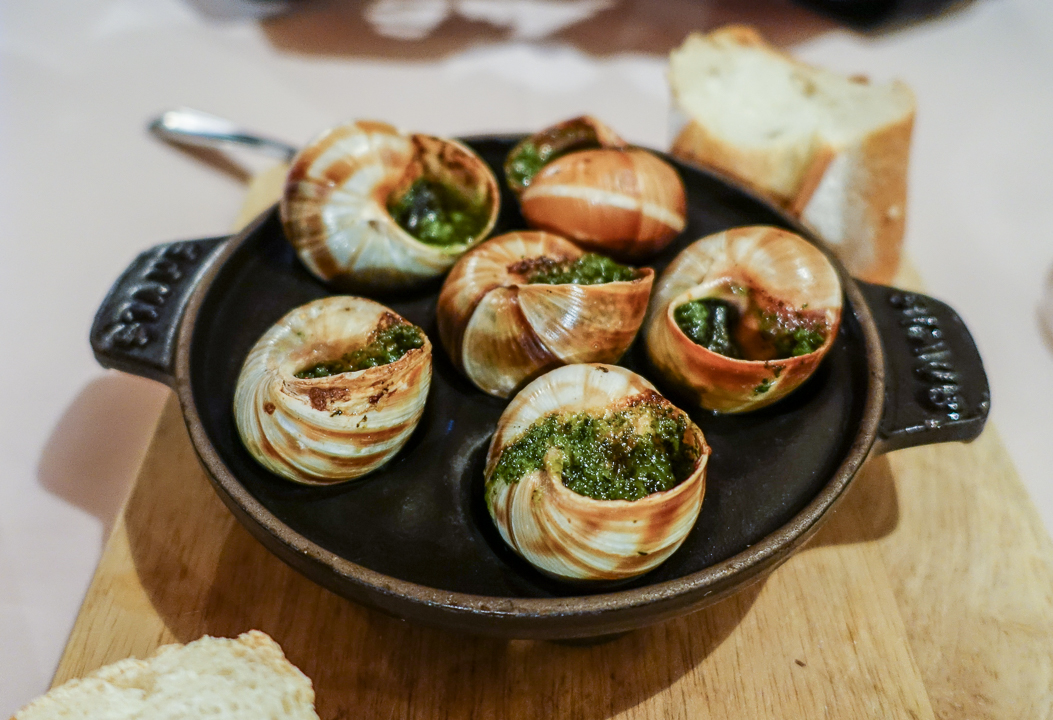
FRENCH: Escargot
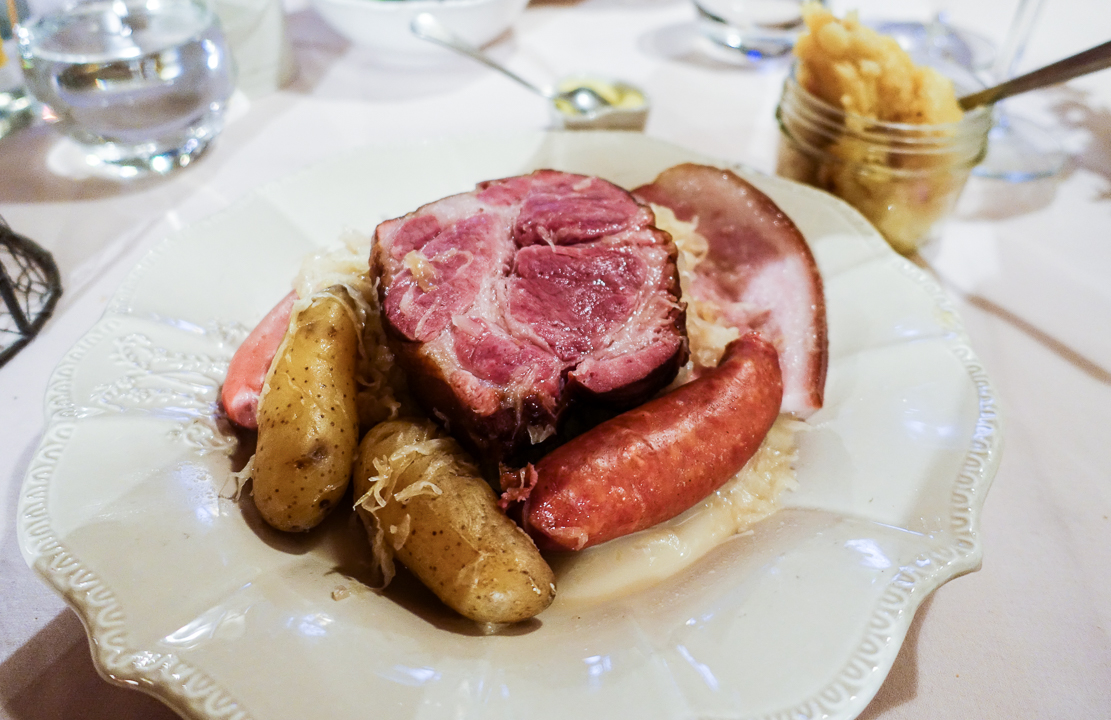
GERMAN: Choucouterie (an Alsatian selection of pork products on sauerkraut) Pete’s dream meal.
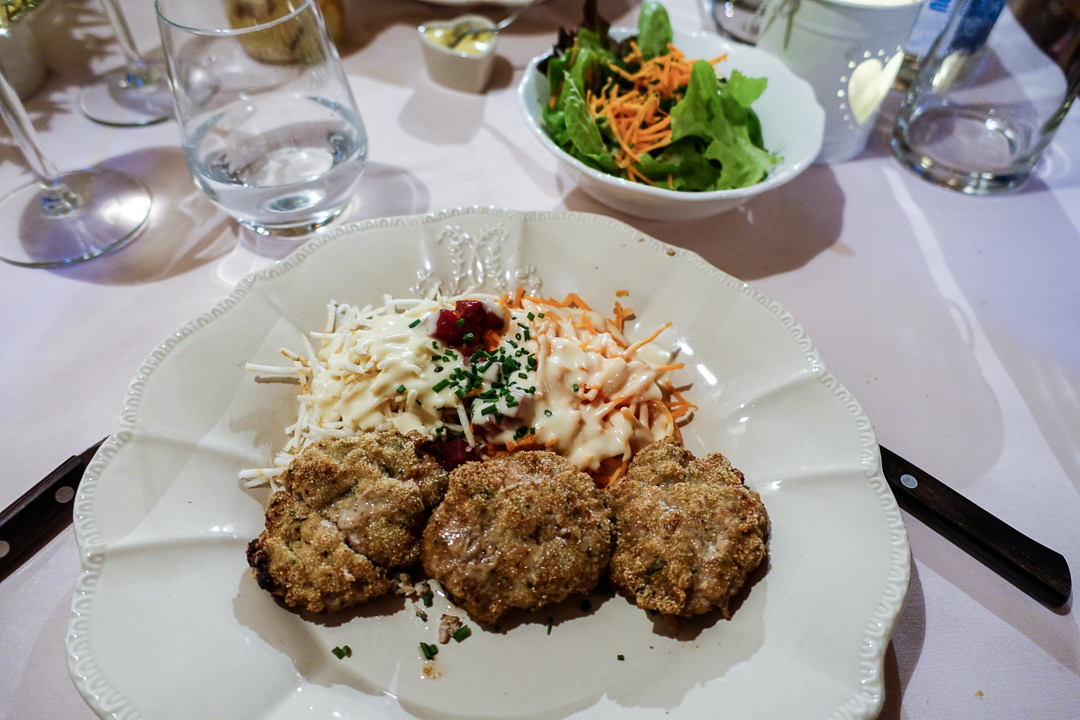
GERMAN: Meatballs and slaw
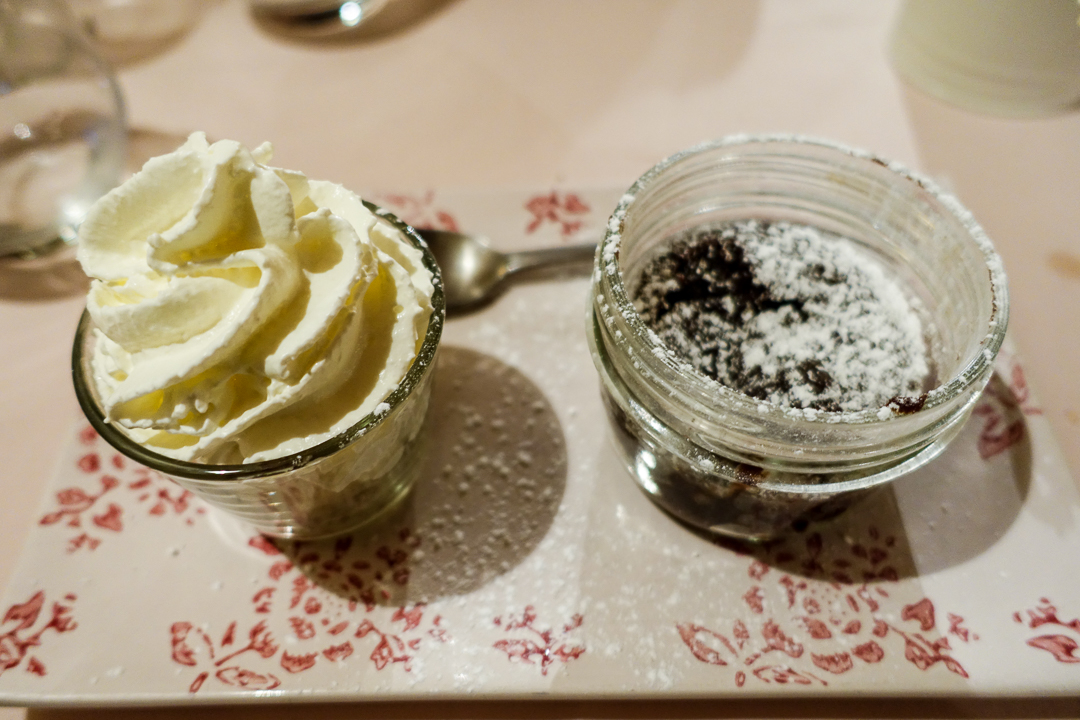
FRENCH: Pot de crème
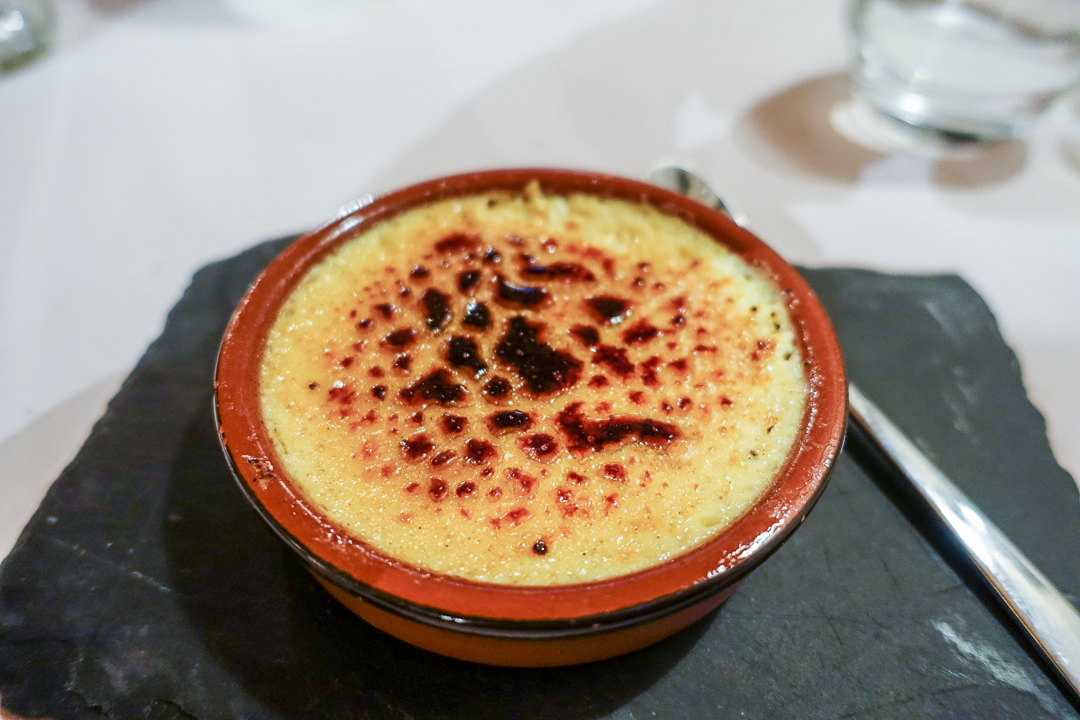
FRENCH: Crème brûlée
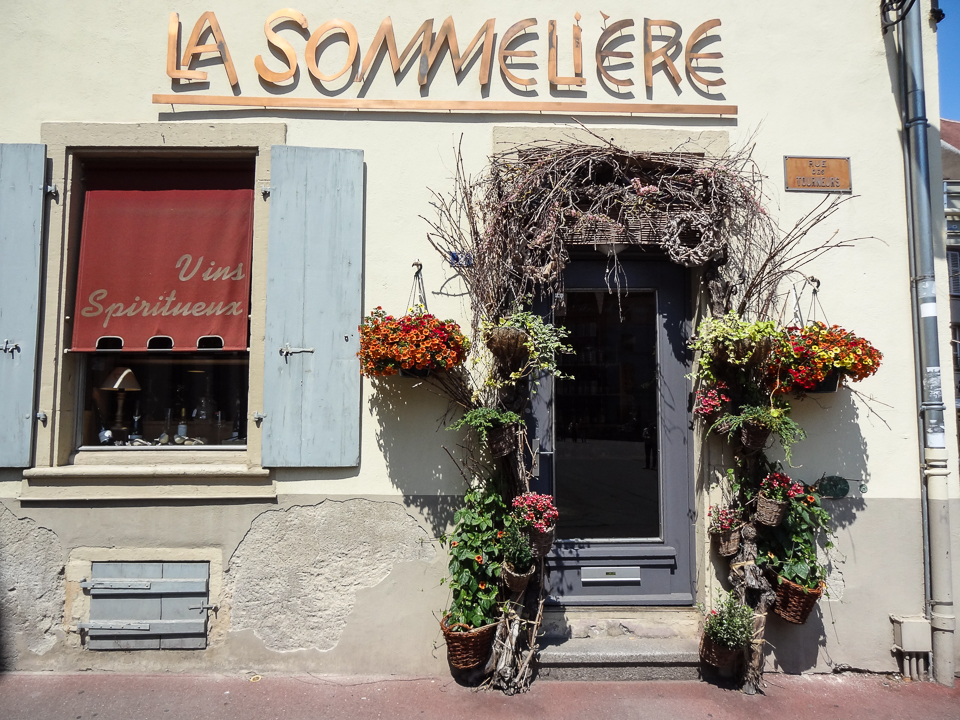
Many shops adorn their facades with flowers and . . .
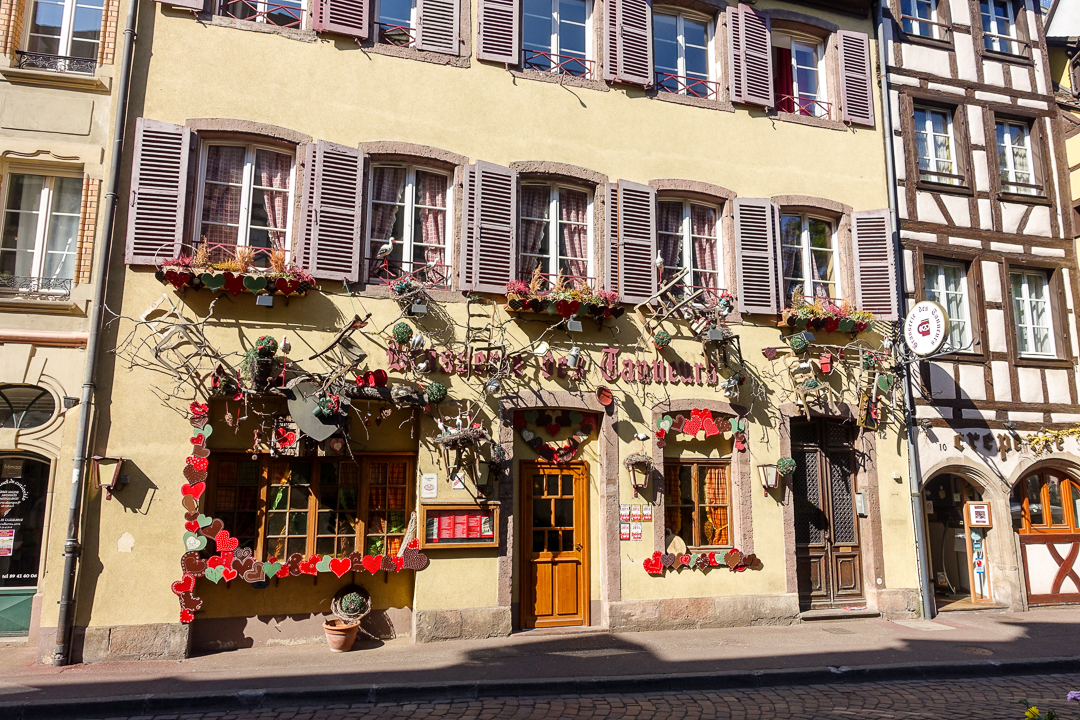
. . . hearts and . . .
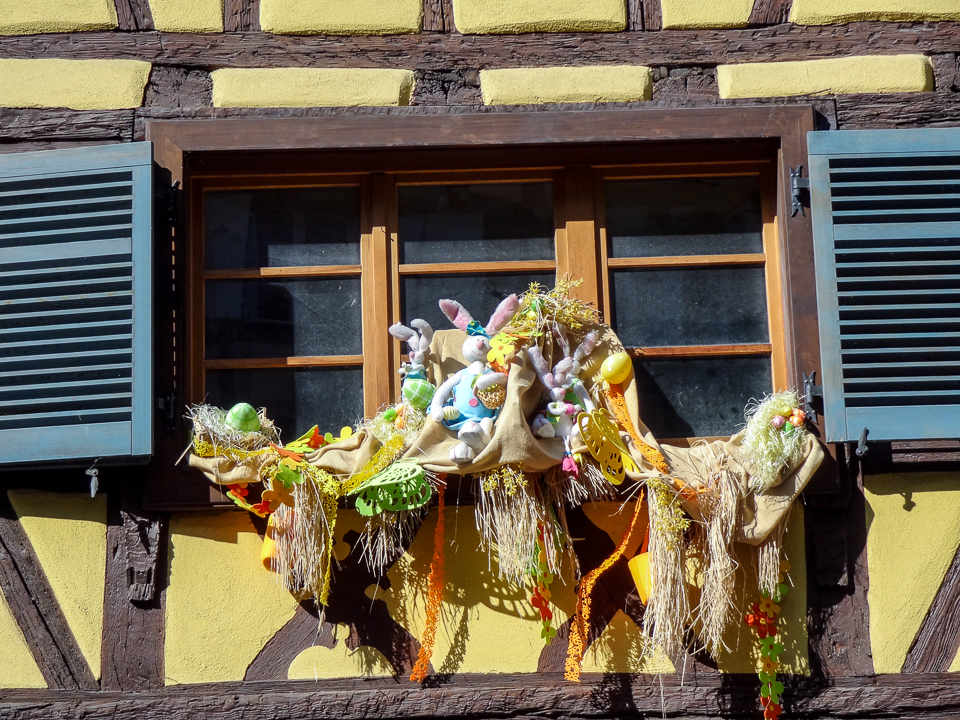
. . .symbols of spring.
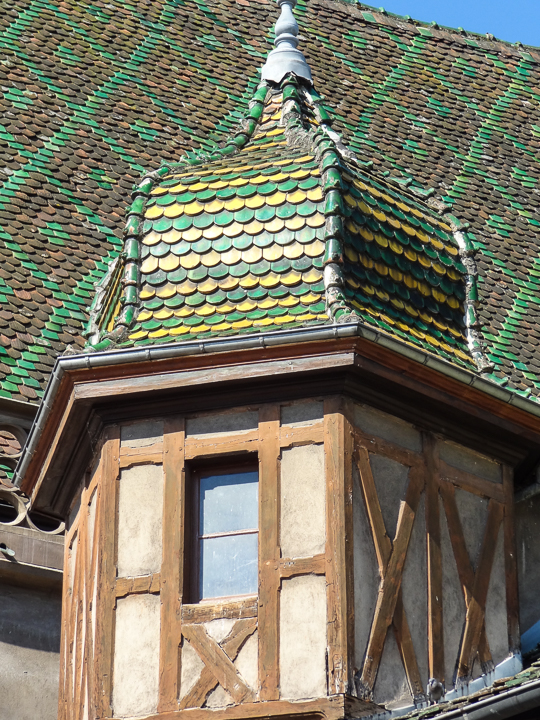
The old Customs House, Colmar’s oldest public building.
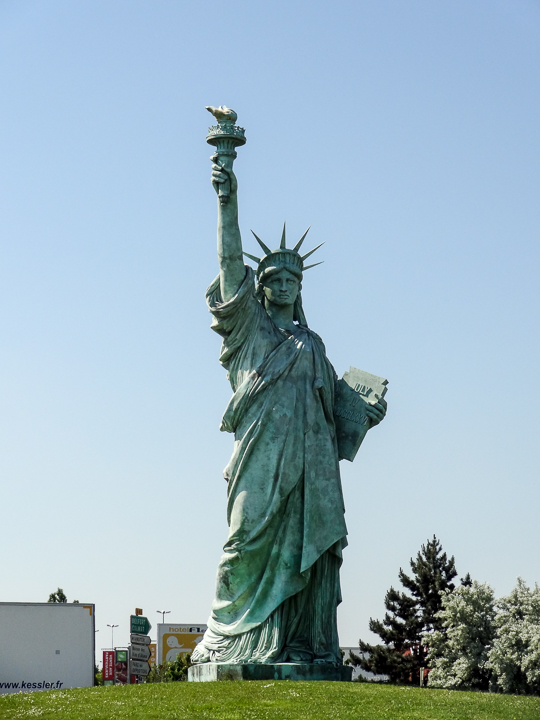
Colmar is also the home of Auguste Batholdi, the designer of our Statue of Liberty.
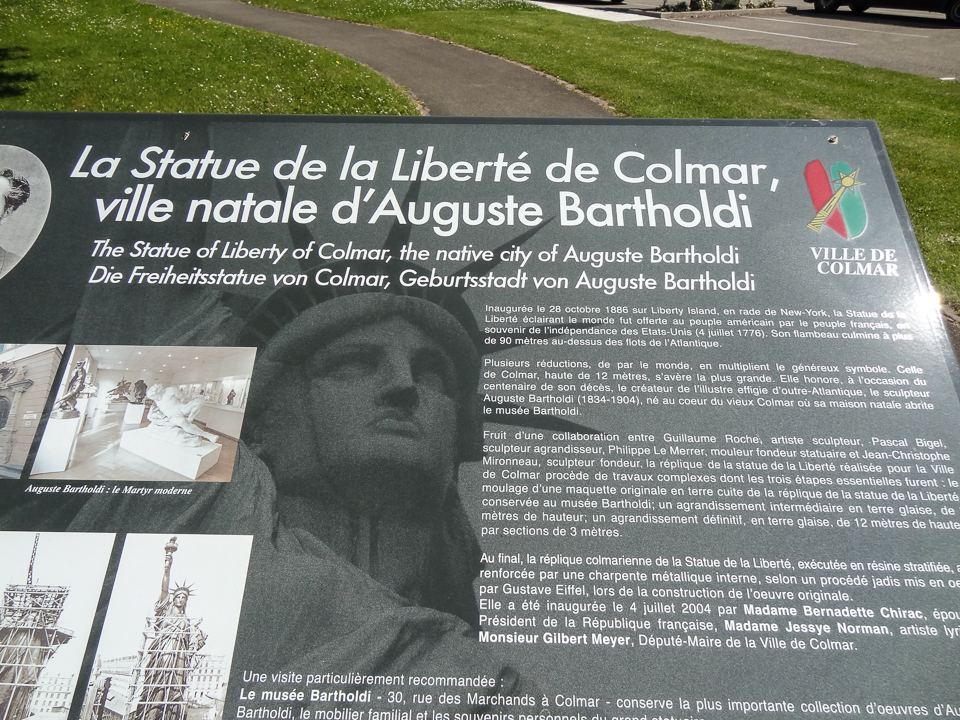
Next stop: Strasbourg.
Au revoir,
P&J
4 Comments
I think that’s where my ancestor’s came from – near the French German border. Thank God – order has been restored – sauerkraut! The photos are terrific (as usual).
It looks like you could get used to this routine.
What a charming area this is!
What is RAINFALL?
We never heard of RAIN in our town.
Flea
Another colorful and cheerful area! Loved the pictures and sightings.
We’re going to Vegas tomorrow for a few days, and have probably packed as much as you did for an entire month!!
Hugs
Riki & Bob
Bon Voyage. Do not injure your back carrying all those trunks! LOL